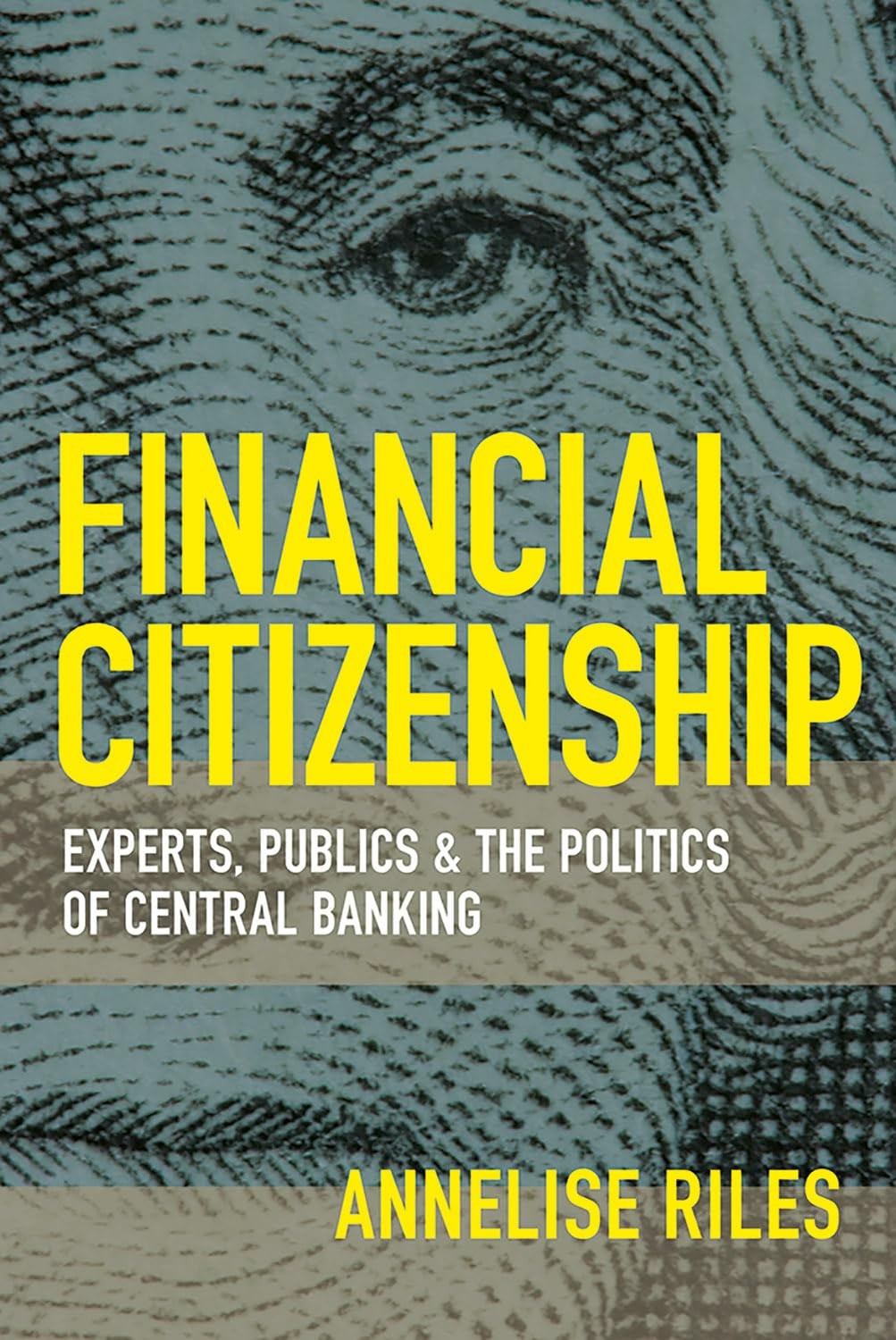
Financial Citizenship: Experts, Publics, and the Politics of Central Banking by Annelise Riles – A Deep Dive into Centra
Inclusive of all applicable taxes. FREE shipping on all orders.
Available Offers
- 🚚Free Delivery — Free shipping on all orders
- 💵Cash on Delivery — Pay when your order arrives
- ↩️15-Day Easy Returns — Hassle-free return policy
- 🔒Cash on Delivery — Pay safely when your order arrives
Check Delivery
Product Description
Introduction
In an era of unprecedented financial upheaval, where government bailouts and negative interest rates have become the norm, Financial Citizenship: Experts, Publics, and the Politics of Central Banking offers a groundbreaking lens through which to understand the most pressing economic challenges of our time. Written by renowned anthropologist and legal scholar Annelise Riles, this hardcover volume from Cornell Global Perspectives dissects the hidden power dynamics between financial experts and the global publics they serve. For Indian readers, students, and professionals navigating a rapidly evolving financial landscape, this book is an essential guide to decoding the politics behind central banking decisions that affect everything from inflation to national development.
Book Overview
Financial Citizenship examines the cultural clash at the heart of modern financial governance. Riles argues that the conflicts over who gets to decide how central banks operate—and whether these institutions act in everyone's interest—stem from a deep divide between experts and the diverse publics who have a stake in their actions. Drawing on years of fieldwork and interdisciplinary research, the book reveals how central banks, regulators, market insiders, and their academic allies have created a world of specialized knowledge that often excludes ordinary citizens. At the same time, it explores how new populist movements, regional organizations, and geopolitical alignments are challenging this expert authority. This is not just a book about economics; it is a profound inquiry into democracy, accountability, and the meaning of citizenship in a financialized world.
Key Highlights
- Original Framework: Introduces the concept of 'financial citizenship' as a way to rethink the relationship between central banks and the people they affect.
- Interdisciplinary Approach: Blends anthropology, law, political science, and economics to provide a holistic understanding of financial governance.
- Global Perspective with Local Relevance: While drawing on examples from around the world, the book's insights are directly applicable to India's own central banking challenges and debates.
- Timely Analysis: Addresses contemporary issues such as inequality, nationalist movements, and the legitimacy of financial institutions in a post-crisis world.
- Accessible Scholarship: Written in clear, engaging prose that makes complex ideas understandable for non-specialists.
Inside the Book
Financial Citizenship is structured to guide readers through the intricate web of expert knowledge and public participation. The book begins by setting the stage with a vivid portrayal of the 2008 financial crisis and its aftermath, showing how central banks became central to public debate. Subsequent chapters delve into the culture of central banking—the rituals, language, and assumptions that define expert communities. Riles then turns to the publics: from ordinary savers and borrowers to activists and politicians who challenge expert authority. She examines case studies from Europe, Asia, and the Americas, including the rise of populist attacks on central banks and the emergence of new regional financial bodies. The final chapters offer a vision for a more inclusive financial governance, one where citizens can meaningfully participate in decisions that shape their economic lives.
Key Topics
- The culture and politics of central banking expertise
- Public trust and legitimacy in financial institutions
- Inequality and the distributional effects of monetary policy
- Populist and nationalist challenges to financial governance
- Regional financial organizations and global economic shifts
- The role of households, consumers, and workers in financial systems
- Democratizing expertise: pathways to financial citizenship
Reader Benefits
By reading Financial Citizenship, you will gain a deeper understanding of the forces shaping the global and Indian economy. You will learn to critically evaluate the claims of experts and policymakers, and you will discover how ordinary people can assert their rights in a financial system that often seems remote and unaccountable. This book empowers you to see beyond headlines about interest rates and bailouts, revealing the human stories and power struggles that lie beneath. Whether you are a student, a professional, or a concerned citizen, this book will transform the way you think about money, power, and democracy.
Learning Outcomes
- Understand the historical and cultural roots of central banking as an expert domain.
- Analyze the tensions between expert authority and democratic accountability.
- Identify the key actors and institutions in global financial governance.
- Critically assess contemporary debates about monetary policy and financial regulation.
- Develop a framework for evaluating the inclusiveness and fairness of financial systems.
- Apply concepts of financial citizenship to real-world economic issues in India and beyond.
Who Should Read
This book is ideal for students of economics, law, political science, sociology, and anthropology who want to understand the real-world dynamics of financial power. It is equally valuable for professionals in banking, finance, public policy, and journalism who seek a deeper, more critical perspective on their fields. Activist groups, civil society organizations, and engaged citizens who are concerned about economic inequality and democratic accountability will find this book an indispensable resource. Indian readers, in particular, will appreciate how the book's arguments illuminate the challenges facing the Reserve Bank of India and the broader financial system in a rapidly changing global context.
About the Author
Annelise Riles is a distinguished scholar and a leading voice in the anthropology of finance and law. She is the Robert L. Nelson Professor of Law and Anthropology at Northwestern University and the former Executive Director of the American Bar Foundation. Riles has conducted extensive fieldwork with central bankers, regulators, and financial market participants around the world. Her work bridges the gap between academic theory and real-world practice, making her one of the most influential thinkers on the cultural and political dimensions of financial institutions. She is also the author of several award-winning books, including Collateral Knowledge: Legal Reasoning in the Global Financial Markets.
About the Publisher
Cornell Global Perspectives is an imprint of Cornell University Press dedicated to publishing accessible, thought-provoking works that address the most critical issues of our time. With a focus on interdisciplinary scholarship and global relevance, the imprint brings together leading thinkers from around the world to explore topics ranging from economics and politics to culture and society. Cornell Global Perspectives is committed to making complex ideas accessible to a broad audience, fostering informed public debate and civic engagement.
Conclusion
Financial Citizenship: Experts, Publics, and the Politics of Central Banking is a vital read for anyone who wants to understand the hidden politics of the financial system. Annelise Riles offers not just a critique but a hopeful vision for a more democratic and inclusive financial future. In a world where central banks shape the lives of billions, this book reminds us that financial citizenship is not a privilege for experts alone—it is a right for all. Order your hardcover copy today from Bookshops.in and join the conversation about the future of money, power, and democracy.
Quick Summary
Financial Citizenship: Experts, Publics, and the Politics of Central Banking by Annelise Riles is a thought-provoking exploration of the political struggles that shape modern central banking. The book argues that central banks are not neutral technocratic institutions but arenas where expertise, public opinion, and democratic values collide. Riles examines contemporary issues such as negative interest rates, market unpredictability, and populist attacks on central banks, linking them to rising inequality and declining public trust. Readers will learn how monetary policy decisions affect ordinary people and why financial governance must become more inclusive. This book is ideal for students of economics, political science, law, and sociology, as well as finance professionals and policymakers. By reading Financial Citizenship, you will gain a deeper understanding of the democratic deficits in current financial systems and the urgent need for reform. Purchasing from Bookshops.in ensures you receive a genuine hardcover edition with fast delivery across India, making it a valuable addition to any academic or personal library.
Book Highlights
Book Specifications
| ISBN-13 | 9781501732720 |
| ISBN-10 | 1501732722 |
| Publisher | Cornell University East Asia Program |
| Language | English |
| Dimensions | 15.24 x 0.71 x 22.86 cm |
| Weight | 204 g |
| Country | India |
| Category | Political Science › Public Policy |
| Series | Cornell Global Perspectives |
| Genre | Nonfiction |
| Reading Age | Adult |
| Translator | None |
| Original Language | English |
Frequently Asked Questions
What is Financial Citizenship about?
Who is Annelise Riles?
Is this book suitable for Indian readers?
What is the publication format?
What is the ISBN-13?
What is the price in India?
What is the publisher?
What are the key themes?
Is this book academic or popular?
Does it cover Indian central banking?
What language is the book in?
Can I use this for research?
Why buy from Bookshops.in?
Readers Also Search For
Customers Also Bought

McFarland & Company
Playing with the Guys | by Marc A. Ouellette | Matthew Wilhelm Kapell | McFarland & Company | by Marc A. Ouellette | Matthew Wilhelm Kapell | McFarland & Company | by Marc A. Ouellette | Matthew Wilhelm Kapell | McFarland & Company | by Marc A. Ouellette | Matthew Wilhelm Kapell | McFarland & Company | by Marc A. Ouellette | Matthew Wilhelm Kapell | McFarland & Company | by Marc A. Ouellette | Matthew Wilhelm Kapell | McFarland & Company | by Marc A. Ouellette | Matthew W

Rowman & Littlefield Publishers
Joss Whedon's Dollhouse: Confounding Purpose, Confusing Identity (Science Fiction Television)

State University of New York Press
Mexico Unmanned: The Cultural Politics of Masculinity in Mexican Cinema (SUNY series in Latin American Cinema)

McFarland & Company
Valley Forge to Monmouth | by Jim Stempel | McFarland & Company | by Jim Stempel | McFarland & Company | by Jim Stempel | McFarland & Company | by Jim Stempel | McFarland & Company | by Jim Stempel | McFarland & Company | by Jim Stempel | McFarland & Company | by Jim Stempel | McFarland & Company | by Jim Stempel | McFarland & Company | by Jim Stempel | McFarland & Company | by Jim Stempel | McFarland & Company | by Jim Stempel | McFarland & Company |

University of Toronto Press
Structures of Feeling in Seventeenth-Century Cultural Expression (UCLA Center Clark Library)

McFarland & Company