
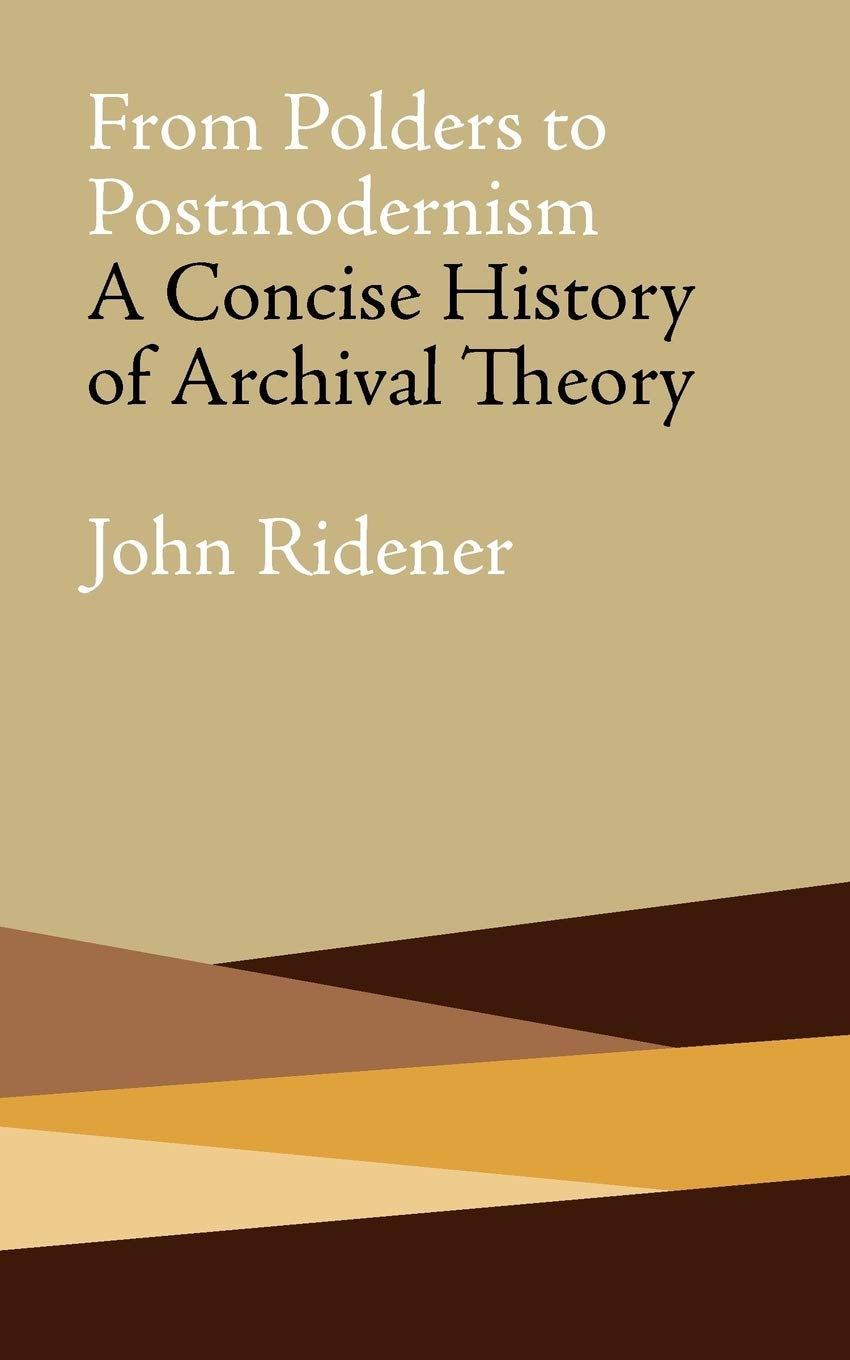
From Polders to Postmodernism: A Concise History of Archival Theory by John Ridener – Essential Reading for Archival Stu
Inclusive of all applicable taxes. FREE shipping on all orders.
Available Offers
- 🚚Free Delivery — Free shipping on all orders
- 💵Cash on Delivery — Pay when your order arrives
- ↩️15-Day Easy Returns — Hassle-free return policy
- 🔒Cash on Delivery — Pay safely when your order arrives
Check Delivery
Product Description
Introduction
In the vast and evolving world of archival science, few books manage to bridge the gap between dense theoretical discourse and accessible historical narrative as elegantly as John Ridener's From Polders to Postmodernism: A Concise History of Archival Theory. Published by the esteemed Litwin Books, this hardcover volume offers Indian students, scholars, and information professionals a rare opportunity to trace the intellectual journey of archival theory from its European origins to the complex, pluralistic frameworks of the postmodern era. Whether you are a library science student in Delhi, a history researcher in Kolkata, or a curator in Mumbai, this book provides an indispensable foundation for understanding how archives have been conceived, organized, and contested over more than a century.
Book Overview
From Polders to Postmodernism is not merely a chronological account; it is a thoughtful analysis of the key shifts in archival thinking. Ridener begins with the Dutch classic manual of the late 19th century—the so-called 'polder' model of recordkeeping—and moves through the influential contributions of British, German, French, and American archivists. The book then navigates the turbulent waters of the mid-20th century, examining the impact of World War II, the rise of national archives, and the emergence of new technologies. Finally, it arrives at the postmodern critique, where archival theory confronts questions of power, memory, and identity. This concise yet comprehensive work is ideal for those who want a clear, well-structured overview without getting lost in jargon.
Key Highlights
- Concise and accessible: Distills over 120 years of archival theory into a single, readable volume.
- Global perspective: Covers European, North American, and international developments, with relevance to Indian archival contexts.
- Critical approach: Engages with both canonical texts and postmodern challenges to traditional archival tenets.
- Well-researched: Draws on primary sources, including the writings of leading archivists and theorists.
- Pedagogical value: Includes clear chapter summaries and thematic organization, making it perfect for classroom use.
Inside the Book
The book is structured around four major periods in archival theory. The first section explores the 'classical' era, dominated by the Dutch manual of 1898 and the principle of provenance. The second section examines the mid-20th century 'modern' period, including the work of Sir Hilary Jenkinson and Theodore Schellenberg. The third section delves into the 'postmodern' turn, with thinkers like Terry Cook and Brien Brothman questioning objectivity and neutrality in archives. Each chapter is enriched with contextual background, biographical notes, and critical analysis, allowing readers to see how theory responds to social and political change. Ridener also includes a useful bibliography for further study.
Key Topics
- The Dutch manual and the principle of provenance
- The archival legacy of Sir Hilary Jenkinson
- Theodore Schellenberg and the American approach
- Archival theory in the age of digital records
- Postmodern critiques of archival neutrality
- Archives, memory, and social justice
- The role of the archivist as an active agent
Reader Benefits
This book offers Indian readers a clear lens through which to view the evolution of archival thought, which is often Eurocentric in its origins but universal in its implications. It helps library and information science students connect abstract theory to real-world archival practice, from managing government records to preserving community heritage. Researchers in history and cultural studies will find the postmodern sections particularly enlightening, as they challenge traditional notions of objective documentation. For practicing archivists in India, the book provides a historical grounding that can inform contemporary debates about digitization, access, and representation.
Learning Outcomes
- Understand the major schools of archival theory from the 19th to 21st centuries.
- Analyze how archival principles have been shaped by social, political, and technological changes.
- Critically evaluate the postmodern arguments that question the neutrality of archives.
- Apply theoretical concepts to practical archival challenges in Indian institutions.
- Develop a nuanced appreciation for the role of archives in constructing collective memory.
Who Should Read
This book is essential reading for students of library and information science, archival studies, and museum studies across Indian universities. It is also highly recommended for history scholars, heritage professionals, and anyone interested in the philosophy of recordkeeping. Archivists working in government, corporate, or community archives will find the historical context invaluable. Additionally, postgraduate researchers exploring themes of memory, power, and documentation will benefit from Ridener's clear exposition of complex ideas.
About the Author
John Ridener is a respected archival scholar and educator with extensive experience in teaching archival theory and practice. He has contributed to the field through both academic publications and professional service. His ability to synthesize complex theoretical developments into an engaging narrative has made From Polders to Postmodernism a widely used text in archival education programs around the world. Ridener's work reflects a deep commitment to making archival history accessible and relevant to contemporary practitioners.
About the Publisher
Litwin Books, based in the United States, is a specialized independent press dedicated to publishing works on library and information science, archival studies, and the history of documentation. Known for its rigorous editorial standards and thoughtful selection of titles, Litwin Books has become a trusted name among scholars and professionals. This hardcover edition is a testament to the publisher's commitment to producing durable, high-quality books that serve as lasting resources for the academic community.
Conclusion
From Polders to Postmodernism: A Concise History of Archival Theory is more than a textbook; it is a journey through the intellectual landscapes that have shaped how we preserve, organize, and interpret the records of human experience. For Indian readers, it offers a vital bridge between global archival traditions and local practices, encouraging critical reflection on the role of archives in a diverse and rapidly changing society. Whether you are beginning your studies or seeking to deepen your understanding, this book deserves a place on your shelf. Order your copy from Bookshops.in today and explore the fascinating story of archival theory.
Quick Summary
From Polders to Postmodernism: A Concise History of Archival Theory by John Ridener is a seminal work that traces the evolution of archival theory from its 19th-century origins to contemporary postmodern perspectives. The book is designed for students, researchers, and professionals in archival science, library science, and records management. Readers will gain a deep understanding of key archival concepts such as provenance, original order, appraisal, and description, and see how these have been shaped by cultural, technological, and philosophical shifts. The book also examines the impact of postmodernism on archival thought, encouraging critical reflection on traditional practices. By providing a clear chronological narrative, Ridener makes complex theoretical developments accessible. This hardcover edition from Litwin Books is a durable reference for academic and professional libraries. Buying from Bookshops.in ensures you receive an authentic copy with reliable delivery across India, supporting your journey into the rich history of archival theory.
Book Highlights
Book Specifications
| ISBN-13 | 9780980200454 |
| ISBN-10 | 0980200458 |
| Publisher | Litwin Books, LLC |
| Language | English |
| Dimensions | 12.7 x 1.22 x 20.32 cm |
| Weight | 1 kg 50 g |
| Country | United Kingdom |
| Category | Reference › Library & Information Science |
| Genre | Non-fiction, Academic |
| Original Language | English |
Frequently Asked Questions
What is 'From Polders to Postmodernism' about?
Who is the author of this book?
Is this book suitable for beginners in archival science?
Does the book cover postmodern archival theory?
What time period does the book cover?
Is this book available in hardcover?
Can Indian students use this book for archival courses?
Does the book include case studies?
How is the book structured?
What are the main themes covered?
Is this book part of a series?
What is the ISBN-13 of this book?
Where can I buy this book in India?
Readers Also Search For
Customers Also Bought
Related Products
View All![Buy Language in the Context of Use: Discourse and Cognitive Approaches to Language: 37 (Cognitive Linguistics Research [CLR], 37) — BookShops.in](/book-covers/language-in-the-context-of-use-english-andrea-tyler-or-yiyoung-kim-or-mari-takad-img-0.jpg)
Reference
Language in the Context of Use: Discourse and Cognitive Approaches to Language: 37 (Cognitive Linguistics Research [CLR], 37)
Reference
Elements Of Fractional Distillation
Reference
Oxford Handbook of the Septuagint by Law Salvesen – Biblical Studies
Reference
Retellings: The Bible in Literature, Music, Art and Film

Reference
Aviation English as a Global Lingua Franca (Elements in Applied Linguistics)
Reference