
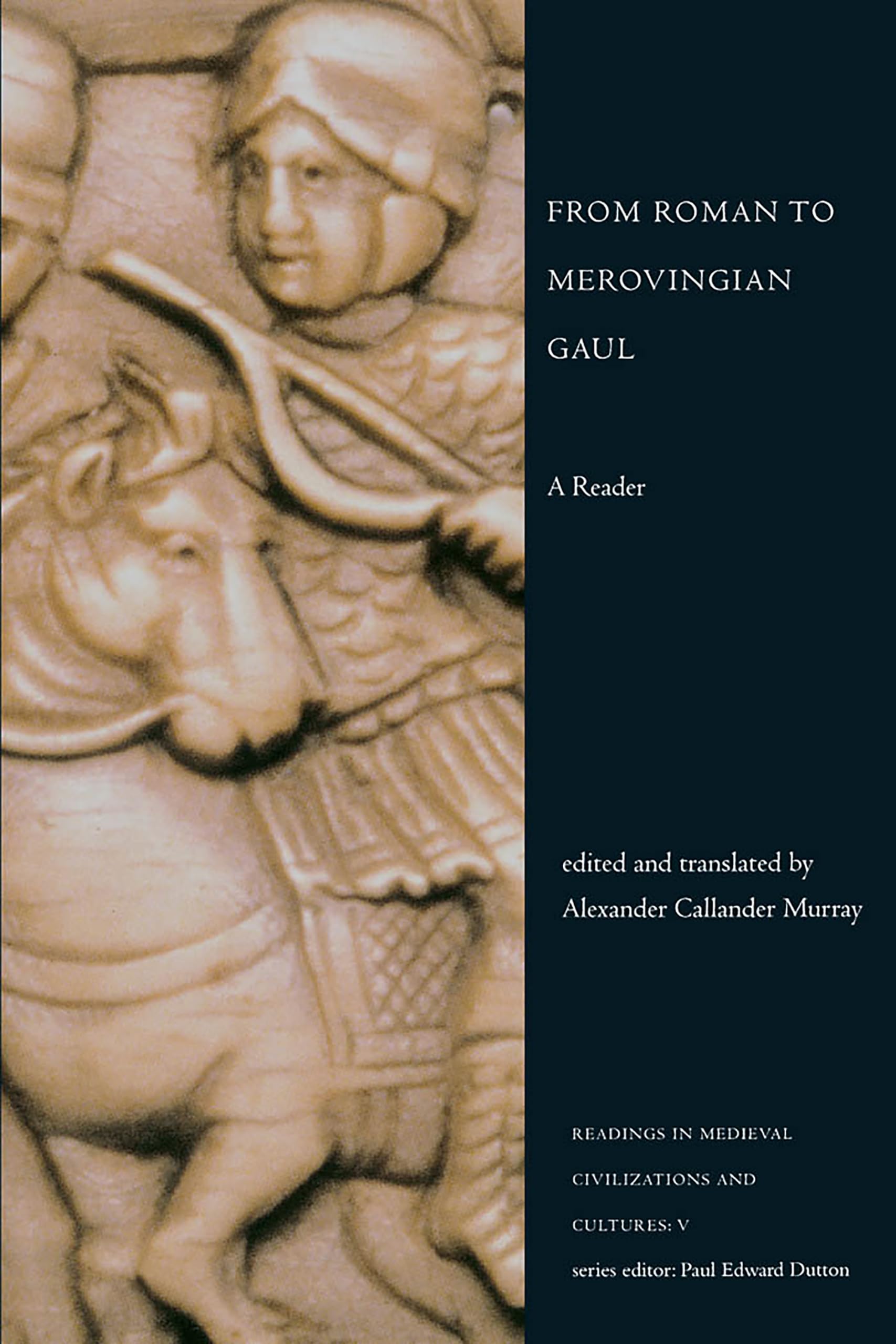
From Roman to Merovingian Gaul: A Reader by Alexander Callander Murray – Primary Sources for Late Antiquity & Early Medi
Inclusive of all applicable taxes. FREE shipping on all orders.
Available Offers
- 🚚Free Delivery — Free shipping on all orders
- 💵Cash on Delivery — Pay when your order arrives
- ↩️15-Day Easy Returns — Hassle-free return policy
- 🔒Cash on Delivery — Pay safely when your order arrives
Check Delivery
Product Description
Introduction
Step into the tumultuous world of late antiquity and early medieval Europe with From Roman to Merovingian Gaul: A Reader, a meticulously curated collection of primary sources that brings to life the transformation of Gaul from a Roman province into the heartland of the Merovingian kingdom. Edited by renowned historian Alexander Callander Murray, this hardcover volume offers students, scholars, and history enthusiasts an unfiltered window into the political, social, and religious upheavals that shaped the foundations of medieval Europe. Whether you are a university student diving into the early Middle Ages or a curious reader fascinated by the clash of empires and the rise of new kingdoms, this book is an indispensable companion.
Book Overview
This comprehensive reader spans the critical centuries from the late Roman Empire to the dawn of the Carolingian era, presenting a rich tapestry of firsthand accounts, legal codes, letters, hagiographies, and chronicles. Covering the period roughly from the third to the eighth century, it documents the gradual decline of Roman authority, the influx of Germanic peoples, and the emergence of a distinctly Gallic Christian culture under Merovingian rule. The book is designed to provide a balanced view, including voices from bishops, kings, peasants, and saints, making it a vital resource for understanding how daily life, religion, and politics intertwined in a time of profound change.
Key Highlights
- Authentic Primary Sources: Features rare and translated documents, including excerpts from Gregory of Tours, the Salic Law, and the lives of saints like Queen Balthild.
- Expert Editorial Guidance: Each section is introduced by Alexander Callander Murray, offering context and analysis that helps readers navigate complex historical terrain.
- Broad Chronological Range: Covers the transition from Roman governance to Merovingian rule, including the impact of Attila the Hun and the consolidation of Christian institutions.
- Focus on Daily Life: Includes vivid descriptions of social customs, legal disputes, and the intersection of faith with politics.
- Academic Excellence: Published by the University of Toronto Press, a trusted name in scholarly publishing.
Inside the Book
Open the pages of From Roman to Merovingian Gaul and you will find a carefully organized collection that balances narrative flow with thematic depth. The book is divided into chronological and thematic sections, each prefaced by a brief introduction that situates the sources within their historical context. You will encounter the dramatic meeting between Attila the Hun and Pope Leo I, the political intrigues of Merovingian queens, and the gritty realities of rural life as recorded by churchmen. Legal texts like the Lex Salica reveal the codes that governed property, marriage, and violence, while hagiographies offer glimpses into the spiritual ideals that shaped early medieval society. The volume also includes maps, genealogies, and a glossary to aid comprehension.
Key Topics
- Late Roman Gaul: The decline of imperial power, barbarian invasions, and the survival of Roman institutions.
- Christianization: The spread of monasticism, the role of bishops, and the cult of saints.
- Merovingian Kingship: Dynastic struggles, royal patronage, and the fusion of Germanic and Roman traditions.
- Social Structures: Slavery, peasant life, and the emergence of a new aristocracy.
- Law and Justice: The transition from Roman law to Germanic customary codes.
- Gender and Power: The influence of royal women like Queen Balthild and Radegund.
- Economic Life: Trade, agriculture, and the decline of urban centers.
Reader Benefits
This reader is designed to make complex historical material accessible and engaging. You will benefit from direct engagement with the words of people who lived through these transformative centuries, gaining a deeper appreciation for how ordinary and extraordinary events shaped the course of history. The book’s structure allows you to explore specific themes or follow the chronological narrative, making it suitable for both systematic study and casual browsing. The inclusion of explanatory notes and a bibliography helps you pursue further research with confidence. For Indian students, understanding this period is crucial for grasping the broader patterns of global history, including the spread of Christianity, the migration of peoples, and the roots of European civilization.
Learning Outcomes
- Analyze Primary Sources: Develop skills in interpreting historical documents, from chronicles to legal codes.
- Understand Historical Transitions: Grasp the complex factors that led from Roman rule to medieval kingdoms.
- Identify Cultural Synthesis: Recognize how Germanic, Roman, and Christian elements merged to create a new society.
- Evaluate Political Change: Assess the role of violence, diplomacy, and religion in the formation of early states.
- Contextualize Religious History: Explore the institutional and spiritual dimensions of early Christianity in Gaul.
Who Should Read
This book is ideal for undergraduate and postgraduate students of history, especially those focusing on late antiquity, medieval studies, or classical studies. It is also an excellent resource for teachers seeking primary source material for classroom discussions. General readers with a keen interest in the fall of Rome, the rise of the Franks, or the early medieval Church will find it equally rewarding. The book assumes no prior expertise, making it accessible to anyone curious about this pivotal era. Indian readers, in particular, will appreciate the parallels between the cultural syncretism in Gaul and the diverse historical traditions of the Indian subcontinent.
About the Author
Alexander Callander Murray is a distinguished historian and professor emeritus at the University of Toronto. His research specializes in the social and political history of late antique and early medieval Europe, with a particular focus on Gaul and the Merovingian period. He has authored and edited numerous works, including Gregory of Tours: The Merovingians and After Rome's Fall. His expertise in deciphering and contextualizing primary sources has made him a leading figure in the field, and this reader reflects his commitment to making original texts accessible to a wide audience.
About the Publisher
University of Toronto Press is one of the oldest and most respected academic publishers in North America. Known for its rigorous editorial standards and commitment to scholarly excellence, the press has been a vital conduit for groundbreaking research in the humanities and social sciences since 1901. This volume is part of their acclaimed 'Readings in Medieval Civilizations and Cultures' series, which offers students and educators carefully selected primary sources with expert commentary.
Conclusion
From Roman to Merovingian Gaul: A Reader is more than a collection of documents—it is a time machine that transports you to an era of dramatic transformation. By reading the actual words of bishops, kings, and commoners, you will witness history as it was lived, not as it is summarized. Whether you are preparing for an exam, writing a thesis, or simply exploring the roots of medieval Europe, this hardcover volume from the University of Toronto Press is a treasure trove of insight. Order your copy today from Bookshops.in and embark on a journey through the crucible of early medieval civilization.
Quick Summary
From Roman to Merovingian Gaul: A Reader is a meticulously edited collection of primary sources that traces the transformation of Gaul from a Roman province into the heartland of the Merovingian kingdom. Compiled by Alexander Callander Murray, a distinguished historian at the University of Toronto, this volume brings together chronicles, hagiographies, law codes, letters, and conciliar decrees that illuminate the political, religious, and social changes of late antiquity and the early Middle Ages. Readers encounter dramatic narratives such as Attila the Hun's encounter with Pope Leo I, the remarkable life of Queen Balthild, and Gregory of Tours' vivid accounts of daily life intertwined with politics. The book is designed for advanced undergraduate and postgraduate students, as well as scholars seeking a convenient and authoritative sourcebook. Each section is prefaced with contextual introductions, making complex historical transitions accessible. By presenting voices from bishops, kings, saints, and ordinary people, the reader offers a nuanced understanding of how Roman institutions, Christian faith, and barbarian customs merged to shape early medieval Europe. Purchasing this hardcover from Bookshops.in ensures Indian readers receive a genuine imported edition with prompt delivery, ideal for academic courses, research, or personal enrichment.
Book Highlights
Book Specifications
| ISBN-13 | 9781442600959 |
| ISBN-10 | 1442600950 |
| Publisher | Univ of Toronto Pr |
| Language | English |
| Dimensions | 15.24 x 3.78 x 22.86 cm |
| Weight | 907 g |
| Category | Region & Countries › Europe |
| Genre | History |
| Original Language | English |
Frequently Asked Questions
What time period does this book cover?
Is this book suitable for undergraduate students?
Does the book include original Latin texts?
Who edited this reader?
What types of sources are included?
Is there a focus on religious history?
Does it include maps or illustrations?
How is this book different from other readers?
Can I use this for a course on the fall of Rome?
Does it cover the Visigoths and Burgundians?
Is there a glossary or index?
What is the binding?
Why buy from Bookshops.in?
Does the book include women's perspectives?
Readers Also Search For
Related Products
View All
History
The Information Revolution: Transforming the World Through Technology (World History)
History
Human Nature and the French Revolution: From the Enlightenment to the Napoleonic Code: 3 (Polygons: Cultural Diversities and Intersections, 3)
History
The Unmaking of Home in Contemporary Art (Cultural Spaces)

History
Handbook to Life in Medieval and Early Modern Japan | by William E. Deal | Oxford University Press | by William E. Deal | Oxford University Press | by William E. Deal | Oxford University Press | by William E. Deal | Oxford University Press | by William E. Deal | Oxford University Press | by William E. Deal | Oxford University Press | by William E. Deal | Oxford University Press | by William E. Deal | Oxford University Press | by William E. Deal | Oxford University Press | by William E. Deal | Ox

History
The Narrators of Barbarian History (A.D. 550-800) | by Walter Goffart | University of Notre Dame Press | by Walter Goffart | University of Notre Dame Press | by Walter Goffart | University of Notre Dame Press | by Walter Goffart | University of Notre Dame Press | by Walter Goffart | University of Notre Dame Press | by Walter Goffart | University of Notre Dame Press | by Walter Goffart | University of Notre Dame Press | by Walter Goffart | University of Notre Dame Press | by Walter Goffart | Univ
History