
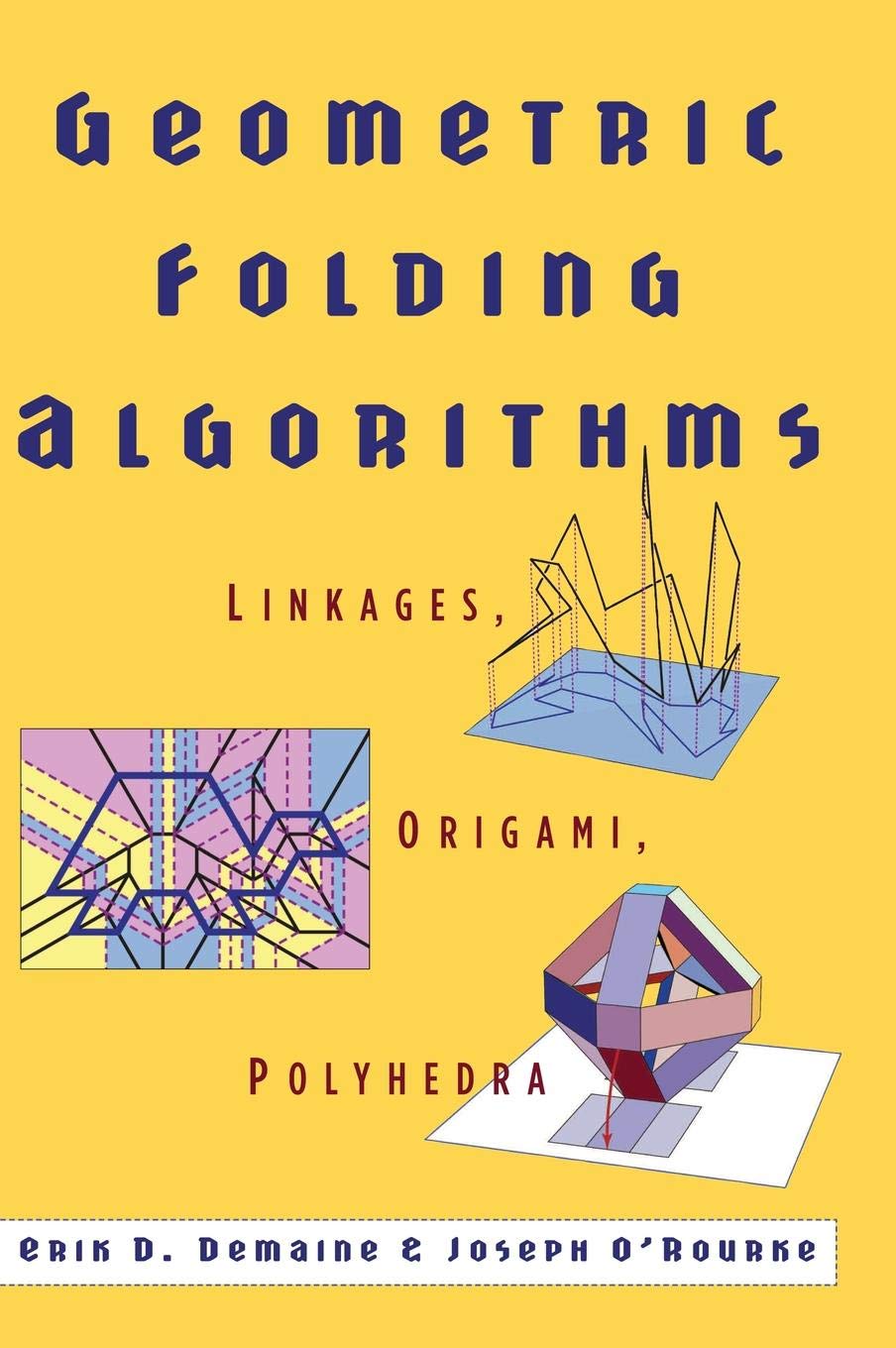
Geometric Folding Algorithms: Linkages, Origami, Polyhedra by Erik D. Demaine – A Comprehensive Computer Science Textboo
Inclusive of all applicable taxes. FREE shipping on all orders.
Available Offers
- 🚚Free Delivery — Free shipping on all orders
- 💵Cash on Delivery — Pay when your order arrives
- ↩️15-Day Easy Returns — Hassle-free return policy
- 🔒Cash on Delivery — Pay safely when your order arrives
Check Delivery
Product Description
Introduction
Geometric folding is a fascinating intersection of mathematics, computer science, and engineering. For Indian students and researchers who have grown up folding paper into intricate shapes or marveling at the mechanics of collapsible structures, this book offers a rigorous yet accessible journey into the algorithms that govern such transformations. Geometric Folding Algorithms: Linkages, Origami, Polyhedra by Erik D. Demaine is a landmark text that bridges theoretical geometry with practical computational methods, making it an essential addition to any serious programmer's or mathematician's library in India.
Book Overview
Published by Cambridge University Press, this hardcover volume is a comprehensive exploration of how geometric objects—from simple linkages to complex polyhedra—can be folded, unfolded, and reconfigured. Erik D. Demaine, a leading figure in computational geometry, distills decades of research into a single, coherent narrative. The book covers everything from the mathematics behind origami design to the algorithms that power robotic arms and deployable space structures. It is written for advanced undergraduate and graduate students, as well as professionals in computer science, engineering, and mathematics.
Key Highlights
- Comprehensive Coverage: Unites three major domains—linkages, origami, and polyhedra—under a single algorithmic framework.
- Original Research: Includes many results from Demaine's own pioneering work, presented in an accessible manner.
- Practical Relevance: Algorithms are tied to real-world applications in robotics, manufacturing, and biomedical devices.
- Rigorous Yet Readable: Balances formal proofs with intuitive explanations, suitable for Indian students accustomed to rigorous academic training.
- High-Quality Production: Hardbound edition with clear diagrams and mathematical notation, ideal for long-term reference.
Inside the Book
The book is structured into three main parts, each delving into a distinct area of geometric folding. The first part focuses on linkages—chains of rigid bars connected by joints—and explores questions of reconfiguration, reachability, and universality. The second part dives into origami, from flat-foldability to curved creases, and presents algorithms for designing crease patterns. The third part examines polyhedra, including unfolding, refolding, and the famous problem of folding a net into a convex shape. Throughout, the text is enriched with exercises, open problems, and references to current research.
Key Topics
- Reconfiguration of linkages and robot arms
- Flat-foldability and crease pattern design
- Origami axioms and computational complexity
- Unfolding polyhedra into nets
- Folding and cutting problems
- Locked chains and universal joints
- Algorithmic geometry of paper folding
- Applications in protein folding and nanotechnology
Reader Benefits
Indian readers will find this book particularly valuable for bridging the gap between theoretical computer science and hands-on problem solving. It sharpens algorithmic thinking and geometric intuition, skills highly prized in competitive programming and research. The book also serves as a gateway to advanced topics like computational topology and discrete geometry. For educators, it provides a rich source of material for courses on geometric algorithms or computational geometry, common in Indian IITs and NITs.
Learning Outcomes
By working through this book, readers will be able to: design and analyze algorithms for folding and reconfiguring geometric objects; understand the theoretical limits of what can be folded; apply these concepts to real-world problems in engineering and computer science; and contribute to ongoing research in this vibrant field. The book's problem sets encourage independent exploration, making it ideal for self-study or classroom use.
Who Should Read
This book is perfect for computer science students specializing in algorithms or computational geometry, mathematics students interested in geometry and topology, and engineers working on robotics, manufacturing, or structural design. It is also a valuable resource for hobbyists and origami enthusiasts who want to understand the mathematics behind the art. Given the growing interest in STEM education in India, this book can serve as an advanced text for undergraduate electives or graduate seminars.
About the Author
Erik D. Demaine is a professor of computer science at the Massachusetts Institute of Technology (MIT) and a leading figure in computational geometry and origami mathematics. He has published extensively on folding algorithms, data structures, and recreational mathematics. His work has been recognized with numerous awards, including a MacArthur Fellowship. Demaine's ability to make complex ideas accessible makes this book a joy to read for students and professionals alike.
About the Publisher
Cambridge University Press is one of the world's oldest and most respected academic publishers, known for producing high-quality textbooks and reference works. This hardcover edition reflects their commitment to excellence, with durable binding and clear typesetting that will withstand years of use. For Indian readers, Cambridge University Press titles are widely available through Bookshops.in, ensuring fast and reliable delivery across the country.
Conclusion
Geometric Folding Algorithms: Linkages, Origami, Polyhedra is more than a textbook—it is an invitation to explore the hidden geometry of everyday folding. Whether you are a student at an Indian university preparing for a career in computer science, a researcher seeking new algorithmic insights, or a curious mind fascinated by the mathematics of paper, this book will challenge and inspire you. Add this definitive guide to your collection today and unlock the algorithms that shape our world.
Quick Summary
Geometric Folding Algorithms: Linkages, Origami, Polyhedra by Erik D. Demaine is a definitive textbook that delves into the algorithmic and mathematical principles behind folding structures. Published by Cambridge University Press, this hardcover volume is ideal for advanced computer science students, researchers, and professionals interested in computational geometry. Readers will learn about the design and analysis of linkages, origami crease patterns, and polyhedral nets, along with applications in robotics, architecture, and material science. The book combines theoretical rigor with practical algorithms, making it a valuable resource for Indian students pursuing higher education in computer science and engineering. By purchasing from Bookshops.in, you receive a genuine, high-quality print edition that supports your academic and research journey.
Book Highlights
Book Specifications
| ISBN-13 | 9780521857574 |
| ISBN-10 | 0521857570 |
| Publisher | CAMBRIDGE UNIVERSITY PRESS |
| Language | English |
| Dimensions | 19.05 x 2.54 x 26.04 cm |
| Weight | 1 kg 380 g |
| Category | Mathematics › Geometry |
| Genre | Non-Fiction |
| Reading Age | Adult |
| Original Language | English |
Frequently Asked Questions
What is Geometric Folding Algorithms about?
Who is the author of this book?
Is this book suitable for beginners?
What topics are covered in the book?
Does the book include practical applications?
Is this book used in Indian universities?
What is the ISBN of this book?
Is this a hardcover or paperback?
Can I use this book for self-study?
Does the book contain exercises?
What is the price of this book in India?
Is this book available at Bookshops.in?
What makes this book unique?
Readers Also Search For
Customers Also Bought
Mathematics
Stereotype Spaces and Algebras: 73 (De Gruyter Expositions in Mathematics, 73)
Mathematics
Semigroups in Algebra, Geometry and Analysis: 20 (De Gruyter Expositions in Mathematics, 20)
Mathematics
Geometry from the Pacific Rim: Proceedings of the Pacific Rim Geometry Conference held at National University of Singapore, Republic of Singapore, ... 1994 (De Gruyter Proceedings in Mathematics)
Mathematics
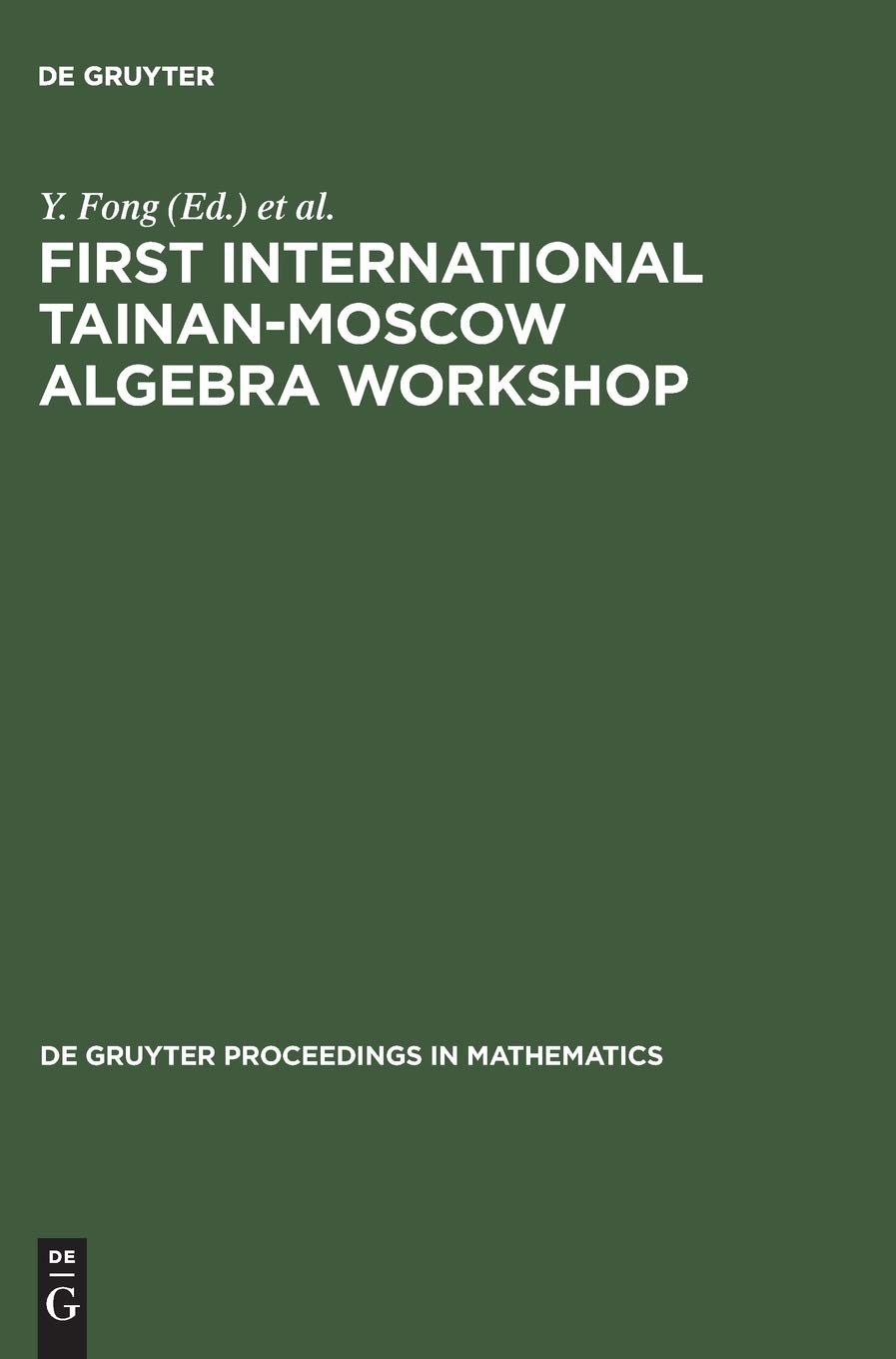
First International Tainan-Moscow Algebra Workshop: Proceedings of the International Conference held at National Cheng Kung University Tainan, Taiwan, ... 1994 (De Gruyter Proceedings in Mathematics)

Mathematics
Differential Geometry - Proceedings of the VIII International Colloquium (English, Jesus A. Alvarez Lopez | Eduardo Garcia-Rio)

Mathematics
Mathematical Theory of Optimal Processes (Classics of Soviet Mathematics)
Related Products
View AllMathematics
Stereotype Spaces and Algebras: 73 (De Gruyter Expositions in Mathematics, 73)
Mathematics
Semigroups in Algebra, Geometry and Analysis: 20 (De Gruyter Expositions in Mathematics, 20)
Mathematics
Geometry from the Pacific Rim: Proceedings of the Pacific Rim Geometry Conference held at National University of Singapore, Republic of Singapore, ... 1994 (De Gruyter Proceedings in Mathematics)
Mathematics
First International Tainan-Moscow Algebra Workshop: Proceedings of the International Conference held at National Cheng Kung University Tainan, Taiwan, ... 1994 (De Gruyter Proceedings in Mathematics)
Mathematics
Differential Geometry - Proceedings of the VIII International Colloquium (English, Jesus A. Alvarez Lopez | Eduardo Garcia-Rio)
Mathematics