
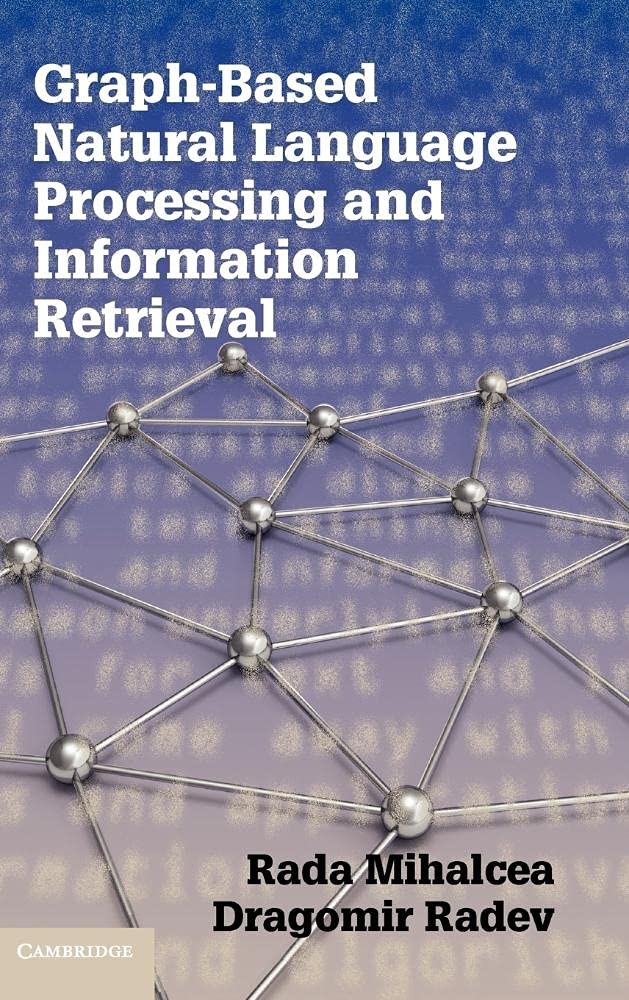
Graph-based Natural Language Processing and Information Retrieval by Rada Mihalcea – A Cambridge University Press Guide
Inclusive of all applicable taxes. FREE shipping on all orders.
Available Offers
- 🚚Free Delivery — Free shipping on all orders
- 💵Cash on Delivery — Pay when your order arrives
- ↩️15-Day Easy Returns — Hassle-free return policy
- 🔒Cash on Delivery — Pay safely when your order arrives
Check Delivery
Product Description
Introduction
In the rapidly evolving landscape of artificial intelligence and machine learning, the intersection of graph theory with natural language processing and information retrieval has emerged as a powerful paradigm. Rada Mihalcea’s Graph-based Natural Language Processing and Information Retrieval offers a comprehensive guide to understanding how graph-based algorithms can solve complex text-related tasks. This hardbound edition from Cambridge University Press is an essential resource for Indian students, researchers, and professionals seeking to deepen their knowledge of AI-driven language technologies.
Book Overview
This book bridges the gap between two traditionally separate fields—graph theory and text processing—by demonstrating their deep interconnectivity. It covers a wide array of applications, from lexical semantics and text summarization to ontology construction and information retrieval, all unified under the common theme of graph-based methods. The author presents both foundational concepts and advanced techniques, making it suitable for readers at various levels of expertise.
Key Highlights
- Unified Framework: Integrates graph theory with NLP and IR, offering a cohesive perspective on problem-solving.
- Practical Algorithms: Provides detailed explanations of graph-based algorithms for text classification, clustering, and ranking.
- Real-World Applications: Covers text mining, information extraction, and document summarization with actionable insights.
- Research-Driven Content: Draws from cutting-edge research, making it ideal for academic and industrial R&D.
Inside the Book
The book is structured to guide readers from basic graph concepts to sophisticated NLP and IR applications. Early chapters introduce graph representations, random walks, and spectral methods, while later chapters delve into specific tasks like word sense disambiguation, text clustering, and query-based information retrieval. Each chapter includes illustrative examples, pseudocode, and references to further study.
Key Topics
- Graph-based lexical semantics and word sense disambiguation
- Text summarization using centrality and connectivity measures
- Ontology construction and semantic network analysis
- Information retrieval models based on graph ranking algorithms
- Text mining and classification with graph kernels
- Graph-based approaches to question answering and dialogue systems
Reader Benefits
By studying this book, readers will gain a solid foundation in applying graph-theoretical methods to text and information processing. They will learn to design efficient algorithms for tasks like document clustering, entity extraction, and knowledge graph construction. The book also equips readers with the skills to evaluate and compare different graph-based techniques, enabling them to choose the best approach for their specific problems.
Learning Outcomes
- Understand the core principles of graph theory as applied to text data
- Implement graph-based algorithms for NLP tasks such as parsing and semantic analysis
- Develop information retrieval systems that leverage graph structures for improved accuracy
- Analyse and interpret results from graph-based models in real-world scenarios
- Critically evaluate research literature in graph-based NLP and IR
Who Should Read
This book is ideal for graduate students in computer science, artificial intelligence, and computational linguistics. It is also highly valuable for data scientists, machine learning engineers, and NLP practitioners working in Indian tech companies, research labs, and academia. Professionals involved in search engine development, text analytics, and knowledge management will find the content directly applicable to their work.
About the Author
Rada Mihalcea is a leading researcher in natural language processing and a professor at the University of Michigan. She has published extensively on graph-based methods for text processing, lexical semantics, and multilingual NLP. Her work has been recognized with multiple awards, and she serves on editorial boards of top-tier journals in the field.
About the Publisher
Cambridge University Press is a world-renowned academic publisher with a long history of producing authoritative works in science, technology, and humanities. This edition upholds their commitment to high-quality scholarship, with rigorous editing and durable hardcover binding suitable for long-term reference.
Conclusion
Graph-based Natural Language Processing and Information Retrieval is an indispensable addition to any AI or ML library. It not only clarifies the theoretical underpinnings of graph-based approaches but also provides practical tools for building smarter language systems. For Indian readers passionate about advancing AI, this book is a gateway to mastering techniques that power modern search engines, chatbots, and text analytics platforms.
Quick Summary
Graph-based Natural Language Processing and Information Retrieval by Rada Mihalcea is a seminal work that unifies graph theory with natural language processing and information retrieval. Published by Cambridge University Press, this book is ideal for Indian students and researchers in AI and machine learning who want to explore how graph algorithms can solve complex language tasks. Readers will learn about graph-based lexical semantics, text summarization, text mining, ontology construction, text classification, and information retrieval, all through a coherent graph-theoretical lens. The book provides both theoretical foundations and practical implementations, making it suitable for postgraduate courses and self-study. By choosing Bookshops.in, you get a genuine physical copy delivered to your doorstep, ensuring you have a reliable resource for your studies or research in the rapidly evolving field of language technology.
Book Highlights
Book Specifications
| ISBN-13 | 9780521896139 |
| ISBN-10 | 0521896134 |
| Publisher | Cambridge University Press |
| Language | English |
| Dimensions | 15.88 x 1.27 x 23.5 cm |
| Weight | 450 g |
| Country | India |
| Category | Computers & Internet › Computer Science |
| Genre | Non-fiction |
| Original Language | English |
Frequently Asked Questions
What is the main focus of this book?
Who is the author of this book?
Is this book suitable for beginners in NLP?
Does the book include practical examples?
What are the key topics covered?
Is this book used in Indian universities?
How is this book different from other NLP books?
Does the book cover graph-based sentiment analysis?
What is the ISBN of this book?
Is the book available in hardcover?
Can I use this book for self-study?
What is the price of this book on Bookshops.in?
Does the book include graph algorithms for question answering?
Readers Also Search For
Customers Also Bought
Computer Science
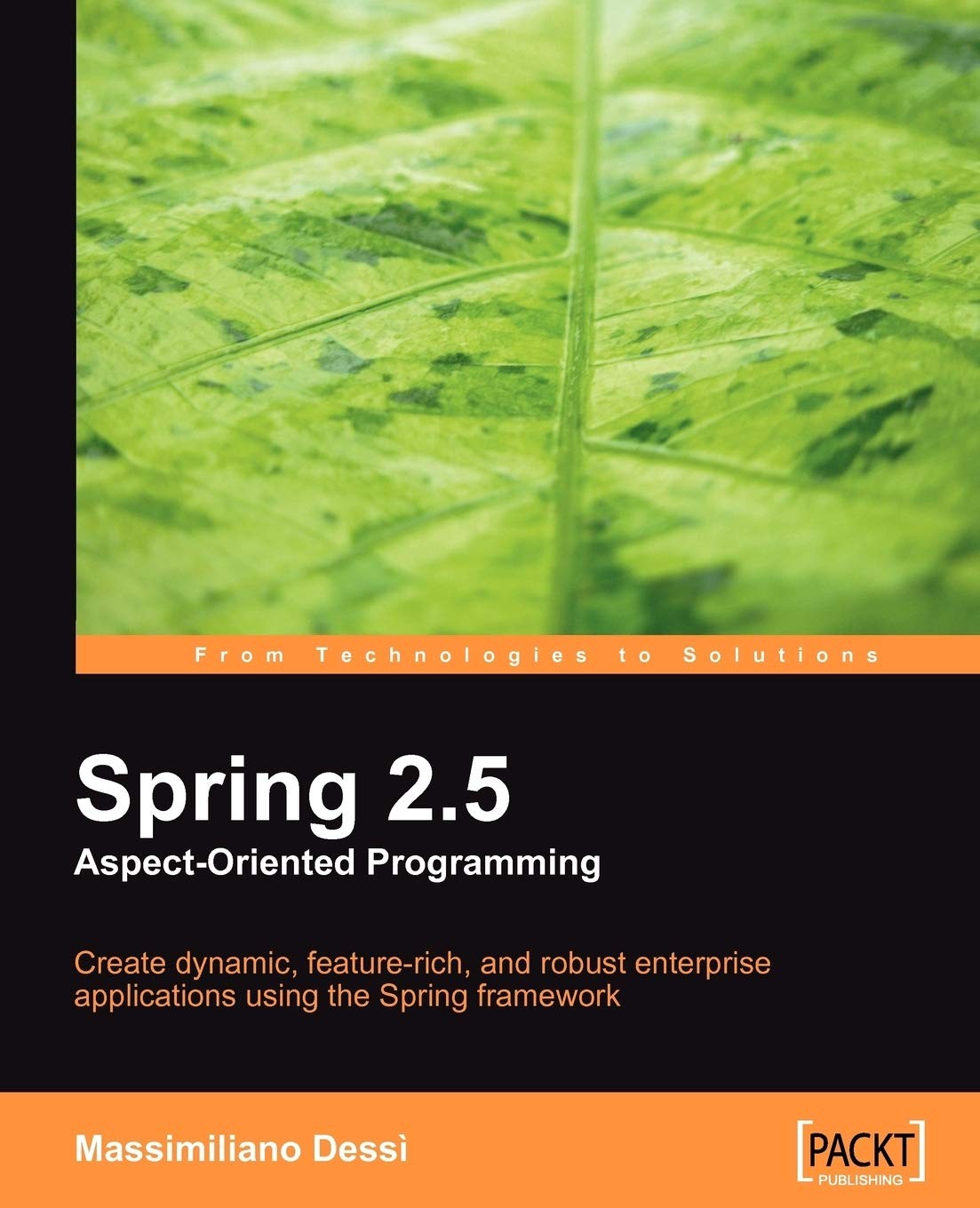
Spring 2.5 Aspect Oriented Programming (English, Massimiliano Dess� | Massimiliano Dessi)

Computer Science
Asterisk 1.4 - the Professional's Guide (English, Colman Carpenter | David Duffett | Nik Middleton)
Computer Science
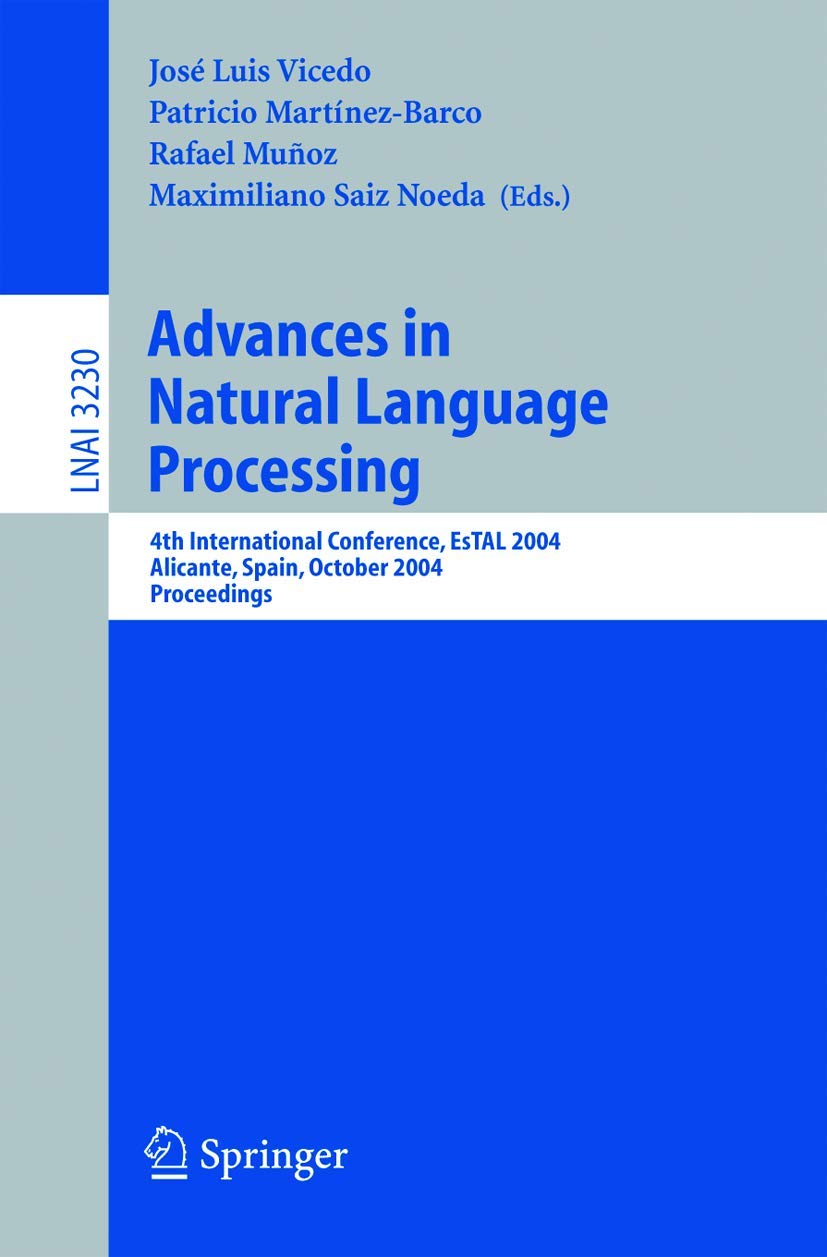
Advances In Natural Language Processing: 4th International Conference, Estal 2004, Alicante, Spain, October 20-22, 2004. Proceedings: 3230 (Lecture Notes in Computer Science)
Computer Science
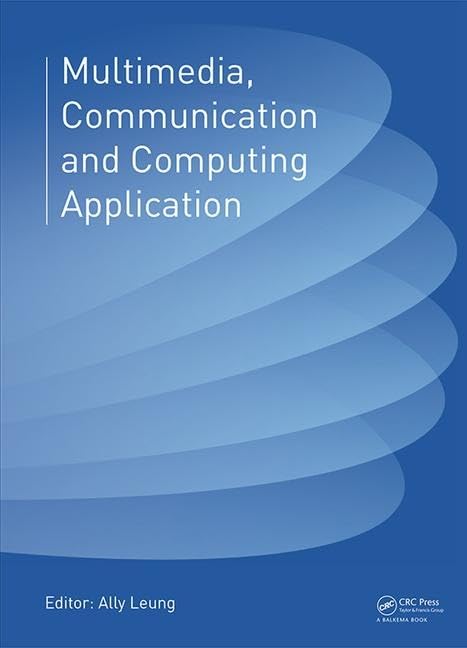
Multimedia, Communication and Computing Application: Proceedings of the 2014 International Conference on Multimedia, Communication and Computing ... 2014), Xiamen, China, October 16-17, 2014
Computer Science
Cases on Database Technologies and Applications (Cases on Information Technology Series)
Computer Science
ASP.Net 3.5 Social Networking (English, Andrew Siemer)
Related Products
View AllComputer Science
Spring 2.5 Aspect Oriented Programming (English, Massimiliano Dess� | Massimiliano Dessi)
Computer Science
Asterisk 1.4 - the Professional's Guide (English, Colman Carpenter | David Duffett | Nik Middleton)
Computer Science
Advances In Natural Language Processing: 4th International Conference, Estal 2004, Alicante, Spain, October 20-22, 2004. Proceedings: 3230 (Lecture Notes in Computer Science)
Computer Science
Multimedia, Communication and Computing Application: Proceedings of the 2014 International Conference on Multimedia, Communication and Computing ... 2014), Xiamen, China, October 16-17, 2014
Computer Science
Cases on Database Technologies and Applications (Cases on Information Technology Series)
Computer Science