
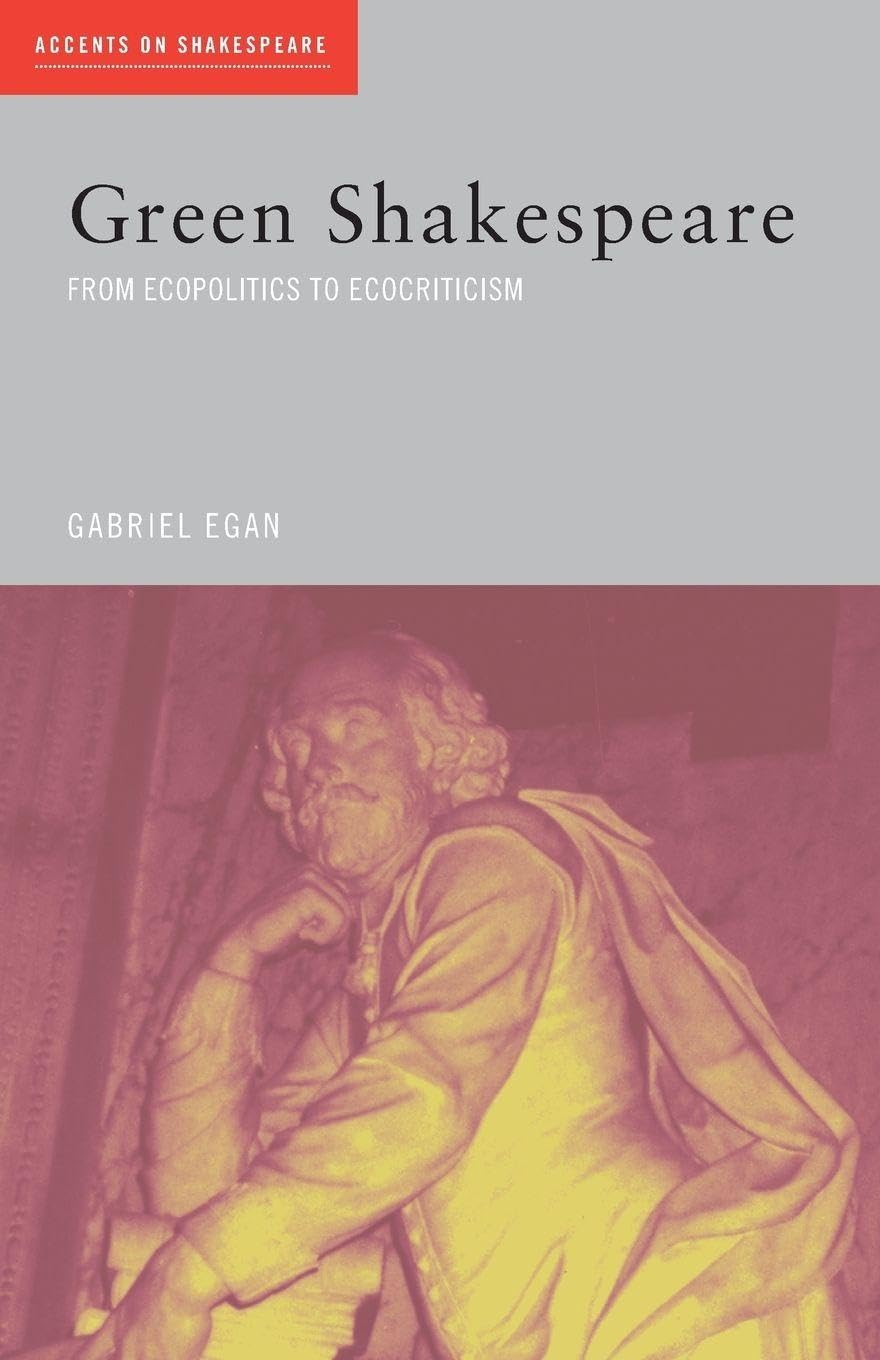
Green Shakespeare: From Ecopolitics to Ecocriticism by Gabriel Egan – A Deep Dive into Environmental Themes in Shakespea
Inclusive of all applicable taxes. FREE shipping on all orders.
Available Offers
- 🚚Free Delivery — Free shipping on all orders
- 💵Cash on Delivery — Pay when your order arrives
- ↩️15-Day Easy Returns — Hassle-free return policy
- 🔒Cash on Delivery — Pay safely when your order arrives
Check Delivery
Product Description
Introduction
In an age where climate change, deforestation, and ecological crises dominate global discourse, the works of William Shakespeare offer surprising insights into humanity's relationship with the natural world. Green Shakespeare: From Ecopolitics to Ecocriticism by Gabriel Egan is a groundbreaking study that bridges the gap between Renaissance literature and modern environmental thought. This hardcover edition, published by Routledge, invites Indian readers, students, and literary enthusiasts to explore how Shakespeare's plays and poems engage with ecological themes, from the politics of land use to the ethics of animal life. Egan's work is not merely a scholarly exercise but a vital conversation about how literature can shape our understanding of sustainability, justice, and the interconnectedness of all living things. Whether you are a student of English literature, an environmental activist, or a curious reader, this book promises to transform the way you read Shakespeare—and the world around you.
Book Overview
Green Shakespeare is a seminal text in the field of ecocriticism, a literary approach that examines how literature represents the environment and our relationship to it. Gabriel Egan, a leading scholar in Renaissance studies, argues that Shakespeare's works are rich with ecological awareness, often anticipating modern debates about nature, power, and ethics. The book moves from ecopolitics—the political dimensions of environmental issues—to ecocriticism, a more theoretical framework for analyzing texts. Egan examines plays such as King Lear, The Tempest, As You Like It, and Hamlet, showing how they grapple with questions of land ownership, animal rights, and the human place in the natural order. This Routledge hardcover is an essential resource for anyone seeking to understand how literature can inform our ecological consciousness, offering a fresh perspective on Shakespeare that is both historically grounded and urgently contemporary.
Key Highlights
- Pioneering Ecocritical Approach: One of the first comprehensive studies to apply ecological theory to Shakespeare's entire canon, blending literary analysis with environmental philosophy.
- Political and Historical Context: Explores how early modern English attitudes toward land, agriculture, and animal life shaped Shakespeare's writing, linking them to today's ecological crises.
- Detailed Play Analyses: In-depth readings of major works, including The Tempest (colonialism and nature), King Lear (the human-animal boundary), and As You Like It (the pastoral ideal).
- Accessible Scholarship: Written in clear, engaging prose that avoids unnecessary jargon, making it suitable for both academic and general readers.
- Global Relevance: Connects Shakespeare's insights to contemporary Indian environmental issues, such as deforestation, water scarcity, and the ethics of development.
Story Themes
The book unpacks several interconnected themes that run through Shakespeare's works and resonate with modern ecological thought. Nature as a Political Arena examines how forests, gardens, and islands in Shakespeare are sites of power struggles, reflecting real-world conflicts over land and resources. The Human-Animal Divide probes Shakespeare's frequent blurring of boundaries between humans and animals, challenging anthropocentric worldviews and raising questions about animal rights. Ecology and Identity explores how characters like Prospero and Lear define themselves through their relationship to the natural world, revealing the psychological and spiritual dimensions of environmental connection. Utopia and Dystopia considers how Shakespeare imagines ideal and degraded environments, from the green world of the comedies to the barren heaths of the tragedies. Finally, Climate and Fate links Shakespeare's use of storms, seasons, and celestial bodies to broader discussions about climate change and human responsibility. These themes are not merely academic; they speak directly to the challenges facing India and the world today, from the loss of biodiversity to the impacts of industrialization.
Reader Benefits
- Deepen Literary Appreciation: Gain a new understanding of Shakespeare's plays and poems by seeing them through an ecological lens, revealing layers of meaning you may have missed.
- Understand Ecocriticism: Learn the key concepts of this important literary theory, from ecopolitics to deep ecology, in a clear and engaging manner.
- Connect Literature to Life: See how Shakespeare's insights about nature, power, and ethics apply to contemporary environmental issues, making literature relevant to your daily life.
- Enhance Academic Performance: For Indian students of English literature, this book provides a unique framework for essays, exams, and research projects, setting you apart in your studies.
- Expand Your Worldview: Develop a more holistic understanding of the relationship between culture and nature, encouraging a more sustainable and compassionate way of living.
Who Should Read
This book is ideal for a wide range of readers. Students of English literature at Indian universities—whether at the undergraduate, postgraduate, or research level—will find it an invaluable resource for courses on Shakespeare, literary theory, or environmental humanities. Teachers and professors can use it to enrich their curriculum and introduce students to ecocritical approaches. Environmental activists and thinkers interested in the cultural dimensions of ecology will discover new perspectives on how literature shapes our relationship with the planet. General readers who love Shakespeare and care about the environment will be fascinated by the connections Egan draws between the Bard's world and our own. Even if you have no prior background in literary theory, this book is written in an accessible style that welcomes all curious minds. For Indian readers, the book's focus on issues like land rights, colonialism, and rural life offers a particularly resonant lens through which to view our own environmental challenges.
About the Author
Gabriel Egan is a distinguished scholar of Renaissance literature and a professor at De Montfort University, Leicester, UK. He has authored numerous books and articles on Shakespeare, including Shakespeare and Marx and The Struggle for Shakespeare's Text. Egan is known for his ability to combine rigorous textual analysis with contemporary political and ecological concerns, making his work both intellectually stimulating and socially relevant. His research spans from the material conditions of early modern theatre to the philosophical implications of Shakespeare's language. With Green Shakespeare, Egan has established himself as a leading voice in ecocriticism, influencing scholars and students around the world. His writing is characterized by clarity, passion, and a deep commitment to showing how literature can help us address the most pressing issues of our time.
About the Publisher
Routledge is a premier academic publisher with a global reputation for excellence in the humanities and social sciences. Part of the Taylor & Francis Group, Routledge has been publishing scholarly works for over a century, including landmark texts in literary studies, philosophy, and environmental thought. Their Accents on Shakespeare series, to which this book belongs, is renowned for bringing innovative and accessible scholarship to students and researchers. Routledge's commitment to high-quality production is evident in this hardcover edition, which features durable binding and clear typography, ensuring it will be a lasting addition to your library. For Indian readers, Routledge books are widely available through Bookshops.in and are trusted by universities across the country for their academic rigor and intellectual depth.
Conclusion
Green Shakespeare: From Ecopolitics to Ecocriticism is more than a book—it is an invitation to rethink the relationship between literature and the living world. Gabriel Egan's insightful analysis reveals that Shakespeare, often seen as a timeless genius, was also deeply engaged with the ecological questions of his own time, questions that have only grown more urgent in ours. For Indian readers, this book offers a unique opportunity to connect the richness of English literature with the environmental realities of our subcontinent, from the forests of the Western Ghats to the rivers of the plains. Whether you are a student, a teacher, or a lifelong learner, this Routledge hardcover will challenge, inspire, and transform your understanding of both Shakespeare and the natural world. Order your copy today from Bookshops.in and embark on a journey that bridges the Elizabethan stage with the global ecological stage of the twenty-first century.
Quick Summary
Green Shakespeare: From Ecopolitics to Ecocriticism by Gabriel Egan is a groundbreaking academic work that reinterprets William Shakespeare's plays through the lens of ecocriticism and ecopolitics. Published by Routledge, this hardcover book is designed for Indian students, scholars, and researchers in English literature, literary theory, and environmental humanities. The book systematically analyses key Shakespearean dramas such as The Tempest, King Lear, As You Like It, and Richard II, revealing how they engage with themes of nature, power, sustainability, and political ecology. Egan connects Renaissance pastoral traditions to modern environmental concerns like climate change, ecofeminism, and deep ecology, offering a fresh, interdisciplinary framework for literary analysis. Readers will learn to apply ecocritical methods to classic texts, deepening their understanding of both Shakespeare and contemporary ecological debates. This book is essential for postgraduate courses, research projects, and seminars in Indian universities. By purchasing from Bookshops.in, you get a genuine, high-quality hardcover edition delivered across India, ensuring a reliable resource for your academic journey.
Book Highlights
Book Specifications
| ISBN-13 | 9780415322966 |
| ISBN-10 | 0415322960 |
| Publisher | TAYLOR & FRANCIS |
| Language | English |
| Dimensions | 13.79 x 1.24 x 21.59 cm |
| Weight | 272 g |
| Country | India |
| Category | Economics › Environmental Economics |
| Genre | Literary Criticism |
| Original Language | English |
Frequently Asked Questions
What is Green Shakespeare about?
Who is the author of Green Shakespeare?
Is this book suitable for Indian students?
What plays are discussed in the book?
Does the book cover modern environmental issues?
What is ecocriticism?
Is this book available in paperback?
What is the ISBN of Green Shakespeare?
Can I use this book for my PhD research?
Does the book include ecofeminist perspectives?
Why is this book called 'Green Shakespeare'?
Where can I buy this book in India?
Readers Also Search For
Customers Also Bought
Entrepreneurship
Chinese Economic Revolution (English, Linda Grove)
Entrepreneurship
Engines of Innovation: The Entrepreneurial University in the Twenty-First Century by Holden Thorp
Entrepreneurship
Invention to Innovation (English, PhD Marshall Larry | Jenna Daroczy)
Entrepreneurship
Database Management Systems by Raghu Ramakrishnan – DBMS Textbook

Entrepreneurship
Decision-making for Technology Executives by Harold A. Linstone
Entrepreneurship
The Business Innovation Audit (English, William Tate)
Related Products
View All
Economics
Political Economy from Pufendorf to Marx (English, István Hont | Lasse S. Andersen | Béla Kapossy)
Economics
Women's Entrepreneurship and Economics (English, Miguel-Angel Galindo | Domingo Ribeiro)
Economics
Trade Policy and Industrialization in Turbulent Times | by Gerry Helleiner | Routledge | by Gerry Helleiner | Routledge | by Gerry Helleiner | Routledge | by Gerry Helleiner | Routledge | by Gerry Helleiner | Routledge | by Gerry Helleiner | Routledge | by Gerry Helleiner | Routledge | by Gerry Helleiner | Routledge | by Gerry Helleiner | Routledge | by Gerry Helleiner | Routledge | by Gerry Helleiner | Routledge | by Gerry Helleiner | Routledge | by Gerry Helleiner | Routledge | by Gerry Hellei
Economics
History of Economic Analysis | by Schumpeter Joseph A. | Taylor & Francis Ltd | by Schumpeter Joseph A. | Taylor & Francis Ltd | by Schumpeter Joseph A. | Taylor & Francis Ltd | by Schumpeter Joseph A. | Taylor & Francis Ltd | by Schumpeter Joseph A. | Taylor & Francis Ltd | by Schumpeter Joseph A. | Taylor & Francis Ltd | by Schumpeter Joseph A. | Taylor & Francis Ltd | by Schumpeter Joseph A. | Taylor & Francis Ltd | by Schumpeter Joseph A. | Taylor & Franci
Economics
OECD Compendium of Productivity Indicators 2015 | by Organization for Economic Cooperation an | Organization for Economic Co-Operation & Deve | by Organization for Economic Cooperation an | Organization for Economic Co-Operation & Deve | by Organization for Economic Cooperation an | Organization for Economic Co-Operation & Deve | by Organization for Economic Cooperation an | Organization for Economic Co-Operation & Deve | by Organization for Economic Cooperation an | Organization

Economics