
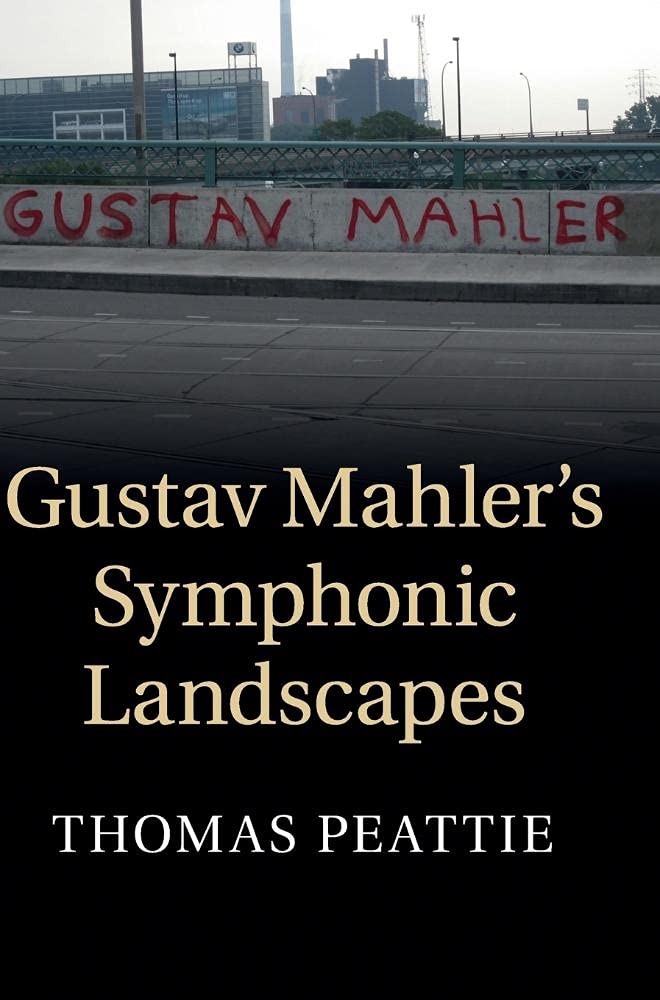
Gustav Mahler's Symphonic Landscapes: A Study of Mahler's Symphonies and the Austrian Fin de Siècle by Thomas Peattie
Inclusive of all applicable taxes. FREE shipping on all orders.
Available Offers
- 🚚Free Delivery — Free shipping on all orders
- 💵Cash on Delivery — Pay when your order arrives
- ↩️15-Day Easy Returns — Hassle-free return policy
- 🔒Cash on Delivery — Pay safely when your order arrives
Check Delivery
Product Description
Introduction
Gustav Mahler's symphonies are among the most profound and emotionally charged works in the classical repertoire. In Gustav Mahler's Symphonic Landscapes, author Thomas Peattie presents a fresh and illuminating perspective on these monumental compositions. This book is an essential addition for any serious student of musicology, aficionado of late Romantic music, or scholar interested in the intersection of musical form and theatrical expression. Published by the prestigious Cambridge University Press, this hardcover volume offers a rigorous yet accessible journey into the heart of Mahler's creative world.
Book Overview
Rather than treating Mahler's symphonies as isolated masterpieces, Peattie situates them within the broader cultural and professional context of the composer's life. The study reimagines the symphonic genre through the lens of landscape, mobility, and theatricality. By drawing on the rich musical, theatrical, and aesthetic traditions of the Austrian fin de siècle, Peattie unveils how Mahler's dual identity as a conductor and composer shaped his revolutionary approach to symphonic writing. The book argues that Mahler's music embodies a fundamental tension between episodic structure and a powerful narrative drive, ultimately presenting his symphonic dramaturgy as a form of abstract theatre.
Key Highlights
- Interdisciplinary Framework: The book uniquely combines concepts from musicology, theatre studies, and landscape theory to decode Mahler's symphonic language.
- Original Interpretation: Peattie challenges conventional readings by highlighting the theatrical and mobile qualities of Mahler's music, moving beyond purely structural analysis.
- Contextual Depth: Offers a rich understanding of the Austrian cultural milieu that influenced Mahler, including his work at the Vienna Court Opera and his engagement with contemporary visual arts.
- Rigorous Scholarship: Backed by Cambridge University Press, this work is grounded in meticulous research and critical thinking, suitable for both academic and informed general readers.
Inside the Book
Peattie's narrative is structured to guide the reader through Mahler's symphonic journey. The opening chapters establish the conceptual framework of landscape and mobility, explaining how these ideas translate into musical structure. Subsequent chapters examine individual symphonies, revealing how Mahler uses abrupt shifts in texture, tempo, and orchestration to create a sense of spatial and temporal movement. The author also explores Mahler's use of folk-like melodies, marches, and dance forms as theatrical elements that disrupt conventional symphonic expectations. The final sections synthesize these insights, proposing that Mahler's symphonies function as a kind of staged drama without words.
Key Topics
- The concept of musical landscape and its application to symphonic form
- The role of theatricality and gesture in Mahler's instrumental music
- Mobility and the disruption of traditional symphonic narrative
- Mahler's career as a conductor and its influence on his compositional style
- The Austrian fin de siècle and its impact on music and aesthetics
- Analysis of key symphonies including the Second, Fifth, and Ninth
Reader Benefits
- Deepen Your Appreciation: Gain a richer understanding of Mahler's music that goes beyond surface-level listening.
- Enhance Analytical Skills: Learn to identify and interpret the theatrical and spatial elements in complex orchestral works.
- Contextual Knowledge: Understand the cultural and professional forces that shaped one of history's greatest composers.
- Academic Excellence: Perfect for writing research papers, preparing lectures, or expanding your personal library of music criticism.
Learning Outcomes
By reading this book, you will be able to articulate how Mahler's symphonies function as abstract theatre, identify the episodic and narrative tensions within his works, and connect his compositional choices to his experience as a conductor. You will also develop a vocabulary for discussing musical landscape and mobility, and gain insight into the relationship between music, space, and drama in the late Romantic period.
Who Should Read
- Music Students and Scholars: Ideal for those studying musicology, music theory, or 19th-century cultural history.
- Professional Musicians: Conductors, composers, and performers looking for deeper interpretative insights into Mahler's scores.
- Passionate Classical Music Lovers: Anyone who has been moved by Mahler's symphonies and wants to understand their inner workings.
- Indian Readers: With the growing appreciation for Western classical music in India, this book offers a sophisticated yet approachable guide for enthusiasts and academics alike.
About the Author
Thomas Peattie is a distinguished musicologist whose research focuses on the music of the late Romantic and early modern periods. He has published extensively on Mahler, the relationship between music and theatre, and the cultural history of the Austro-Hungarian Empire. Peattie's work is known for its interdisciplinary approach, blending rigorous musical analysis with insights from visual arts, literature, and performance studies. He is a Professor of Music at the University of Oklahoma, where he continues to inspire students with his passion for the symphonic tradition.
About the Publisher
Cambridge University Press is one of the oldest and most respected academic publishers in the world, with a history dating back to 1534. Their musicology catalogue is renowned for its scholarly excellence, featuring works by leading experts that set the standard for research and education. This hardcover edition reflects their commitment to producing durable, beautifully designed books that are a pleasure to own and study.
Conclusion
Gustav Mahler's Symphonic Landscapes is not just a book about music; it is an invitation to experience Mahler's symphonies with new ears and a fresh mind. Thomas Peattie's original framework of landscape, mobility, and theatricality opens up exciting pathways for interpretation, making this an indispensable resource for anyone seeking to understand the depth and drama of Mahler's art. Whether you are a student in a university library or a music lover in your private study, this volume will enrich your encounter with one of the most extraordinary symphonic cycles ever conceived.
Quick Summary
Gustav Mahler's Symphonic Landscapes by Thomas Peattie is a groundbreaking study that reinterprets Mahler's symphonies through the lenses of landscape, mobility, and theatricality. Peattie, a respected musicologist, connects Mahler's innovative symphonic style to his extensive career as a conductor and the vibrant cultural milieu of the Austrian fin de siècle. The book reveals a fundamental tension between the episodic, almost cinematic structure of Mahler's music and its powerful narrative drive, suggesting that his symphonies function as a form of abstract theatre. Ideal for musicology students, classical music enthusiasts, and scholars of 19th-century culture, this work offers a fresh, interdisciplinary perspective that deepens our understanding of Mahler's radical reinvention of the symphony. Published by Cambridge University Press, this hardcover edition is a valuable addition to any serious music library. Buy from Bookshops.in to enjoy a premium reading experience and reliable delivery across India.
Book Highlights
Book Specifications
| ISBN-13 | 9781107027084 |
| ISBN-10 | 110702708X |
| Publisher | Cambridge University Press |
| Language | English |
| Dimensions | 17.78 x 2.54 x 22.86 cm |
| Weight | 660 g |
| Country | India |
| Category | Arts, Film & Photography › Music |
| Genre | Musicology |
| Original Language | English |
Frequently Asked Questions
What is the main argument of Gustav Mahler's Symphonic Landscapes?
Who is Thomas Peattie?
Is this book suitable for non-specialist readers?
What makes this book different from other Mahler studies?
Does the book cover all of Mahler's symphonies?
What is the significance of the term 'landscape' in this context?
How does the book address Mahler's theatricality?
What is the ISBN for this book?
Is this book available in Indian bookstores?
Does the book include musical examples?
What is the price of this book in India?
What is the language of the book?
Who is the publisher of this book?
Readers Also Search For
Customers Also Bought
Art History
The Italian Renaissance in Art

Art History
Photovoltaic Design & Installation For Dummies | by Mayfield | ForDummies | by Mayfield | ForDummies | by Mayfield | ForDummies | by Mayfield | ForDummies | by Mayfield | ForDummies | by Mayfield | ForDummies | by Mayfield | ForDummies | by Mayfield | ForDummies | by Mayfield | ForDummies | by Mayfield | ForDummies | by Mayfield | ForDummies | by Mayfield | ForDummies | by Mayfield | ForDummies | by Mayfield | ForDummies | by Mayfield | ForDummies | by Mayfield | ForDummies | by Mayfield | ForDu
Art History
Designing School Systems for All Students (English, Robert J. Manley | Richard J. Hawkins)

Art History
Routledge Library Editions: Art and Culture in the Nineteenth Century
Art History
An Errant Design (English, S. H. Long)
Art History
Distributed System Design | by Jie Wu | CRC Press | by Jie Wu | CRC Press | by Jie Wu | CRC Press | by Jie Wu | CRC Press | by Jie Wu | CRC Press | by Jie Wu | CRC Press | by Jie Wu | CRC Press | by Jie Wu | CRC Press | by Jie Wu | CRC Press | by Jie Wu | CRC Press | by Jie Wu | CRC Press | by Jie Wu | CRC Press | by Jie Wu | CRC Press | by Jie Wu | CRC Press | by Jie Wu | CRC Press | by Jie Wu | CRC Press | by Jie Wu | CRC Press | by Jie Wu | CRC Press | by Jie Wu | CRC Press | by Jie Wu | CRC
Related Products
View All
Music
The Cambridge Companion to Michael Tippett by Kenneth Gloag – Music Analysis

Music
Making Light: Haydn, Musical Camp, and the Long Shadow of German Idealism
Music
Music and the Crises of the Modern Subject by Michael L. Klein – Music Theory & Criticism
Music
Opera and Drama in Eighteenth-Century London: The King's Theatre, Garrick and the Business of Perfor
Music
Music in Theory and Practice Volume 1 | by Bruce Benward | Marilyn Saker | McGraw-Hill Companies | by Bruce Benward | Marilyn Saker | McGraw-Hill Companies | by Bruce Benward | Marilyn Saker | McGraw-Hill Companies | by Bruce Benward | Marilyn Saker | McGraw-Hill Companies | by Bruce Benward | Marilyn Saker | McGraw-Hill Companies | by Bruce Benward | Marilyn Saker | McGraw-Hill Companies | by Bruce Benward | Marilyn Saker | McGraw-Hill Companies | by Bruce Benward | Marilyn Saker | McGraw-Hill
Music