
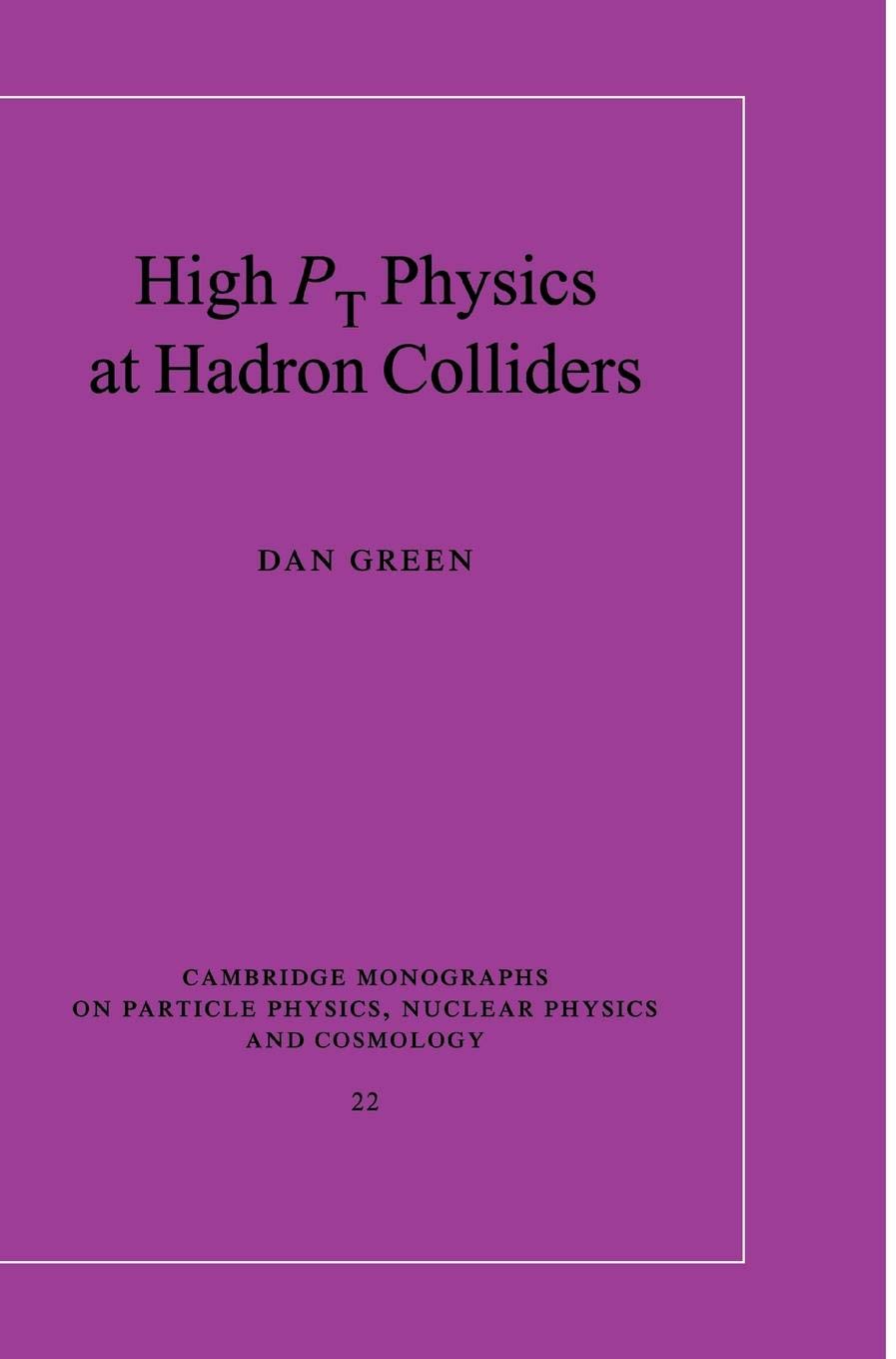
Physics at Hadron Colliders: A Graduate-Level Guide to Particle Physics and Collider Experiments by Dan Green
Inclusive of all applicable taxes. FREE shipping on all orders.
Available Offers
- 🚚Free Delivery — Free shipping on all orders
- 💵Cash on Delivery — Pay when your order arrives
- ↩️15-Day Easy Returns — Hassle-free return policy
- 🔒Cash on Delivery — Pay safely when your order arrives
Check Delivery
Product Description
Introduction
Physics at Hadron Colliders by Dan Green is a definitive reference for advanced students and researchers delving into the experimental and theoretical foundations of high-energy particle physics. Published by Cambridge University Press, this hardcover edition offers a rigorous exploration of the physics probed by hadron colliders, with a special focus on the Large Hadron Collider (LHC) and its groundbreaking discoveries. Tailored for Indian readers and students pursuing physics at the postgraduate or doctoral level, this book bridges the gap between complex theoretical constructs and practical experimental methods, making it an indispensable resource for those aiming to understand the universe at its most fundamental level.
Book Overview
This comprehensive volume systematically covers the principles and practices of hadron collider physics, from the basics of quantum chromodynamics (QCD) and parton distribution functions to the intricacies of event simulation and data analysis. Dan Green, a seasoned physicist with decades of experience, presents a balanced narrative that integrates theoretical insights with real-world experimental challenges. The book delves into the detection of particles, the role of triggers and detectors, and the interpretation of collision events, providing readers with a holistic view of how discoveries like the Higgs boson are made. With a focus on the Standard Model and beyond, it also touches upon supersymmetry and dark matter candidates, ensuring relevance to contemporary research.
Key Highlights
- Comprehensive Coverage: From QCD dynamics to electroweak physics, the book covers all essential topics in hadron collider physics.
- Experimental Focus: Detailed discussions on detector design, data acquisition, and statistical methods used at colliders like the LHC.
- Pedagogical Approach: Clear explanations with mathematical derivations make complex concepts accessible to advanced students.
- Up-to-Date Context: Includes references to recent discoveries, including the Higgs boson and searches for new physics.
- Global Relevance: Ideal for Indian students preparing for careers in experimental high-energy physics at institutions like TIFR, IISc, or CERN.
Inside the Book
The book is organized into chapters that progress logically from fundamental principles to advanced applications. Early chapters introduce the theoretical framework of hadron collisions, including cross-section calculations and Monte Carlo event generators. Subsequent sections explore detector technologies such as calorimeters, tracking systems, and muon spectrometers, along with their performance metrics. The later part of the book covers data analysis techniques, including background estimation, systematic uncertainties, and statistical inference, culminating in case studies of key measurements and searches. Appendices provide supplementary material on group theory and kinematics, enhancing the book's utility as a self-study guide.
Key Topics
- Quantum Chromodynamics (QCD) and parton distribution functions
- Hadron collider physics and event kinematics
- Detector design: calorimeters, trackers, and particle identification
- Trigger systems and data acquisition in high-luminosity environments
- Standard Model measurements and precision tests
- Higgs boson physics and electroweak symmetry breaking
- Beyond the Standard Model: supersymmetry, extra dimensions, and dark matter
- Statistical methods for discovery and limits
- Monte Carlo simulation and event reconstruction
Reader Benefits
Readers will gain a deep, practical understanding of how hadron colliders operate and how physicists extract meaningful results from billions of collisions. The book equips students with the skills to design analyses, interpret experimental data, and critically evaluate new findings. It also serves as a valuable reference for researchers transitioning into collider physics, offering insights into both the theoretical underpinnings and the day-to-day realities of working at experiments like ATLAS or CMS. For Indian scholars aiming to contribute to global collaborations, this book provides the foundational knowledge needed to excel in this competitive field.
Learning Outcomes
- Master the theoretical basis of hadron collisions, including QCD and electroweak interactions.
- Understand the working principles of major detector subsystems and their role in particle identification.
- Learn to compute cross-sections, decay widths, and event rates using standard tools.
- Develop proficiency in statistical techniques for hypothesis testing and parameter estimation.
- Gain familiarity with key experimental results and their implications for the Standard Model and beyond.
- Acquire the ability to critically read research papers and design independent analyses.
Who Should Read
This book is tailored for graduate students in physics, particularly those specializing in high-energy physics, particle physics, or experimental physics. It is also highly suitable for postdoctoral researchers and faculty members who need a comprehensive refresher on collider physics. Indian students preparing for competitive exams or pursuing research at national laboratories and universities will find it an excellent companion. Additionally, professionals in related fields such as accelerator science or computational physics will benefit from its detailed yet accessible treatment of the subject.
About the Author
Dan Green is a distinguished physicist with a long career at Fermi National Accelerator Laboratory (Fermilab) and contributions to major collider experiments. He has authored numerous papers and books on particle physics, bringing decades of hands-on experience to his writing. His expertise spans detector development, data analysis, and the search for new phenomena, making him a trusted voice in the field. Green's ability to explain complex ideas with clarity has earned him recognition as both a researcher and an educator.
About the Publisher
Cambridge University Press is one of the world's oldest and most respected academic publishers, known for its rigorous editorial standards and commitment to advancing knowledge. With a strong presence in India, Cambridge University Press offers a wide range of high-quality textbooks and reference works in science, mathematics, and engineering. Their publications are trusted by students and researchers globally for accuracy, depth, and pedagogical excellence.
Conclusion
Physics at Hadron Colliders is an essential addition to the library of any serious student or researcher in particle physics. Dan Green's masterful synthesis of theory and experiment provides a roadmap for understanding the universe's smallest constituents through the lens of high-energy collisions. Whether you are preparing for a career in research or seeking to deepen your knowledge of the Standard Model and beyond, this book offers the clarity, depth, and rigor you need. Order your hardcover copy from Bookshops.in today and embark on a journey to the frontiers of physics.
Quick Summary
Physics at Hadron Colliders by Dan Green is a definitive textbook that bridges the gap between theoretical particle physics and experimental practice at high-energy hadron colliders. It begins with the fundamental concepts of the Standard Model, parton distributions, and cross-section calculations, then progresses to detailed discussions of detector systems—trackers, calorimeters, and muon chambers—and the algorithms used to reconstruct events. The book covers essential topics like jet physics, b-tagging, missing transverse energy, and the physics of the top quark and Higgs boson. It also explores beyond Standard Model searches and the experimental challenges of high-luminosity running. Written by an experienced physicist from Fermilab, the text is enriched with real data examples from the Tevatron and LHC. This book is ideal for Indian graduate students and researchers aiming to work at CERN or other international facilities. By purchasing from Bookshops.in, Indian customers receive a genuine hardcover edition with fast delivery and reliable service, supporting local bookstores while accessing world-class academic content.
Book Highlights
Book Specifications
| ISBN-13 | 9780521835091 |
| ISBN-10 | 0521835097 |
| Publisher | Cambridge University Press |
| Language | English |
| Dimensions | 17.78 x 2.54 x 24.77 cm |
| Weight | 1 kg 50 g |
| Country | USA |
| Category | Science & Mathematics › Physics |
| Genre | Science & Mathematics |
| Original Language | English |
Frequently Asked Questions
What is Physics at Hadron Colliders about?
Who is the author Dan Green?
Is this book suitable for Indian graduate students?
Does the book cover the Higgs boson discovery?
Is this a hardcover or paperback edition?
What is the ISBN of this book?
Does the book include exercises or problems?
Can I use this book for self-study?
What topics are covered in the detector section?
Is there a focus on Indian research groups?
What is the price of this book on Bookshops.in?
Does the book discuss beyond Standard Model physics?
Is this book part of a series?
Readers Also Search For
Customers Also Bought
Mathematics
Stereotype Spaces and Algebras: 73 (De Gruyter Expositions in Mathematics, 73)
Mathematics
Semigroups in Algebra, Geometry and Analysis: 20 (De Gruyter Expositions in Mathematics, 20)
Mathematics
Geometry from the Pacific Rim: Proceedings of the Pacific Rim Geometry Conference held at National University of Singapore, Republic of Singapore, ... 1994 (De Gruyter Proceedings in Mathematics)
Mathematics
First International Tainan-Moscow Algebra Workshop: Proceedings of the International Conference held at National Cheng Kung University Tainan, Taiwan, ... 1994 (De Gruyter Proceedings in Mathematics)
Mathematics
Differential Geometry - Proceedings of the VIII International Colloquium (English, Jesus A. Alvarez Lopez | Eduardo Garcia-Rio)
Mathematics
Mathematical Theory of Optimal Processes (Classics of Soviet Mathematics)
Related Products
View All
Physics
The Quantum and Cosmic Codes of the Universe
Physics
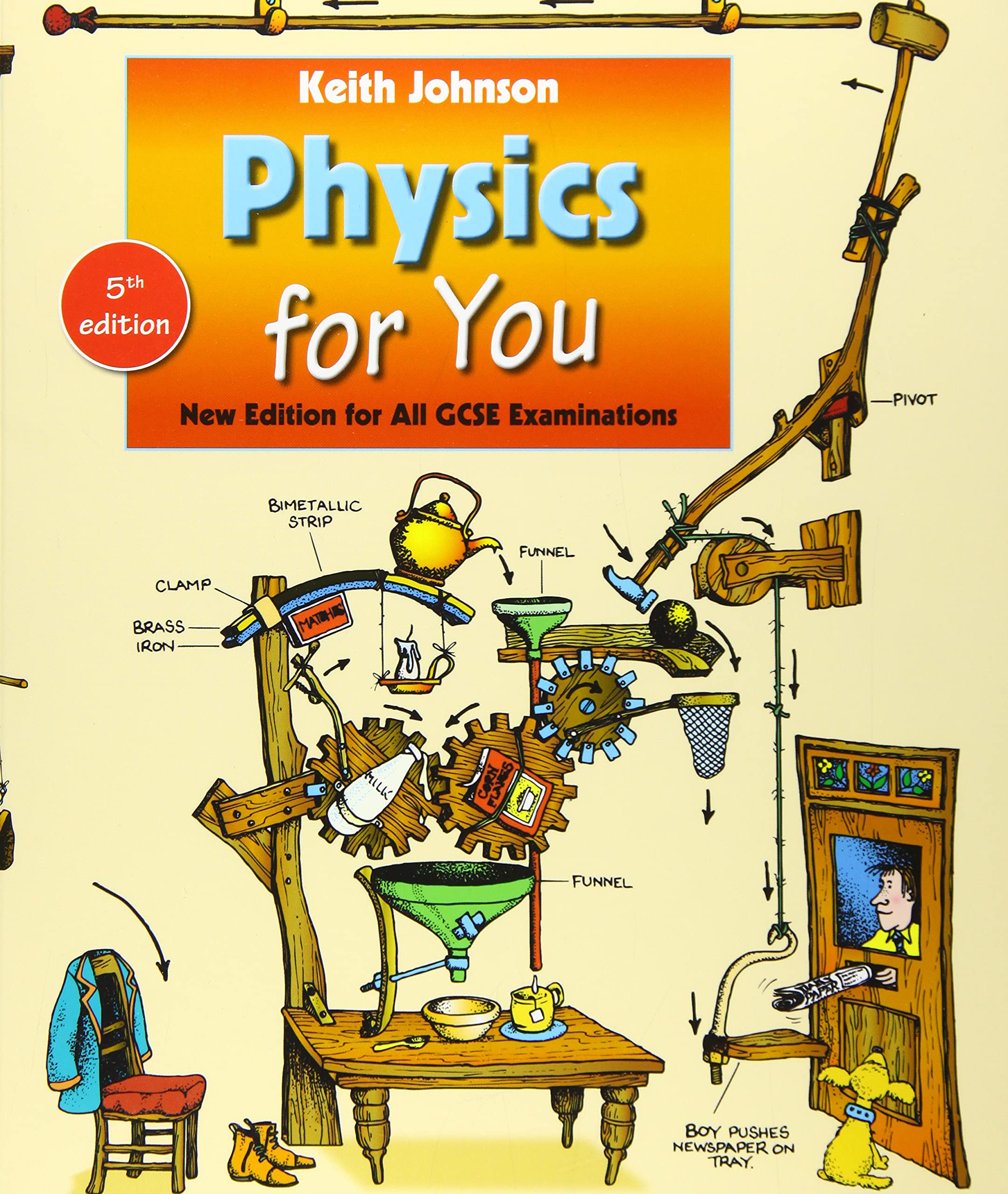
Physics for You by Keith Johnson – GCSE Physics Textbook
Physics
Experimental Techniques in Nuclear Physics
Physics
Essential Physics I

Physics
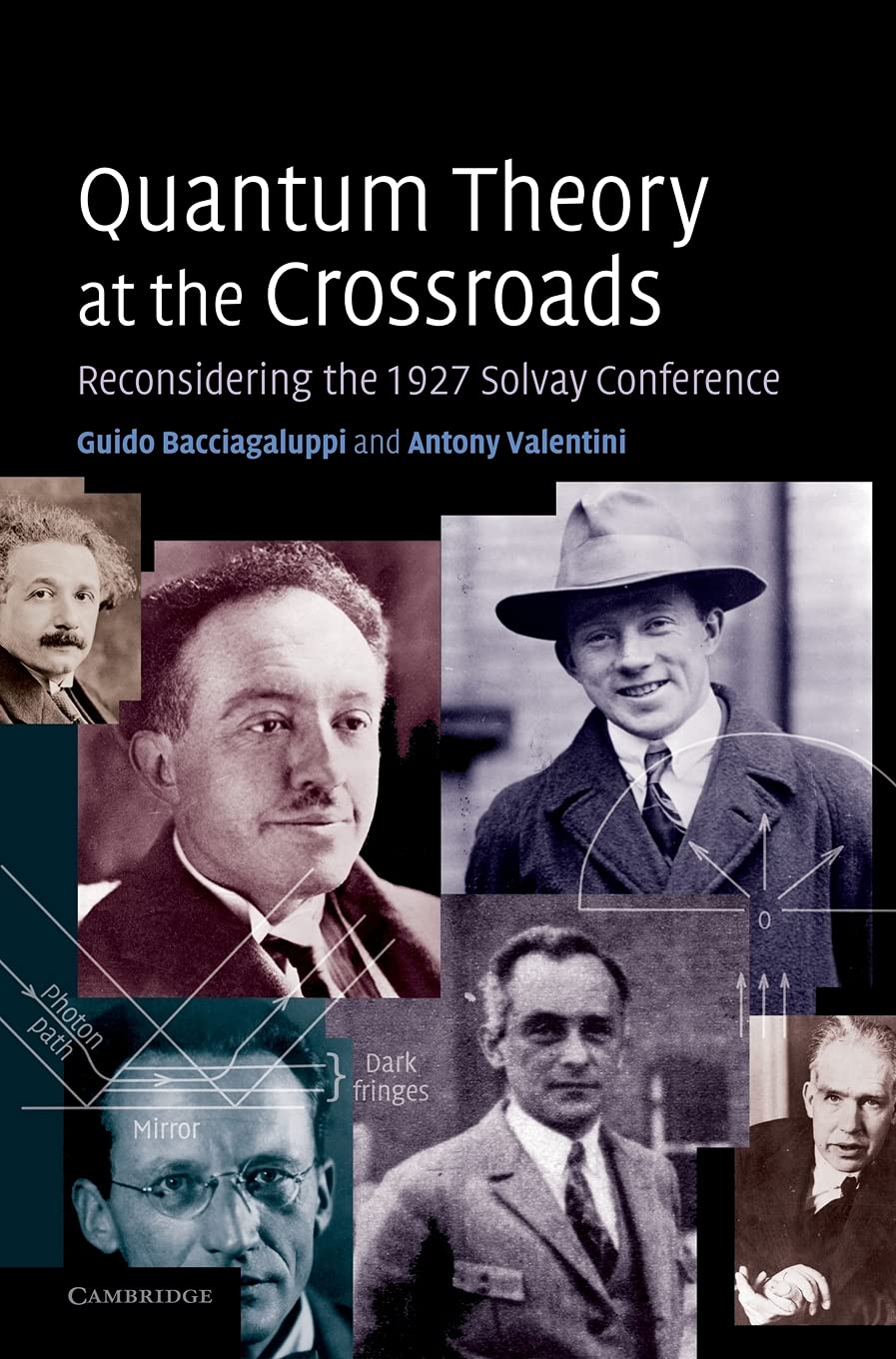
Modern Foundations of Quantum Optics
Physics