
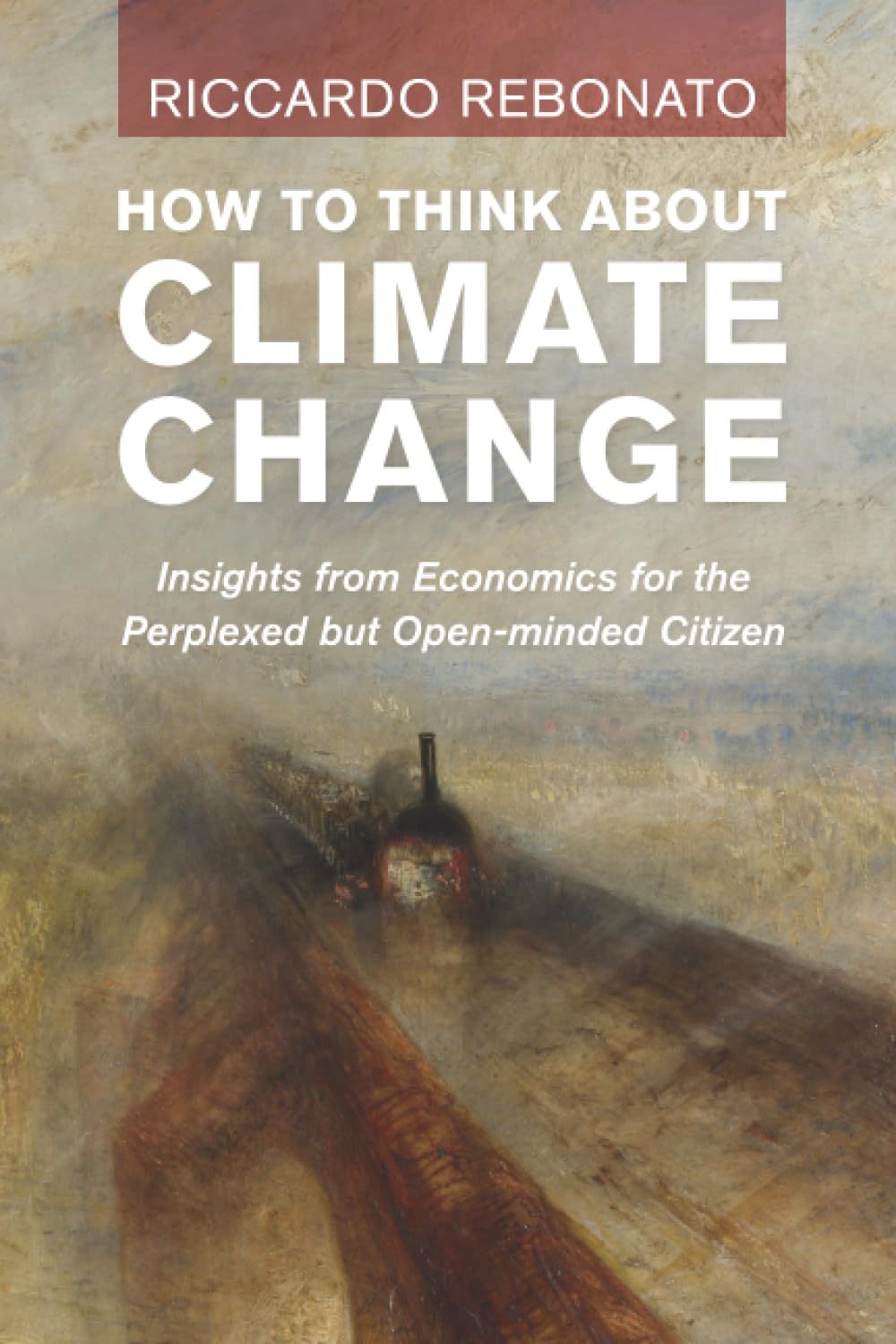
How to Think About Climate Change: Insights from Economics for the Perplexed but Open-minded Citizen by Riccardo Rebonat
Inclusive of all applicable taxes. FREE shipping on all orders.
Available Offers
- 🚚Free Delivery — Free shipping on all orders
- 💵Cash on Delivery — Pay when your order arrives
- ↩️15-Day Easy Returns — Hassle-free return policy
- 🔒Cash on Delivery — Pay safely when your order arrives
Check Delivery
Product Description
Introduction
Climate change is one of the most pressing and polarising issues of our time. For the intelligent but non-specialist reader, the sheer volume of conflicting data, policy proposals, and scientific jargon can be overwhelming. Riccardo Rebonato’s How to Think About Climate Change: Insights from Economics for the Perplexed but Open-minded Citizen offers a refreshingly clear and rational pathway through this complexity. Published by Cambridge University Press, this hardcover volume equips you with the economic lens needed to cut through the noise and form your own well-reasoned opinion.
Book Overview
This book is not a dry textbook. It is a thoughtful guide written for the curious and engaged citizen who wants to understand the real trade-offs and decisions behind climate action. Rebonato, a renowned economist and professor, explains how new-generation economic models are painting a radically different picture of how we should tackle climate change. Instead of presenting doom-laden scenarios or simplistic solutions, he shows how economics can help us think systematically about risk, uncertainty, and the best use of our limited resources. The result is an empowering read that replaces confusion with clarity.
Key Highlights
- Fresh Economic Perspective: Introduces cutting-edge economic models that challenge conventional climate narratives.
- Accessible to All: Written in plain, engaging language with no prior economics knowledge required.
- Practical Thinking Tools: Provides frameworks to evaluate climate policies, costs, and benefits on your own.
- Balanced and Open-Minded: Avoids alarmism and dogma, encouraging critical and independent thought.
- Authoritative Source: Published by Cambridge University Press, ensuring academic rigour and credibility.
Inside the Book
Inside this hardcover edition, you will find a well-structured journey through the economic logic of climate change. Rebonato begins by explaining why our intuitive reactions to climate problems often lead us astray. He then introduces the core concepts of cost-benefit analysis, discount rates, and risk management in a way that feels intuitive. Later chapters explore the role of innovation, the limits of current policies, and how we can think about intergenerational fairness. Each chapter builds on the last, so by the end, you will have a solid mental toolkit for evaluating any climate argument you encounter.
Key Topics
- Why traditional economics failed to capture climate risks accurately
- The role of uncertainty and fat-tail risks in climate decision-making
- How to weigh the costs of action versus inaction
- The economics of renewable energy and carbon pricing
- Ethical considerations and the rights of future generations
- Common fallacies in climate debates exposed through economic logic
Reader Benefits
By reading this book, you will move from feeling perplexed to feeling empowered. You will learn to ask better questions about climate policies, spot weak arguments, and understand why some proposed solutions are more effective than others. This is not a book that tells you what to think—it shows you how to think. For Indian readers, the insights are especially valuable as India navigates its own path between development and sustainability. You will gain the confidence to participate in conversations about climate action without being swayed by emotion or misinformation.
Learning Outcomes
- Understand the fundamental economic principles behind climate change debates
- Evaluate the true cost and benefit of different climate policies
- Recognise cognitive biases that distort our perception of climate risk
- Apply economic reasoning to real-world environmental challenges
- Develop a personal, informed stance on climate action
Who Should Read
This book is perfect for students, professionals, and general readers in India who want a clear, non-technical introduction to the economics of climate change. It is ideal for those who are concerned about the environment but feel lost in the technical debates. Whether you are a university student studying environmental science, a policy enthusiast, a business leader, or simply a curious citizen, this book will sharpen your thinking and deepen your understanding. No background in economics is required—just an open mind.
About the Author
Riccardo Rebonato is a distinguished economist and professor of finance. He has held senior positions at leading financial institutions and has taught at top universities including Oxford and Imperial College London. His expertise lies in risk management and decision-making under uncertainty, making him uniquely qualified to bridge the gap between economics and climate science. He is known for his ability to explain complex ideas with clarity and humour.
About the Publisher
Cambridge University Press is one of the oldest and most respected academic publishers in the world. With a history spanning over four centuries, it is committed to advancing knowledge, education, and learning. This book is part of their mission to bring rigorous, accessible scholarship to a global audience. The high-quality production of this hardcover edition reflects their dedication to excellence.
Conclusion
How to Think About Climate Change is more than a book—it is a compass for navigating one of the defining challenges of our era. By combining economic rigour with genuine accessibility, Riccardo Rebonato has created a resource that will empower you to think clearly, act wisely, and engage meaningfully with the climate conversation. If you are ready to move beyond confusion and toward understanding, this is the book to read.
Quick Summary
How to Think About Climate Change: Insights from Economics for the Perplexed but Open-minded Citizen by Riccardo Rebonato is a refreshingly clear guide that uses economic principles to help readers navigate the complexity of climate change. Written for intelligent laypersons—including Indian students, professionals, and concerned citizens—the book demystifies concepts like carbon pricing, discount rates, and policy trade-offs without requiring any prior economics background. Rebonato, a respected risk management scholar, presents new-generation economic models that challenge conventional wisdom and suggest that ambitious climate action may be more affordable and urgent than previously thought. The book avoids alarmism and political bias, instead equipping readers with tools to evaluate arguments critically. For Indian readers, the insights are particularly valuable given the country’s vulnerability to climate impacts and its role in global negotiations. By purchasing from Bookshops.in, you get a genuine Cambridge University Press hardcover with reliable delivery and customer support. This book is an essential addition to the library of anyone who wants to think rationally about one of the defining issues of our time.
Book Highlights
Book Specifications
| ISBN-13 | 9781009405010 |
| ISBN-10 | 1009405012 |
| Publisher | Proquest Black Box B&t |
| Language | English |
| Dimensions | 15.24 x 2.08 x 22.86 cm |
| Weight | 532 g |
| Country | India |
| Category | Economics › Macroeconomics |
| Genre | Non-fiction |
| Reading Age | Adult |
| Original Language | English |
Frequently Asked Questions
What is the main idea of this book?
Do I need to know economics to read this?
Is this book relevant for Indian readers?
How is this book different from other climate books?
Does the book support a particular political view?
What are the new-generation economic models mentioned?
Is this a textbook or a popular science book?
How long does it take to read?
Does the book cover carbon pricing?
What is the author's background?
Can I use this book for academic research?
Is there a focus on developing countries?
Does it discuss renewable energy?
What is the publication quality?
Where can I buy this book in India?
Readers Also Search For
Customers Also Bought
Entrepreneurship
Chinese Economic Revolution (English, Linda Grove)
Entrepreneurship
Engines of Innovation: The Entrepreneurial University in the Twenty-First Century by Holden Thorp
Entrepreneurship
Invention to Innovation (English, PhD Marshall Larry | Jenna Daroczy)
Entrepreneurship
Database Management Systems by Raghu Ramakrishnan – DBMS Textbook

Entrepreneurship
Decision-making for Technology Executives by Harold A. Linstone
Entrepreneurship
The Business Innovation Audit (English, William Tate)
Related Products
View All
Economics
Political Economy from Pufendorf to Marx (English, István Hont | Lasse S. Andersen | Béla Kapossy)
Economics
Women's Entrepreneurship and Economics (English, Miguel-Angel Galindo | Domingo Ribeiro)
Economics
Trade Policy and Industrialization in Turbulent Times | by Gerry Helleiner | Routledge | by Gerry Helleiner | Routledge | by Gerry Helleiner | Routledge | by Gerry Helleiner | Routledge | by Gerry Helleiner | Routledge | by Gerry Helleiner | Routledge | by Gerry Helleiner | Routledge | by Gerry Helleiner | Routledge | by Gerry Helleiner | Routledge | by Gerry Helleiner | Routledge | by Gerry Helleiner | Routledge | by Gerry Helleiner | Routledge | by Gerry Helleiner | Routledge | by Gerry Hellei
Economics
History of Economic Analysis | by Schumpeter Joseph A. | Taylor & Francis Ltd | by Schumpeter Joseph A. | Taylor & Francis Ltd | by Schumpeter Joseph A. | Taylor & Francis Ltd | by Schumpeter Joseph A. | Taylor & Francis Ltd | by Schumpeter Joseph A. | Taylor & Francis Ltd | by Schumpeter Joseph A. | Taylor & Francis Ltd | by Schumpeter Joseph A. | Taylor & Francis Ltd | by Schumpeter Joseph A. | Taylor & Francis Ltd | by Schumpeter Joseph A. | Taylor & Franci
Economics
OECD Compendium of Productivity Indicators 2015 | by Organization for Economic Cooperation an | Organization for Economic Co-Operation & Deve | by Organization for Economic Cooperation an | Organization for Economic Co-Operation & Deve | by Organization for Economic Cooperation an | Organization for Economic Co-Operation & Deve | by Organization for Economic Cooperation an | Organization for Economic Co-Operation & Deve | by Organization for Economic Cooperation an | Organization

Economics