
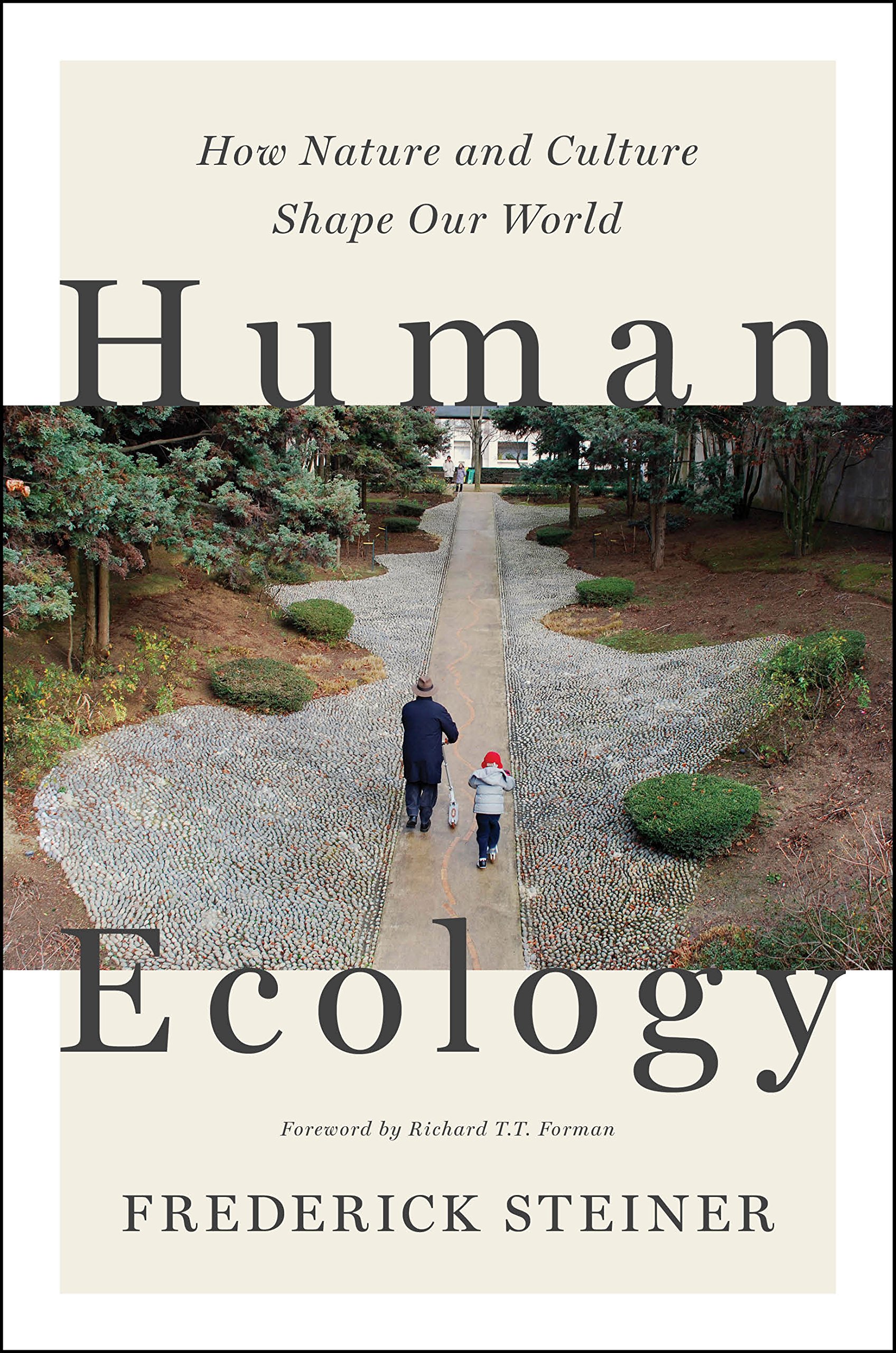
Human Ecology: How Nature and Culture Shape Our World by Frederick R. Steiner – A Deep Dive into Landscape, Society, and
Inclusive of all applicable taxes. FREE shipping on all orders.
Available Offers
- 🚚Free Delivery — Free shipping on all orders
- 💵Cash on Delivery — Pay when your order arrives
- ↩️15-Day Easy Returns — Hassle-free return policy
- 🔒Cash on Delivery — Pay safely when your order arrives
Check Delivery
Product Description
Introduction
In an age where concrete jungles expand and climate patterns shift unpredictably, understanding the delicate bond between humans and the natural world has never been more critical. Human Ecology: How Nature and Culture Shape Our World by Frederick R. Steiner offers a profound exploration of this relationship, blending insights from landscape architecture, biology, sociology, and urban planning. This hardcover edition from Island Press is an essential read for Indian students, researchers, and professionals who seek to grasp how our cultural practices and natural surroundings co-evolve, influencing everything from village settlements to megacities like Mumbai and Delhi.
Book Overview
Frederick Steiner, a renowned city planner and landscape architect, presents a comprehensive framework for understanding human ecology—the study of interconnections between people and their environments. The book moves from intimate scales, such as our homes and gardens, outward to neighborhoods, cities, and entire bioregions. Steiner argues that by recognizing how nature has shaped human cultures throughout history, we can design more resilient, sustainable futures. The narrative weaves together case studies from around the world, including examples from India, to illustrate how traditional knowledge and modern science can converge.
Key Highlights
- Eight Principles of Human Ecology: A clear, actionable set of guidelines for analyzing human-environment interactions.
- Interdisciplinary Approach: Bridges biology, geography, sociology, engineering, and architecture, making it relevant across fields.
- Landscape as a Lens: Uses landscape architecture as a unifying discipline to connect human design with natural processes.
- Global and Local Perspectives: Draws on examples from diverse cultures, including Indian agricultural practices and urban planning challenges.
- Practical Applications: Offers tools for planners, architects, and policymakers to create environments where both nature and people thrive.
Inside the Book
Structured in a logical progression, the book begins with foundational concepts of human ecology and then scales up from the personal to the planetary. Early chapters examine the home as an ecological unit, discussing vernacular architecture and the use of local materials. Subsequent sections explore community design, urban ecosystems, and regional planning. Steiner incorporates vivid descriptions of how natural landscapes—from river basins to mountain ranges—have influenced settlement patterns and cultural identities. The final chapters address global challenges like climate change, biodiversity loss, and sustainable development, offering hope through adaptive design strategies.
Key Topics
- Human ecology principles and their historical roots
- The role of landscape in shaping culture and identity
- Designing resilient homes and communities
- Urban ecosystems and green infrastructure
- Bioregionalism and sustainable resource management
- Adaptation to climate change through ecological planning
- Integrating traditional ecological knowledge with modern science
Reader Benefits
Readers will gain a holistic understanding of how natural systems and human societies interact, enabling them to think critically about environmental issues. The book provides a vocabulary and conceptual toolkit for analyzing real-world problems, from water scarcity in Indian villages to heat islands in cities like Bengaluru. It encourages readers to see themselves as part of a larger ecological web, fostering a sense of responsibility and empowerment. The insights are immediately applicable for students writing dissertations, professionals designing projects, or anyone curious about the future of our planet.
Learning Outcomes
- Understand the core principles of human ecology and their relevance to contemporary challenges.
- Analyze how cultural practices and natural landscapes mutually influence each other over time.
- Evaluate urban and rural environments through an ecological lens.
- Apply landscape-based thinking to planning and design projects.
- Identify strategies for creating sustainable communities that respect both nature and heritage.
Who Should Read
This book is ideal for students and professionals in environmental science, geography, architecture, urban planning, sociology, and landscape design. It is also valuable for policymakers, NGO workers, and engaged citizens in India who are concerned about sustainable development, conservation, and the quality of life in rapidly urbanizing areas. Anyone with a curiosity about how our surroundings shape who we are—and how we can shape them for the better—will find this book enlightening.
About the Author
Frederick R. Steiner is a distinguished professor and former dean of the School of Design at the University of Pennsylvania. With a career spanning decades, he has authored numerous influential works on landscape architecture, ecological planning, and human ecology. Steiner’s work bridges academic theory and practical application, and he has advised governments and organizations worldwide, including in India, on sustainable development and design. His deep understanding of how culture and nature intertwine makes him a leading voice in this field.
About the Publisher
Island Press is a nonprofit publisher based in Washington, D.C., dedicated to providing innovative solutions for environmental challenges. Known for its authoritative and accessible books on ecology, conservation, and sustainable design, Island Press has been a trusted resource for students, professionals, and policymakers for over four decades. This hardcover edition reflects their commitment to high-quality, enduring works that inspire action and understanding.
Conclusion
Human Ecology: How Nature and Culture Shape Our World is more than a textbook—it is a call to rethink our place on Earth. Frederick Steiner masterfully synthesizes diverse knowledge into a coherent vision for a future where human creativity and natural systems work in harmony. For Indian readers navigating the complexities of rapid growth and environmental change, this book offers both wisdom and practical guidance. Add this compelling hardcover to your collection and begin a journey that will transform how you see the world around you.
Quick Summary
Human Ecology: How Nature and Culture Shape Our World by Frederick R. Steiner is a seminal work that bridges the gap between natural landscapes and human societies. Steiner, a leading landscape architect and urban planner, argues that our cultural evolution has been profoundly influenced by the environments we inhabit, and that understanding this relationship is essential for creating sustainable futures. The book synthesizes insights from ecology, geography, sociology, architecture, and planning to offer a comprehensive framework for designing cities and regions that respect both natural systems and human needs. Readers will learn about the history of human-environment interactions, practical strategies for ecological design, and the importance of cultural context in shaping landscapes. This book is ideal for Indian students and professionals in urban planning, environmental science, landscape architecture, and related fields. By purchasing from Bookshops.in, you support a trusted Indian bookstore committed to delivering quality physical books across the country.
Book Highlights
Book Specifications
| ISBN-13 | 9781610917384 |
| ISBN-10 | 1610917383 |
| Publisher | Island Pr |
| Language | English |
| Dimensions | 15.24 x 2.03 x 22.86 cm |
| Weight | 386 g |
| Country | India |
| Category | Arts, Film & Photography › Architecture |
| Genre | Nonfiction |
| Original Language | English |
Frequently Asked Questions
What is the main theme of Human Ecology by Frederick R. Steiner?
Who is the author Frederick R. Steiner?
Is this book suitable for Indian readers?
What disciplines does the book cover?
Does the book include practical design guidelines?
What is the ISBN-13 for this book?
Is this book part of a series?
Can I use this book for academic coursework?
What makes this book different from other ecology books?
Does the book address climate change?
What is the reading level of this book?
Is there a focus on Indian examples?
Where can I buy this book in India?
Readers Also Search For
Customers Also Bought
Art History
The Italian Renaissance in Art

Art History
Photovoltaic Design & Installation For Dummies | by Mayfield | ForDummies | by Mayfield | ForDummies | by Mayfield | ForDummies | by Mayfield | ForDummies | by Mayfield | ForDummies | by Mayfield | ForDummies | by Mayfield | ForDummies | by Mayfield | ForDummies | by Mayfield | ForDummies | by Mayfield | ForDummies | by Mayfield | ForDummies | by Mayfield | ForDummies | by Mayfield | ForDummies | by Mayfield | ForDummies | by Mayfield | ForDummies | by Mayfield | ForDummies | by Mayfield | ForDu

Art History
Designing School Systems for All Students (English, Robert J. Manley | Richard J. Hawkins)

Art History
Routledge Library Editions: Art and Culture in the Nineteenth Century

Art History
An Errant Design (English, S. H. Long)

Art History
Distributed System Design | by Jie Wu | CRC Press | by Jie Wu | CRC Press | by Jie Wu | CRC Press | by Jie Wu | CRC Press | by Jie Wu | CRC Press | by Jie Wu | CRC Press | by Jie Wu | CRC Press | by Jie Wu | CRC Press | by Jie Wu | CRC Press | by Jie Wu | CRC Press | by Jie Wu | CRC Press | by Jie Wu | CRC Press | by Jie Wu | CRC Press | by Jie Wu | CRC Press | by Jie Wu | CRC Press | by Jie Wu | CRC Press | by Jie Wu | CRC Press | by Jie Wu | CRC Press | by Jie Wu | CRC Press | by Jie Wu | CRC
Related Products
View All
Architecture
Literatur Und Buhn: Tamil Literature: 2 (Hanbuch Der Orientalistik - Abeilung - Indien, Vol 2/1)

Architecture
Handbook of Synagogue Architecture: 29 (Brown Judaic Studies)

Architecture
Houses, Cottages & Bungalows: A Selection of Representative Examples ... Edited by F. Chatterton. Illustrations and Plans, With Explanatory Text

Architecture
Sport and Architecture (Frontiers of Sport)
Architecture
Britain's New Towns: an Experiment in Living

Architecture