
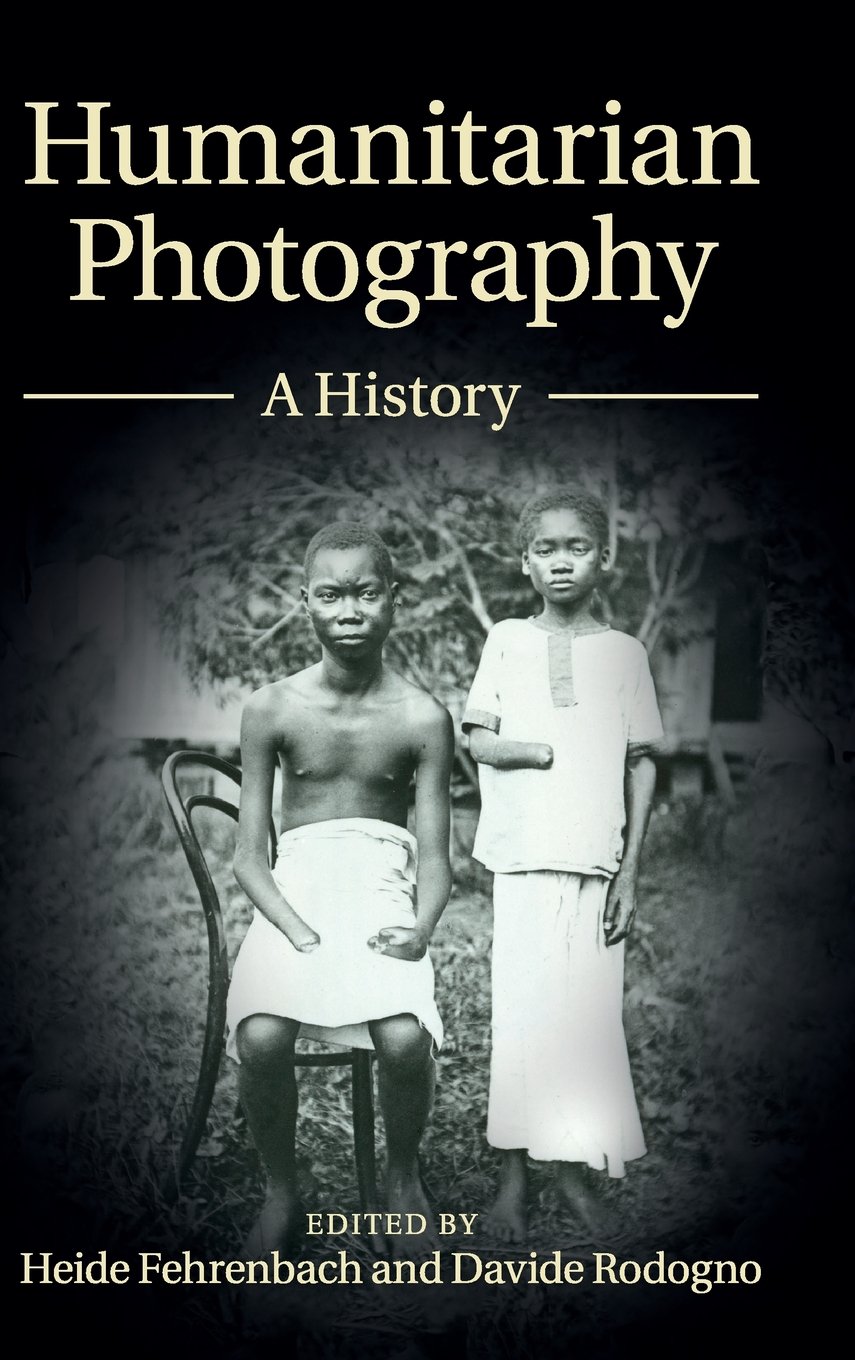
Humanitarian Photography: A History by Heide Fehrenbach – Tracing the Role of Photography in Humanitarian Advocacy and E
Inclusive of all applicable taxes. FREE shipping on all orders.
Available Offers
- 🚚Free Delivery — Free shipping on all orders
- 💵Cash on Delivery — Pay when your order arrives
- ↩️15-Day Easy Returns — Hassle-free return policy
- 🔒Cash on Delivery — Pay safely when your order arrives
Check Delivery
Product Description
Introduction
In an age where images of distant suffering flood our screens, it is easy to forget that the very act of capturing and sharing such photographs has a profound and contested history. Humanitarian Photography: A History, edited by Heide Fehrenbach, offers a groundbreaking exploration of how photography has been harnessed to shape public compassion, raise funds, and drive global humanitarian efforts. This meticulously researched volume, published by Cambridge University Press, is an essential addition to the libraries of scholars, students, and anyone interested in visual culture, international relations, and the ethics of representation.
Book Overview
This hardcover edition traces the evolution of what we now term 'humanitarian photography'—from its tentative and debated beginnings in the late nineteenth century to its current status as a professionalized and often commercialized practice. The book brings together over a dozen leading scholars who examine how photographic imagery has been deployed across Africa, Asia, the Middle East, Europe, and the United States. By situating these images within diverse political, institutional, and social contexts, the volume reveals the complex interplay between empathy, advocacy, and power. It challenges readers to rethink the visual narratives that have shaped modern humanitarianism.
Key Highlights
- Multidisciplinary Approach: Combines insights from history, visual studies, anthropology, and international relations.
- Global Scope: Covers humanitarian photography across continents, including rarely discussed case studies from Asia and Africa.
- Critical Analysis: Examines the ethical dilemmas and power dynamics behind iconic humanitarian images.
- Original Research: Features contributions from renowned scholars, offering fresh perspectives on well-known and obscure photographic campaigns.
Inside the Book
The volume is structured around thematic sections that explore the shifting roles of photographers, humanitarian organizations, and audiences. It delves into the early use of lantern slides by missionaries, the rise of NGO photo departments, and the contemporary phenomenon of 'humanitarian photographers' who market themselves as advocates. Each chapter is rich with archival evidence, including analyses of photographs from the Red Cross, UNICEF, and lesser-known agencies. The book also interrogates how images have been used to construct racial and cultural hierarchies, often reinforcing the very inequalities they sought to alleviate.
Key Topics
- The birth of humanitarian imagery in colonial and missionary contexts.
- Photography and the politics of pity in the early twentieth century.
- The role of visual media in fundraising campaigns for famine, war, and disaster relief.
- The professionalization of humanitarian photography after World War II.
- Ethical debates about consent, exploitation, and the 'gaze' of the photographer.
- Case studies from the Bengal Famine, Biafran War, Ethiopian famine, and more.
Reader Benefits
This book equips readers with a critical vocabulary to analyze humanitarian imagery encountered in news, social media, and museum exhibitions. It deepens understanding of how visual storytelling influences public opinion and policy. For Indian readers, the volume offers valuable insights into how South Asian crises—from famines to refugee movements—have been visually represented to global audiences. The hardcover edition is durable for repeated reference, making it ideal for academic libraries and personal collections.
Learning Outcomes
- Understand the historical trajectory of humanitarian photography from the 19th century to the present.
- Critically evaluate the ethical implications of using images of suffering for advocacy.
- Identify the institutional and political forces that shape which images are circulated and remembered.
- Develop skills to analyze visual culture within broader historical and social contexts.
Who Should Read
This book is indispensable for students and scholars of history, visual culture, media studies, and international development. It is also highly relevant for professionals working in non-governmental organizations, journalism, and advocacy who wish to reflect on the power of images. General readers with an interest in photography or humanitarianism will find the accessible yet rigorous writing engaging. Indian readers, particularly those studying colonial and postcolonial visual narratives, will discover rich comparative material.
About the Author
Heide Fehrenbach is a distinguished professor of history known for her work on visual culture, genocide, and humanitarianism. She has authored and edited several acclaimed books that explore the intersection of photography, politics, and ethics. Her scholarship is marked by a commitment to uncovering marginalized histories and challenging simplistic narratives.
About the Publisher
Cambridge University Press is one of the world's oldest and most prestigious academic publishers, with a legacy of producing authoritative works in the humanities and social sciences. This volume upholds their tradition of rigorous scholarship and global relevance.
Conclusion
Humanitarian Photography: A History is more than a chronicle of images—it is a vital inquiry into how we see, feel, and act in the face of human suffering. By tracing the evolution of this powerful visual practice, the book invites us to become more conscious viewers and more ethical participants in a world mediated by photographs. For anyone seeking to understand the visual roots of modern compassion, this is an indispensable guide.
Quick Summary
Humanitarian Photography: A History by Heide Fehrenbach is a critical academic work that traces the evolution of photography as a tool for humanitarian advocacy from the late 19th century to the present. The book examines how images of suffering have been used to raise public awareness and funds, while also interrogating the ethical, political, and social implications of such visual representation. It features contributions from leading scholars and includes case studies from around the world, making it an essential resource for students and researchers in visual culture, media studies, history, and ethics. Readers will gain a nuanced understanding of how photography shapes humanitarian responses and the power dynamics inherent in representing distant suffering. Published by Cambridge University Press, this hardcover edition is ideal for Indian students and academics seeking a rigorous historical perspective. Order from Bookshops.in for a trusted purchase experience.
Book Highlights
Book Specifications
| ISBN-13 | 9781107064706 |
| ISBN-10 | 1107064708 |
| Publisher | Cambridge University Press |
| Language | English |
| Dimensions | 16.51 x 2.54 x 24.13 cm |
| Weight | 740 g |
| Country | India |
| Category | Visual Arts › Photography |
| Genre | Non-fiction |
| Original Language | English |
Frequently Asked Questions
What is Humanitarian Photography: A History about?
Who is the author of this book?
Which publisher released this book?
Is this book suitable for Indian students?
Does the book cover contemporary humanitarian photography?
What format is the book available in?
What are the key themes of the book?
Is this book peer-reviewed?
Can I use this book for my university course?
Does the book include case studies?
What is the price in India?
Is this book available at Bookshops.in?
What is the ISBN?
Readers Also Search For
Customers Also Bought
Art History
The Italian Renaissance in Art

Art History
Photovoltaic Design & Installation For Dummies | by Mayfield | ForDummies | by Mayfield | ForDummies | by Mayfield | ForDummies | by Mayfield | ForDummies | by Mayfield | ForDummies | by Mayfield | ForDummies | by Mayfield | ForDummies | by Mayfield | ForDummies | by Mayfield | ForDummies | by Mayfield | ForDummies | by Mayfield | ForDummies | by Mayfield | ForDummies | by Mayfield | ForDummies | by Mayfield | ForDummies | by Mayfield | ForDummies | by Mayfield | ForDummies | by Mayfield | ForDu

Art History
Designing School Systems for All Students (English, Robert J. Manley | Richard J. Hawkins)

Art History
Routledge Library Editions: Art and Culture in the Nineteenth Century

Art History
An Errant Design (English, S. H. Long)

Art History
Distributed System Design | by Jie Wu | CRC Press | by Jie Wu | CRC Press | by Jie Wu | CRC Press | by Jie Wu | CRC Press | by Jie Wu | CRC Press | by Jie Wu | CRC Press | by Jie Wu | CRC Press | by Jie Wu | CRC Press | by Jie Wu | CRC Press | by Jie Wu | CRC Press | by Jie Wu | CRC Press | by Jie Wu | CRC Press | by Jie Wu | CRC Press | by Jie Wu | CRC Press | by Jie Wu | CRC Press | by Jie Wu | CRC Press | by Jie Wu | CRC Press | by Jie Wu | CRC Press | by Jie Wu | CRC Press | by Jie Wu | CRC
Related Products
View All
Photography
The Art Within Portrait Photography by Klaus Bohn

Photography
Women Photographers and Mexican Modernity (English, Brown Julia R. | Radmila Stefkova | Tamara R. Williams)

Photography
Women and the Collaborative Art of Gardens (English, Victoria E. Pagán | Judith W. Page)

Photography
The Market Photo Workshop in South Africa and the 'Born Free' Generation (English, Julie Bonzon)

Photography
Theory/Theatre: An Introduction by Mark Fortier – Theatre Theory Textbook
Photography