
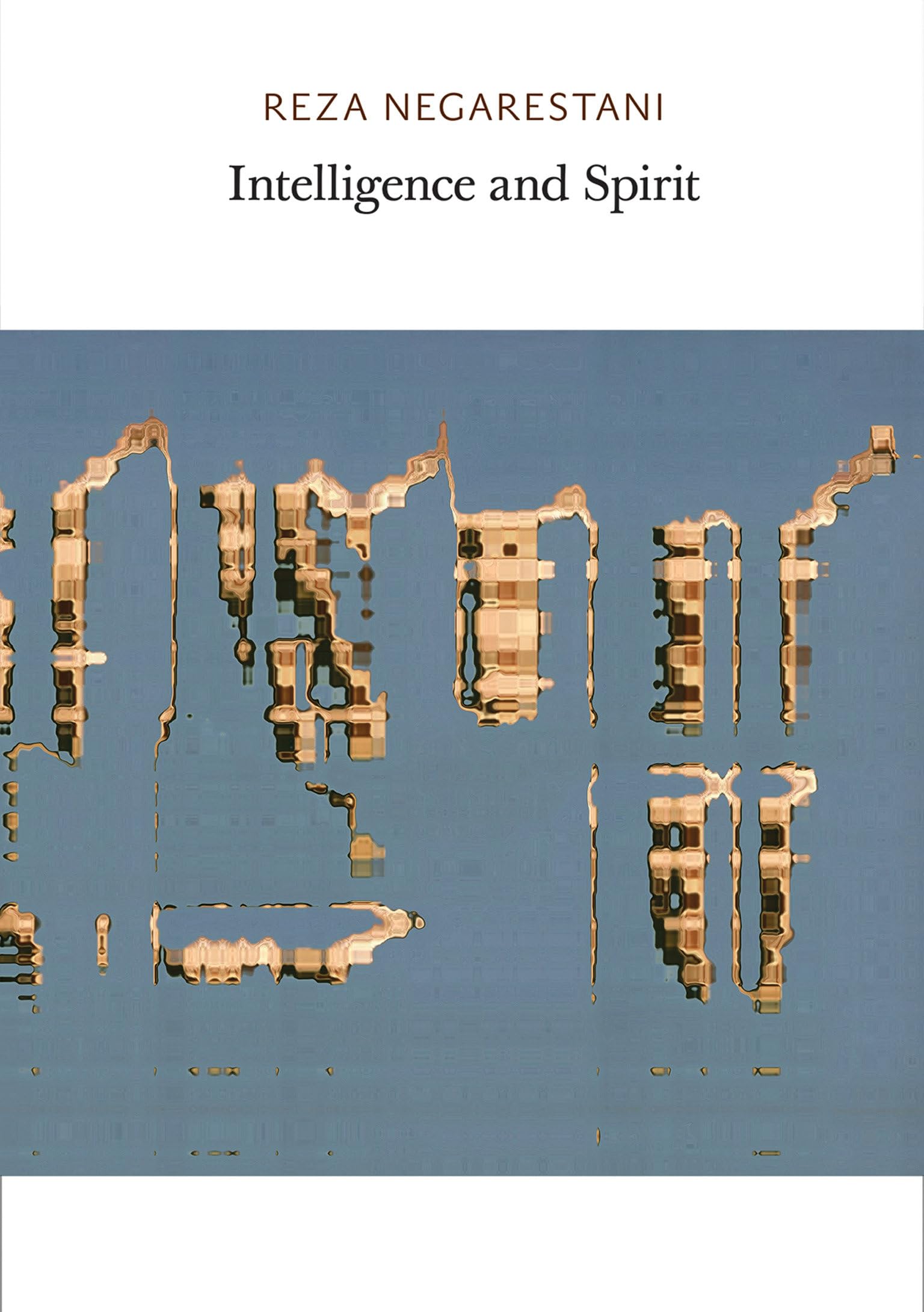
Intelligence and Spirit: Reza Negarestani's Philosophical Exploration of Thought Beyond Time
Inclusive of all applicable taxes. FREE shipping on all orders.
Available Offers
- 🚚Free Delivery — Free shipping on all orders
- 💵Cash on Delivery — Pay when your order arrives
- ↩️15-Day Easy Returns — Hassle-free return policy
- 🔒Cash on Delivery — Pay safely when your order arrives
Check Delivery
Product Description
Introduction
In an era where debates around artificial intelligence, human cognition, and the future of thought dominate both academic and public discourse, Reza Negarestani’s Intelligence and Spirit emerges as a landmark philosophical work that challenges conventional understandings of mind and reason. This book is not merely a treatise on intelligence but a radical rethinking of what it means to think, act, and create beyond the limitations of the present. For Indian readers—whether students of philosophy, researchers in cognitive science, or curious minds exploring the frontiers of thought—this volume offers a rigorous yet accessible entry into some of the most pressing questions of our time.
Book Overview
Intelligence and Spirit is a profound exploration of the nature of intelligence, drawing on the rich traditions of German Idealism, particularly the works of Hegel and Kant. Negarestani argues that intelligence is not a static property of individuals or machines but a dynamic, collective process that unfolds through history. He critiques both classical humanism, which centers the human as the ultimate agent of reason, and dominant trends in posthumanism, which often reduce intelligence to mere computational processing. Instead, he proposes a vision of intelligence as a theoretical and practical thought that is not bound by the temporal order of things—a real movement capable of overcoming any state of affairs that appears to be the final totality of history. This book is a bold synthesis of philosophy, science, and political theory, making it essential reading for anyone interested in the future of thought.
Key Highlights
- Original Synthesis of Hegel and Kant: Negarestani builds on Hegel’s concept of Geist as a multiagent conception of mind and Kant’s transcendental psychology as a functional analysis of the conditions of possibility of mind.
- Critique of Humanism and Posthumanism: The book offers a balanced yet incisive critique of both classical humanism and contemporary posthumanist trends, avoiding the pitfalls of either extreme.
- Interdisciplinary Approach: Drawing from philosophy, cognitive science, cybernetics, and political economy, the book bridges multiple fields to offer a holistic understanding of intelligence.
- Timely Relevance: In an age of technocapitalism and AI, this work provides a philosophical framework for thinking about agency, history, and the future of humanity.
Inside the Book
The book is structured around a series of interconnected arguments that move from the abstract to the concrete. Negarestani begins by deconstructing the idea of intelligence as a fixed attribute, showing how it emerges from collective, historical processes. He then delves into Hegel’s Phenomenology of Spirit to argue that mind is not a solitary entity but a product of social and material interactions. Drawing on Kant, he explores the functional architecture of cognition, suggesting that intelligence is a system of rules and practices that can be extended and transformed. Later chapters tackle the implications of this view for politics, technology, and ethics, culminating in a vision of intelligence as a form of self-determining freedom that resists being captured by any single historical moment.
Key Topics
- The nature of intelligence and its relationship to history
- Hegel’s concept of Geist and multiagent cognition
- Kant’s transcendental psychology and the conditions of possibility of mind
- Critique of classical humanism and its limitations
- Posthumanism, technocapitalism, and the future of agency
- The role of collective intelligence in shaping history
- Freedom, reason, and the overcoming of temporal constraints
Reader Benefits
- Deepen Your Understanding of Philosophy: Gain a nuanced grasp of German Idealism and its relevance to contemporary debates.
- Engage with Cutting-Edge Ideas: Explore a novel framework that challenges both traditional and trendy views on intelligence.
- Enhance Critical Thinking: Learn to question assumptions about human nature, technology, and progress.
- Broaden Intellectual Horizons: Connect philosophy with science, politics, and everyday life in meaningful ways.
Learning Outcomes
By reading Intelligence and Spirit, you will be able to articulate a sophisticated critique of both human-centered and machine-centered views of intelligence. You will understand how Hegel and Kant’s ideas can be repurposed for contemporary issues, from AI ethics to political theory. You will also develop the ability to think about intelligence as a dynamic, historical process rather than a static property, empowering you to engage with complex problems in philosophy, technology, and society with greater clarity and depth.
Who Should Read
- Students of Philosophy: Especially those interested in German Idealism, philosophy of mind, and continental philosophy.
- Researchers in Cognitive Science and AI: Those looking for a philosophical grounding for their work on intelligence and consciousness.
- Academics in Political Theory: Scholars exploring the intersection of history, agency, and collective action.
- General Readers: Anyone curious about the nature of thought and the future of humanity in an age of rapid technological change.
About the Author
Reza Negarestani is an Iranian philosopher and writer known for his innovative and interdisciplinary approach to philosophy. He is the author of Cyclonopedia: Complicity with Anonymous Materials, a cult classic that blends philosophy, horror, and political theory. Negarestani’s work often engages with the traditions of German Idealism, speculative realism, and contemporary political thought. He is a fellow at the Urbanomic research group and has contributed to numerous journals and anthologies. His writing is characterized by its rigor, creativity, and willingness to challenge established boundaries, making him one of the most provocative thinkers of our time.
About the Publisher
Urbanomic, in collaboration with Sequence Press, is a leading independent publisher dedicated to pushing the boundaries of contemporary philosophy, art, and theory. Known for its cutting-edge titles that explore the intersections of science, technology, and culture, Urbanomic has become a vital platform for thinkers who challenge conventional academic and artistic norms. Their publications are celebrated for their intellectual depth and innovative design, making complex ideas accessible to a broad audience. Intelligence and Spirit is a testament to their commitment to fostering bold, transformative thought.
Conclusion
Intelligence and Spirit is not just a book; it is an invitation to rethink the very foundations of thought itself. For Indian readers navigating a world shaped by rapid technological change and deep philosophical questions, this work offers a rigorous yet rewarding path forward. Whether you are a student, a scholar, or a lifelong learner, Negarestani’s vision of intelligence as a collective, historical, and liberating force will challenge and inspire you. Order your copy today from Bookshops.in and embark on a journey that transcends the boundaries of time and thought.
Quick Summary
Intelligence and Spirit by Reza Negarestani is a groundbreaking philosophical work that critiques both classical humanism and dominant posthumanist trends. The book formulates intelligence as a theoretical and practical thought that is unfettered by the temporal order of things, a real movement capable of overcoming any state of affairs that presents itself as the complete totality of history. Building on Hegel's account of Geist as a multiagent conception of mind and Kant's transcendental philosophy, Negarestani argues that intelligence pierces through what seems to be the inevitable outcome of history, whether it be the manifest portrait of the human or technocapitalism. This book is for advanced philosophy students, academics, and thinkers interested in critical theory, continental philosophy, and the nature of mind. Readers will learn to challenge conventional views of intelligence, history, and progress. Buying from Bookshops.in ensures you receive a genuine, high-quality hardcover edition with reliable service across India.
Book Highlights
Book Specifications
| ISBN-13 | 9780997567403 |
| ISBN-10 | 0997567406 |
| Publisher | Urbanomic/Sequence Press |
| Language | English |
| Dimensions | 14.9 x 3.2 x 21 cm |
| Weight | 683 g |
| Country | USA |
| Category | Reference › Library & Information Science |
| Genre | Philosophy |
| Original Language | English |
Frequently Asked Questions
What is Intelligence and Spirit about?
Who is the author of Intelligence and Spirit?
Is this book suitable for beginners in philosophy?
What is the main argument of the book?
How does the book use Hegel's concept of Geist?
What role does Kant play in this book?
Is this book critical of technocapitalism?
What language is the book written in?
What is the ISBN for this book?
What is the price of Intelligence and Spirit on Bookshops.in?
What rating does this book have?
Why should I buy this book from Bookshops.in?
Readers Also Search For
Customers Also Bought

Related Products
View All
Reference
Discourses of the Developing World: Researching Properties, Problems, and Potentials of the Developing World (Cultural Discourse Studies Series)
![Buy Language in the Context of Use: Discourse and Cognitive Approaches to Language: 37 (Cognitive Linguistics Research [CLR], 37) — BookShops.in](/book-covers/language-in-the-context-of-use-english-andrea-tyler-or-yiyoung-kim-or-mari-takad-img-0.jpg)
Reference
Language in the Context of Use: Discourse and Cognitive Approaches to Language: 37 (Cognitive Linguistics Research [CLR], 37)
Reference
Elements Of Fractional Distillation
Reference
Oxford Handbook of the Septuagint by Law Salvesen – Biblical Studies

Reference
Retellings: The Bible in Literature, Music, Art and Film

Reference