
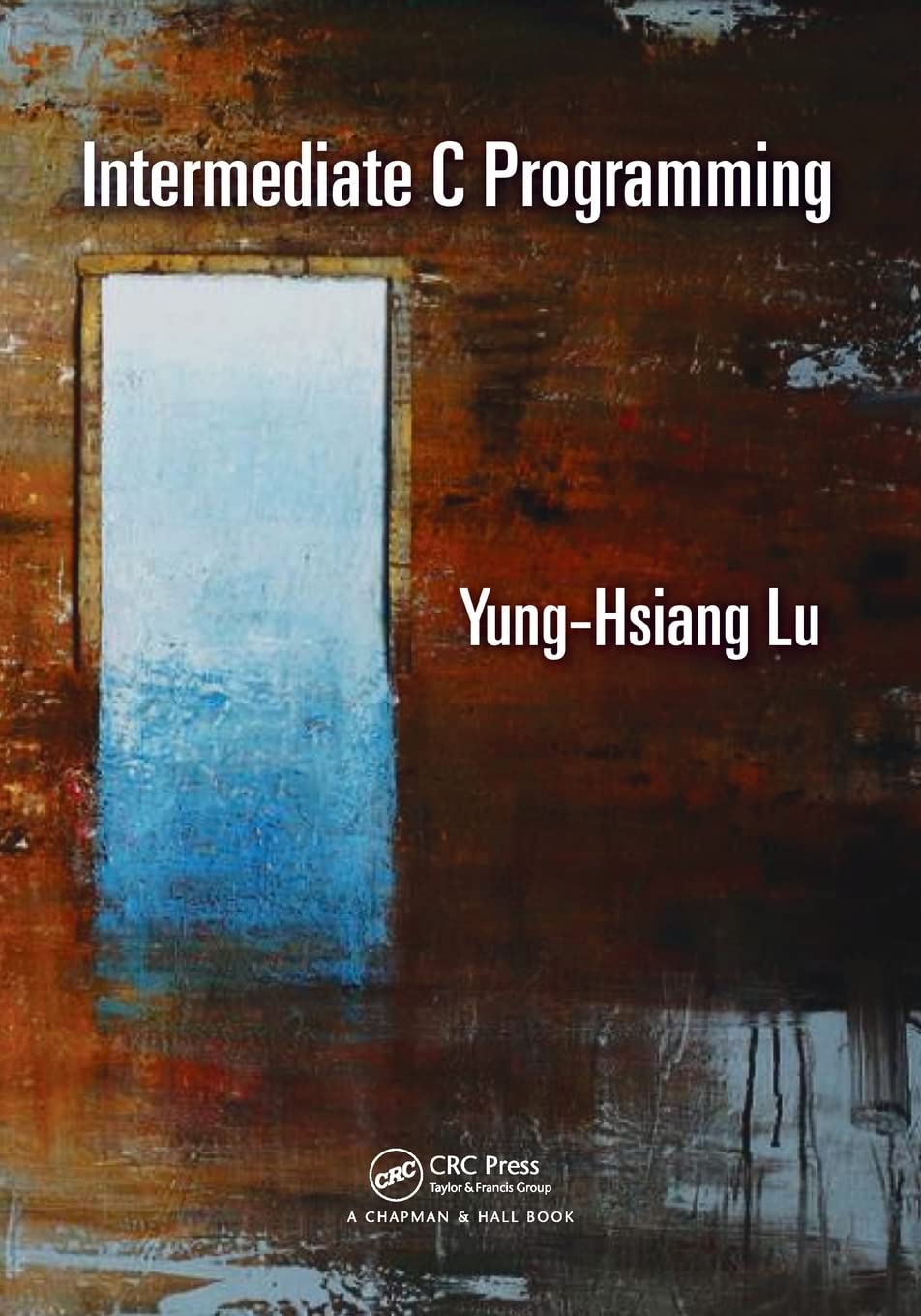
Intermediate C Programming by Yung-Hsiang Lu – A Step-by-Step Guide to Writing Professional C Code with Debugging and Li
Inclusive of all applicable taxes. FREE shipping on all orders.
Available Offers
- 🚚Free Delivery — Free shipping on all orders
- 💵Cash on Delivery — Pay when your order arrives
- ↩️15-Day Easy Returns — Hassle-free return policy
- 🔒Cash on Delivery — Pay safely when your order arrives
Check Delivery
Product Description
Introduction
For students and self-taught programmers who have mastered the basics of C and want to move beyond small academic exercises, Intermediate C Programming by Yung-Hsiang Lu is the ideal next step. This hardbound edition from CRC Press is designed specifically to bridge the gap between writing short code snippets and building real-world, maintainable software. Whether you are an engineering student in India preparing for placements or a hobbyist looking to deepen your understanding, this book offers a structured, no-nonsense approach to writing robust C programs.
Book Overview
Unlike beginner guides that focus on syntax, Intermediate C Programming emphasizes the craft of programming itself. The book teaches you how to think like a seasoned developer: how to identify and eliminate bugs before they become problems, how to write clean and readable code, and how to collaborate effectively with others using standard tools. The text is built around the Linux environment, introducing essential utilities like ddd (a graphical debugger) and valgrind (a memory debugging tool) that are widely used in industry and academia. Each concept is illustrated with concrete examples, comparing common mistakes with correct implementations to reinforce learning.
Key Highlights
- Focuses on practical debugging strategies and memory management, areas where intermediate programmers often struggle.
- Explains the connection between programming and discrete mathematics, helping you understand the logic behind algorithms.
- Uses real-world scenarios and code examples that reflect the challenges faced in professional software development.
- Teaches how to share code with others using version control and documentation best practices.
- Includes exercises that encourage you to write, test, and refine your own programs.
Inside the Book
The book is divided into logical sections that build upon each other. Early chapters revisit pointers, arrays, and structures but from a deeper perspective—focusing on common pitfalls and how to avoid them. Subsequent chapters introduce debugging techniques, including how to use breakpoints, watchpoints, and memory leak detection. Later sections cover modular programming, file I/O, and multi-file projects. The final chapters explore advanced topics like recursion, dynamic data structures, and the mathematical foundations of programming, ensuring you gain both theoretical understanding and practical skill.
Key Topics
- Advanced pointer usage and pointer arithmetic
- Dynamic memory allocation and deallocation
- Debugging with GDB and ddd
- Memory leak detection using valgrind
- Writing reusable and modular code
- File handling and error management
- Introduction to discrete mathematics for programmers
- Common programming mistakes and how to fix them
Reader Benefits
By working through this book, you will gain confidence in writing programs that are not only correct but also efficient and maintainable. You will learn to spot bugs early, use professional tools to diagnose issues, and structure your code so that others can easily understand and modify it. The emphasis on Linux-based tools is particularly valuable for Indian students who often encounter these environments in university labs and technical interviews. Additionally, the book's focus on discrete mathematics sharpens your analytical thinking, which is crucial for cracking coding challenges and building complex systems.
Learning Outcomes
- Ability to write C programs that are free of common errors like buffer overflows and memory leaks.
- Proficiency in using debuggers and memory analysis tools to improve code quality.
- Understanding of modular programming principles for building larger applications.
- Capability to apply discrete mathematics concepts to solve programming problems.
- Skill in reading, reviewing, and refactoring existing code.
Who Should Read
This book is perfect for undergraduate engineering students in India who have completed an introductory C programming course and want to level up. It is also suitable for working professionals who need to refresh their C skills or transition from scripting languages to systems programming. Anyone preparing for technical interviews that test deep C knowledge—such as those at top product-based companies—will find this book invaluable. It assumes basic familiarity with C syntax (variables, loops, functions) but does not require prior experience with debugging tools or advanced topics.
About the Author
Yung-Hsiang Lu is a professor at Purdue University, where he teaches computer engineering and programming. With years of experience teaching intermediate and advanced C courses, he has a deep understanding of the common hurdles students face. His research interests include computer vision, embedded systems, and energy-efficient computing. Lu's clear, example-driven teaching style makes complex concepts accessible without oversimplifying them.
About the Publisher
CRC Press is a globally respected publisher of scientific, technical, and medical content. Known for its rigorous editorial standards, CRC Press produces textbooks that are trusted by universities and professionals worldwide. This hardcover edition is built to last, making it a durable reference for your bookshelf.
Conclusion
Intermediate C Programming is more than just a textbook—it is a mentor that guides you from writing code that merely works to writing code that works well. If you are ready to move beyond the basics and become a programmer who can debug, optimize, and collaborate effectively, this book is your essential companion. Order your copy today from Bookshops.in and take the next step in your programming journey.
Quick Summary
Intermediate C Programming by Yung-Hsiang Lu is a transformative guide for students who have grasped the basics of C and are ready to write real-world software. Unlike introductory texts that focus on syntax, this book dives into the art of debugging, code quality, and professional tooling. Readers will learn to use Linux-based utilities like valgrind for memory leak detection and ddd for visual debugging, alongside strategies to identify and eliminate bugs systematically. The book also bridges programming with discrete mathematics, enhancing logical thinking. It is perfect for Indian engineering students, self-taught programmers, and anyone aiming to write clean, maintainable C code. By the end, readers can confidently tackle complex projects, share code with peers, and adopt practices used in industry. Buy your copy from Bookshops.in, India's trusted source for academic and professional books, and elevate your C programming skills to the next level.
Book Highlights
Book Specifications
| ISBN-13 | 9781498711630 |
| ISBN-10 | 1498711634 |
| Publisher | CRC Pr I Llc |
| Language | English |
| Dimensions | 17.27 x 2.79 x 25.15 cm |
| Weight | 862 g |
| Category | Languages › C & C++ |
| Genre | Non-fiction |
| Reading Age | 18+ |
| Original Language | English |
Frequently Asked Questions
Is this book suitable for beginners in C?
What Linux tools are covered in the book?
Does this book cover C++ or just C?
Can I use this book on Windows or macOS?
How many chapters are in the book?
Does the book include exercises?
Is this book part of a series?
Does the book cover modern C standards like C11 or C18?
How is this book different from other C programming books?
Can I use this book for self-study?
Does the book include solutions to exercises?
Where can I buy this book in India?
Readers Also Search For
Customers Also Bought

Programming
Algorithmische Sprache Und Programmentwicklung | by H. Partsch | F. L. Bauer | P. Pepper | Springer | by H. Partsch | F. L. Bauer | P. Pepper | Springer | by H. Partsch | F. L. Bauer | P. Pepper | Springer | by H. Partsch | F. L. Bauer | P. Pepper | Springer | by H. Partsch | F. L. Bauer | P. Pepper | Springer | by H. Partsch | F. L. Bauer | P. Pepper | Springer | by H. Partsch | F. L. Bauer | P. Pepper | Springer | by H. Partsch | F. L. Bauer | P. Pepper | Springer | by H. Partsch | F. L. Bauer
Programming
Distributed Algorithms | by Jean-Claude Bermond | Michel Raynal | Springer | by Jean-Claude Bermond | Michel Raynal | Springer | by Jean-Claude Bermond | Michel Raynal | Springer | by Jean-Claude Bermond | Michel Raynal | Springer | by Jean-Claude Bermond | Michel Raynal | Springer | by Jean-Claude Bermond | Michel Raynal | Springer | by Jean-Claude Bermond | Michel Raynal | Springer | by Jean-Claude Bermond | Michel Raynal | Springer | by Jean-Claude Bermond | Michel Raynal | Springer | by Jean
Programming
Meta-Level Control for Deductive Database Systems | by Helmut Schmidt | Springer | by Helmut Schmidt | Springer | by Helmut Schmidt | Springer | by Helmut Schmidt | Springer | by Helmut Schmidt | Springer | by Helmut Schmidt | Springer | by Helmut Schmidt | Springer | by Helmut Schmidt | Springer | by Helmut Schmidt | Springer | by Helmut Schmidt | Springer | by Helmut Schmidt | Springer | by Helmut Schmidt | Springer | by Helmut Schmidt | Springer | by Helmut Schmidt | Springer | by Helmut Schm
Programming
Java Web Services | by David A. Chappell | Tyler Jewell | O'Reilly Media | by David A. Chappell | Tyler Jewell | O'Reilly Media | by David A. Chappell | Tyler Jewell | O'Reilly Media | by David A. Chappell | Tyler Jewell | O'Reilly Media | by David A. Chappell | Tyler Jewell | O'Reilly Media | by David A. Chappell | Tyler Jewell | O'Reilly Media | by David A. Chappell | Tyler Jewell | O'Reilly Media | by David A. Chappell | Tyler Jewell | O'Reilly Media | by David A. Chappell | Tyler Jewell | O'
Programming
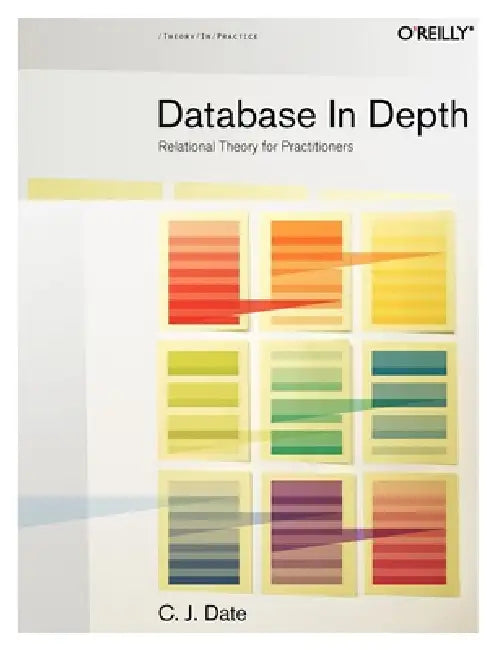
Database in Depth | by Chris J. Date | O'Reilly Media | by Chris J. Date | O'Reilly Media | by Chris J. Date | O'Reilly Media | by Chris J. Date | O'Reilly Media | by Chris J. Date | O'Reilly Media | by Chris J. Date | O'Reilly Media | by Chris J. Date | O'Reilly Media | by Chris J. Date | O'Reilly Media | by Chris J. Date | O'Reilly Media | by Chris J. Date | O'Reilly Media | by Chris J. Date | O'Reilly Media | by Chris J. Date | O'Reilly Media | by Chris J. Date | O'Reilly Media | by Chris J.
Programming
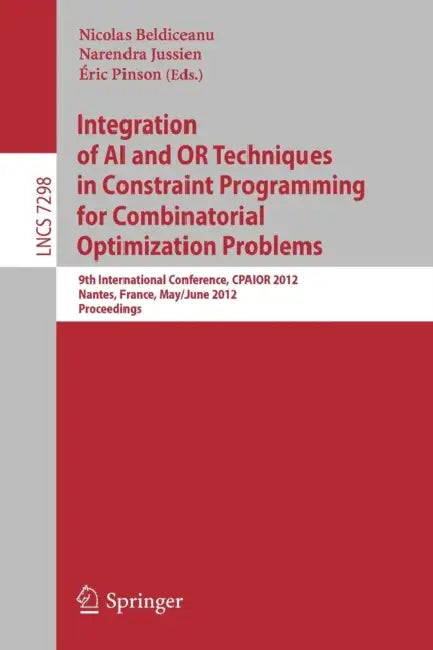
Integration of AI and OR Techniques in Constraint Programming for Combinatorial Optimization Problem | by Nicolas Beldiceanu | Narendra Jussien | Eric Pinson | Springer | by Nicolas Beldiceanu | Narendra Jussien | Eric Pinson | Springer | by Nicolas Beldiceanu | Narendra Jussien | Eric Pinson | Springer | by Nicolas Beldiceanu | Narendra Jussien | Eric Pinson | Springer | by Nicolas Beldiceanu | Narendra Jussien | Eric Pinson | Springer | by Nicolas Beldiceanu | Narendra Jussien | Eric Pinson |
Related Products
View All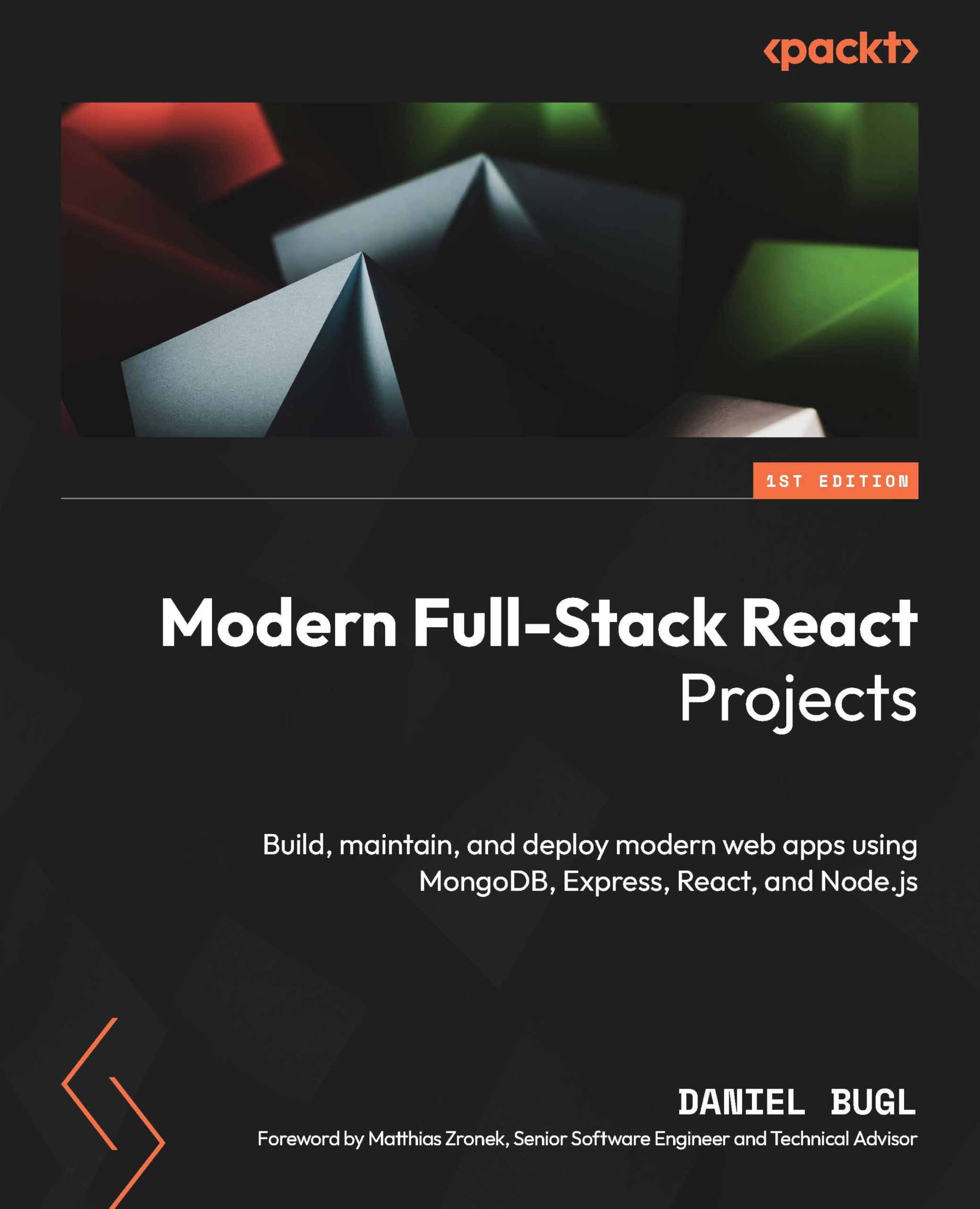
Computers & Internet
Modern Full-Stack React Projects by Daniel Bugl
Computers & Internet
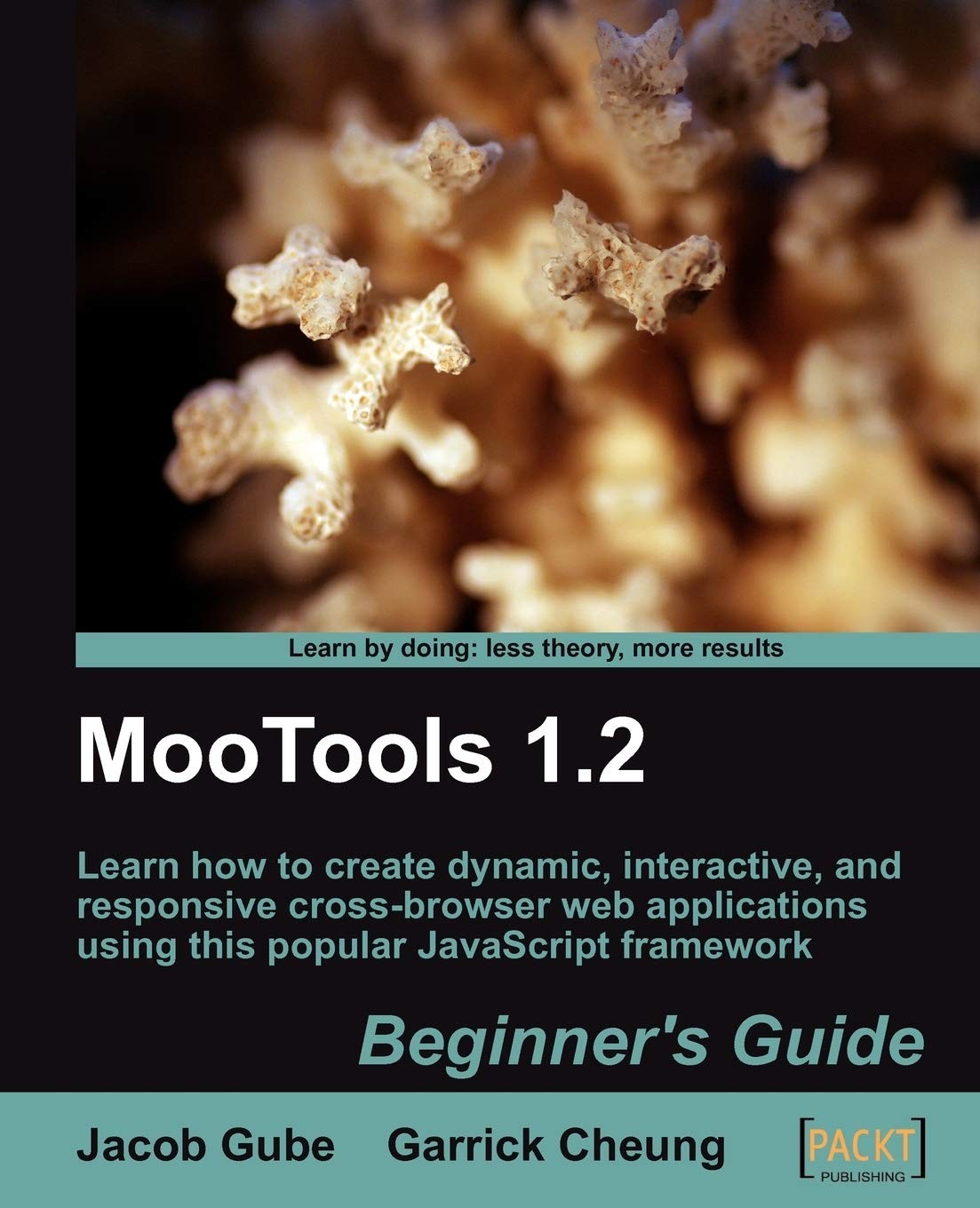
Mootools 1.2 Beginner's Guide (English, Jacob Gube)
Computers & Internet
Contemporary Methods for Speech Parameterization (Springerbriefs in Electrical and Computer Engineering / Springerbriefs in Speech Technology)

Computers & Internet
Information Technology and Lawyers | by Arno R. Lodder | Anja Oskamp | Springer | by Arno R. Lodder | Anja Oskamp | Springer | by Arno R. Lodder | Anja Oskamp | Springer | by Arno R. Lodder | Anja Oskamp | Springer | by Arno R. Lodder | Anja Oskamp | Springer | by Arno R. Lodder | Anja Oskamp | Springer | by Arno R. Lodder | Anja Oskamp | Springer | by Arno R. Lodder | Anja Oskamp | Springer | by Arno R. Lodder | Anja Oskamp | Springer | by Arno R. Lodder | Anja Oskamp | Springer | by Arno R. Lo

Computers & Internet
Digital Analysis of Remotely Sensed Imagery | by Jay Gao | McGraw-Hill Companies | by Jay Gao | McGraw-Hill Companies | by Jay Gao | McGraw-Hill Companies | by Jay Gao | McGraw-Hill Companies | by Jay Gao | McGraw-Hill Companies | by Jay Gao | McGraw-Hill Companies | by Jay Gao | McGraw-Hill Companies | by Jay Gao | McGraw-Hill Companies | by Jay Gao | McGraw-Hill Companies | by Jay Gao | McGraw-Hill Companies | by Jay Gao | McGraw-Hill Companies | by Jay Gao | McGraw-Hill Companies | by Jay Gao
Computers & Internet