
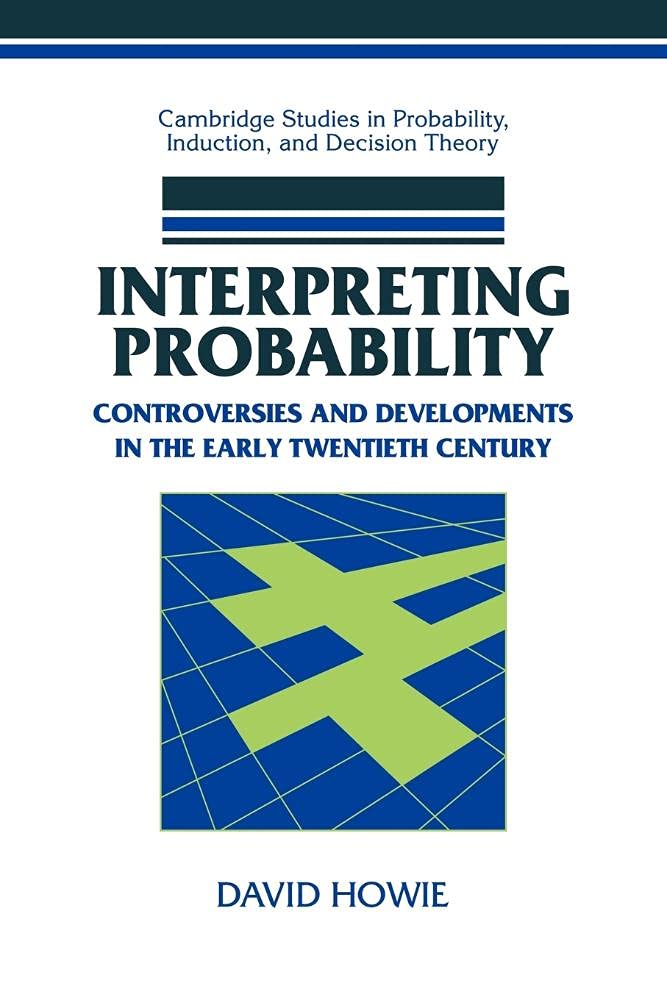
Interpreting Probability: Controversies and Developments in the Early Twentieth Century by David Howie – A Deep Dive int
Inclusive of all applicable taxes. FREE shipping on all orders.
Available Offers
- 🚚Free Delivery — Free shipping on all orders
- 💵Cash on Delivery — Pay when your order arrives
- ↩️15-Day Easy Returns — Hassle-free return policy
- 🔒Cash on Delivery — Pay safely when your order arrives
Check Delivery
Product Description
Introduction
How do we make sense of uncertainty? Is probability an objective property of the world, or a subjective measure of our own ignorance? These questions have fascinated thinkers for centuries, but never more intensely than during the early twentieth century. David Howie's Interpreting Probability: Controversies and Developments in the Early Twentieth Century takes readers to the heart of this intellectual storm. Published by Cambridge University Press, this hardcover volume is an essential addition to the library of anyone serious about the foundations of statistics, the philosophy of science, or the history of mathematical thought.
Book Overview
This 2002 work examines a pivotal period when two competing interpretations of probability—the frequentist and the Bayesian—clashed for dominance. Through a detailed reconstruction of a famous dispute between two British scientists, Howie demonstrates that neither logic nor mathematics alone could settle the debate. Instead, personal experiences, professional aims, and philosophical commitments shaped which interpretation each scientist embraced. The book offers a compelling narrative that is as much about human judgment as it is about mathematical theory.
Key Highlights
- Historical Depth: Traces the evolution of probability theory from the eighteenth century through the 1930s, focusing on the critical decades that discredited Bayesianism as a scientific inference tool.
- Real-World Dispute: Centers on a fascinating intellectual confrontation between two British scientists, showing how abstract ideas play out in actual research.
- Balanced Treatment: Neither champions nor dismisses either interpretation, but reveals the contextual factors that influence scientific choice.
- Interdisciplinary Appeal: Bridges mathematics, statistics, history, sociology, and philosophy in a single accessible narrative.
Inside the Book
The book is structured around the gradual shift in scientific attitudes toward probability. It begins by explaining the frequency interpretation—probability as a limiting ratio in repeatable events—and the Bayesian view—probability as a mental construct representing uncertainty. Howie then reconstructs the early twentieth-century debates, drawing on archival sources and published works. Readers will encounter detailed discussions of key figures, including their correspondence and unpublished notes, which bring the intellectual drama to life. The final chapters reflect on what this historical episode means for contemporary science and statistics.
Key Topics
- Frequency interpretation of probability
- Bayesian probability and subjective uncertainty
- The dispute between R. A. Fisher and Harold Jeffreys
- Scientific inference in the early 1900s
- Role of personal judgment in statistical methodology
- Historical sociology of scientific knowledge
- Philosophical foundations of probability theory
Reader Benefits
This book is not just a history lesson; it is a toolkit for clearer thinking. By understanding how past scientists grappled with probability, readers gain a deeper appreciation of modern statistical methods. The narrative style makes complex ideas approachable, while the rigorous scholarship ensures that serious students will find ample material for further study. For Indian readers, especially those preparing for competitive exams or academic research in statistics, economics, or the sciences, this book provides a crucial conceptual foundation that standard textbooks often skip.
Learning Outcomes
- Understand the difference between frequentist and Bayesian interpretations of probability.
- Recognize the historical events that shaped modern statistical practice.
- Analyze how personal and professional factors influence scientific theory choice.
- Critically evaluate the assumptions behind statistical methods used today.
- Apply historical perspectives to contemporary debates in data science and machine learning.
Who Should Read
This book is ideal for undergraduate and postgraduate students in statistics, mathematics, philosophy of science, and history of science. Researchers and teachers looking to enrich their understanding of probability will find it invaluable. General readers with a curiosity about how science really works—beyond the textbook formulas—will also enjoy the narrative. If you are a professional in data analytics, economics, or artificial intelligence, this historical perspective will sharpen your conceptual tools.
About the Author
David Howie is a historian and philosopher of science whose work focuses on the development of statistical reasoning. His research combines meticulous archival study with clear philosophical analysis, making him uniquely qualified to tell this story. Howie has contributed to several academic journals and his writing is known for its accessibility without sacrificing depth.
About the Publisher
Cambridge University Press is one of the world's oldest and most respected academic publishers. With a tradition of excellence dating back to 1534, Cambridge books are synonymous with rigorous peer review, authoritative scholarship, and global reach. This volume upholds that reputation, offering a work that is both scholarly and readable.
Conclusion
Interpreting Probability is more than a history book; it is a mirror held up to the scientific mind. By showing how two brilliant scientists could look at the same mathematical facts and reach opposite conclusions, David Howie reveals the human element at the core of objective science. For anyone who has ever wondered why statisticians disagree, or how we can be certain about uncertainty, this book provides the answers—and raises new questions. Order your hardcover copy from Bookshops.in today and add a landmark work to your collection.
Quick Summary
Interpreting Probability: Controversies and Developments in the Early Twentieth Century by David Howie is a scholarly exploration of the fundamental divide between Bayesian and frequentist interpretations of probability. The book delves into the historical context of the early 1900s, when Bayesianism, once widely accepted, was discredited as a theory of scientific inference. Through a detailed examination of a dispute between two British scientists, Howie argues that the choice between these interpretations is not dictated by pure logic or mathematics but is shaped by the personal experiences, aims, and philosophical commitments of the individuals involved. This work is ideal for students and researchers in statistics, philosophy of science, and the history of mathematics. Readers will gain a nuanced understanding of how probability theory evolved and why different statistical approaches persist today. By purchasing from Bookshops.in, Indian readers receive a genuine hardcover edition from Cambridge University Press, ensuring quality and authenticity. The book encourages critical reflection on the nature of scientific inference, making it a valuable addition to any academic library.
Book Highlights
Book Specifications
| ISBN-13 | 9780521037549 |
| ISBN-10 | 0521037549 |
| Publisher | Cambridge University Press |
| Language | English |
| Dimensions | 15.24 x 1.75 x 22.86 cm |
| Weight | 422 g |
| Country | India |
| Category | Philosophy › Epistemology |
| Genre | Non-fiction |
| Original Language | English |
Frequently Asked Questions
What is the main topic of Interpreting Probability?
Who is the author of this book?
Is this book suitable for beginners in statistics?
What makes this book unique?
Does the book cover modern probability theory?
What language is the book in?
What is the ISBN-13?
Is this book available in hardcover?
Can I use this book for a philosophy of science course?
Does the book include mathematical formulas?
Why should I buy from Bookshops.in?
Is the book relevant for data scientists?
Readers Also Search For
Customers Also Bought
Philosophy
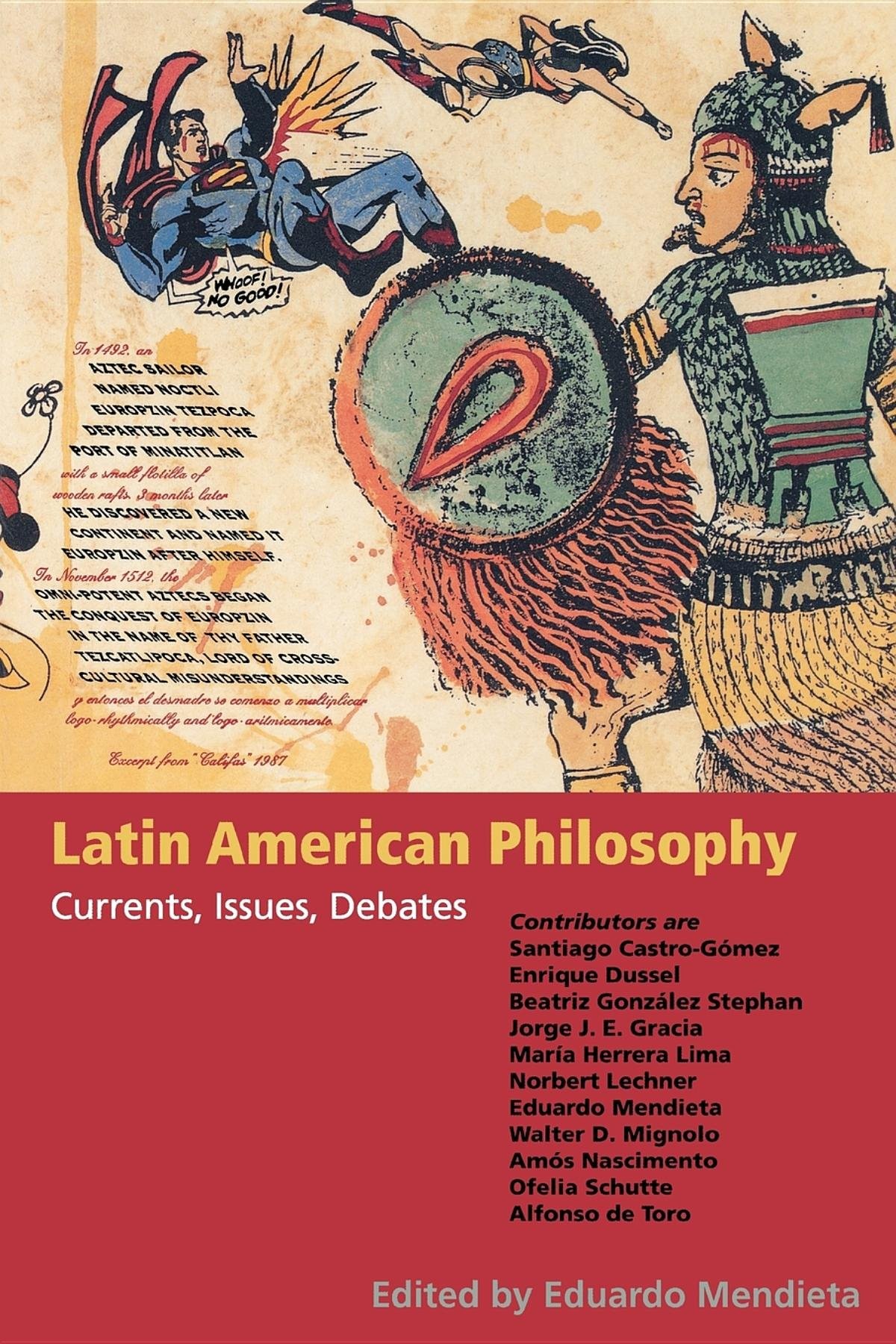
Latin American Philosophy: Currents, Issues, Debates by Eduardo Mendieta

Philosophy
Al-Farabi's Short Commentary on Aristotle's Prior Analytics by Nicholas Rescher – Philosophy

Philosophy
Poetics of Imagining: Modern to Post-modern by Richard Kearney

Philosophy
The Metaphysics of Extrinsic Properties: 11 (Metaphysical Research, 11)
Philosophy
Dialogues on Metaphysics and on Religion by Nicolas Malebranche – Philosophy
Philosophy
Metaphysics and Truthmakers: 18 (Philosophische Analyse / Philosophical Analysis, 18)
Related Products
View AllPhilosophy
Latin American Philosophy: Currents, Issues, Debates by Eduardo Mendieta
Philosophy
Al-Farabi's Short Commentary on Aristotle's Prior Analytics by Nicholas Rescher – Philosophy
Philosophy
Poetics of Imagining: Modern to Post-modern by Richard Kearney
Philosophy
The Metaphysics of Extrinsic Properties: 11 (Metaphysical Research, 11)
Philosophy
Dialogues on Metaphysics and on Religion by Nicolas Malebranche – Philosophy
Philosophy