
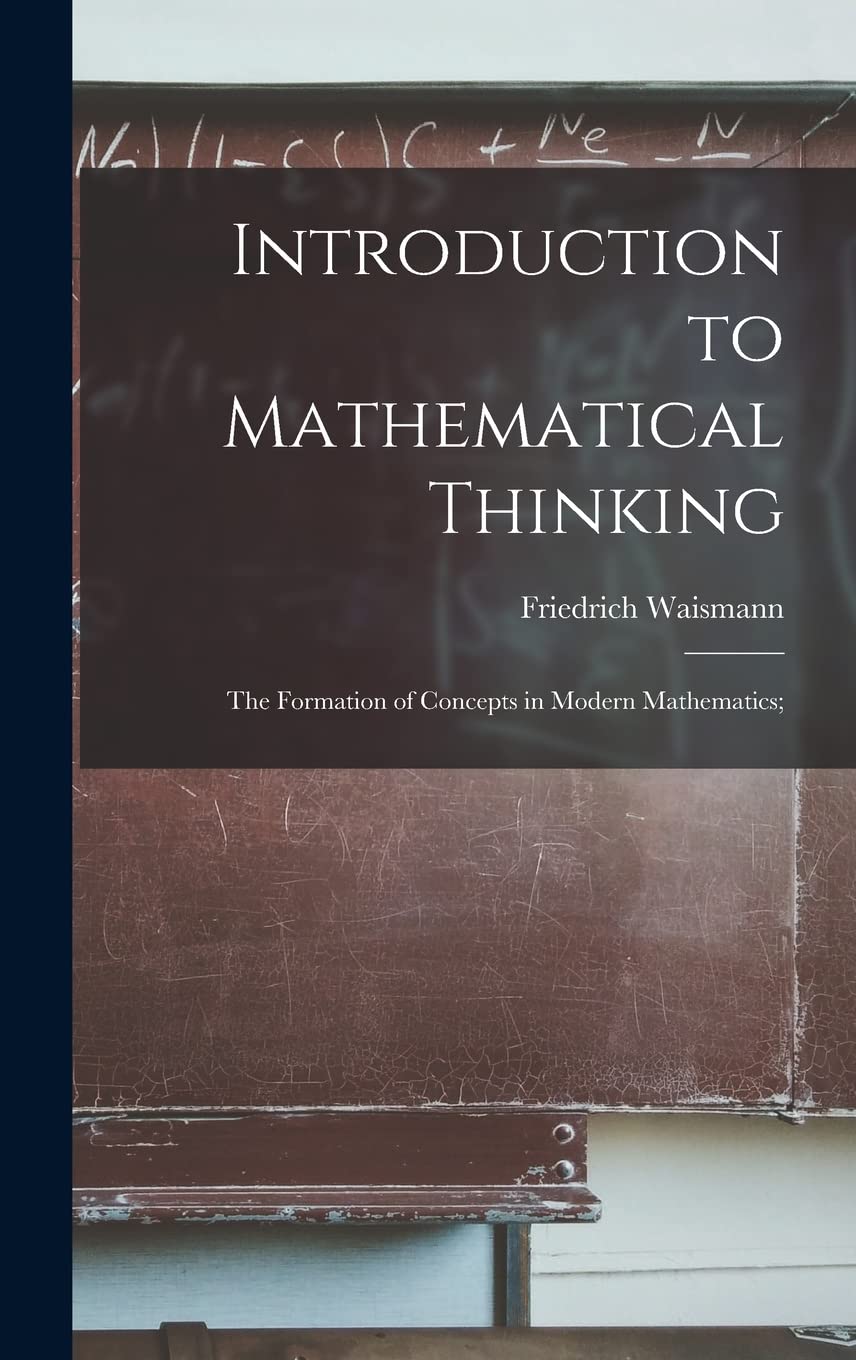
Introduction to Mathematical Thinking: The Formation of Concepts in Modern Mathematics by Friedrich Waismann – A Deep Di
Inclusive of all applicable taxes. FREE shipping on all orders.
Available Offers
- 🚚Free Delivery — Free shipping on all orders
- 💵Cash on Delivery — Pay when your order arrives
- ↩️15-Day Easy Returns — Hassle-free return policy
- 🔒Cash on Delivery — Pay safely when your order arrives
Check Delivery
Product Description
Introduction
Mathematics is often seen as a collection of rules and formulas, but at its heart, it is a living, evolving language of thought. Friedrich Waismann’s Introduction to Mathematical Thinking: the Formation of Concepts in Modern Mathematics is a profound exploration of how mathematical ideas are born, shaped, and refined. This hardcover edition, published by Hassell Street Press, brings a classic work back into the hands of curious students, educators, and lifelong learners in India. Whether you are preparing for competitive exams, teaching mathematics, or simply fascinated by the philosophy behind numbers, this book offers a unique journey into the very fabric of mathematical reasoning.
Book Overview
Originally written by one of the leading figures of the Vienna Circle, this book is not a typical textbook. Instead, it delves into the conceptual foundations of modern mathematics. Waismann examines how abstract concepts like number, space, and infinity emerge from practical human experience and logical necessity. The book bridges the gap between formal mathematics and the philosophical questions that drive it. This edition has been carefully proofread and republished to preserve the original graphical elements while ensuring a clean, easy-to-read typeface for modern readers.
Key Highlights
- Philosophical Depth: Explores the logical and historical roots of mathematical concepts, not just their applications.
- Accessible Prose: Written in a clear, engaging style that makes complex ideas understandable to non-specialists.
- Classic Scholarship: A culturally significant work that has shaped the way mathematicians and philosophers think about their discipline.
- High-Quality Hardcover: Durable binding suitable for library collections, academic study, or personal reference.
- Preserved Originality: Retains the essence of the original publication while being updated for readability.
Inside the Book
The book is structured as a series of interconnected essays that build upon each other. It begins with the nature of mathematical propositions and moves through the evolution of number systems, the concept of infinity, the role of axioms, and the rise of set theory. Waismann uses simple examples and logical arguments to show how mathematical thinking is a creative act, not just mechanical calculation. The text is supplemented with diagrams and notations that help visualise key ideas, making it a rich resource for self-study.
Key Topics
- The nature of mathematical truth and proof
- Formation of natural numbers and the concept of zero
- Rational and irrational numbers
- The infinite in mathematics
- Geometric thinking and spatial intuition
- Axiomatic method and formal systems
- Set theory and the foundations of mathematics
- The relationship between logic and mathematics
Reader Benefits
By reading this book, you will move beyond rote learning and develop a genuine understanding of why mathematics works the way it does. It sharpens critical thinking, enhances problem-solving skills, and provides a historical perspective that enriches any mathematical study. For Indian students preparing for competitive exams like JEE, GATE, or NET, this book offers conceptual clarity that can be a game-changer. Teachers will find new ways to explain abstract topics, while general readers will discover the beauty hidden within equations.
Learning Outcomes
- Understand how mathematical concepts are defined and refined over time
- Recognise the difference between intuitive and formal reasoning
- Gain insight into the philosophical debates that shaped modern mathematics
- Develop a deeper appreciation for the logical structure of arithmetic, algebra, and geometry
- Improve your ability to think abstractly and critically about mathematical problems
Who Should Read
This book is ideal for undergraduate and postgraduate students of mathematics, physics, and philosophy. It is also highly recommended for mathematics educators who wish to bring historical and philosophical context into their classrooms. Anyone with a curious mind—whether a self-learner, a researcher, or a hobbyist—who wants to understand the ‘why’ behind mathematical rules will find this book invaluable. It is particularly suited for readers in India who value a rigorous yet accessible approach to intellectual history.
About the Author
Friedrich Waismann (1896–1959) was an Austrian mathematician, physicist, and philosopher. He was a key member of the Vienna Circle, a group of thinkers who revolutionised the philosophy of science and mathematics. Waismann worked closely with Ludwig Wittgenstein and Moritz Schlick, and his writings reflect a deep commitment to clarity and logical analysis. His works continue to be studied by scholars and students around the world for their insight into the foundations of human knowledge.
About the Publisher
Hassell Street Press is dedicated to preserving culturally important works of scholarship. They specialise in republishing classic texts in high-quality formats, ensuring that timeless ideas remain accessible to new generations. This edition has been meticulously proofread and formatted to blend original graphical elements with a modern, easy-to-read typeface, honouring both the author’s vision and the reader’s comfort.
Conclusion
Introduction to Mathematical Thinking: the Formation of Concepts in Modern Mathematics is more than a book—it is an invitation to think like a mathematician. It challenges you to question assumptions, trace the origins of ideas, and appreciate the elegance of logical structure. Whether you add it to your personal library or use it for academic study, this hardcover edition from Hassell Street Press is a treasure for any serious learner in India. Order your copy from Bookshops.in today and step into the fascinating world of mathematical thought.
Quick Summary
Introduction to Mathematical Thinking: The Formation of Concepts in Modern Mathematics by Friedrich Waismann is a profound exploration of how mathematical ideas originate and evolve. Written by a key figure of the Vienna Circle, this book bridges philosophy and mathematics, examining the logical and intuitive roots of concepts like number, set, and proof. It is ideal for students of mathematics, philosophy, and logic who wish to deepen their understanding of the foundations of the discipline. Readers will gain insight into the debates that shaped modern mathematics, from axiomatic systems to the nature of mathematical truth. This hardcover edition from Hassell Street Press preserves the original text with clear typography and graphical elements. By purchasing from Bookshops.in, Indian readers receive a high-quality physical copy that enriches their library and intellectual journey.
Book Highlights
Book Specifications
| ISBN-13 | 9781014310095 |
| ISBN-10 | 1014310091 |
| Publisher | Hassell Street Press |
| Language | English |
| Dimensions | 15.6 x 1.75 x 23.39 cm |
| Weight | 571 g |
| Category | Science & Mathematics › Mathematics |
| Genre | Nonfiction |
| Reading Age | Adult |
| Original Language | German |
Frequently Asked Questions
What is the main theme of Introduction to Mathematical Thinking?
Who is Friedrich Waismann?
Is this book suitable for beginners in mathematics?
What topics are covered in this book?
Is this a textbook or a philosophical work?
Does the book include exercises or problems?
What is the ISBN-13 for this book?
Is this book part of a series?
Can I use this book for a philosophy of mathematics course?
What is the price of this book on Bookshops.in?
Is the book written in English?
Why should I buy from Bookshops.in?
What is the customer rating for this book?
Readers Also Search For
Customers Also Bought
Mathematics
Stereotype Spaces and Algebras: 73 (De Gruyter Expositions in Mathematics, 73)
Mathematics
Semigroups in Algebra, Geometry and Analysis: 20 (De Gruyter Expositions in Mathematics, 20)
Mathematics
Geometry from the Pacific Rim: Proceedings of the Pacific Rim Geometry Conference held at National University of Singapore, Republic of Singapore, ... 1994 (De Gruyter Proceedings in Mathematics)
Mathematics
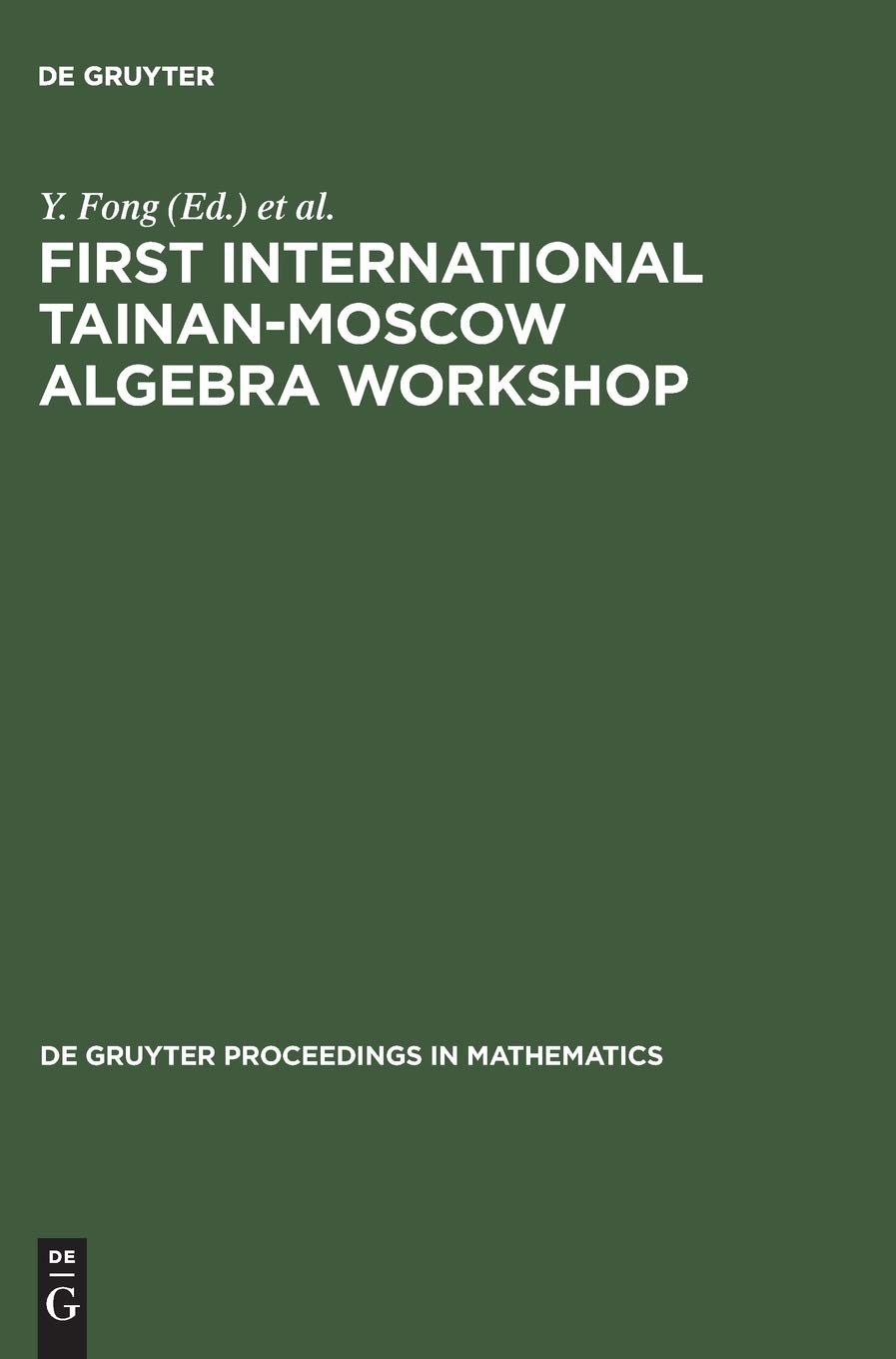
First International Tainan-Moscow Algebra Workshop: Proceedings of the International Conference held at National Cheng Kung University Tainan, Taiwan, ... 1994 (De Gruyter Proceedings in Mathematics)
Mathematics
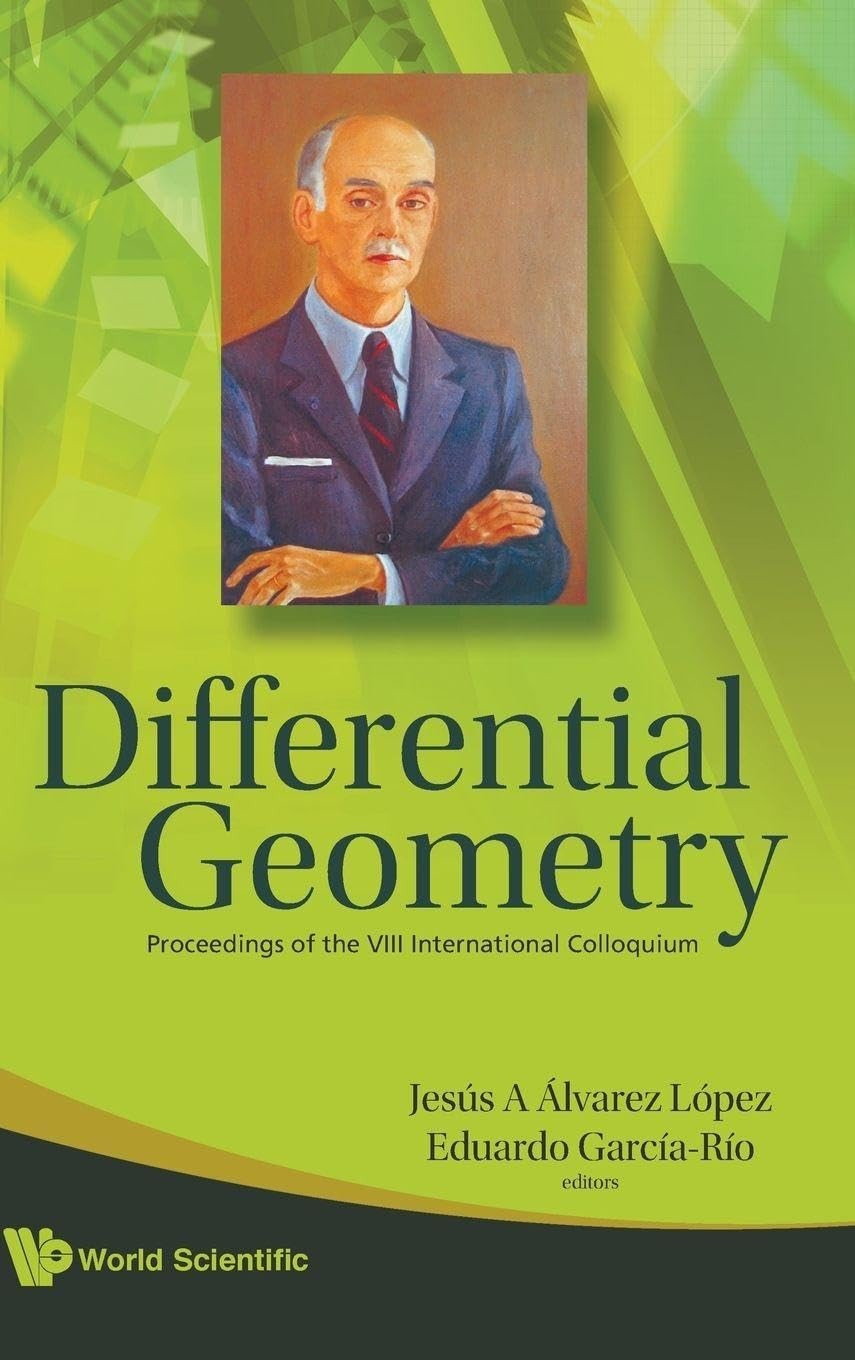
Differential Geometry - Proceedings of the VIII International Colloquium (English, Jesus A. Alvarez Lopez | Eduardo Garcia-Rio)
Mathematics
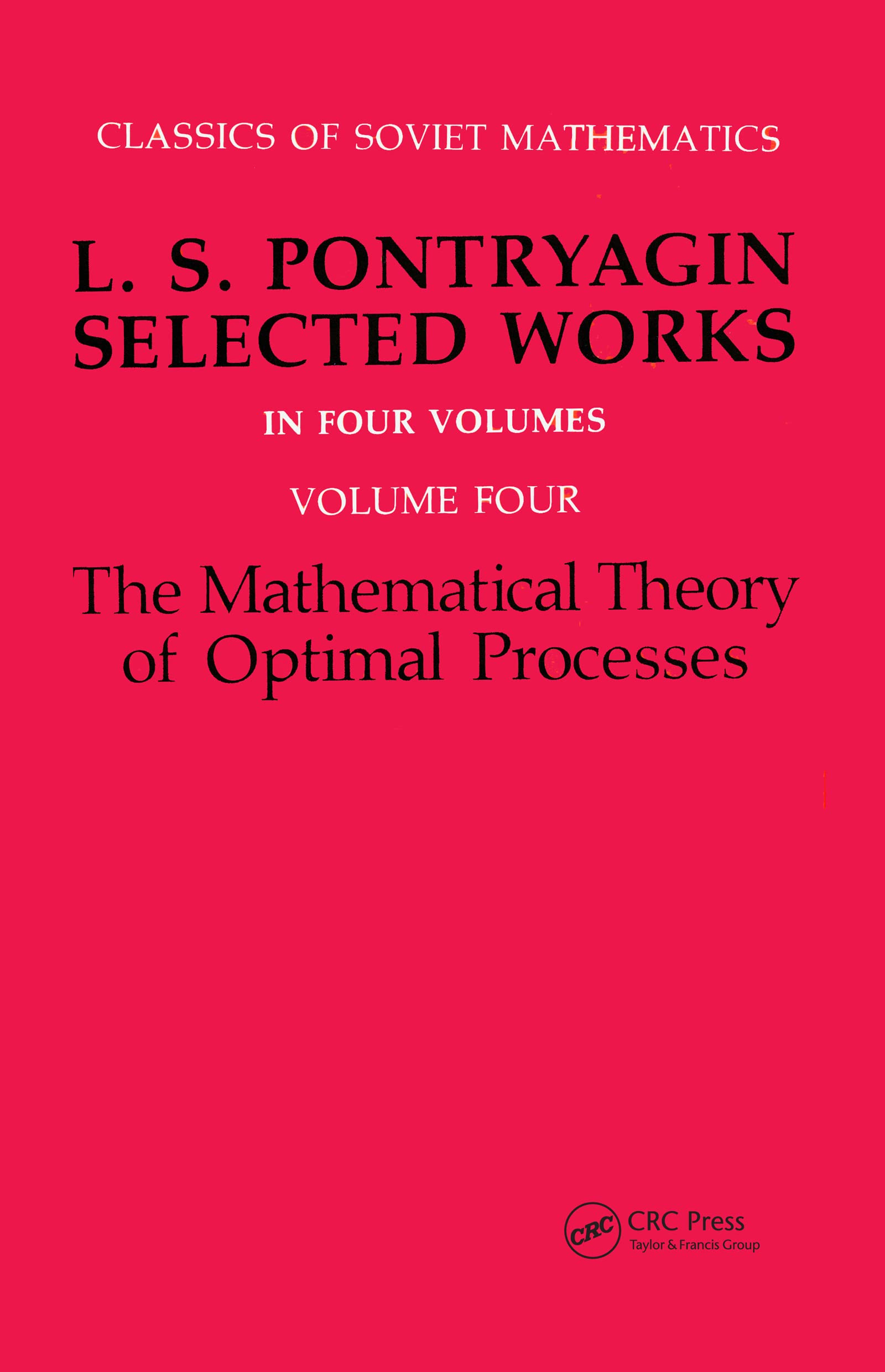
Mathematical Theory of Optimal Processes (Classics of Soviet Mathematics)
Related Products
View AllMathematics
Mathematical Theory of Optimal Processes (Classics of Soviet Mathematics)
Mathematics
Stereotype Spaces and Algebras: 73 (De Gruyter Expositions in Mathematics, 73)
Mathematics
Semigroups in Algebra, Geometry and Analysis: 20 (De Gruyter Expositions in Mathematics, 20)
Mathematics
Geometry from the Pacific Rim: Proceedings of the Pacific Rim Geometry Conference held at National University of Singapore, Republic of Singapore, ... 1994 (De Gruyter Proceedings in Mathematics)
Mathematics
First International Tainan-Moscow Algebra Workshop: Proceedings of the International Conference held at National Cheng Kung University Tainan, Taiwan, ... 1994 (De Gruyter Proceedings in Mathematics)
Mathematics