

Introduction to Optical Quantum Information Processing by Pieter Kok – A Graduate Textbook on Quantum Optics, Computing,
Inclusive of all applicable taxes. FREE shipping on all orders.
Available Offers
- 🚚Free Delivery — Free shipping on all orders
- 💵Cash on Delivery — Pay when your order arrives
- ↩️15-Day Easy Returns — Hassle-free return policy
- 🔒Cash on Delivery — Pay safely when your order arrives
Check Delivery
Product Description
Introduction
Quantum information processing is poised to redefine the boundaries of computing, communication, and measurement. For students and researchers stepping into this fascinating field, finding a clear, rigorous, and practical guide is essential. Introduction to Optical Quantum Information Processing by Pieter Kok offers exactly that—a comprehensive journey through the principles and techniques that underpin optical quantum technologies. Published by Cambridge University Press, this hardbound edition is an indispensable resource for anyone serious about mastering the science behind quantum computers and secure quantum networks.
Book Overview
This textbook bridges the gap between quantum optics and quantum information theory, presenting a unified view of how light-based systems can be harnessed for quantum computation. Starting with foundational concepts, the book systematically builds up to cutting-edge implementations, including single-photon linear optics, optically controlled atoms, solid-state systems, atomic ensembles, and continuous-variable approaches. With over 120 exercises and numerous worked examples, it is designed to transform theoretical understanding into practical problem-solving skills. The author’s clear narrative style ensures that even complex topics become accessible, making this a go-to reference for graduate students and early-career researchers in India and around the world.
Key Highlights
- Comprehensive coverage of both quantum optics and quantum information theory in one volume
- Over 120 exercises with worked examples to reinforce learning
- Focus on optical implementations—the most promising pathway to practical quantum devices
- Up-to-date techniques including linear optical quantum computing, atomic ensembles, and continuous variables
- Rigorous yet accessible treatment suitable for graduate-level study
Inside the Book
The book is structured to take readers from basics to advanced topics seamlessly. Early chapters cover essential quantum optics—coherent states, squeezed light, and photon statistics—alongside core quantum information concepts like qubits, entanglement, and quantum gates. Later chapters dive into specific architectures: how single photons and linear optics can perform universal quantum computation, how atoms trapped in optical cavities enable deterministic gates, and how solid-state systems like quantum dots offer scalability. The final sections explore continuous-variable quantum information, where light’s quadrature amplitudes encode information, and the exciting frontier of atomic ensembles for quantum repeaters and memory. Each chapter ends with exercises that challenge readers to apply concepts, making it ideal for self-study or classroom use.
Key Topics
- Quantum optics fundamentals: coherent states, beam splitters, phase shifters, and homodyne detection
- Quantum information primitives: qubits, quantum gates, teleportation, and error correction
- Linear optical quantum computing: the KLM protocol and its variants
- Atom–light interactions: cavity QED and optically controlled quantum gates
- Solid-state implementations: quantum dots, nitrogen-vacancy centres, and photonic crystals
- Atomic ensembles: collective excitations, quantum memory, and repeaters
- Continuous-variable quantum information: squeezed states, Gaussian operations, and cluster states
Reader Benefits
By studying this book, you will develop a deep, intuitive grasp of how light can be used to process quantum information. The worked examples train you to solve real-world problems in quantum optics and quantum computing. The extensive exercise sets prepare you for research-level challenges, whether you are designing experiments or developing theoretical models. Moreover, the book’s balanced approach—combining mathematical rigour with physical insight—ensures that you not only learn the 'how' but also the 'why' behind each technique. Indian students preparing for competitive exams or research positions will find this text particularly valuable for building a solid foundation in a rapidly growing field.
Learning Outcomes
- Master the mathematical tools of quantum optics and quantum information theory
- Understand how to represent and manipulate quantum information using optical systems
- Analyse and compare different optical quantum computing architectures
- Design basic quantum circuits using linear optics and photon detectors
- Evaluate the strengths and limitations of atomic, solid-state, and continuous-variable approaches
- Apply quantum error correction and fault-tolerant concepts to optical systems
Who Should Read
This book is ideally suited for graduate students in physics, electrical engineering, or computer science who are beginning research in quantum information processing. It also serves as an excellent reference for postdoctoral researchers and professionals transitioning into quantum technologies. Indian students pursuing M.Sc., M.Tech., or Ph.D. programmes in quantum optics, photonics, or quantum computing will find the content perfectly aligned with advanced coursework. The book assumes prior knowledge of basic quantum mechanics and electromagnetism, but no prior exposure to quantum optics is required—making it accessible yet challenging.
About the Author
Pieter Kok is a leading researcher in the field of quantum information science, with a focus on optical implementations. He has contributed significantly to the theory of linear optical quantum computing and quantum error correction. His teaching experience at the University of Sheffield and other institutions has shaped this textbook into a pedagogically sound resource that balances depth with clarity. Kok’s ability to explain intricate concepts in an approachable manner has earned him recognition among students and colleagues alike.
About the Publisher
Cambridge University Press is one of the world’s oldest and most respected academic publishers, with a legacy of producing high-quality textbooks and research monographs. Known for rigorous peer review and editorial excellence, Cambridge University Press ensures that every title meets the highest standards of scholarship. This hardcover edition of Introduction to Optical Quantum Information Processing reflects that commitment, offering durable binding and clear typesetting—perfect for years of use in the classroom or laboratory.
Conclusion
Whether you are a student embarking on a research career or a professional seeking to understand the optical route to quantum computing, Introduction to Optical Quantum Information Processing is the definitive guide. With its thorough coverage, practical exercises, and focus on real-world implementations, this book will equip you with the knowledge and skills to contribute to the quantum revolution. Order your copy from Bookshops.in today and take the first step into the light-based future of information processing.
Quick Summary
Introduction to Optical Quantum Information Processing by Pieter Kok is a definitive graduate textbook that bridges quantum optics and quantum information science. It begins with foundational concepts in quantum optics and information theory, then systematically presents the leading optical approaches to building quantum computers. Readers will explore linear optics quantum computing, single-photon sources and detectors, quantum gates, teleportation, cryptography, and error correction. The book also delves into implementations using atomic ensembles, solid-state systems, and continuous variables. Written by a respected researcher, it balances rigorous mathematics with practical insights, making it ideal for Indian graduate students and researchers entering the field. Bookshops.in provides this essential Cambridge University Press hardcover at ₹2866, ensuring you receive a genuine copy for your academic journey.
Book Highlights
Book Specifications
| ISBN-13 | 9780521519144 |
| ISBN-10 | 0521519144 |
| Publisher | Cambridge University Press |
| Language | English |
| Dimensions | 19.05 x 1.91 x 24.77 cm |
| Weight | 1 kg 240 g |
| Category | Science & Mathematics › Physics |
| Genre | Non-fiction |
| Original Language | English |
Frequently Asked Questions
What is this book about?
Who is the author?
What level of prior knowledge is needed?
Is this book suitable for self-study?
Does it cover quantum cryptography?
What practical implementations are discussed?
Is this a research monograph or a textbook?
Does it include exercises?
What is the binding type?
Can I use this for a course on quantum computing?
Does it cover quantum error correction?
What is the price in India?
Why should I buy from Bookshops.in?
Readers Also Search For
Customers Also Bought
Mathematics
Stereotype Spaces and Algebras: 73 (De Gruyter Expositions in Mathematics, 73)
Mathematics
Semigroups in Algebra, Geometry and Analysis: 20 (De Gruyter Expositions in Mathematics, 20)
Mathematics
Geometry from the Pacific Rim: Proceedings of the Pacific Rim Geometry Conference held at National University of Singapore, Republic of Singapore, ... 1994 (De Gruyter Proceedings in Mathematics)
Mathematics
First International Tainan-Moscow Algebra Workshop: Proceedings of the International Conference held at National Cheng Kung University Tainan, Taiwan, ... 1994 (De Gruyter Proceedings in Mathematics)
Mathematics
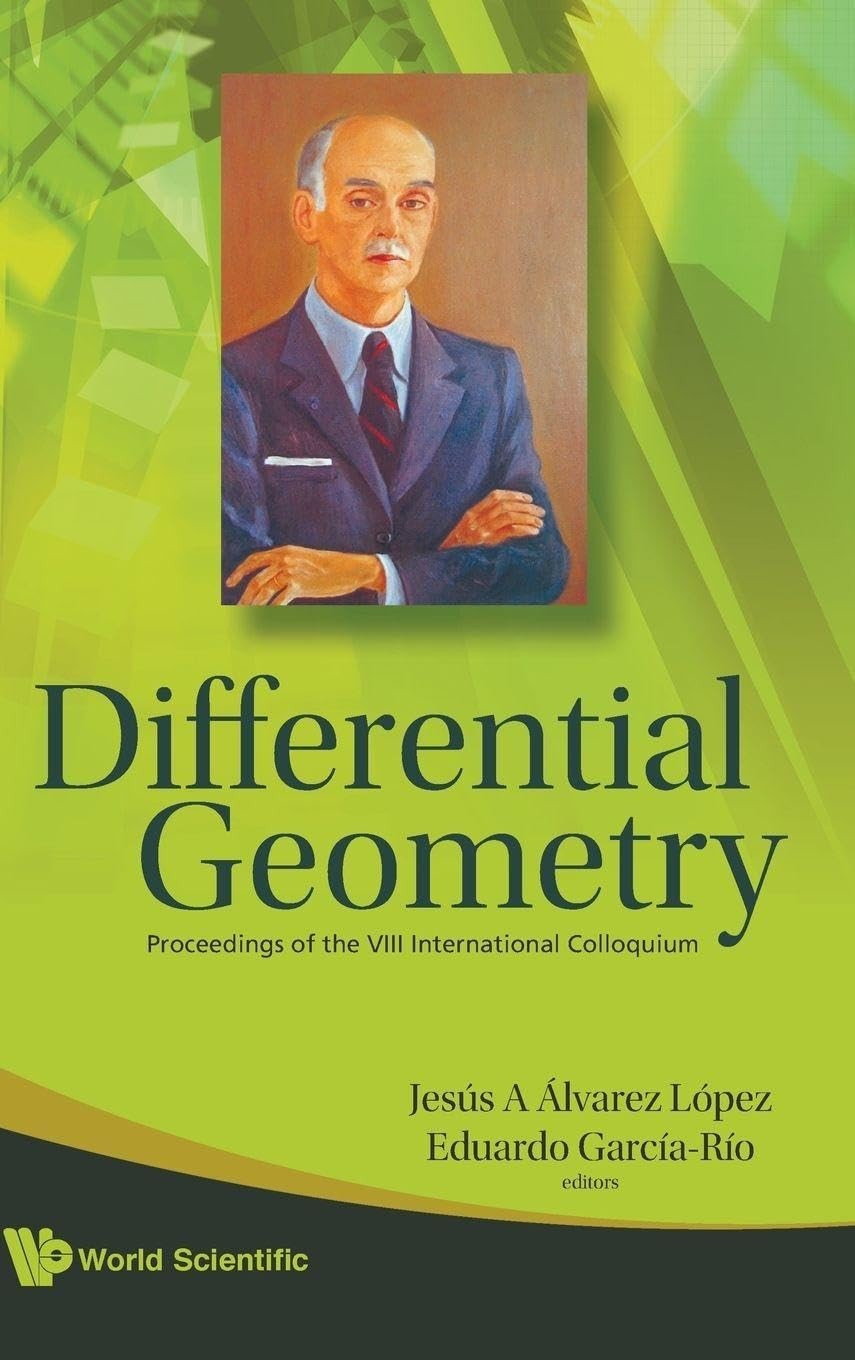
Differential Geometry - Proceedings of the VIII International Colloquium (English, Jesus A. Alvarez Lopez | Eduardo Garcia-Rio)
Mathematics
Mathematical Theory of Optimal Processes (Classics of Soviet Mathematics)
Related Products
View All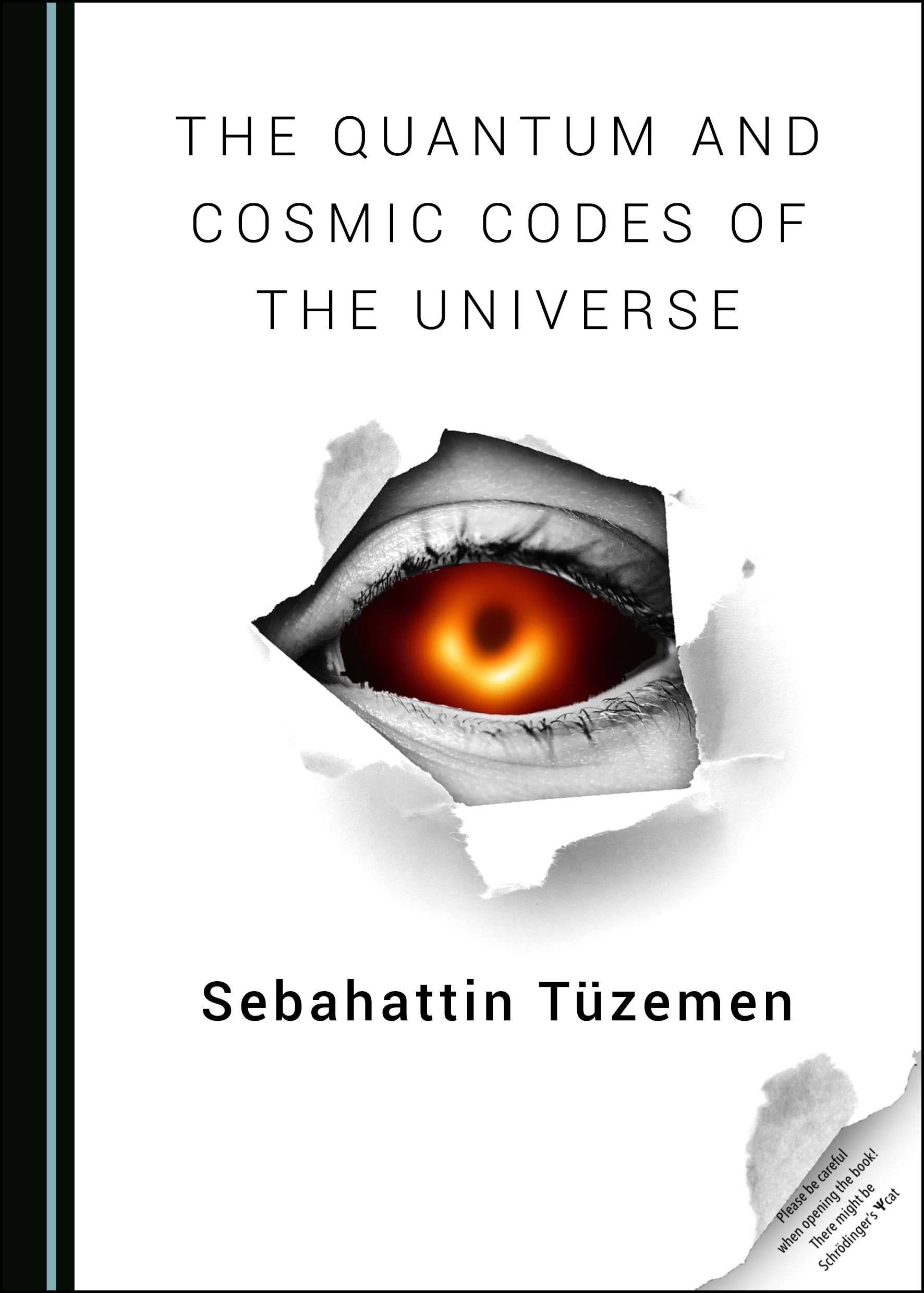
Physics
The Quantum and Cosmic Codes of the Universe
Physics
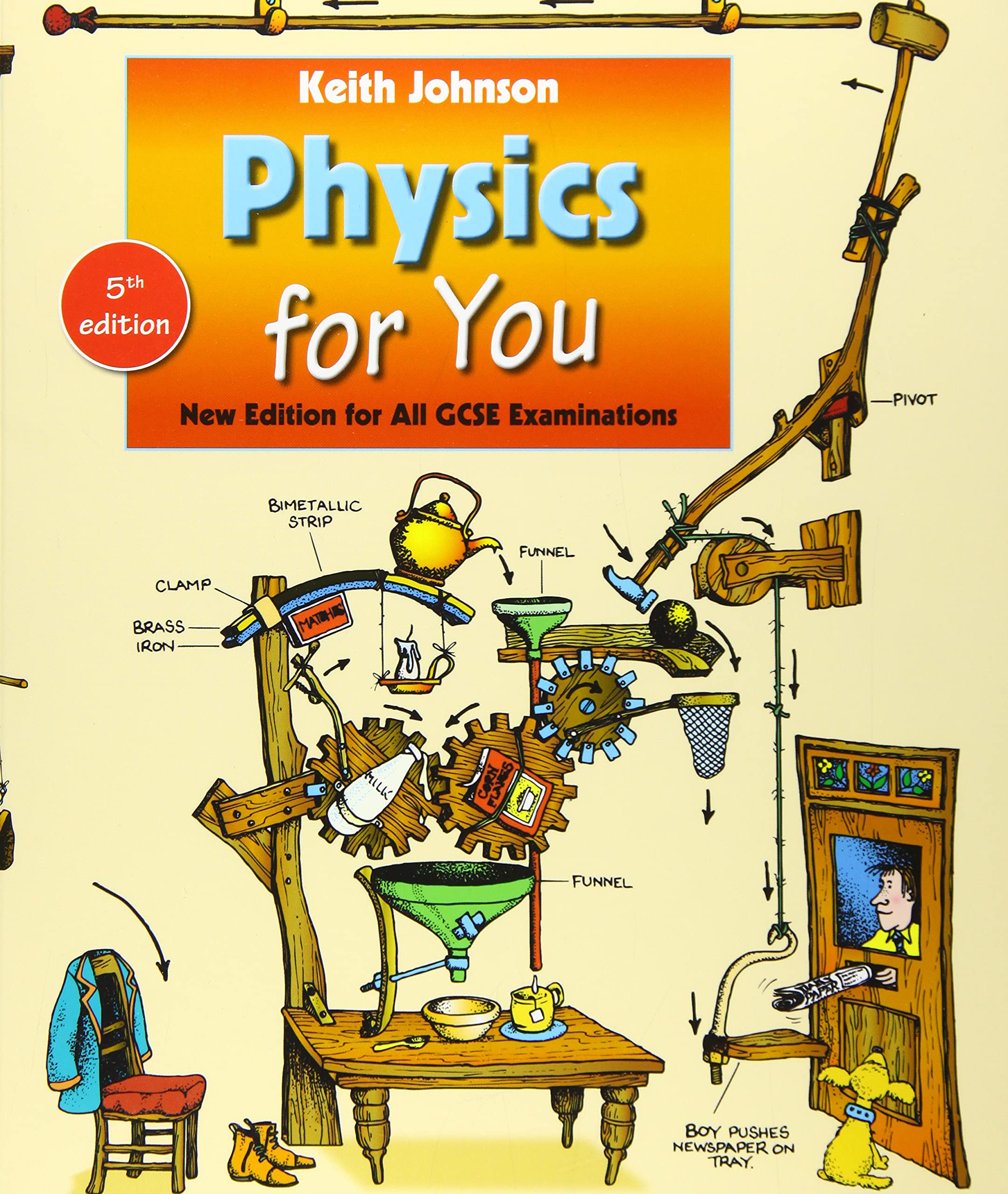
Physics for You by Keith Johnson – GCSE Physics Textbook
Physics
Experimental Techniques in Nuclear Physics
Physics
Essential Physics I

Physics
Modern Foundations of Quantum Optics
Physics