
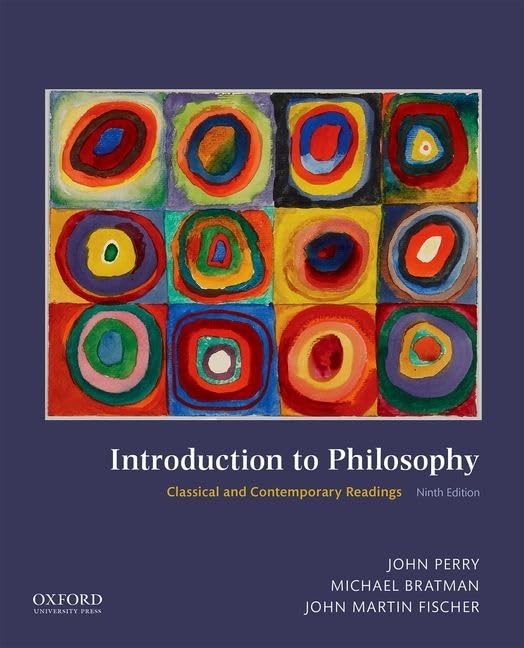
Introduction to Philosophy: Classical and Contemporary Readings by John Perry – A Comprehensive Guide for Indian Student
Inclusive of all applicable taxes. FREE shipping on all orders.
Available Offers
- 🚚Free Delivery — Free shipping on all orders
- 💵Cash on Delivery — Pay when your order arrives
- ↩️15-Day Easy Returns — Hassle-free return policy
- 🔒Cash on Delivery — Pay safely when your order arrives
Check Delivery
Product Description
Introduction
Philosophy is not merely a subject—it is a way of thinking that shapes how we understand existence, knowledge, ethics, and reality. For students and curious minds across India, Introduction to Philosophy by John Perry, published by Oxford University Press, offers a comprehensive and accessible gateway into this timeless discipline. This hardbound volume brings together classical and contemporary readings, making it an ideal companion for undergraduate courses and self-learners alike. Whether you are grappling with the problem of evil, the nature of consciousness, or the foundations of political justice, this book provides the tools and texts to begin your philosophical journey.
Book Overview
Introduction to Philosophy: Classical and Contemporary Readings is a topically organised anthology that covers the full spectrum of philosophical inquiry. Unlike many introductory texts that focus solely on historical figures, this book balances foundational works from thinkers like Plato, Aristotle, Descartes, and Hume with modern voices addressing today’s most pressing questions. The structure is designed to help readers move seamlessly from one area of philosophy to the next, building a coherent understanding of the discipline. With over 800 pages of carefully curated content, this edition is both a textbook and a reference work that will serve students throughout their academic careers.
Key Highlights
- Comprehensive topical organisation – Covers metaphysics, epistemology, ethics, political philosophy, philosophy of science, and more.
- Classical and contemporary readings – Features works from Aristotle, Descartes, Kant, and Nietzsche alongside modern philosophers like Thomas Nagel, John Rawls, and Patricia Churchland.
- Unique section on Puzzles and Paradoxes – A favourite among students, this section introduces logical conundrums that sharpen critical thinking.
- Pedagogical aids – Includes boldfaced key terms, a glossary, study questions after each reading, and a guide to writing philosophy papers.
- Logical Toolkit – A dedicated appendix that explains argument forms, fallacies, and reasoning techniques.
Inside the Book
This hardcover edition is structured into twelve major parts, each focusing on a core area of philosophy. The opening section on God and Evil presents classical arguments for the existence of God alongside the problem of suffering. The Knowledge and Reality section explores scepticism, perception, and the nature of truth. Philosophy of Science examines induction, explanation, and scientific change. The Mind/Body problem delves into dualism, materialism, and functionalism, while Freedom of Will addresses determinism and moral responsibility. Later sections cover consciousness, ethical theories (utilitarianism, deontology, virtue ethics), political philosophy (justice, rights, liberty), existential issues (meaning of life, death, freedom), and the celebrated Puzzles and Paradoxes unit. Each reading is preceded by a brief introduction and followed by study questions that encourage active engagement.
Key Topics
- Arguments for and against the existence of God
- The problem of evil and theodicies
- Scepticism and the nature of knowledge
- Reality, perception, and idealism
- Induction, causation, and scientific method
- Dualism, behaviourism, and the mind-body connection
- Determinism, compatibilism, and free will
- Consciousness and qualia
- Moral theories and applied ethics
- Social contract, justice, and rights
- Meaning of life, death, and existential choice
- Logical puzzles, paradoxes, and thought experiments
Reader Benefits
This book is designed to make philosophy accessible without sacrificing depth. The boldfaced key terms help you build a precise philosophical vocabulary, while the glossary ensures you can quickly revisit definitions. Study questions after each reading promote critical analysis and prepare you for exams and discussions. The guide to writing philosophy papers is invaluable for crafting clear, argumentative essays, and the Logical Toolkit demystifies formal reasoning. The unique Puzzles and Paradoxes section not only entertains but also trains your mind to spot inconsistencies and evaluate arguments—skills that are useful in law, medicine, business, and everyday life. By the end of the book, you will have a solid foundation in the major branches of philosophy and the confidence to engage with complex ideas.
Learning Outcomes
- Identify and evaluate classical and contemporary philosophical arguments across multiple traditions.
- Understand key concepts such as substance, causality, free will, justice, and moral obligation.
- Apply logical tools to analyse arguments and detect fallacies.
- Write clear, structured philosophical essays with thesis statements and evidence.
- Engage critically with questions about reality, knowledge, ethics, and human existence.
- Appreciate the historical development of philosophical ideas from ancient Greece to the present.
- Develop the ability to discuss complex topics with precision and intellectual humility.
Who Should Read
This book is ideal for undergraduate students taking introductory philosophy courses in Indian universities and colleges. It is also perfect for self-learners who want a structured, rigorous introduction to the subject. High school students preparing for competitive exams or seeking to broaden their intellectual horizons will find the material challenging yet approachable. Teachers and educators looking for a reliable, well-organised anthology for their classrooms will appreciate the pedagogical features. Finally, anyone with a curiosity about life’s biggest questions—from the nature of consciousness to the foundations of a just society—will find this book a rewarding companion.
About the Author
John Perry is a distinguished American philosopher and professor emeritus at Stanford University. He is known for his work in philosophy of language, metaphysics, and philosophy of mind. Perry has authored several influential books, including A Dialogue on Personal Identity and Immortality and The Art of Procrastination. His writing style is clear, engaging, and accessible, making complex ideas understandable for students. As the editor of this anthology, Perry has drawn on decades of teaching experience to select readings that are both philosophically significant and pedagogically effective.
About the Publisher
Oxford University Press (OUP) is one of the oldest and most respected academic publishers in the world, with a history dating back to 1586. OUP India has been a trusted name in educational publishing for over a century, providing high-quality textbooks, reference works, and scholarly monographs. Known for rigorous editorial standards and commitment to excellence, OUP titles are widely adopted in Indian universities and colleges. This hardcover edition reflects OUP’s dedication to producing durable, well-designed books that support serious learning.
Conclusion
Introduction to Philosophy by John Perry is more than just a textbook—it is an invitation to think deeply about the world and our place in it. With its balanced selection of classic and modern readings, user-friendly features, and comprehensive coverage, this book stands out as one of the finest resources for philosophy students in India. Whether you are beginning your academic journey or revisiting the discipline, this volume will challenge, inspire, and equip you with the intellectual tools to explore life’s most profound questions. Add it to your library today and take the first step toward becoming a philosopher.
Quick Summary
Introduction to Philosophy by John Perry is a comprehensive anthology published by Oxford University Press, designed for introductory philosophy courses. The book covers a wide range of classical and contemporary readings, including sections on God and Evil, Knowledge and Reality, Philosophy of Science, the Mind/Body problem, Freedom of Will, Consciousness, Ethics, Political Philosophy, Existential Issues, and a unique section on philosophical Puzzles and Paradoxes. It is ideal for Indian undergraduate and postgraduate students, as well as self-learners, offering boldfaced key terms with a glossary and a guide to writing philosophy papers. Readers will gain a solid foundation in philosophical thought, critical analysis skills, and the ability to articulate arguments effectively. By purchasing from Bookshops.in, Indian customers receive a genuine Oxford University Press hardcover with fast delivery and reliable service, making it a valuable addition to any philosophy library.
Book Highlights
Book Specifications
| ISBN-13 | 9780197543818 |
| ISBN-10 | 0197543812 |
| Publisher | Oxford Univ Pr |
| Language | English |
| Dimensions | 23.5 x 2.97 x 19.2 cm |
| Weight | 1 kg 240 g |
| Category | Humanities › Philosophy |
| Genre | Nonfiction |
| Original Language | English |
Frequently Asked Questions
What is Introduction to Philosophy about?
Who is the author of this book?
Which publisher released this book?
Is this book suitable for Indian students?
Does the book include a glossary?
What is the ISBN of this book?
Is this a hardcover or paperback?
What topics are covered in the book?
Does it include a writing guide?
Can I use this for self-study?
Is this book available in India?
What is the price of the book?
Does the book cover contemporary philosophers?
Readers Also Search For
Customers Also Bought

Philosophy
The Metaphysics of Extrinsic Properties: 11 (Metaphysical Research, 11)
Philosophy
Dialogues on Metaphysics and on Religion by Nicolas Malebranche – Philosophy
Philosophy
Metaphysics and Oppression: Heidegger's Challenge to Western Philosophy by John McCumber

Philosophy
Merleau-Ponty's Philosophy by Lawrence Hass – Phenomenology & Continental Philosophy
Philosophy
Feminism, Capitalism, and Ecology
Philosophy
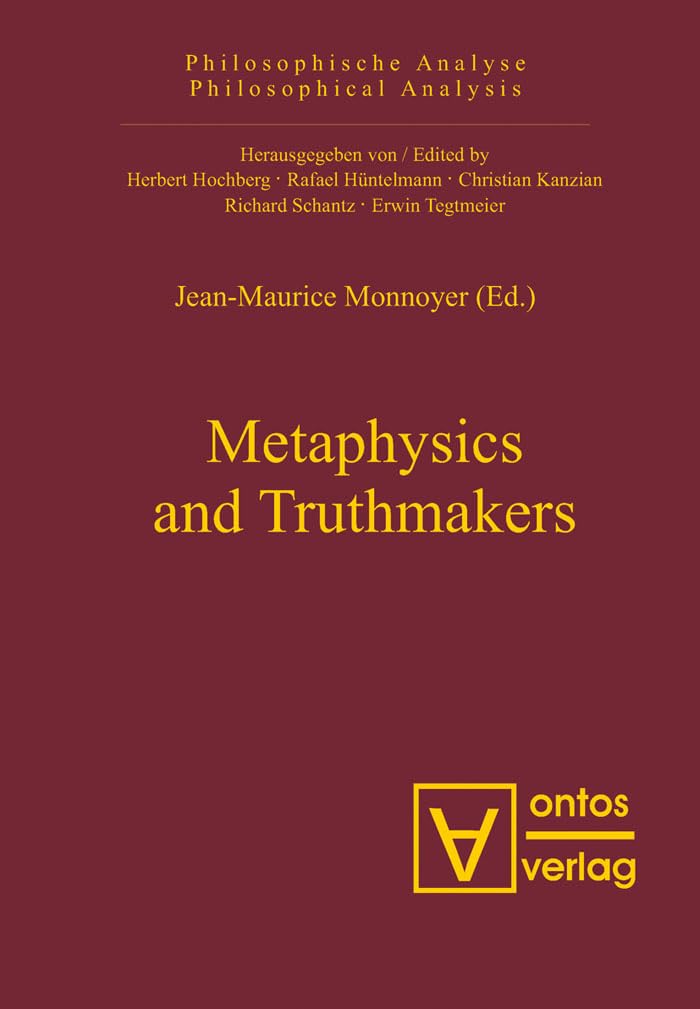
Metaphysics and Truthmakers: 18 (Philosophische Analyse / Philosophical Analysis, 18)
Related Products
View AllPhilosophy
The Metaphysics of Extrinsic Properties: 11 (Metaphysical Research, 11)
Philosophy
Dialogues on Metaphysics and on Religion by Nicolas Malebranche – Philosophy
Philosophy
Metaphysics and Oppression: Heidegger's Challenge to Western Philosophy by John McCumber
Philosophy
Merleau-Ponty's Philosophy by Lawrence Hass – Phenomenology & Continental Philosophy
Philosophy
Feminism, Capitalism, and Ecology
Philosophy