
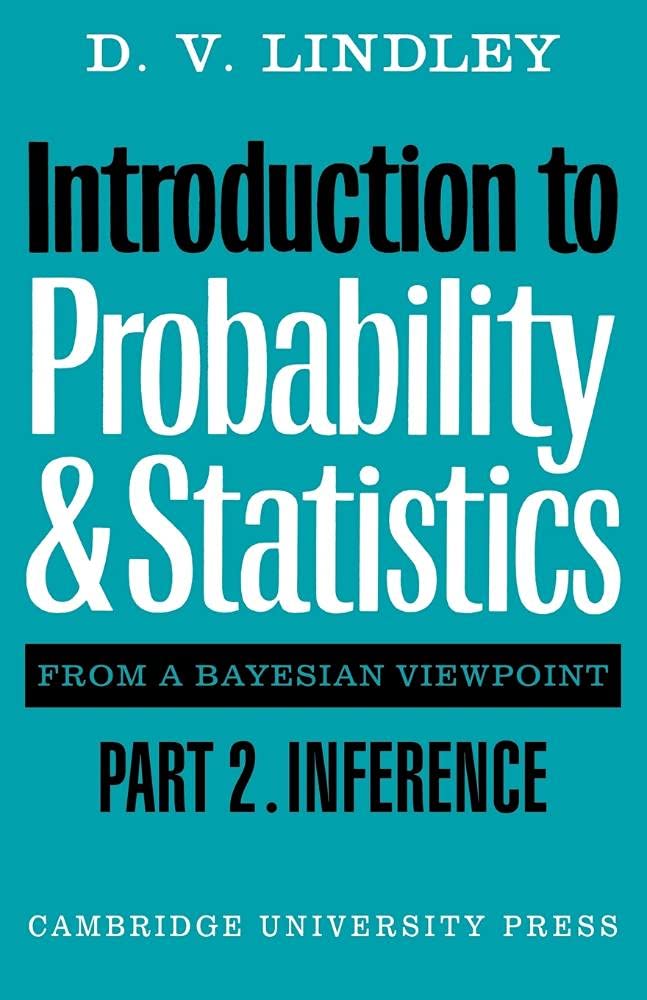
Introduction to Probability and Statistics from a Bayesian Viewpoint, Part 2, Inference by D. V. Lindley – A Rigorous Ba
Inclusive of all applicable taxes. FREE shipping on all orders.
Available Offers
- 🚚Free Delivery — Free shipping on all orders
- 💵Cash on Delivery — Pay when your order arrives
- ↩️15-Day Easy Returns — Hassle-free return policy
- 🔒Cash on Delivery — Pay safely when your order arrives
Check Delivery
Product Description
Introduction
In the vast landscape of statistical literature, few works command the respect and intellectual rigor as D. V. Lindley's Introduction to Probability and Statistics from a Bayesian Viewpoint, Part 2, Inference. This hardcover volume, published by the esteemed Cambridge University Press, is not merely a textbook but a foundational treatise for anyone serious about understanding the mathematical underpinnings of statistical inference. For Indian students and academics pursuing advanced degrees in mathematics, statistics, or related fields, this book offers a unique, Bayesian perspective that challenges conventional frequentist approaches and provides a coherent framework for making sense of data.
Book Overview
This is the second part of a two-volume masterpiece that treats probability and statistics with the same mathematical discipline expected in a British honours degree program. While the first volume lays the groundwork in probability theory, this second volume dives headfirst into the heart of statistics: the theory of making valid inferences from experimental data. Lindley’s approach is distinctly Bayesian, meaning that uncertainty is quantified through probability distributions and updated as new evidence emerges. The book assumes a solid grasp of calculus and linear algebra, making it ideal for mathematics honours students, postgraduate researchers, and professionals who wish to deepen their theoretical understanding of inference.
Key Highlights
- Bayesian Perspective: One of the earliest and most rigorous treatments of statistical inference from a Bayesian viewpoint, written by a pioneer in the field.
- Mathematical Rigour: Every concept is developed with the precision expected in pure mathematics, making it suitable for honours-level study.
- Comprehensive Coverage: Includes detailed accounts of least squares, maximum likelihood, and other foundational inference methods.
- Self-Contained: No prior knowledge of probability or statistics is required, though familiarity with calculus and linear algebra is essential.
- Classic Authority: Published by Cambridge University Press, ensuring high editorial and academic standards.
Inside the Book
The book systematically builds the Bayesian framework for inference. Starting from the basic principles of probability established in Part 1, Lindley guides the reader through the logic of statistical reasoning. Topics are presented with clear definitions, theorems, and proofs, followed by illustrative examples. The text emphasizes the role of prior information and how it combines with data to produce posterior distributions. Unlike many modern texts that shy away from mathematical depth, this book embraces it, offering a rigorous yet accessible journey through the foundations of statistical inference.
Key Topics
- Foundations of Bayesian Inference: Understanding the role of prior and posterior distributions.
- Estimation: Point and interval estimation from a Bayesian perspective.
- Hypothesis Testing: Bayesian approaches to testing hypotheses, including Bayes factors.
- Least Squares Method: A thorough treatment of the method of least squares within the Bayesian framework.
- Maximum Likelihood: The principle of maximum likelihood and its Bayesian interpretation.
- Decision Theory: Introduction to statistical decision theory and loss functions.
- Applications: Real-world examples demonstrating inference in scientific and experimental contexts.
Reader Benefits
- Deep Understanding: Gain a profound, mathematical understanding of statistical inference that goes beyond recipe-based learning.
- Bayesian Fluency: Develop the ability to think naturally in terms of probabilities and update beliefs with data—a skill increasingly valued in data science and research.
- Critical Thinking: Learn to evaluate statistical arguments and methods with a critical, mathematically grounded eye.
- Academic Excellence: Ideal preparation for competitive exams, research work, or teaching statistics at the university level.
- Timeless Knowledge: Unlike software-dependent guides, this book teaches principles that remain relevant regardless of technological changes.
Learning Outcomes
By the end of this book, readers will be able to formulate and solve statistical inference problems using Bayesian methods. They will understand how to construct prior distributions, compute posterior distributions for common models, and interpret results in a coherent probabilistic framework. Readers will also be equipped to critically compare Bayesian and frequentist approaches, and to apply methods like least squares and maximum likelihood with a deeper appreciation of their assumptions and limitations. The book cultivates a mindset where uncertainty is quantified and updated logically, a skill essential for any serious statistician or data analyst.
Who Should Read
- Mathematics Honours Students: Especially those in Indian universities pursuing a B.Sc. or M.Sc. in Mathematics or Statistics.
- Postgraduate Researchers: Scholars in fields like econometrics, biostatistics, physics, or engineering who need a rigorous foundation in inference.
- Academicians and Teachers: Professors and lecturers looking for a classic text to base their courses on Bayesian statistics.
- Self-Learners: Individuals with a strong mathematical background who wish to master Bayesian inference independently.
- Data Science Enthusiasts: Those who want to move beyond black-box algorithms and understand the mathematical principles behind predictive models.
About the Author
D. V. Lindley (1923–2013) was one of the most influential statisticians of the 20th century and a leading proponent of Bayesian statistics. He held academic positions at the University of Cambridge, University College London, and other prestigious institutions. His work on decision theory, exchangeability, and the foundations of statistical inference has shaped modern statistical thought. Lindley’s clear, logical writing style and his commitment to mathematical rigour make his books enduring classics that continue to inspire new generations of statisticians and mathematicians worldwide.
About the Publisher
Cambridge University Press is one of the oldest and most respected academic publishers in the world. Founded in 1534, it has a long tradition of publishing high-quality scholarly works across all disciplines. Their mathematics and statistics catalogue includes seminal texts by authors like Lindley, Fisher, and Jeffreys. For Indian readers, a Cambridge University Press book is a mark of academic excellence and reliability, ensuring that the content has been rigorously reviewed and edited to the highest standards.
Conclusion
Introduction to Probability and Statistics from a Bayesian Viewpoint, Part 2, Inference is not just a book; it is an intellectual investment. For Indian students and professionals who aspire to truly understand the logic behind statistical inference, this hardcover edition from Cambridge University Press is an indispensable resource. Its rigorous yet clear exposition, combined with the authority of its author, makes it a must-have for any serious mathematics or statistics library. Whether you are preparing for advanced research, teaching a course, or simply satisfying your curiosity about how we learn from data, Lindley’s classic remains as relevant today as when it was first published.
Quick Summary
Introduction to Probability and Statistics from a Bayesian Viewpoint, Part 2, Inference by D. V. Lindley is a rigorous mathematical textbook designed for honours mathematics students. This volume focuses entirely on Bayesian inference, covering estimation, hypothesis testing, credible intervals, and decision theory. The author assumes no prior knowledge of probability or statistics, but requires calculus and linear algebra. The book is written with the same mathematical rigour as other branches of applied mathematics, making it ideal for students who want a deep theoretical understanding. Readers will learn to construct posterior distributions, interpret prior information, and apply Bayesian reasoning to real-world problems. This classic work by a pioneer of Bayesian statistics remains a cornerstone reference for researchers and practitioners. By purchasing from Bookshops.in, Indian students and academics receive a genuine hardcover edition at a fair price, with prompt delivery across the country.
Book Highlights
Book Specifications
| ISBN-13 | 9780521298667 |
| ISBN-10 | 0521298660 |
| Publisher | Cambridge University Press |
| Language | English |
| Dimensions | 13.97 x 1.96 x 21.59 cm |
| Weight | 440 g |
| Category | Mathematics › Statistics |
| Series | Introduction to Probability and Statistics from a Bayesian Viewpoint |
| Genre | Non-fiction |
| Original Language | English |
Frequently Asked Questions
What is the main focus of this book?
Do I need prior knowledge of probability or statistics?
Is this book suitable for Indian university students?
Who is the author D. V. Lindley?
What is the difference between Part 1 and Part 2?
Is this book available in hardcover?
Can I use this book for self-study?
What topics are covered in the inference section?
Is this book still relevant today?
Does the book include exercises?
Is this part of a series?
What is the ISBN?
Why buy from Bookshops.in?
Readers Also Search For
Customers Also Bought
Mathematics
Stereotype Spaces and Algebras: 73 (De Gruyter Expositions in Mathematics, 73)
Mathematics
Semigroups in Algebra, Geometry and Analysis: 20 (De Gruyter Expositions in Mathematics, 20)
Mathematics
Geometry from the Pacific Rim: Proceedings of the Pacific Rim Geometry Conference held at National University of Singapore, Republic of Singapore, ... 1994 (De Gruyter Proceedings in Mathematics)
Mathematics
First International Tainan-Moscow Algebra Workshop: Proceedings of the International Conference held at National Cheng Kung University Tainan, Taiwan, ... 1994 (De Gruyter Proceedings in Mathematics)
Mathematics
Differential Geometry - Proceedings of the VIII International Colloquium (English, Jesus A. Alvarez Lopez | Eduardo Garcia-Rio)
Mathematics
Mathematical Theory of Optimal Processes (Classics of Soviet Mathematics)
Related Products
View All
Statistics
Asymptotics in Statistics and Probability: Papers in Honor of George Gregory Roussas
Statistics
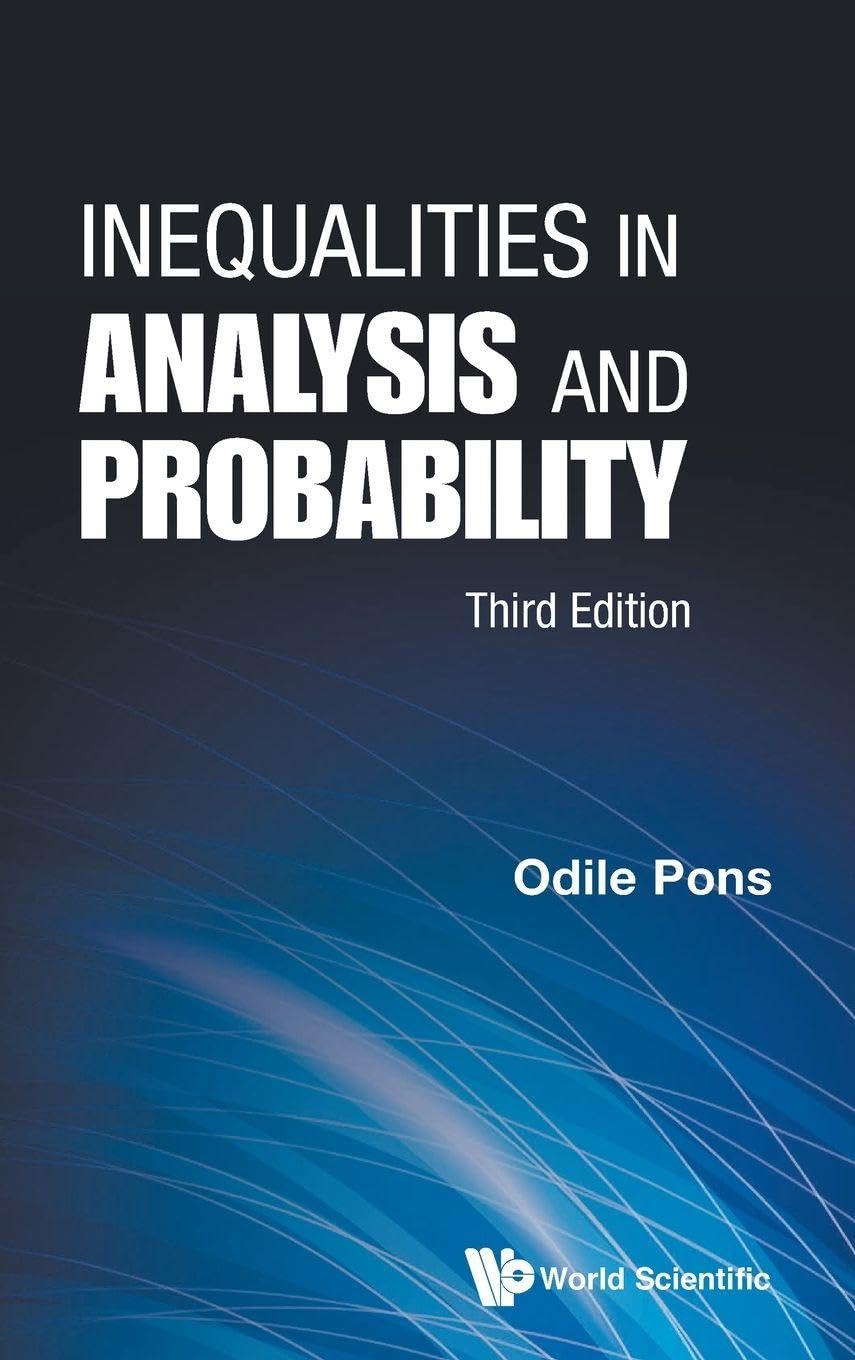
Inequalities in Analysis and Probability: 3rd Edition
Statistics
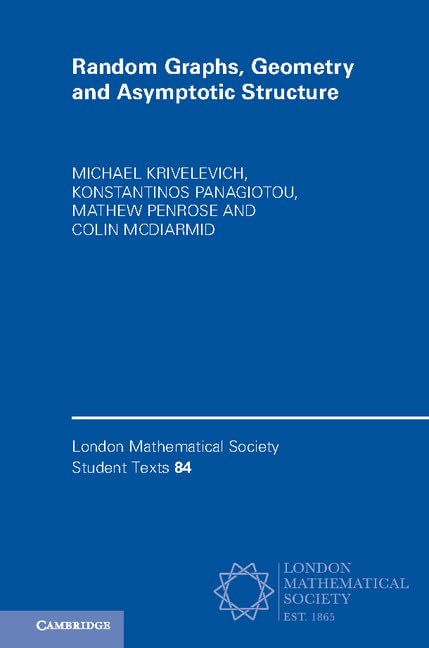
Random Graphs, Geometry and Asymptotic Structure
Statistics
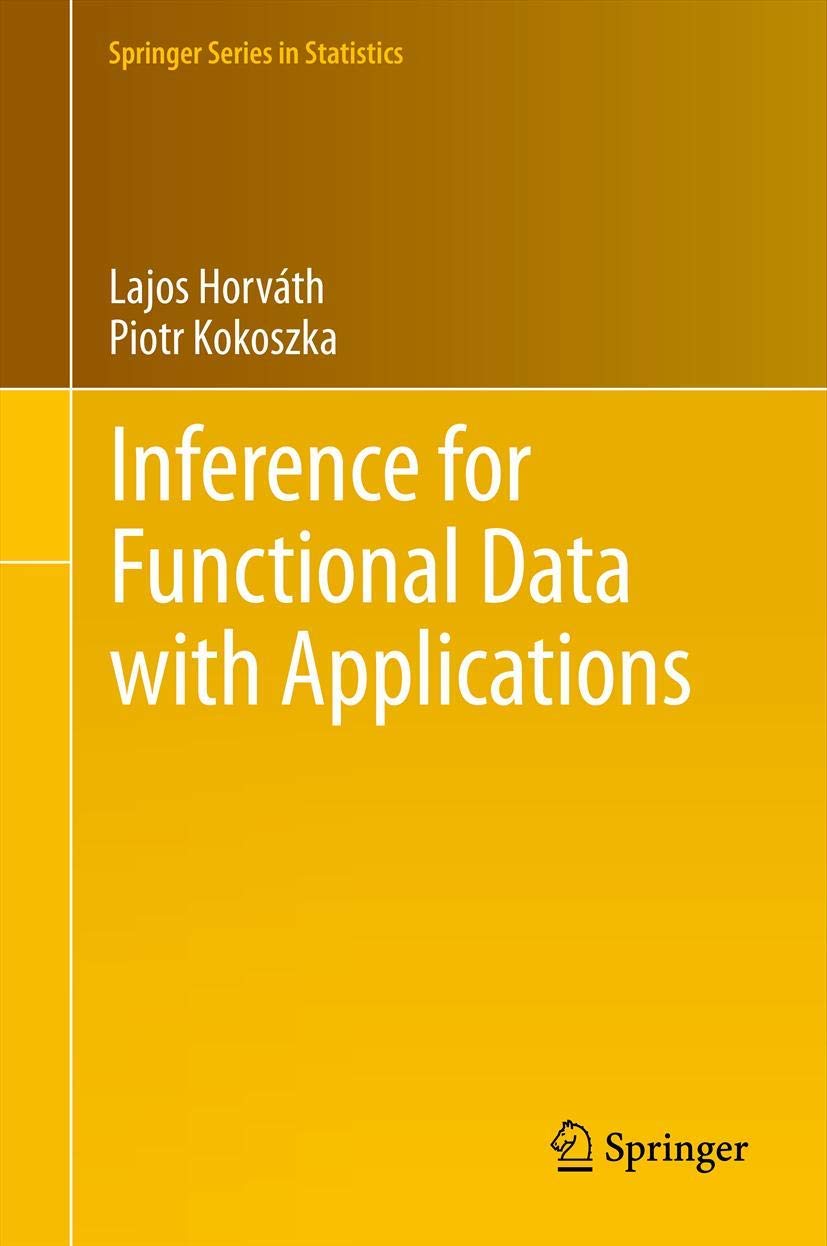
Inference for Functional Data With Applications: 200 (Springer Series in Statistics, 692)
Statistics
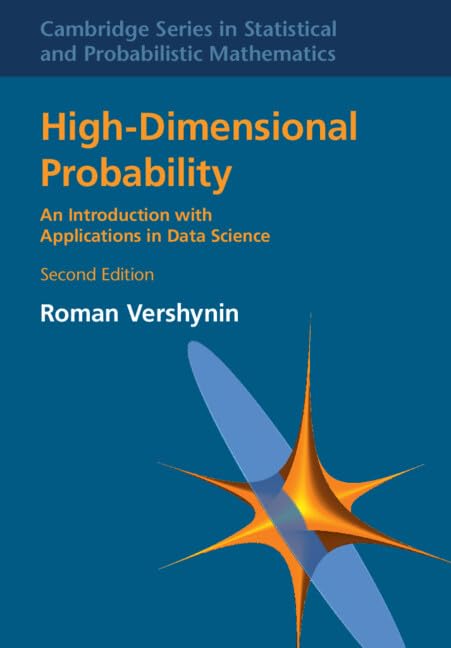
High-Dimensional Probability: An Introduction with Applications in Data Science (Cambridge Series in Statistical and Probabilistic Mathematics)
Statistics