
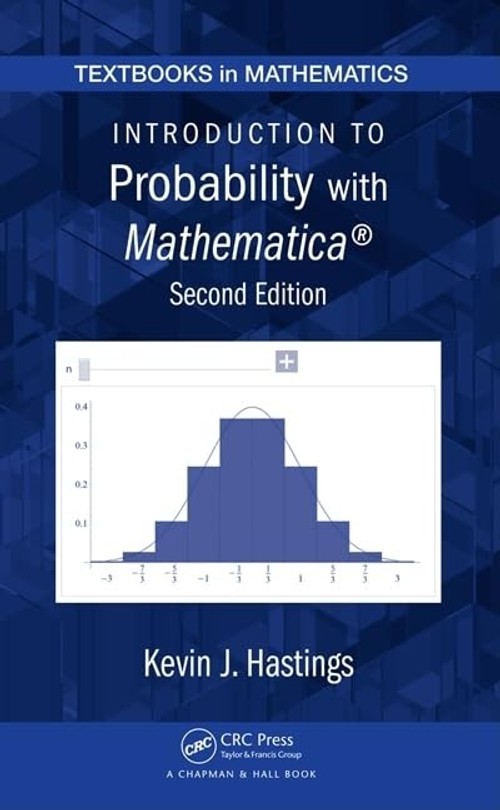
Introduction to Probability With Mathematica by Kevin J. Hastings – A Comprehensive Guide to Probabilistic Modeling, Sim
Inclusive of all applicable taxes. FREE shipping on all orders.
Available Offers
- 🚚Free Delivery — Free shipping on all orders
- 💵Cash on Delivery — Pay when your order arrives
- ↩️15-Day Easy Returns — Hassle-free return policy
- 🔒Cash on Delivery — Pay safely when your order arrives
Check Delivery
Product Description
Introduction
Probability is the silent engine behind everything from weather forecasts to stock market movements, and mastering it opens doors to careers in data science, actuarial science, finance, and engineering. For Indian students and professionals who want a rigorous yet hands-on introduction, Introduction to Probability With Mathematica by Kevin J. Hastings is the ideal companion. Published by Chapman and Hall/CRC, this hardcover edition blends classical probability theory with the computational power of Mathematica, making abstract concepts tangible through simulations and real data analysis. Whether you are preparing for Actuarial Exam P or diving into stochastic processes, this book equips you with both the theoretical foundation and the practical skills to solve complex problems with confidence.
Book Overview
This second edition has been thoroughly updated to align with Mathematica 7.0, but its value extends far beyond software compatibility. The book is structured to guide readers from basic probability concepts to advanced topics like Markov chains, Brownian motion, and multivariate normal transformations. Each chapter builds on the last, with clear explanations, worked examples, and exercises that range from routine calculations to challenging proofs. The accompanying downloadable resources—including templates and datasets—allow instructors to create custom class notes, demonstrations, and projects, making it a versatile resource for both classroom and self-study.
Key Highlights
- Expanded coverage of Markov chains, including absorbing chains and their applications in real-world systems.
- New sections on order statistics, transformations of multivariate normal random variables, and Brownian motion—topics essential for modern finance and physics.
- More example data for the normal distribution, helping students understand sampling variability and inference.
- Increased focus on conditional expectation, a cornerstone of financial mathematics and risk analysis.
- Additional problems from Actuarial Exam P, making it a targeted resource for exam preparation.
- A new appendix providing a basic introduction to Mathematica, ensuring readers with no prior coding experience can follow along.
Inside the Book
The book opens with the fundamentals: sample spaces, events, axioms of probability, and combinatorial methods. It then moves into random variables, probability distributions, and expectation—both discrete and continuous. Later chapters delve into joint distributions, functions of random variables, and the Central Limit Theorem. The second half covers more advanced territory: Markov chains (including absorbing and ergodic chains), Poisson processes, and Brownian motion. Each topic is illustrated with Mathematica code snippets that readers can run to see probability in action. The writing is clear and methodical, with Indian students in mind—examples use familiar contexts like cricket scores, monsoon rainfall, and share market fluctuations.
Key Topics
- Probability axioms and counting techniques
- Discrete and continuous random variables
- Expectation, variance, and moments
- Joint, marginal, and conditional distributions
- Transformations of random variables
- Order statistics and their applications
- Multivariate normal distribution and transformations
- Conditional expectation and its role in finance
- Markov chains: transition probabilities, stationary distributions, absorbing chains
- Poisson processes and Brownian motion
- Simulation methods using Mathematica
- Actuarial Exam P practice problems
Reader Benefits
By working through this book, you will gain more than just theoretical knowledge. You will learn to write Mathematica code to simulate dice rolls, random walks, and queueing systems—skills that translate directly into data analysis and modelling jobs. The hands-on approach demystifies probability, turning abstract formulas into visual, interactive experiments. The expanded actuarial problems give you a competitive edge if you are aiming for a career in insurance or risk management. And because the book is written for a global audience, the concepts apply equally to Indian competitive exams like the IIT JAM Statistics or the ISI entrance tests.
Learning Outcomes
- Understand and apply the axioms of probability to solve real-world problems.
- Compute probabilities for discrete and continuous distributions using analytical and computational methods.
- Analyze Markov chains to model systems like inventory management, customer behaviour, and network traffic.
- Simulate random processes using Mathematica and interpret the results.
- Solve problems involving conditional expectation, order statistics, and multivariate normal transformations.
- Prepare effectively for Actuarial Exam P with targeted practice questions.
- Develop a solid foundation for advanced study in stochastic processes, financial mathematics, or data science.
Who Should Read
This book is perfect for undergraduate and postgraduate students in mathematics, statistics, engineering, economics, and computer science. It is also a valuable resource for professionals working in data analytics, actuarial science, finance, and operations research. If you are an Indian student preparing for competitive exams like the GATE in statistics or the Actuarial Common Entrance Test (ACET), the blend of theory and computation will give you a significant advantage. Instructors looking for a textbook that combines rigorous mathematics with practical computing will find it ideal for a one-semester course.
About the Author
Kevin J. Hastings is a seasoned mathematician and educator with decades of experience teaching probability and statistics at the undergraduate and graduate levels. He has a talent for making complex ideas accessible, and his deep familiarity with Mathematica allows him to bridge the gap between abstract theory and computational practice. His previous works and contributions to mathematical education have been widely appreciated in academic circles, and this book reflects his commitment to equipping students with both conceptual clarity and practical skills.
About the Publisher
Chapman and Hall/CRC is a premier academic publisher known for its high-quality textbooks and reference works in mathematics, statistics, and the sciences. With a legacy spanning over a century, the brand is trusted by universities worldwide for producing rigorous, well-edited, and pedagogically sound content. This hardcover edition is built to last—perfect for the demanding Indian student who needs a reliable reference that will survive years of use. By choosing this book, you are investing in a resource that has been shaped by the best traditions of academic publishing.
Conclusion
Probability is not just a subject to be studied; it is a lens through which we understand uncertainty. Introduction to Probability With Mathematica gives you the tools to see that lens clearly and to use it with precision. Whether you are a student in Mumbai preparing for exams, a researcher in Bangalore modelling data, or a professional in Delhi analysing risk, this book will serve as a trusted guide. Its combination of rigorous theory, computational practice, and exam-focused problems makes it a standout choice. Order your copy from Bookshops.in today and take the first step toward mastering probability with confidence.
Quick Summary
Introduction to Probability With Mathematica by Kevin J. Hastings is a practical, simulation-driven textbook that makes probability theory accessible and engaging for Indian students and researchers. Updated to Mathematica 7.0, this second edition expands coverage of Markov chains with absorbing chains, introduces order statistics, multivariate normal transformations, and Brownian motion, and deepens the treatment of conditional expectation. Readers learn by doing—creating simulations from templates, analyzing real-world data, and solving problems using Mathematica. The book is ideal for undergraduate and graduate courses in mathematics, statistics, engineering, and data science, as well as for self-study. With clear explanations, numerous examples, and downloadable instructor resources, it bridges theory and application. Buying from Bookshops.in ensures you receive a genuine hardcover copy at a competitive price, with reliable delivery across India.
Book Highlights
Book Specifications
| ISBN-13 | 9781420079388 |
| ISBN-10 | 1420079387 |
| Publisher | Chapman & Hall |
| Language | English |
| Dimensions | 15.88 x 3.18 x 24.13 cm |
| Weight | 454 g |
| Country | India |
| Category | Mathematics › Statistics |
| Series | Textbooks in Mathematics |
| Genre | Textbook |
| Reading Age | 18+ |
| Original Language | English |
Frequently Asked Questions
What is the main focus of this book?
Do I need prior knowledge of Mathematica?
Is this book suitable for self-study?
What new topics are in this edition?
Can I use this for an Indian university course?
Does the book include solutions?
What is the price of this book?
Is this book available in hardcover?
What are the dimensions of the book?
Is this book useful for data science?
Does the book cover Markov chains in detail?
Can instructors get additional resources?
Readers Also Search For
Customers Also Bought
Mathematics
Stereotype Spaces and Algebras: 73 (De Gruyter Expositions in Mathematics, 73)
Mathematics
Semigroups in Algebra, Geometry and Analysis: 20 (De Gruyter Expositions in Mathematics, 20)
Mathematics
Geometry from the Pacific Rim: Proceedings of the Pacific Rim Geometry Conference held at National University of Singapore, Republic of Singapore, ... 1994 (De Gruyter Proceedings in Mathematics)
Mathematics
First International Tainan-Moscow Algebra Workshop: Proceedings of the International Conference held at National Cheng Kung University Tainan, Taiwan, ... 1994 (De Gruyter Proceedings in Mathematics)
Mathematics
Differential Geometry - Proceedings of the VIII International Colloquium (English, Jesus A. Alvarez Lopez | Eduardo Garcia-Rio)
Mathematics
Mathematical Theory of Optimal Processes (Classics of Soviet Mathematics)
Related Products
View All
Statistics
Asymptotics in Statistics and Probability: Papers in Honor of George Gregory Roussas
Statistics
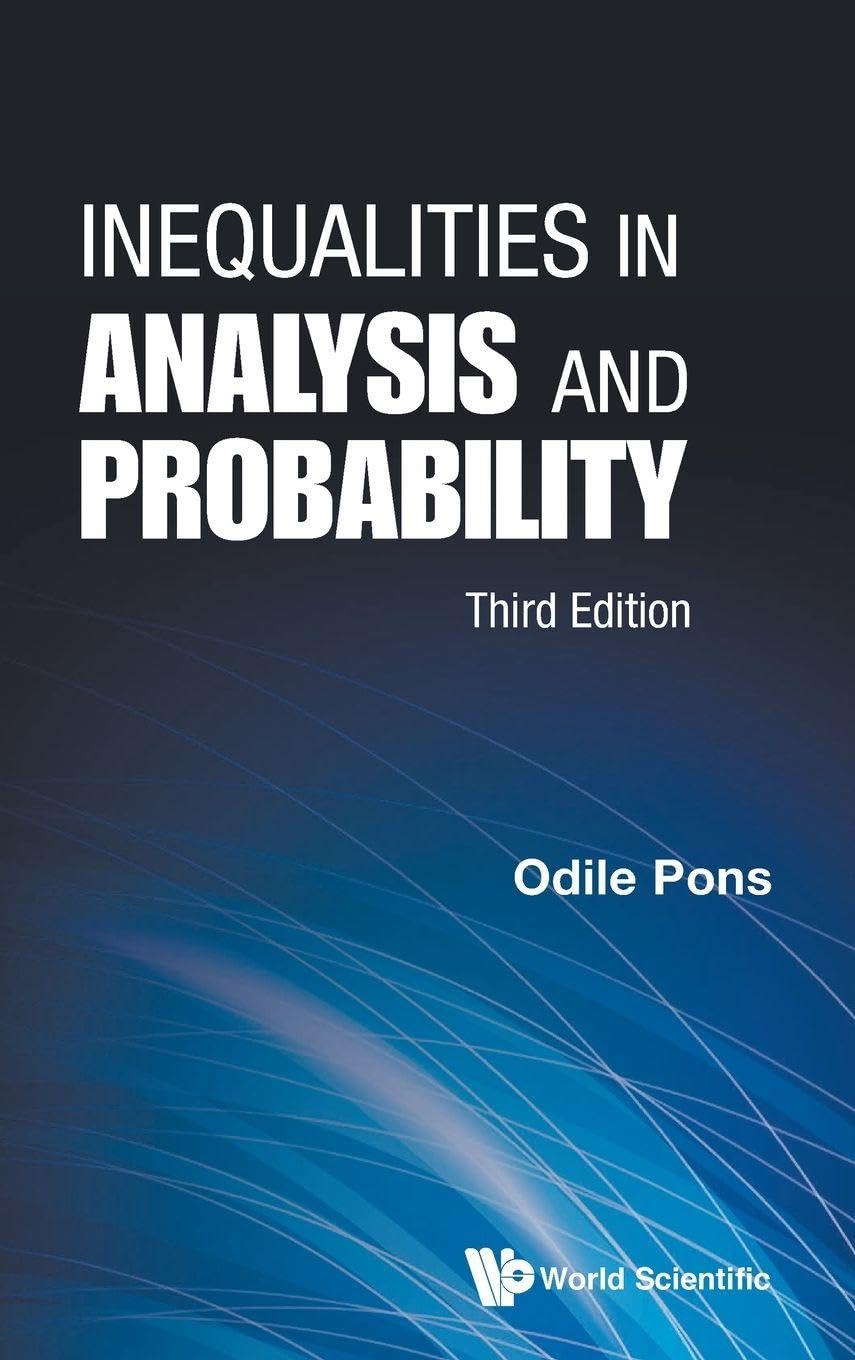
Inequalities in Analysis and Probability: 3rd Edition
Statistics
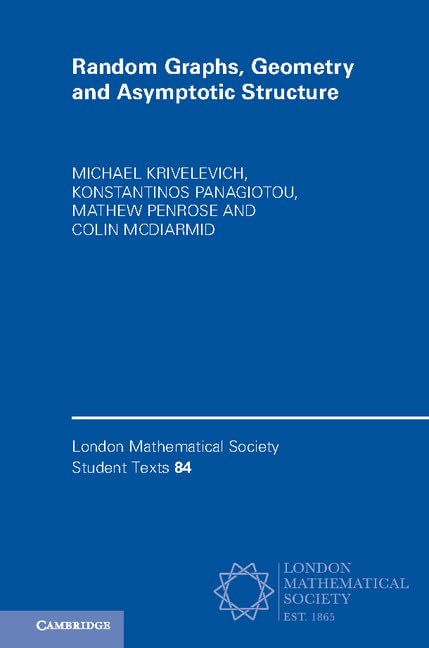
Random Graphs, Geometry and Asymptotic Structure
Statistics
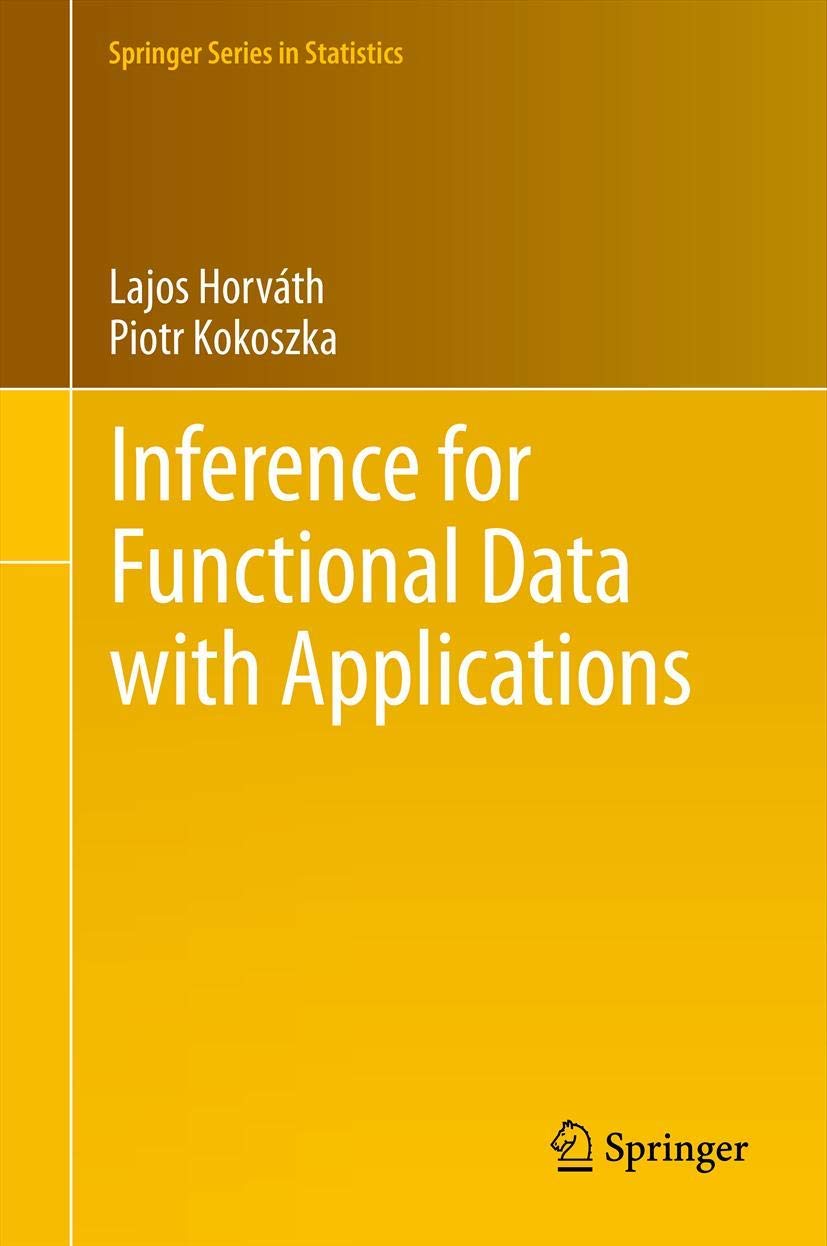
Inference for Functional Data With Applications: 200 (Springer Series in Statistics, 692)
Statistics
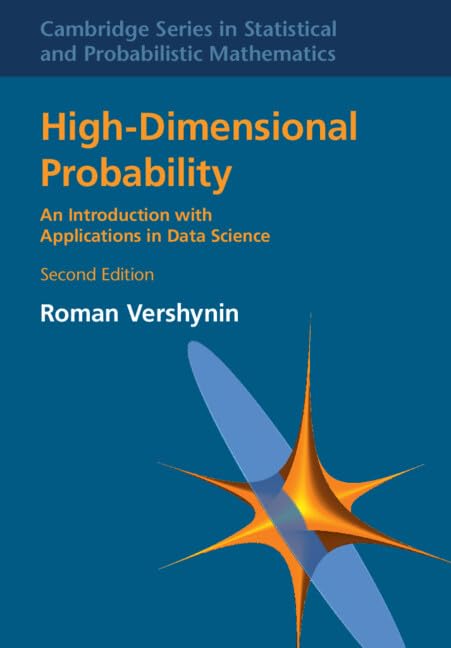
High-Dimensional Probability: An Introduction with Applications in Data Science (Cambridge Series in Statistical and Probabilistic Mathematics)
Statistics