

Introduction to Quantum Computing: A Thorough Textbook on Quantum Algorithms and Information Science by Phillip Kaye
Inclusive of all applicable taxes. FREE shipping on all orders.
Available Offers
- 🚚Free Delivery — Free shipping on all orders
- 💵Cash on Delivery — Pay when your order arrives
- ↩️15-Day Easy Returns — Hassle-free return policy
- 🔒Cash on Delivery — Pay safely when your order arrives
Check Delivery
Product Description
Introduction
Quantum computing is no longer a distant concept reserved for research labs—it is rapidly becoming the next frontier in computation. For Indian students and professionals looking to understand this transformative field, Introduction to Quantum Computing by Phillip Kaye offers a rigorous yet accessible entry point. Published by OUP Oxford, this hardcover volume bridges the gap between theoretical physics and practical computer science, making it an indispensable resource for advanced undergraduate and graduate learners across engineering, mathematics, and the physical sciences.
Book Overview
This comprehensive textbook takes readers on a structured journey from foundational principles to advanced quantum algorithms. Unlike many titles that either oversimplify or drown in mathematical abstraction, Phillip Kaye strikes a careful balance. The book assumes prior knowledge of linear algebra—including vector spaces and inner products—but does not require familiarity with quantum mechanics or computational complexity. This makes it uniquely suited for Indian students coming from strong mathematics or computer science backgrounds. The text is technically detailed, richly illustrated with diagrams, and packed with exercises that reinforce learning. It covers essential topics such as qubits, quantum gates, entanglement, quantum circuits, and key algorithms like Shor’s factoring and Grover’s search.
Key Highlights
- Clear and Accessible: Written in a conversational yet precise style, making complex ideas digestible for motivated beginners.
- Exercise-Rich: Each chapter includes carefully designed problems to test understanding and build problem-solving skills.
- Diagram-Driven: Numerous illustrations and circuit diagrams help visualize abstract quantum concepts.
- Self-Contained: No prior quantum mechanics required—just basic linear algebra and a curious mind.
- Academic Rigour: Suitable for university courses and self-study alike, with a strong emphasis on conceptual clarity.
Inside the Book
The book is organized into well-structured chapters that gradually build complexity. Early chapters introduce the quantum bit (qubit) and its mathematical representation, followed by quantum gates and circuits. Later sections delve into entanglement, quantum teleportation, and the famous algorithms that give quantum computing its power. The final chapters explore quantum error correction and the physical realization of quantum computers, providing a complete picture of the field. Each chapter ends with a summary and a set of exercises—ranging from straightforward calculations to challenging proofs—ensuring that readers not only learn but also apply the material.
Key Topics
- Qubits and quantum states
- Quantum gates and circuits
- Entanglement and Bell states
- Quantum teleportation and superdense coding
- Deutsch–Jozsa algorithm
- Shor’s factoring algorithm
- Grover’s search algorithm
- Quantum Fourier transform
- Quantum error correction
- Physical implementations of quantum computers
Reader Benefits
By studying this book, readers will gain a solid foundation in quantum computing that is both mathematically sound and practically oriented. They will be able to understand current research papers, pursue advanced studies, or contribute to India’s growing quantum technology ecosystem. The exercises build analytical reasoning and prepare students for competitive exams or research positions. Moreover, the book’s emphasis on algorithms means that computer science students can immediately connect quantum concepts to classical computing problems.
Learning Outcomes
- Understand the mathematical framework of quantum mechanics relevant to computation.
- Design and analyze basic quantum circuits.
- Explain the principles of quantum entanglement and its applications.
- Implement key quantum algorithms step-by-step.
- Evaluate the advantages and limitations of quantum computing over classical computing.
- Grasp the challenges of building practical quantum computers.
Who Should Read
This book is ideal for advanced undergraduate and beginning graduate students in computer science, electrical engineering, mathematics, and physics. It is also a valuable resource for self-learners—tech professionals, researchers, and educators—who want a thorough yet approachable introduction. Indian students preparing for GATE, NET, or research in quantum technologies will find this book especially useful. No prior exposure to quantum mechanics is needed, only a comfort with linear algebra and a willingness to engage with new ideas.
About the Author
Phillip Kaye is a respected researcher and educator in the field of quantum computing. With a background in both theoretical computer science and quantum information, he brings a unique interdisciplinary perspective to his writing. His teaching experience at the university level is evident in the book’s clarity and pedagogical structure, making complex topics feel intuitive and well-paced.
About the Publisher
Oxford University Press (OUP) is a world-renowned academic publisher with a legacy of excellence spanning centuries. OUP Oxford produces authoritative texts that are trusted by universities and institutions globally. This hardcover edition reflects OUP’s commitment to quality—durable binding, clear print, and meticulous editing ensure that this book will serve as a lasting reference on your shelf.
Conclusion
In an era where India is investing heavily in quantum research and education, Introduction to Quantum Computing by Phillip Kaye is more than a textbook—it is a launchpad. Whether you are a student aiming for a career in quantum technologies, a teacher designing a course, or a professional exploring new frontiers, this book delivers the depth and clarity you need. Order your hardcover copy from Bookshops.in today and step into the quantum future with confidence.
Quick Summary
Introduction to Quantum Computing by Phillip Kaye is a concise yet comprehensive textbook that demystifies the world of quantum computing for advanced undergraduate and graduate students. Published by OUP Oxford, this book covers essential topics such as quantum algorithms (including Shor's and Grover's algorithms), quantum circuits, quantum gates, entanglement, error correction, and quantum cryptography. The author assumes only basic knowledge of linear algebra, making it accessible to students from computer science, engineering, mathematics, and physics backgrounds. With clear explanations, illustrative diagrams, and practical exercises, readers will build a solid foundation in quantum information science. This hardcover edition is ideal for Indian students and researchers looking to enter the quantum computing field. By purchasing from Bookshops.in, you get a genuine, high-quality print book delivered to your doorstep, supporting your academic journey with a trusted Indian bookstore.
Book Highlights
Book Specifications
| ISBN-13 | 9780198570004 |
| ISBN-10 | 0198570007 |
| Publisher | OUP Oxford |
| Language | English |
| Dimensions | 23.39 x 15.6 x 1.75 cm |
| Weight | 544 g |
| Country | United Kingdom |
| Category | Programming & Software Development › Algorithms |
| Genre | Science & Mathematics |
| Original Language | English |
Frequently Asked Questions
What is Introduction to Quantum Computing about?
Who is the author of this book?
Do I need to know quantum mechanics to read this book?
What topics are covered in the book?
Is this book suitable for Indian students?
Does the book include exercises?
What is the ISBN of this book?
Is this book available in hardcover?
Can I use this book for self-study?
What is the price of this book?
What is the language of the book?
Readers Also Search For
Customers Also Bought

Programming
Algorithmische Sprache Und Programmentwicklung | by H. Partsch | F. L. Bauer | P. Pepper | Springer | by H. Partsch | F. L. Bauer | P. Pepper | Springer | by H. Partsch | F. L. Bauer | P. Pepper | Springer | by H. Partsch | F. L. Bauer | P. Pepper | Springer | by H. Partsch | F. L. Bauer | P. Pepper | Springer | by H. Partsch | F. L. Bauer | P. Pepper | Springer | by H. Partsch | F. L. Bauer | P. Pepper | Springer | by H. Partsch | F. L. Bauer | P. Pepper | Springer | by H. Partsch | F. L. Bauer
Programming
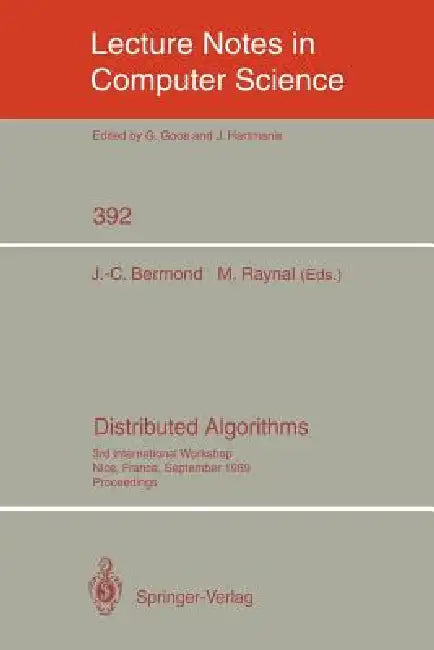
Distributed Algorithms | by Jean-Claude Bermond | Michel Raynal | Springer | by Jean-Claude Bermond | Michel Raynal | Springer | by Jean-Claude Bermond | Michel Raynal | Springer | by Jean-Claude Bermond | Michel Raynal | Springer | by Jean-Claude Bermond | Michel Raynal | Springer | by Jean-Claude Bermond | Michel Raynal | Springer | by Jean-Claude Bermond | Michel Raynal | Springer | by Jean-Claude Bermond | Michel Raynal | Springer | by Jean-Claude Bermond | Michel Raynal | Springer | by Jean
Programming
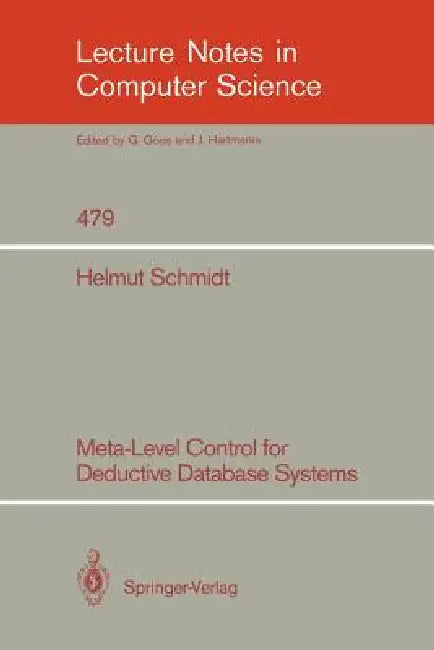
Meta-Level Control for Deductive Database Systems | by Helmut Schmidt | Springer | by Helmut Schmidt | Springer | by Helmut Schmidt | Springer | by Helmut Schmidt | Springer | by Helmut Schmidt | Springer | by Helmut Schmidt | Springer | by Helmut Schmidt | Springer | by Helmut Schmidt | Springer | by Helmut Schmidt | Springer | by Helmut Schmidt | Springer | by Helmut Schmidt | Springer | by Helmut Schmidt | Springer | by Helmut Schmidt | Springer | by Helmut Schmidt | Springer | by Helmut Schm
Programming
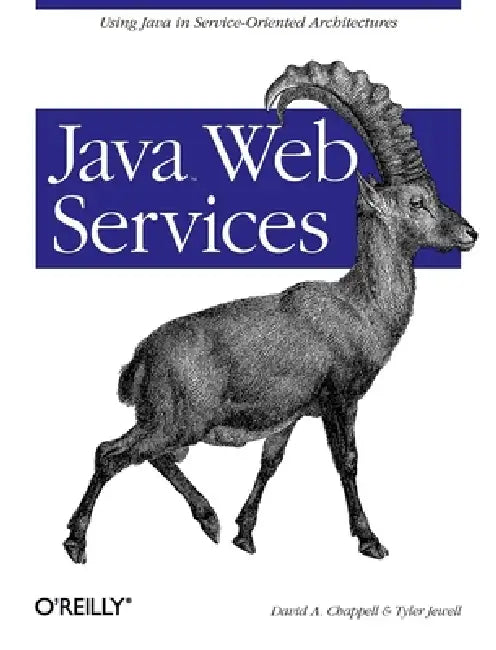
Java Web Services | by David A. Chappell | Tyler Jewell | O'Reilly Media | by David A. Chappell | Tyler Jewell | O'Reilly Media | by David A. Chappell | Tyler Jewell | O'Reilly Media | by David A. Chappell | Tyler Jewell | O'Reilly Media | by David A. Chappell | Tyler Jewell | O'Reilly Media | by David A. Chappell | Tyler Jewell | O'Reilly Media | by David A. Chappell | Tyler Jewell | O'Reilly Media | by David A. Chappell | Tyler Jewell | O'Reilly Media | by David A. Chappell | Tyler Jewell | O'
Programming
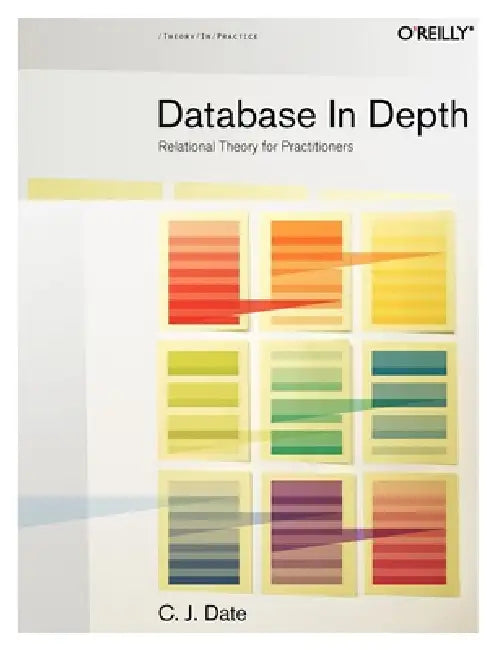
Database in Depth | by Chris J. Date | O'Reilly Media | by Chris J. Date | O'Reilly Media | by Chris J. Date | O'Reilly Media | by Chris J. Date | O'Reilly Media | by Chris J. Date | O'Reilly Media | by Chris J. Date | O'Reilly Media | by Chris J. Date | O'Reilly Media | by Chris J. Date | O'Reilly Media | by Chris J. Date | O'Reilly Media | by Chris J. Date | O'Reilly Media | by Chris J. Date | O'Reilly Media | by Chris J. Date | O'Reilly Media | by Chris J. Date | O'Reilly Media | by Chris J.
Programming
Integration of AI and OR Techniques in Constraint Programming for Combinatorial Optimization Problem | by Nicolas Beldiceanu | Narendra Jussien | Eric Pinson | Springer | by Nicolas Beldiceanu | Narendra Jussien | Eric Pinson | Springer | by Nicolas Beldiceanu | Narendra Jussien | Eric Pinson | Springer | by Nicolas Beldiceanu | Narendra Jussien | Eric Pinson | Springer | by Nicolas Beldiceanu | Narendra Jussien | Eric Pinson | Springer | by Nicolas Beldiceanu | Narendra Jussien | Eric Pinson |
Related Products
View All
Computers & Internet
Modern Full-Stack React Projects by Daniel Bugl
Computers & Internet
Mootools 1.2 Beginner's Guide (English, Jacob Gube)
Computers & Internet
Contemporary Methods for Speech Parameterization (Springerbriefs in Electrical and Computer Engineering / Springerbriefs in Speech Technology)

Computers & Internet
Information Technology and Lawyers | by Arno R. Lodder | Anja Oskamp | Springer | by Arno R. Lodder | Anja Oskamp | Springer | by Arno R. Lodder | Anja Oskamp | Springer | by Arno R. Lodder | Anja Oskamp | Springer | by Arno R. Lodder | Anja Oskamp | Springer | by Arno R. Lodder | Anja Oskamp | Springer | by Arno R. Lodder | Anja Oskamp | Springer | by Arno R. Lodder | Anja Oskamp | Springer | by Arno R. Lodder | Anja Oskamp | Springer | by Arno R. Lodder | Anja Oskamp | Springer | by Arno R. Lo

Computers & Internet
Digital Analysis of Remotely Sensed Imagery | by Jay Gao | McGraw-Hill Companies | by Jay Gao | McGraw-Hill Companies | by Jay Gao | McGraw-Hill Companies | by Jay Gao | McGraw-Hill Companies | by Jay Gao | McGraw-Hill Companies | by Jay Gao | McGraw-Hill Companies | by Jay Gao | McGraw-Hill Companies | by Jay Gao | McGraw-Hill Companies | by Jay Gao | McGraw-Hill Companies | by Jay Gao | McGraw-Hill Companies | by Jay Gao | McGraw-Hill Companies | by Jay Gao | McGraw-Hill Companies | by Jay Gao

Computers & Internet