
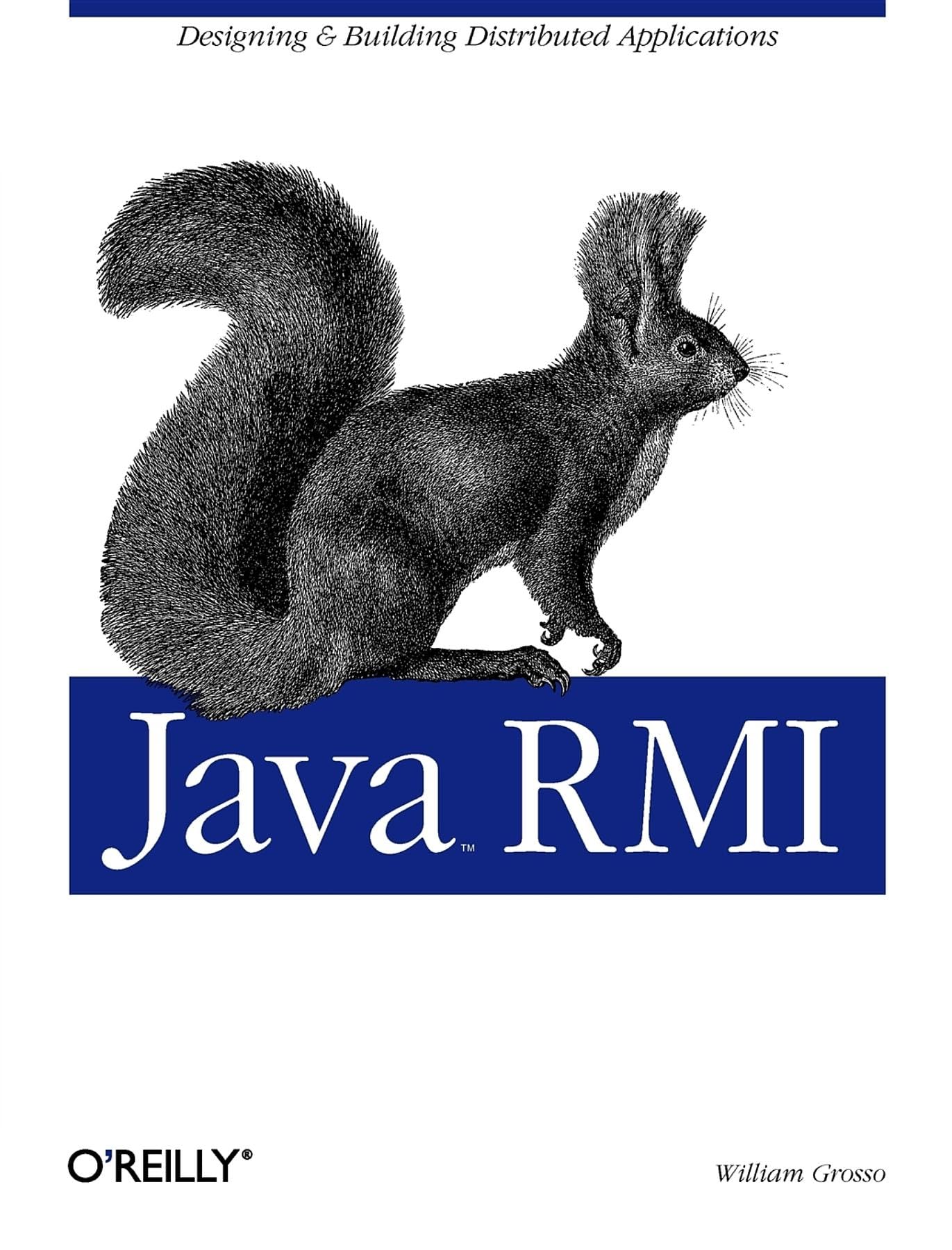
Java RMI: Remote Method Invocation for Distributed Systems by William Grosso – O'Reilly Media
Inclusive of all applicable taxes. FREE shipping on all orders.
Available Offers
- 🚚Free Delivery — Free shipping on all orders
- 💵Cash on Delivery — Pay when your order arrives
- ↩️15-Day Easy Returns — Hassle-free return policy
- 🔒Cash on Delivery — Pay safely when your order arrives
Check Delivery
Product Description
Introduction
Java Remote Method Invocation (RMI) has long been a cornerstone technology for building distributed systems in the Java ecosystem. In a world where applications increasingly rely on seamless communication between remote components, mastering RMI becomes essential for any serious Java developer. William Grosso's Java RMI, published by O'Reilly Media, stands as a definitive guide that bridges the gap between theoretical concepts and practical implementation. Whether you are a student in Bangalore exploring distributed computing for the first time or a seasoned professional architecting enterprise solutions in Mumbai, this book offers a structured pathway to understanding and applying RMI with confidence.
Book Overview
This hardcover edition is a comprehensive resource that distills years of hands-on experience into a single, well-organised volume. The book does not merely list APIs; it explains the why behind each design decision, helping readers build robust, scalable, and maintainable distributed systems. From the fundamentals of remote object communication to advanced topics like activation, dynamic class downloading, and HTTP tunnelling, every chapter is crafted to provide actionable knowledge. The author’s clear, example-driven approach ensures that complex ideas become accessible, making this book a valuable companion for both self-study and classroom use.
Key Highlights
- Practical Focus: Real-world code examples and design patterns that you can immediately apply in your projects.
- Depth of Coverage: Detailed exploration of serialisation, threading, RMI registry, sockets, and distributed garbage collection.
- Advanced Topics: Covers activation, dynamic class downloading, HTTP tunnelling, JNDI integration, and CORBA interoperability.
- Authoritative Source: Written by William Grosso, a recognised expert in Java distributed computing, with insights from O’Reilly’s trusted technical review process.
- Indian Context: Concepts are presented in a vendor-neutral manner, ideal for India’s diverse IT landscape where Java powers everything from fintech to e-governance.
Inside the Book
The book is structured to take you from zero to hero in RMI. Early chapters introduce the core RMI architecture, including remote interfaces, stubs, skeletons, and the RMI registry. As you progress, you will delve into serialisation—the backbone of data transfer in RMI—and learn how to handle custom object graphs efficiently. The middle sections focus on threading models, socket factories, and security considerations, which are critical for building production-grade systems. Later chapters explore advanced features like activation (for long-lived remote objects), dynamic class downloading (to reduce client-side dependencies), and HTTP tunnelling (to bypass firewalls). The final part discusses integrating RMI with JNDI for naming services and with CORBA for heterogeneous environments, ensuring your skills remain relevant in multi-platform setups.
Key Topics
- RMI architecture and remote object lifecycle
- Serialisation techniques and customised object streaming
- Threading strategies for concurrent remote calls
- RMI registry configuration and management
- Socket factories and custom network layers
- Activation framework for persistent remote objects
- Dynamic class downloading and security managers
- HTTP tunnelling for firewall traversal
- Distributed garbage collection and memory management
- JNDI integration for scalable naming
- CORBA interoperability with RMI-IIOP
Reader Benefits
By engaging with this book, you will gain a deep, practical understanding of how to design and implement distributed systems using Java RMI. You will learn to avoid common pitfalls like memory leaks, thread deadlocks, and serialisation errors. The code examples are self-contained and can be run on any standard Java development environment, making it easy to experiment and iterate. For students, the book provides a solid foundation for academic projects and research in distributed computing. For professionals, it offers battle-tested patterns that can reduce development time and improve system reliability. Moreover, the insights into HTTP tunnelling and firewall traversal are particularly valuable for Indian developers working in environments with restrictive network policies.
Learning Outcomes
- Design and deploy remote objects using RMI’s client-server model
- Implement efficient serialisation strategies for complex data types
- Manage concurrent remote invocations with safe threading practices
- Configure RMI registries and deploy applications in production
- Use socket factories to customise network behaviour
- Leverage activation for fault-tolerant, long-running services
- Enable dynamic class loading to distribute code seamlessly
- Set up HTTP tunnelling to communicate across firewalls
- Integrate RMI with JNDI and CORBA for enterprise interoperability
- Optimise distributed garbage collection to prevent resource leaks
Who Should Read
This book is ideal for Java developers who have a basic understanding of the language and want to step into distributed programming. It is equally valuable for software architects evaluating RMI for new projects, system integrators working with legacy RMI-based systems, and students pursuing courses in distributed computing or enterprise Java. The content assumes familiarity with Java syntax and object-oriented concepts, but no prior experience with RMI is required. If you are a developer in India’s growing tech hubs—be it Hyderabad, Pune, Chennai, or Delhi—this book will equip you with skills that are in high demand across banking, telecom, and e-commerce sectors.
About the Author
William Grosso is a seasoned software engineer and author with extensive experience in distributed systems and Java technologies. He has contributed to several O’Reilly titles and is known for his ability to explain complex technical subjects with clarity and precision. His practical background in designing large-scale enterprise applications lends credibility to every example and recommendation in this book. Grosso’s writing style is engaging and methodical, ensuring that readers not only understand the material but also retain it for real-world application.
About the Publisher
O’Reilly Media has been a trusted name in technical publishing for decades, renowned for its high-quality books that blend theory with practice. Their titles are widely used in Indian universities, corporate training programmes, and by self-learners who value depth and accuracy. O’Reilly’s commitment to publishing authoritative content makes this book a reliable investment for anyone serious about mastering Java RMI.
Conclusion
Java RMI by William Grosso is more than a reference—it is a mentor in print. It takes you through the entire journey of building distributed applications with Java, from the first remote interface to advanced enterprise integration. With its clear explanations, practical examples, and comprehensive coverage, this book deserves a place on every Java developer’s shelf. Whether you are preparing for a certification, building a startup, or enhancing your skills for a better career, this O’Reilly classic will guide you every step of the way. Order your copy from Bookshops.in today and unlock the full potential of Java RMI.
Quick Summary
Java RMI by William Grosso is an authoritative guide to mastering Remote Method Invocation in Java, published by O'Reilly Media. This book is designed for both novice and experienced Java developers who want to build robust distributed systems. Readers will learn the core concepts of RMI, including serialization, threading, the RMI registry, socket factories, activation, dynamic class downloading, HTTP tunneling, distributed garbage collection, JNDI integration, and CORBA interoperability. The author shares practical tips and tricks to optimize RMI code, avoid common pitfalls, and implement enterprise-level solutions. With clear explanations and real-world examples, this book transforms complex distributed programming into an accessible skill. Whether you are a student, a professional developer, or an IT architect, Java RMI equips you with the knowledge to design scalable, efficient remote applications. By purchasing from Bookshops.in, you receive a genuine physical hardcover copy delivered to your doorstep in India, with trusted quality and support.
Book Highlights
Book Specifications
| ISBN-13 | 9781565924529 |
| ISBN-10 | 1565924525 |
| Publisher | O'Reilly Media |
| Language | English |
| Dimensions | 17.78 x 3.02 x 23.34 cm |
| Weight | 794 g |
| Category | Languages › Java |
| Genre | Nonfiction |
| Original Language | English |
Frequently Asked Questions
What is Java RMI?
Who is the author of this book?
What topics does this book cover?
Is this book suitable for beginners?
Does the book include practical examples?
What is the ISBN of this book?
Is this book available in hardcover?
Can I use this book for self-study?
Does this book cover JNDI and CORBA?
What is the price of this book on Bookshops.in?
Is this book recommended for Indian students?
What is the language of the book?
Why should I buy from Bookshops.in?
Readers Also Search For
Customers Also Bought

Programming
Algorithmische Sprache Und Programmentwicklung | by H. Partsch | F. L. Bauer | P. Pepper | Springer | by H. Partsch | F. L. Bauer | P. Pepper | Springer | by H. Partsch | F. L. Bauer | P. Pepper | Springer | by H. Partsch | F. L. Bauer | P. Pepper | Springer | by H. Partsch | F. L. Bauer | P. Pepper | Springer | by H. Partsch | F. L. Bauer | P. Pepper | Springer | by H. Partsch | F. L. Bauer | P. Pepper | Springer | by H. Partsch | F. L. Bauer | P. Pepper | Springer | by H. Partsch | F. L. Bauer
Programming
Distributed Algorithms | by Jean-Claude Bermond | Michel Raynal | Springer | by Jean-Claude Bermond | Michel Raynal | Springer | by Jean-Claude Bermond | Michel Raynal | Springer | by Jean-Claude Bermond | Michel Raynal | Springer | by Jean-Claude Bermond | Michel Raynal | Springer | by Jean-Claude Bermond | Michel Raynal | Springer | by Jean-Claude Bermond | Michel Raynal | Springer | by Jean-Claude Bermond | Michel Raynal | Springer | by Jean-Claude Bermond | Michel Raynal | Springer | by Jean

Programming
Meta-Level Control for Deductive Database Systems | by Helmut Schmidt | Springer | by Helmut Schmidt | Springer | by Helmut Schmidt | Springer | by Helmut Schmidt | Springer | by Helmut Schmidt | Springer | by Helmut Schmidt | Springer | by Helmut Schmidt | Springer | by Helmut Schmidt | Springer | by Helmut Schmidt | Springer | by Helmut Schmidt | Springer | by Helmut Schmidt | Springer | by Helmut Schmidt | Springer | by Helmut Schmidt | Springer | by Helmut Schmidt | Springer | by Helmut Schm
Programming
Java Web Services | by David A. Chappell | Tyler Jewell | O'Reilly Media | by David A. Chappell | Tyler Jewell | O'Reilly Media | by David A. Chappell | Tyler Jewell | O'Reilly Media | by David A. Chappell | Tyler Jewell | O'Reilly Media | by David A. Chappell | Tyler Jewell | O'Reilly Media | by David A. Chappell | Tyler Jewell | O'Reilly Media | by David A. Chappell | Tyler Jewell | O'Reilly Media | by David A. Chappell | Tyler Jewell | O'Reilly Media | by David A. Chappell | Tyler Jewell | O'
Programming
Database in Depth | by Chris J. Date | O'Reilly Media | by Chris J. Date | O'Reilly Media | by Chris J. Date | O'Reilly Media | by Chris J. Date | O'Reilly Media | by Chris J. Date | O'Reilly Media | by Chris J. Date | O'Reilly Media | by Chris J. Date | O'Reilly Media | by Chris J. Date | O'Reilly Media | by Chris J. Date | O'Reilly Media | by Chris J. Date | O'Reilly Media | by Chris J. Date | O'Reilly Media | by Chris J. Date | O'Reilly Media | by Chris J. Date | O'Reilly Media | by Chris J.

Programming
Integration of AI and OR Techniques in Constraint Programming for Combinatorial Optimization Problem | by Nicolas Beldiceanu | Narendra Jussien | Eric Pinson | Springer | by Nicolas Beldiceanu | Narendra Jussien | Eric Pinson | Springer | by Nicolas Beldiceanu | Narendra Jussien | Eric Pinson | Springer | by Nicolas Beldiceanu | Narendra Jussien | Eric Pinson | Springer | by Nicolas Beldiceanu | Narendra Jussien | Eric Pinson | Springer | by Nicolas Beldiceanu | Narendra Jussien | Eric Pinson |
Related Products
View All
Computers & Internet
Modern Full-Stack React Projects by Daniel Bugl
Computers & Internet
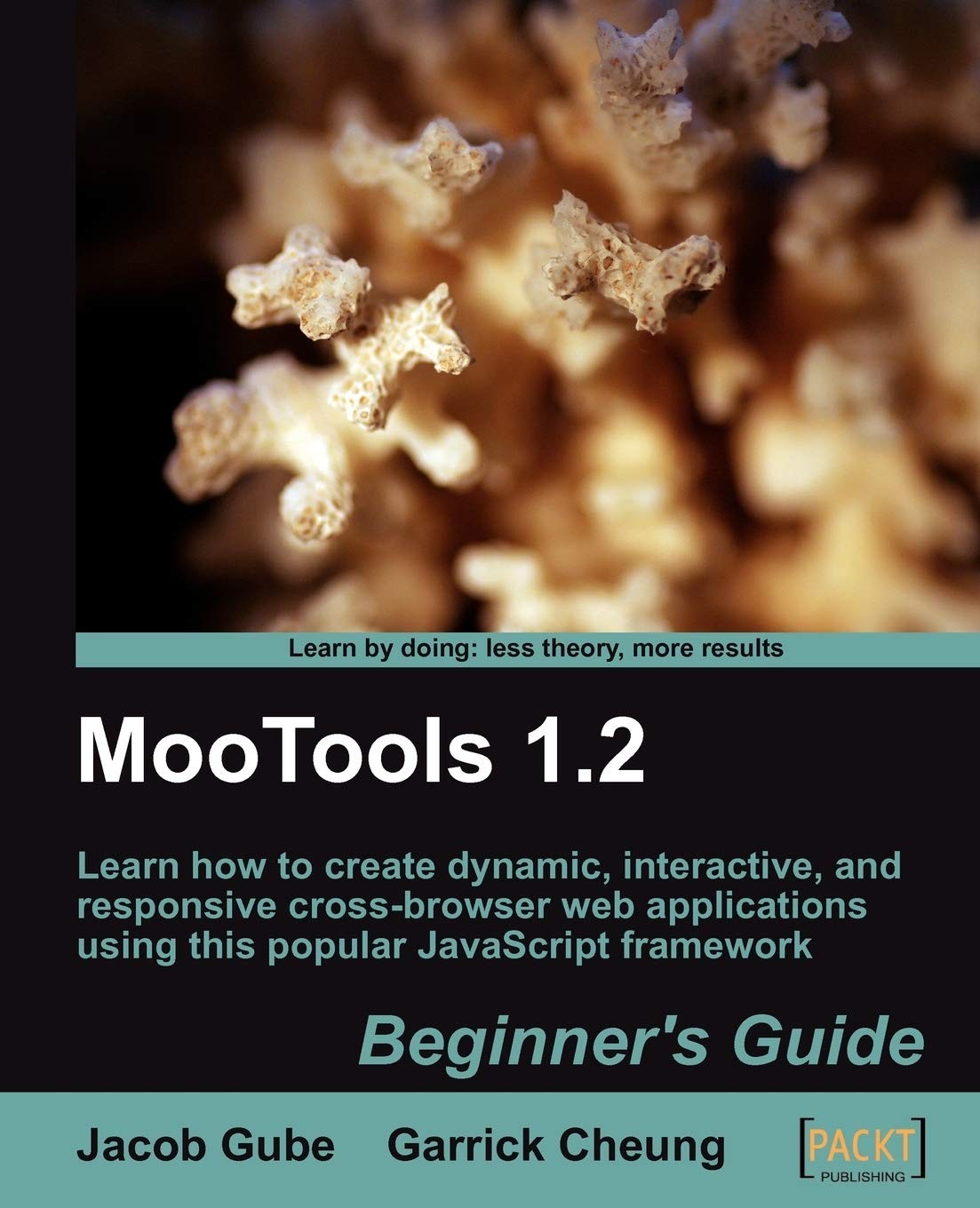
Mootools 1.2 Beginner's Guide (English, Jacob Gube)
Computers & Internet
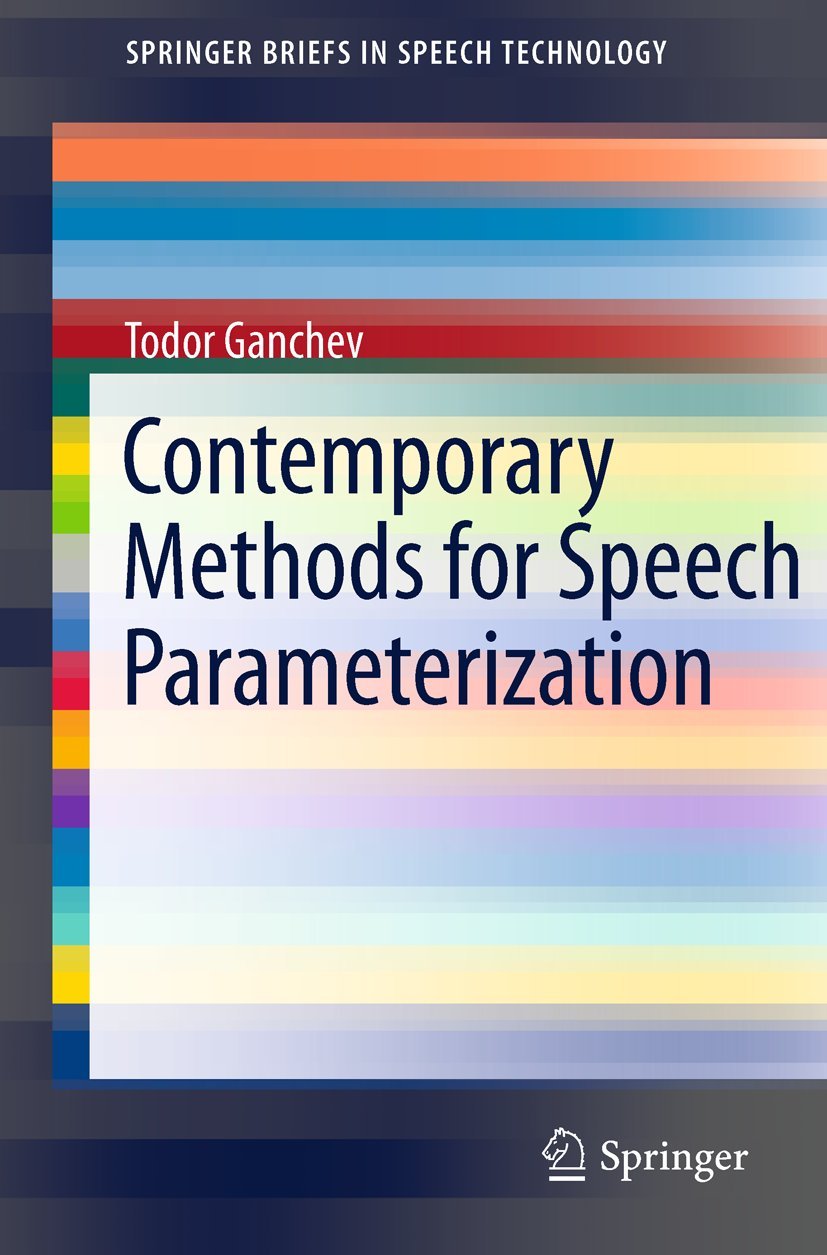
Contemporary Methods for Speech Parameterization (Springerbriefs in Electrical and Computer Engineering / Springerbriefs in Speech Technology)

Computers & Internet
Information Technology and Lawyers | by Arno R. Lodder | Anja Oskamp | Springer | by Arno R. Lodder | Anja Oskamp | Springer | by Arno R. Lodder | Anja Oskamp | Springer | by Arno R. Lodder | Anja Oskamp | Springer | by Arno R. Lodder | Anja Oskamp | Springer | by Arno R. Lodder | Anja Oskamp | Springer | by Arno R. Lodder | Anja Oskamp | Springer | by Arno R. Lodder | Anja Oskamp | Springer | by Arno R. Lodder | Anja Oskamp | Springer | by Arno R. Lodder | Anja Oskamp | Springer | by Arno R. Lo

Computers & Internet
Digital Analysis of Remotely Sensed Imagery | by Jay Gao | McGraw-Hill Companies | by Jay Gao | McGraw-Hill Companies | by Jay Gao | McGraw-Hill Companies | by Jay Gao | McGraw-Hill Companies | by Jay Gao | McGraw-Hill Companies | by Jay Gao | McGraw-Hill Companies | by Jay Gao | McGraw-Hill Companies | by Jay Gao | McGraw-Hill Companies | by Jay Gao | McGraw-Hill Companies | by Jay Gao | McGraw-Hill Companies | by Jay Gao | McGraw-Hill Companies | by Jay Gao | McGraw-Hill Companies | by Jay Gao
Computers & Internet