

Laws, Theories, and Patterns in Ecology: A Foundational Textbook by Walter K. Dodds for Students and Ecologists
Inclusive of all applicable taxes. FREE shipping on all orders.
Available Offers
- 🚚Free Delivery — Free shipping on all orders
- 💵Cash on Delivery — Pay when your order arrives
- ↩️15-Day Easy Returns — Hassle-free return policy
- 🔒Cash on Delivery — Pay safely when your order arrives
Check Delivery
Product Description
Introduction
In the vast and intricate world of ecology, understanding the fundamental principles that govern life on Earth is both a challenge and a necessity. Walter Dodds' Laws, Theories, and Patterns in Ecology offers a compelling and structured journey into the heart of ecological science. Published by the esteemed University of California Press, this hardcover edition is an indispensable resource for Indian students, researchers, and educators who seek clarity in the complex web of ecological thought. It bridges the gap between abstract theory and observable natural phenomena, making it a must-have for any serious science library.
Book Overview
This meticulously crafted volume explores the core laws, theories, and recurring patterns that ecologists use to make sense of the natural world. Unlike many textbooks that merely list facts, Dodds delves into the conceptual foundations of ecology, examining how ideas like the competitive exclusion principle, island biogeography theory, and metabolic scaling laws shape our understanding of ecosystems. The book is organized to guide readers from basic principles to more complex integrative concepts, with a strong emphasis on real-world examples and empirical evidence. It is a perfect companion for advanced undergraduate and postgraduate courses in ecology, environmental science, and conservation biology across Indian universities.
Key Highlights
- Comprehensive coverage of major ecological laws, from population dynamics to ecosystem energetics.
- Clear explanations of theoretical frameworks using accessible language and illustrative diagrams.
- Critical analysis of how patterns emerge across different scales—from microbes to forests.
- Integration of historical context with modern ecological research, showing the evolution of key ideas.
- Practical relevance for Indian ecosystems, with examples that resonate with tropical and subtropical environments.
Inside the Book
Readers will find a rich tapestry of content that includes detailed discussions on ecological laws such as Liebig's law of the minimum, the law of tolerance, and the species-area relationship. Each chapter systematically unpacks a theory or pattern, presenting its origins, assumptions, empirical support, and limitations. The book also features thought-provoking end-of-chapter questions that encourage critical thinking and classroom discussion. Dodds skillfully weaves together mathematical models, observational data, and philosophical insights to create a holistic learning experience.
Key Topics
- Ecological laws and their philosophical underpinnings
- Theories of population regulation and community assembly
- Patterns in biodiversity and species distribution
- Metabolic theory and scaling in ecology
- Ecosystem functioning and stability
- Succession, disturbance, and resilience
- Macroecology and global patterns
Reader Benefits
This book empowers readers to think like ecologists. By mastering the laws and theories presented, students will be better equipped to design experiments, interpret data, and tackle pressing environmental issues such as climate change, habitat fragmentation, and invasive species. Researchers will appreciate the rigorous synthesis of decades of ecological research, while educators will find a reliable framework for teaching complex concepts. The hardcover format ensures durability for frequent reference, making it a long-term investment in your academic growth.
Learning Outcomes
- Identify and explain the major laws and theories that form the backbone of ecology.
- Critically evaluate the evidence supporting different ecological patterns.
- Apply theoretical concepts to real-world ecological problems in Indian contexts.
- Understand the historical development of ecological thought and its modern relevance.
- Develop a deeper appreciation for the interconnectedness of life and the environment.
Who Should Read
This book is ideal for undergraduate and postgraduate students of ecology, environmental science, botany, zoology, and forestry. It is also highly recommended for research scholars seeking a comprehensive reference, teachers and professors designing course curricula, and conservation professionals who need a solid theoretical grounding. Anyone with a passion for understanding how nature works—from amateur naturalists to seasoned scientists—will find immense value in these pages.
About the Author
Walter Dodds is a distinguished ecologist and professor at Kansas State University, where his research focuses on aquatic ecology, nutrient cycling, and the impacts of human activities on freshwater ecosystems. With decades of teaching and field experience, Dodds brings a rare ability to translate complex ecological concepts into clear, engaging prose. His work has been widely published in leading scientific journals, and he is known for his integrative approach that bridges theory and practice.
About the Publisher
The University of California Press is a premier academic publisher with a long-standing reputation for excellence in the sciences and humanities. Their ecology and biology titles are highly regarded worldwide for their scholarly rigor, editorial quality, and contribution to advancing knowledge. This hardcover edition upholds the press's commitment to producing durable, beautifully designed books that serve as lasting resources for students and professionals alike.
Conclusion
Laws, Theories, and Patterns in Ecology is more than a textbook—it is a gateway to deeper ecological understanding. Walter Dodds has crafted a work that is both intellectually stimulating and practically useful, making it an essential addition to the bookshelf of anyone serious about ecology. Whether you are preparing for exams, conducting research, or simply exploring the wonders of the natural world, this book will inspire and inform. Order your copy from Bookshops.in today and embark on a transformative journey through the principles that shape life on Earth.
Quick Summary
Laws, Theories, and Patterns in Ecology by Walter Dodds is a comprehensive hardcover textbook that systematically explores the foundational principles governing ecological systems. Written by a renowned ecologist, the book distils complex ecological concepts into clear, logical frameworks covering population dynamics, community structure, ecosystem processes, and biodiversity patterns. It is designed for Indian undergraduate and postgraduate students in ecology, environmental science, and related disciplines, as well as researchers and professionals seeking a deeper theoretical grounding. Readers will learn to identify and apply ecological laws to real-world environmental challenges, from conservation to climate change. The book integrates mathematical models with conceptual understanding, making it suitable for competitive exam preparation like CSIR NET and GATE. By purchasing from Bookshops.in, Indian customers receive a genuine hardcover edition with fast delivery and excellent customer service, ensuring a valuable addition to any academic library.
Book Highlights
Book Specifications
| ISBN-13 | 9780520260412 |
| ISBN-10 | 0520260414 |
| Publisher | University of California Press |
| Language | English |
| Dimensions | 13.72 x 1.6 x 20.83 cm |
| Weight | 318 g |
| Category | Environmental Science › Ecology |
| Genre | Non-fiction |
| Original Language | English |
Frequently Asked Questions
What is the main focus of Laws, Theories, and Patterns in Ecology?
Who is the author of this book?
Is this book suitable for Indian university students?
Does the book include Indian ecological examples?
What is the price of this book on Bookshops.in?
Is this book available in paperback?
Can I use this book for CSIR NET preparation?
Does the book include mathematical models?
Is the book written in simple language?
Does the book cover conservation topics?
What is the ISBN of this book?
Can I gift this book to a biology student?
How is this book different from other ecology textbooks?
Readers Also Search For
Customers Also Bought
Mathematics
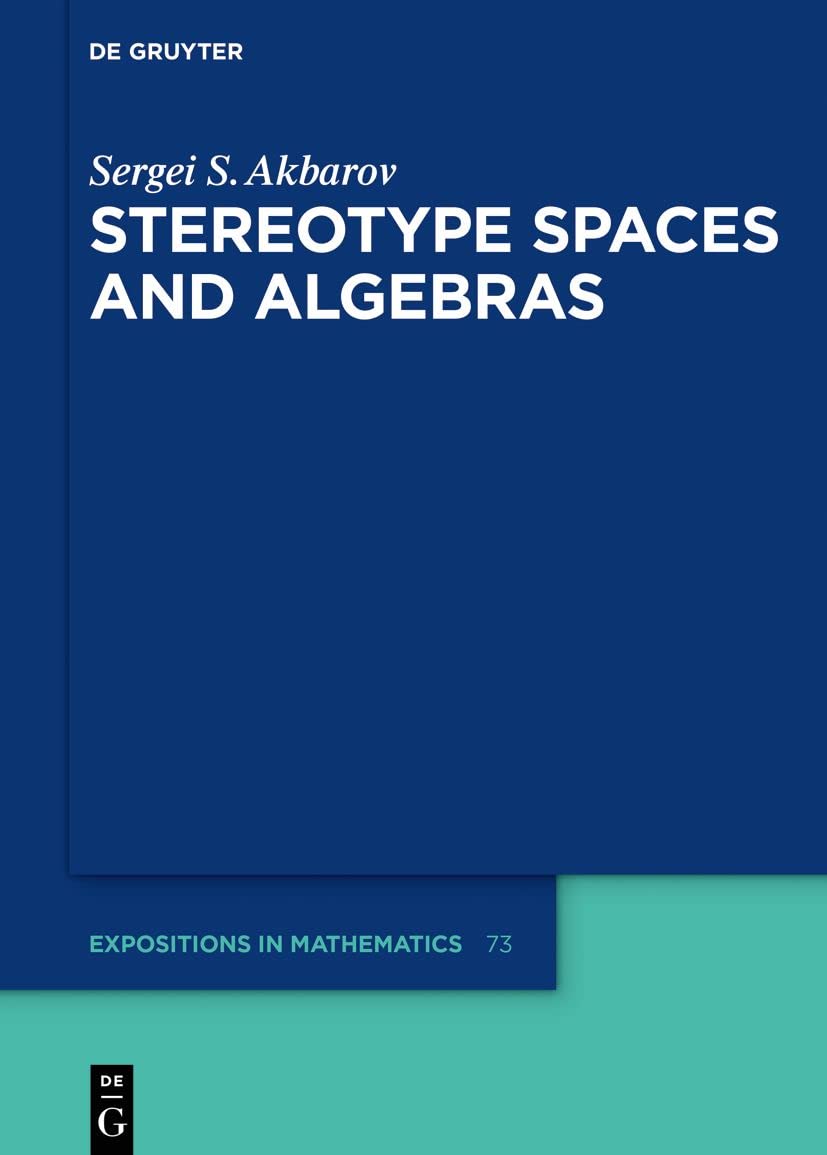
Stereotype Spaces and Algebras: 73 (De Gruyter Expositions in Mathematics, 73)

Mathematics
Semigroups in Algebra, Geometry and Analysis: 20 (De Gruyter Expositions in Mathematics, 20)

Mathematics
Geometry from the Pacific Rim: Proceedings of the Pacific Rim Geometry Conference held at National University of Singapore, Republic of Singapore, ... 1994 (De Gruyter Proceedings in Mathematics)

Mathematics
First International Tainan-Moscow Algebra Workshop: Proceedings of the International Conference held at National Cheng Kung University Tainan, Taiwan, ... 1994 (De Gruyter Proceedings in Mathematics)

Mathematics
Differential Geometry - Proceedings of the VIII International Colloquium (English, Jesus A. Alvarez Lopez | Eduardo Garcia-Rio)
Mathematics