
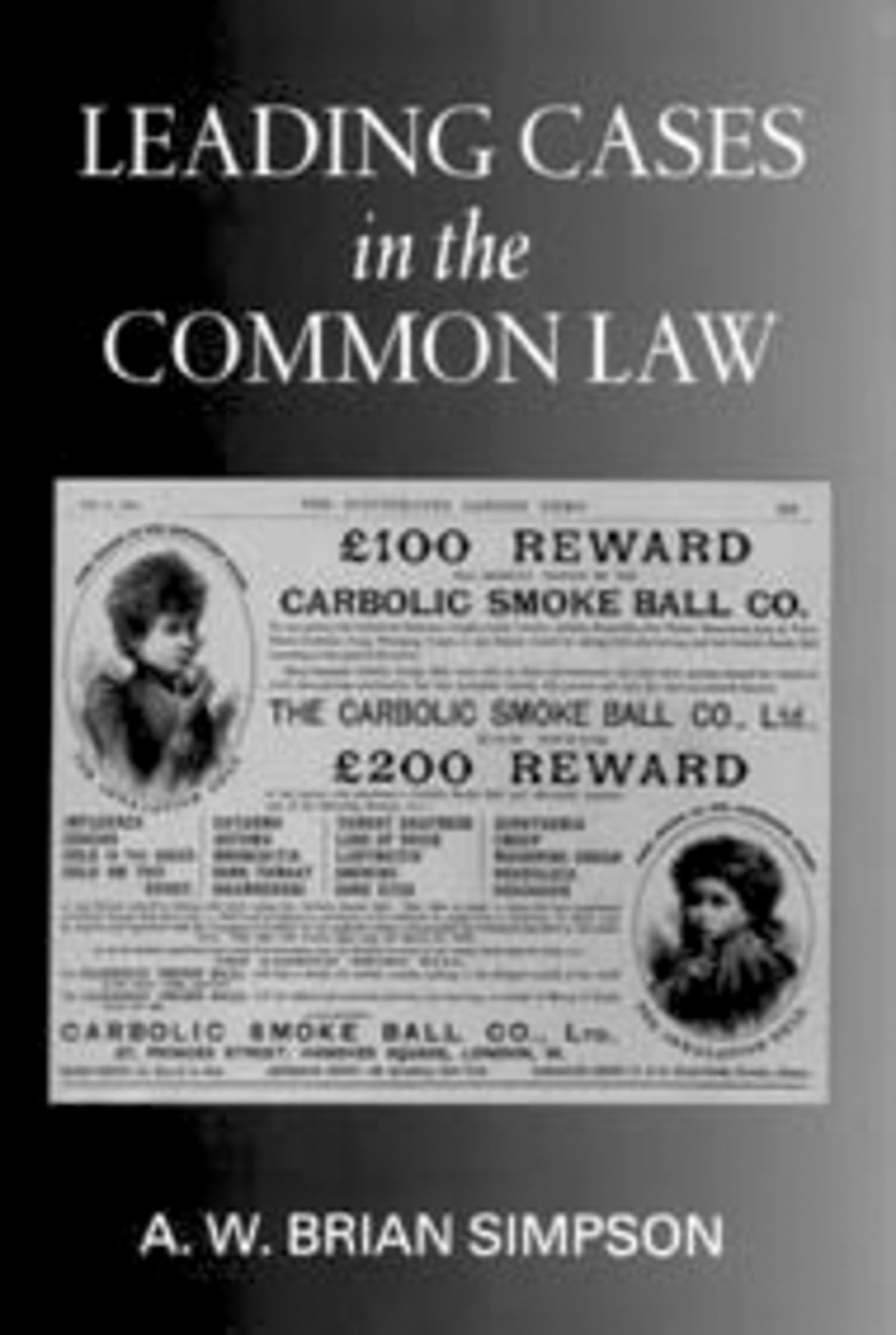
Leading Cases in the Common Law by A. W. Brian Simpson – A Historical Study of Landmark Judicial Decisions
Inclusive of all applicable taxes. FREE shipping on all orders.
Available Offers
- 🚚Free Delivery — Free shipping on all orders
- 💵Cash on Delivery — Pay when your order arrives
- ↩️15-Day Easy Returns — Hassle-free return policy
- 🔒Cash on Delivery — Pay safely when your order arrives
Check Delivery
Product Description
Introduction
In the vast and intricate world of legal scholarship, few works manage to bridge the gap between rigorous academic analysis and engaging storytelling. Leading Cases in the Common Law by A. W. Brian Simpson is one such rare gem. This hardbound volume offers Indian law students, practitioners, and history enthusiasts a fresh perspective on how certain judicial decisions transcend their time to become foundational pillars of the common law tradition. Rather than presenting dry legal doctrines, Simpson invites readers on a captivating journey through the social, cultural, and historical contexts that gave birth to these landmark rulings.
Book Overview
This meticulously researched work challenges the conventional approach to studying judicial decisions. Simpson, a renowned legal historian, argues that leading cases are not merely abstract principles but living artifacts shaped by the peculiar circumstances of their era. By delving into the original historical settings of cases like Donoghue v. Stevenson and Rylands v. Fletcher, the author uncovers the forgotten facts, eccentric personalities, and societal pressures that influenced the judges' reasoning. The book traces the strange intellectual journey of these cases as they evolved into authoritative statements of law, often acquiring meanings their original authors never intended.
Key Highlights
- Original Historical Research: Each chapter is built on painstaking archival work, revealing previously overlooked details about the litigants, lawyers, and judges involved.
- Critical Examination of Legal Myths: Simpson debunks many cherished assumptions about how leading cases achieved their status, exposing the role of chance, advocacy, and academic commentary.
- Accessible Prose: Written in an unpretentious style, the book assumes no specialized legal knowledge, making it suitable for curious readers from any background.
- Relevance to Indian Law: Since Indian courts often draw upon English common law precedents, understanding their origins enriches the study of Indian jurisprudence.
Inside the Book
The volume is organized around a series of famous cases, each treated as a case study in the creation of legal authority. Simpson begins with the medieval origins of the common law and moves through the nineteenth and twentieth centuries, showing how cases like Carlill v. Carbolic Smoke Ball Company and The Case of the Speluncean Explorers (though fictional, included for its illustrative power) came to define contract, tort, and criminal law. The narrative is enriched with anecdotes about the litigants—such as the unfortunate snail in the ginger beer bottle—and the barristers who argued the appeals. Simpson also explores how legal textbooks and law professors later canonized these decisions, sometimes distorting their original meaning.
Key Topics
- The concept of a leading case and its role in the common law tradition
- Historical methodology in legal research
- The relationship between judicial decisions and social context
- The evolution of legal doctrines through precedent
- The influence of legal education and scholarship on case law
- Critique of the anti-empirical bias in academic legal writing
Reader Benefits
For Indian readers, this book offers a deeper appreciation of the common law heritage that underpins much of India's legal system. Law students will gain a more nuanced understanding of how precedents are formed and applied, moving beyond rote memorization of case names and ratios. Practitioners will find fresh arguments to challenge established interpretations, while historians will delight in the rich tapestry of social history woven into each chapter. The book also encourages critical thinking about the nature of legal authority—a skill essential for anyone navigating the complexities of modern litigation.
Learning Outcomes
- Understand the historical and social forces that shape judicial reasoning
- Analyze how legal doctrines evolve through reinterpretation over time
- Identify the biases and limitations of traditional case law analysis
- Apply contextual methods to evaluate the relevance of foreign precedents in Indian courts
- Develop a skeptical yet respectful approach to legal authority
Who Should Read
This book is ideal for law students at Indian universities (LL.B., LL.M., or competitive exam aspirants), legal academics, judges, and practicing advocates who wish to deepen their understanding of the common law's foundations. It will also appeal to historians, political scientists, and general readers with an interest in how law interacts with society. Anyone preparing for the CLAT, AILET, or other law entrance exams will find the historical insights invaluable for answering conceptual questions.
About the Author
A. W. Brian Simpson (1931–2017) was one of the most distinguished legal historians of the twentieth century. A professor at the University of Michigan Law School and later at the University of Cambridge, he authored seminal works such as A History of the Common Law of Contract and Cannibalism and the Common Law. His scholarship was renowned for its meticulous archival research and engaging narrative style, which brought the dusty annals of legal history to life. Simpson was a Fellow of the British Academy and held honorary doctorates from several universities.
About the Publisher
Oxford University Press (OUP) is the world's largest university press, with a distinguished history of publishing authoritative works in law, history, and the humanities. The OUP Oxford imprint ensures that this volume meets the highest standards of editorial precision and academic integrity. For Indian readers, OUP's global network guarantees that the book is available through trusted channels like Bookshops.in, with reliable delivery across the country.
Conclusion
Leading Cases in the Common Law is not just a book about law—it is a meditation on how legal knowledge is created, preserved, and transformed. By revealing the human stories behind the headlines of law reports, A. W. Brian Simpson reminds us that the common law is a living tradition, constantly reshaped by the societies it serves. For anyone seeking to move beyond the surface of legal doctrine and explore the rich, messy reality of how law truly works, this hardbound volume is an indispensable addition to your library. Order your copy today from Bookshops.in and embark on an intellectual adventure that will change the way you think about law forever.
Quick Summary
Leading Cases in the Common Law by A. W. Brian Simpson is a groundbreaking work that delves into the phenomenon of the 'leading case'—a judicial decision that transcends its time to become a cornerstone of legal doctrine. Simpson meticulously investigates the original historical contexts of these cases and traces their strange intellectual journeys, offering a fresh, empirical critique of conventional legal scholarship. Written in an accessible style, the book is ideal for Indian law students, legal scholars, and practitioners who seek to understand how precedents are formed and why they endure. Readers will learn to appreciate the casuistic tradition of common law and gain critical insights into judicial reasoning. By purchasing from Bookshops.in, you get a genuine hardcover edition delivered to your doorstep, backed by reliable service and competitive pricing.
Book Highlights
Book Specifications
| ISBN-13 | 9780198262992 |
| ISBN-10 | 019826299X |
| Publisher | Clarendon Pr |
| Language | English |
| Dimensions | 15.24 x 1.91 x 22.86 cm |
| Weight | 590 g |
| Category | Region & Countries › Europe |
| Genre | Non-fiction |
| Original Language | English |
Frequently Asked Questions
What is 'Leading Cases in the Common Law' about?
Who is the author of this book?
Is this book suitable for Indian law students?
What is the ISBN-13?
Is this a hardcover or paperback?
What is the price in INR?
What is the book's rating?
Which publisher released this book?
What language is the book in?
Does the book cover Indian common law cases?
How is this book different from other legal texts?
Can I use this book for exam preparation?
Where can I buy this book in India?
Readers Also Search For
Related Products
View All
History
The Information Revolution: Transforming the World Through Technology (World History)
History
Human Nature and the French Revolution: From the Enlightenment to the Napoleonic Code: 3 (Polygons: Cultural Diversities and Intersections, 3)

History
The Unmaking of Home in Contemporary Art (Cultural Spaces)

History
Handbook to Life in Medieval and Early Modern Japan | by William E. Deal | Oxford University Press | by William E. Deal | Oxford University Press | by William E. Deal | Oxford University Press | by William E. Deal | Oxford University Press | by William E. Deal | Oxford University Press | by William E. Deal | Oxford University Press | by William E. Deal | Oxford University Press | by William E. Deal | Oxford University Press | by William E. Deal | Oxford University Press | by William E. Deal | Ox

History
The Narrators of Barbarian History (A.D. 550-800) | by Walter Goffart | University of Notre Dame Press | by Walter Goffart | University of Notre Dame Press | by Walter Goffart | University of Notre Dame Press | by Walter Goffart | University of Notre Dame Press | by Walter Goffart | University of Notre Dame Press | by Walter Goffart | University of Notre Dame Press | by Walter Goffart | University of Notre Dame Press | by Walter Goffart | University of Notre Dame Press | by Walter Goffart | Univ

History