
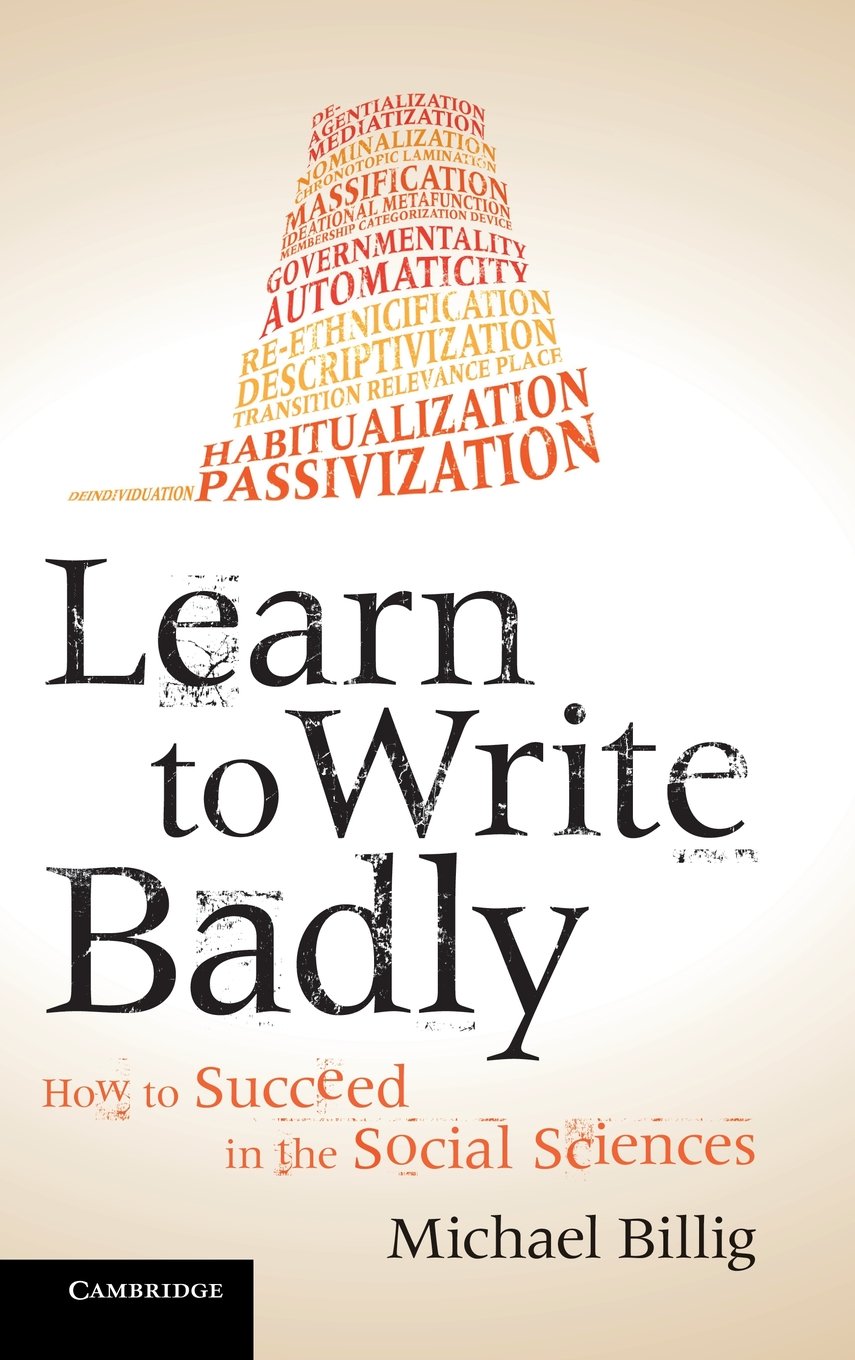
Learn to Write Badly: How to Succeed in the Social Sciences
Inclusive of all applicable taxes. FREE shipping on all orders.
Available Offers
- 🚚Free Delivery — Free shipping on all orders
- 💵Cash on Delivery — Pay when your order arrives
- ↩️15-Day Easy Returns — Hassle-free return policy
- 🔒Cash on Delivery — Pay safely when your order arrives
Check Delivery
Product Description
Introduction
In the competitive world of academia, where publishing is paramount, a provocative question emerges: what if the very style of writing that social scientists adopt is holding them back? Michael Billig’s Learn to Write Badly: How to Succeed in the Social Sciences turns conventional advice on its head. This sharp, witty, and eye-opening book, published by Cambridge University Press, is not a typical style guide. Instead, it is a critical examination of the linguistic habits that plague modern social science writing. For Indian students, researchers, and faculty navigating the pressures of journals, conferences, and PhD dissertations, this book offers a refreshing, counterintuitive lens through which to view academic prose—and perhaps, to write better by first understanding what ‘bad’ really means.
Book Overview
Learn to Write Badly is a compelling critique of the often opaque, noun-heavy, and jargon-laden language that dominates the social sciences. Billig argues that the pressure to sound ‘scientific’ has led to a culture of poor writing, where complex ideas are hidden behind abstract nouns like ‘reification’ and ‘nominalization’ rather than expressed through clear verbs. The book dissects how these linguistic choices—from passive constructions to excessive technical terminology—not only obscure meaning but also reflect deeper institutional and psychological pressures. Drawing on examples from linguistics, sociology, and experimental social psychology, Billig reveals the hidden cost of ‘success’ in academia: a loss of clarity, critical thought, and genuine communication. This is not a manual on grammar but a deep dive into the sociology of academic language itself.
Key Highlights
- Witty and entertaining tone that makes a serious critique accessible and engaging, even for those new to academic writing.
- Real-world examples from published social science texts, showing exactly how bad writing happens and why it persists.
- Focus on noun-based terminology and its impact on clarity, including concepts like nominalization and reification.
- Critical perspective on the pressures of academic publishing that reward obscurity over transparency.
- Relevance for multiple disciplines, including sociology, psychology, political science, anthropology, and linguistics.
Inside the Book
Billig structures his argument around the linguistic features that make social science writing ‘bad’. He examines how verbs are turned into nouns, creating a static, impersonal tone that distances the writer from the reader. He explores the use of technical jargon that often serves to impress rather than inform. The book also looks at how social scientists use language to exaggerate findings, conceal weak arguments, and maintain an aura of expertise. Each chapter unpacks a specific problem, using concrete examples from well-known academic works. Billig does not just diagnose the illness; he traces its roots to the competitive culture of universities, where quantity of publications often trumps quality of communication. This inside view is invaluable for any Indian student or scholar trying to understand why their own writing sometimes feels forced or unnatural.
Key Topics
- Nominalization and its effects on academic prose
- Reification: turning processes into things
- The role of passive voice in obscuring agency
- Jargon as a tool of exclusion and prestige
- The sociology of academic publishing and career incentives
- Linguistic habits that undermine critical thinking
- Comparison of writing styles across social science disciplines
Reader Benefits
Reading this book will transform how you view academic writing. Instead of feeling guilty about not using enough jargon, you will learn to spot the linguistic traps that even seasoned scholars fall into. You will gain a critical vocabulary to discuss writing quality—not just in terms of grammar, but in terms of clarity, honesty, and intellectual courage. For postgraduate students, it offers a roadmap to avoid common pitfalls that can make a thesis or paper seem less credible. For faculty and researchers, it provides a fresh perspective on peer review and editorial standards. Ultimately, this book empowers you to write with greater precision, confidence, and authenticity, helping you communicate your ideas effectively without sacrificing academic rigour.
Learning Outcomes
- Identify and avoid nominalization and reification in your own writing.
- Understand the institutional and psychological reasons behind poor academic prose.
- Develop a critical eye for evaluating the clarity of social science texts.
- Learn to use technical terminology only when it adds genuine precision.
- Gain insights into how writing style affects the reception of your research.
- Improve your ability to write clearly for both academic and non-academic audiences.
Who Should Read
This book is essential for social science postgraduate students in India—whether in sociology, psychology, political science, economics, or anthropology—who are writing dissertations or preparing for journal publication. It is equally valuable for early-career researchers, academic faculty, and university administrators concerned about the quality of scholarly communication. Anyone who has ever struggled with the pressure to sound ‘academic’ or felt that their writing was losing its natural voice will find this book both liberating and instructive. Even undergraduate students considering a research career will benefit from this early exposure to the hidden rules of academic language.
About the Author
Michael Billig is a distinguished British social psychologist and Emeritus Professor at Loughborough University. He is known for his groundbreaking work on rhetoric, ideology, and nationalism, including his influential books Arguing and Thinking and Banal Nationalism. Billig’s writing is celebrated for its clarity, wit, and critical edge—qualities that shine through in Learn to Write Badly. His deep familiarity with both the practice and the pitfalls of social science writing makes him an ideal guide for this unconventional journey.
About the Publisher
Cambridge University Press is one of the world’s oldest and most prestigious academic publishers, with a history spanning over four centuries. Known for its rigorous peer review and high editorial standards, Cambridge University Press publishes groundbreaking scholarship across all disciplines. This hardcover edition reflects the Press’s commitment to producing durable, high-quality books that serve the academic community. For Indian readers, a Cambridge University Press title is a mark of intellectual credibility and scholarly excellence.
Conclusion
Learn to Write Badly: How to Succeed in the Social Sciences is not just a book about writing—it is a bold critique of the academic culture that shapes how knowledge is produced and communicated. Michael Billig’s sharp analysis and engaging style make this an indispensable read for anyone who wants to write better, think more critically, and resist the pressures that lead to bad academic prose. Whether you are a student in Delhi, a researcher in Mumbai, or a professor in Kolkata, this book will change the way you approach your next paper, thesis, or article. Pick up your copy from Bookshops.in today and discover the surprising path to writing well: by learning to write badly.
Quick Summary
Learn to Write Badly: How to Succeed in the Social Sciences by Michael Billig is a sharp, witty, and deeply insightful book that takes a critical look at the state of academic writing in the social sciences. Billig, a renowned social psychologist, argues that much of what passes for scholarly prose is unnecessarily complex, jargon-laden, and often less precise than simpler language. Using concrete examples from linguistics, sociology, and experimental social psychology, he shows how noun-based terminology and the pressure to sound 'academic' lead to poor communication. The book is not just a critique—it is a guide for students and researchers who want to write more clearly and effectively. Ideal for Indian postgraduate students, early-career researchers, and faculty, this book offers both humour and practical wisdom. By reading it, you will learn to spot bad writing habits and avoid them in your own work. Order your copy from Bookshops.in, India’s premium online bookstore, and take a step toward better academic writing.
Book Highlights
Book Specifications
| ISBN-13 | 9781107027053 |
| ISBN-10 | 1107027055 |
| Publisher | Cambridge University Press |
| Language | English |
| Dimensions | 15.88 x 1.91 x 23.5 cm |
| Weight | 590 g |
| Country | India |
| Category | Literature › Creative Writing & Composition |
| Genre | Academic / Social Sciences |
| Original Language | English |
Frequently Asked Questions
What is 'Learn to Write Badly' about?
Who is the author of this book?
Is this book suitable for Indian students?
What makes this book different from other writing guides?
Does the book provide practical writing advice?
Which disciplines does the book cover?
Is this book only for social scientists?
What is the publication date of this book?
What is the price of this book on Bookshops.in?
What is the rating of this book?
Does the book discuss reification?
Can this book help me write my thesis?
Is the book humorous?
How is the book structured?
Readers Also Search For
Customers Also Bought

de Gruyter Mouton
Regional Development (English, John H. Cumberland)

British Archaeological Reports Oxford Ltd
Copies of the Fel Temp Reparatio Coinage in Britain | by R. J. Brickstock | British Archaeological Reports Oxford Ltd | by R. J. Brickstock | British Archaeological Reports Oxford Ltd | by R. J. Brickstock | British Archaeological Reports Oxford Ltd | by R. J. Brickstock | British Archaeological Reports Oxford Ltd | by R. J. Brickstock | British Archaeological Reports Oxford Ltd | by R. J. Brickstock | British Archaeological Reports Oxford Ltd | by R. J. Brickstock | British Archaeological Repor

de Gruyter
Baby - Cutter (English, Gerhard Strau | Heidrun Kamper-Jensen | Isolde Nortmeyer)
de Gruyter Mouton
Stratégies Et Choix Dans La Recherche (English, G. Lemaine | M. Clémençon | A. Gomis)
Fordham University Press
Charms That Soothe: Classical Music and the Narrative Film (Communications and Media Studies, 9)
Atheneum Books
Ghost | by Jason Reynolds | Atheneum Books | by Jason Reynolds | Atheneum Books | by Jason Reynolds | Atheneum Books | by Jason Reynolds | Atheneum Books | by Jason Reynolds | Atheneum Books | by Jason Reynolds | Atheneum Books | by Jason Reynolds | Atheneum Books | by Jason Reynolds | Atheneum Books | by Jason Reynolds | Atheneum Books | by Jason Reynolds | Atheneum Books | by Jason Reynolds | Atheneum Books | by Jason Reynolds | Atheneum Books | by Jason Reynolds | Atheneum Books | by Jason Re
Related Products
View All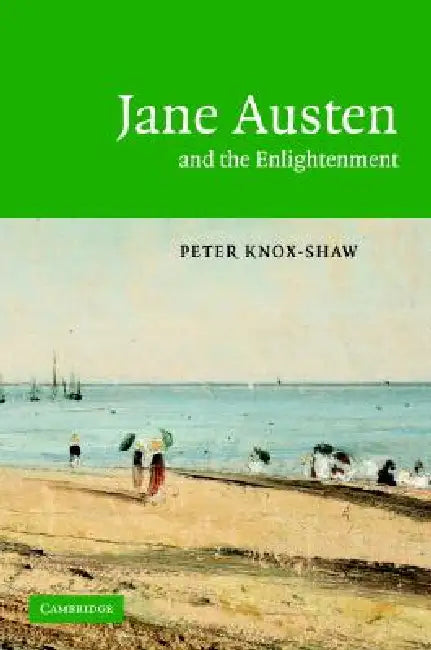
Cambridge University Press
Jane Austen and the Enlightenment (English, Peter Knox-Shaw)

Cambridge University Press
Children of the Queen's Revels (English, Lucy Munro)

Cambridge University Press
Site Automation | by Thomas Bock | Thomas Linner | Cambridge University Press | by Thomas Bock | Thomas Linner | Cambridge University Press | by Thomas Bock | Thomas Linner | Cambridge University Press | by Thomas Bock | Thomas Linner | Cambridge University Press | by Thomas Bock | Thomas Linner | Cambridge University Press | by Thomas Bock | Thomas Linner | Cambridge University Press | by Thomas Bock | Thomas Linner | Cambridge University Press | by Thomas Bock | Thomas Linner | Cambridge Unive
Cambridge University Press
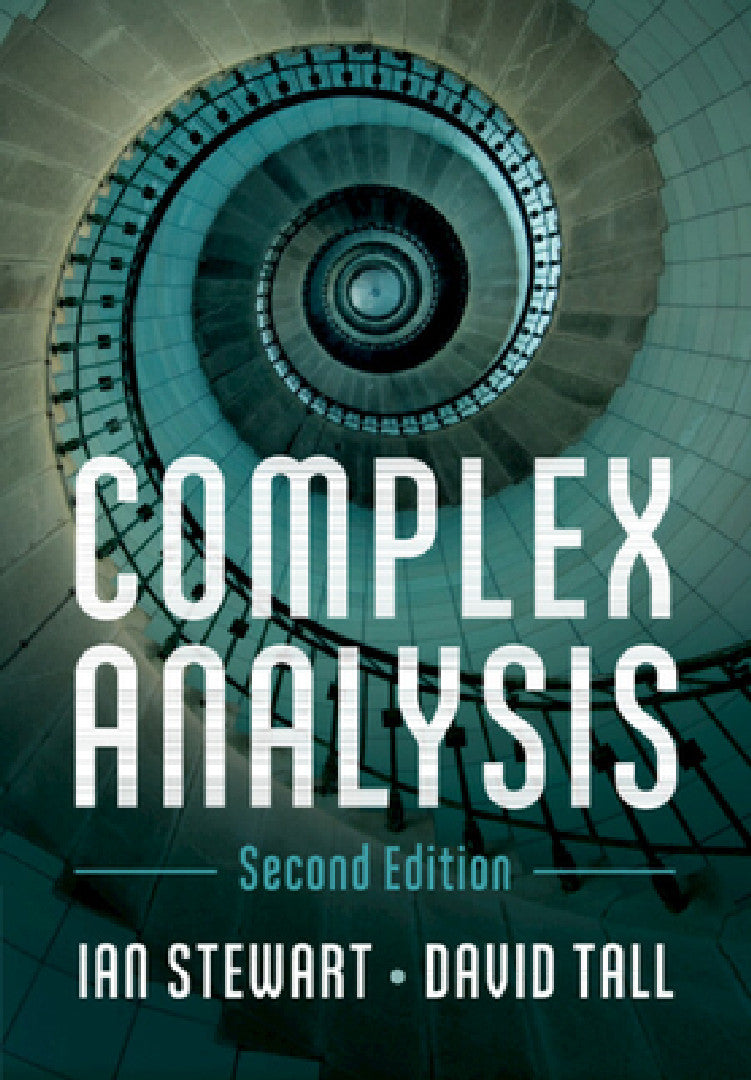
Complex Analysis | by Ian Stewart | David Tall | Cambridge University Press | by Ian Stewart | David Tall | Cambridge University Press | by Ian Stewart | David Tall | Cambridge University Press | by Ian Stewart | David Tall | Cambridge University Press | by Ian Stewart | David Tall | Cambridge University Press | by Ian Stewart | David Tall | Cambridge University Press | by Ian Stewart | David Tall | Cambridge University Press | by Ian Stewart | David Tall | Cambridge University Press | by Ian St
Cambridge University Press
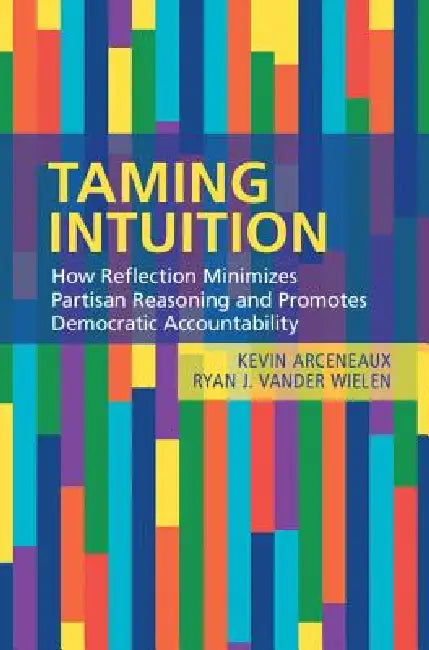
Taming Intuition | by Kevin Arceneaux | Ryan J. Vander Wielen | Cambridge University Press | by Kevin Arceneaux | Ryan J. Vander Wielen | Cambridge University Press | by Kevin Arceneaux | Ryan J. Vander Wielen | Cambridge University Press | by Kevin Arceneaux | Ryan J. Vander Wielen | Cambridge University Press | by Kevin Arceneaux | Ryan J. Vander Wielen | Cambridge University Press | by Kevin Arceneaux | Ryan J. Vander Wielen | Cambridge University Press | by Kevin Arceneaux | Ryan J. Vander W
Cambridge University Press