
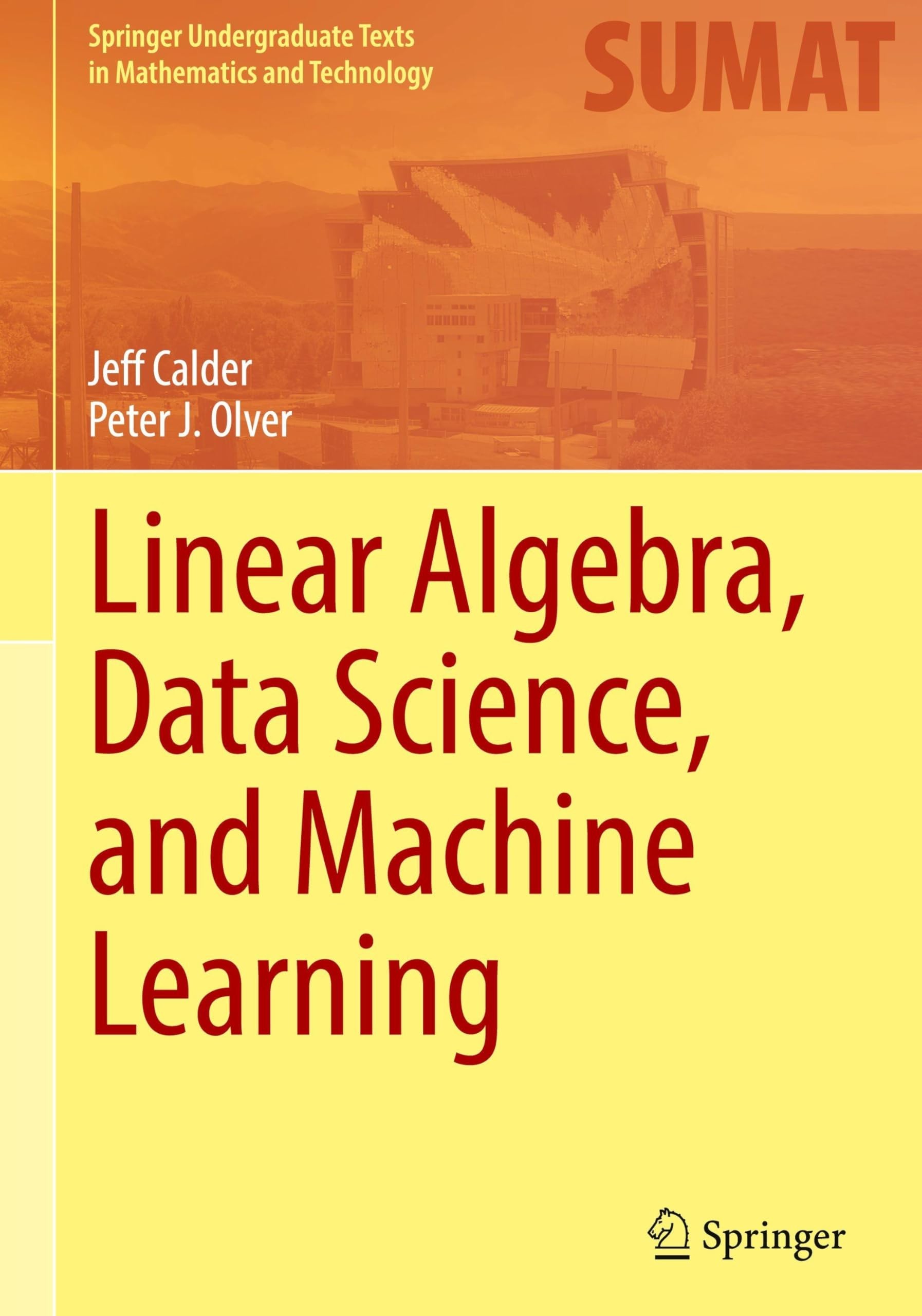
Linear Algebra, Data Science and Machine Learning: A Rigorous Introduction to Modern Machine Learning and Data Analysis
Inclusive of all applicable taxes. FREE shipping on all orders.
Available Offers
- 🚚Free Delivery — Free shipping on all orders
- 💵Cash on Delivery — Pay when your order arrives
- ↩️15-Day Easy Returns — Hassle-free return policy
- 🔒Cash on Delivery — Pay safely when your order arrives
Check Delivery
Product Description
Introduction
In the rapidly evolving landscape of artificial intelligence and data science, a solid mathematical foundation is no longer optional—it is essential. Linear Algebra, Data Science and Machine Learning by Jeff Calder is a meticulously crafted textbook that bridges the gap between abstract mathematical theory and cutting-edge algorithmic practice. Designed for advanced undergraduates and beginning graduate students, this hardcover volume from Springer offers a self-contained journey into the core mathematics that power modern machine learning, with a special emphasis on linear algebra as the unifying thread. For Indian students and professionals seeking to deepen their understanding of how and why algorithms work, this book is an invaluable resource.
Book Overview
Published by Springer, a name synonymous with academic excellence, this book stands out for its rigorous yet accessible approach. Jeff Calder assumes only basic calculus as a prerequisite, building everything from scratch—linear algebra, optimization, elementary probability, graph theory, and statistics—in a sequence specifically tailored for contemporary data analysis and machine learning. The text does not merely present formulas; it explains the intuition behind them, ensuring readers develop both theoretical insight and practical facility. With a strong focus on real-world applications, this book prepares students to not only use algorithms but to innovate and adapt them for new challenges.
Key Highlights
- Self-contained curriculum: Requires only basic calculus; all other mathematics is developed from first principles.
- Unique linear algebra focus: Topics are ordered and chosen to directly support modern machine learning and data science workflows.
- Rigorous yet intuitive: Balances mathematical proof with practical explanation of how and why algorithms succeed.
- Application-driven: Emphasizes hands-on understanding through examples and exercises relevant to real data problems.
- Ideal for Indian curricula: Matches the depth expected in advanced undergraduate and postgraduate courses in data science, AI, and applied mathematics.
Inside the Book
The book unfolds in a logical progression, starting with foundational linear algebra concepts—vector spaces, matrices, eigenvalues, and singular value decomposition—before moving into optimization theory, probability, and graph theory. Each chapter is designed to build on the previous one, with clear connections drawn to machine learning topics such as regression, classification, clustering, and neural networks. The author includes numerous worked examples, end-of-chapter exercises, and algorithmic illustrations that make abstract ideas tangible. Readers will appreciate the careful treatment of topics like matrix factorizations, gradient descent, and spectral methods, which are directly applicable in Python or R implementations.
Key Topics
- Vector spaces, linear transformations, and matrix decompositions
- Eigenvalues, eigenvectors, and singular value decomposition (SVD)
- Least squares, ridge regression, and principal component analysis (PCA)
- Convex optimization and gradient-based methods
- Probability theory for data science: distributions, expectation, and Bayes' rule
- Graph theory basics: adjacency matrices, Laplacians, and spectral clustering
- Statistical learning theory: bias-variance tradeoff, regularization, and model selection
- Support vector machines, kernel methods, and neural network fundamentals
Reader Benefits
By working through this book, readers will gain a deep, mathematically grounded understanding of machine learning algorithms. They will learn not just to call library functions but to design and debug models from the ground up. The strong linear algebra emphasis ensures that concepts like dimensionality reduction, feature engineering, and optimization become second nature. Indian students preparing for competitive exams, research roles, or industry positions will find this book a powerful tool for building confidence in both theory and application. The self-contained nature also makes it suitable for self-study, with clear explanations that reduce dependency on external resources.
Learning Outcomes
- Master the linear algebra essential for data science, including matrix factorizations and spectral methods.
- Understand the mathematical underpinnings of popular machine learning algorithms like PCA, SVM, and neural networks.
- Develop the ability to derive and implement optimization algorithms from scratch.
- Gain fluency in probability and statistics as used in model evaluation and inference.
- Learn to connect graph theory concepts to clustering and network analysis.
- Build a strong foundation for advanced research or professional work in AI and data science.
Who Should Read
This book is ideal for advanced undergraduate and postgraduate students in computer science, data science, statistics, mathematics, and engineering. It is equally valuable for researchers and professionals who wish to solidify their mathematical foundations while staying current with modern machine learning techniques. Indian students pursuing BTech, MTech, MSc, or PhD programs will find the content perfectly aligned with their coursework. The minimal prerequisites also make it accessible to motivated learners from diverse backgrounds, provided they have a working knowledge of basic calculus.
About the Author
Jeff Calder is a respected academic and researcher in the field of applied mathematics and machine learning. With a deep commitment to pedagogical clarity, he has designed this book to demystify the mathematics behind data science for a broad audience. His expertise ensures that every concept is presented with precision and relevance, making complex ideas approachable without sacrificing rigor.
About the Publisher
Springer is a globally renowned academic publisher, known for its high-quality textbooks, monographs, and reference works in science, technology, and mathematics. This book carries the hallmark of Springer's rigorous peer-review and editorial standards, guaranteeing content that is both authoritative and up-to-date. For Indian readers, Springer's publications are trusted resources in university libraries and research institutions nationwide.
Conclusion
Linear Algebra, Data Science and Machine Learning is more than a textbook—it is a gateway to mastering the mathematical language of modern AI. Whether you are a student aiming for top grades, a researcher pushing the boundaries of knowledge, or a professional seeking to upgrade your skills, this book provides the clarity, depth, and practical orientation you need. With its unique focus on linear algebra and its self-contained design, it stands as an essential addition to the library of anyone serious about data science and machine learning. Order your hardcover copy from Bookshops.in today and take the next step in your learning journey.
Quick Summary
Linear Algebra, Data Science and Machine Learning by Jeff Calder is a mathematically rigorous yet self-contained textbook designed for advanced undergraduate and beginning graduate students. The book requires only basic calculus and builds all necessary mathematics—linear algebra, optimization, elementary probability, graph theory, and statistics—from scratch, with a unique ordering that emphasizes topics most relevant to contemporary machine learning and data analysis. Readers will gain a deep understanding of how and why algorithms work, along with practical skills for applying them. This book is perfect for Indian students and professionals looking to strengthen their mathematical foundations for AI and data science careers. By choosing Bookshops.in, you get authentic Springer hardcover editions at competitive prices with reliable delivery across India.
Book Highlights
Book Specifications
| ISBN-13 | 9783031937637 |
| ISBN-10 | 3031937635 |
| Publisher | Springer Nature |
| Language | English |
| Dimensions | 17.78 x 3.51 x 25.4 cm |
| Weight | 1 kg 350 g |
| Country | India |
| Category | Mathematics › Algebra & Trigonometry |
| Genre | Non-fiction |
| Original Language | English |
Frequently Asked Questions
Is this book suitable for beginners in machine learning?
What mathematics does this book cover?
Does the book include practical examples?
Who is the author?
What is the ISBN?
Is this book available in paperback?
Can I use this book for self-study?
Does this book cover deep learning?
What is the price in India?
Is this book recommended for Indian university courses?
What makes this book different from other ML textbooks?
Does the book include exercises?
Can I order this book from Bookshops.in?
Readers Also Search For
Customers Also Bought
Mathematics
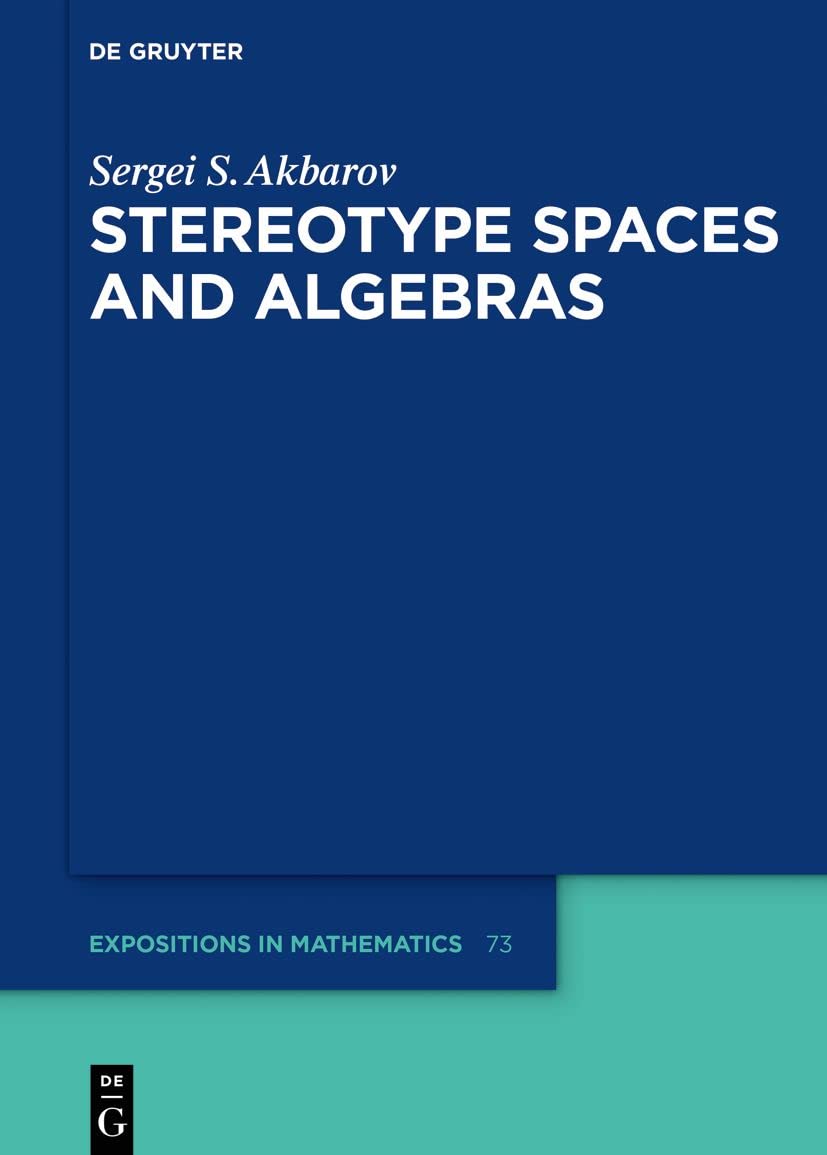
Stereotype Spaces and Algebras: 73 (De Gruyter Expositions in Mathematics, 73)
Mathematics
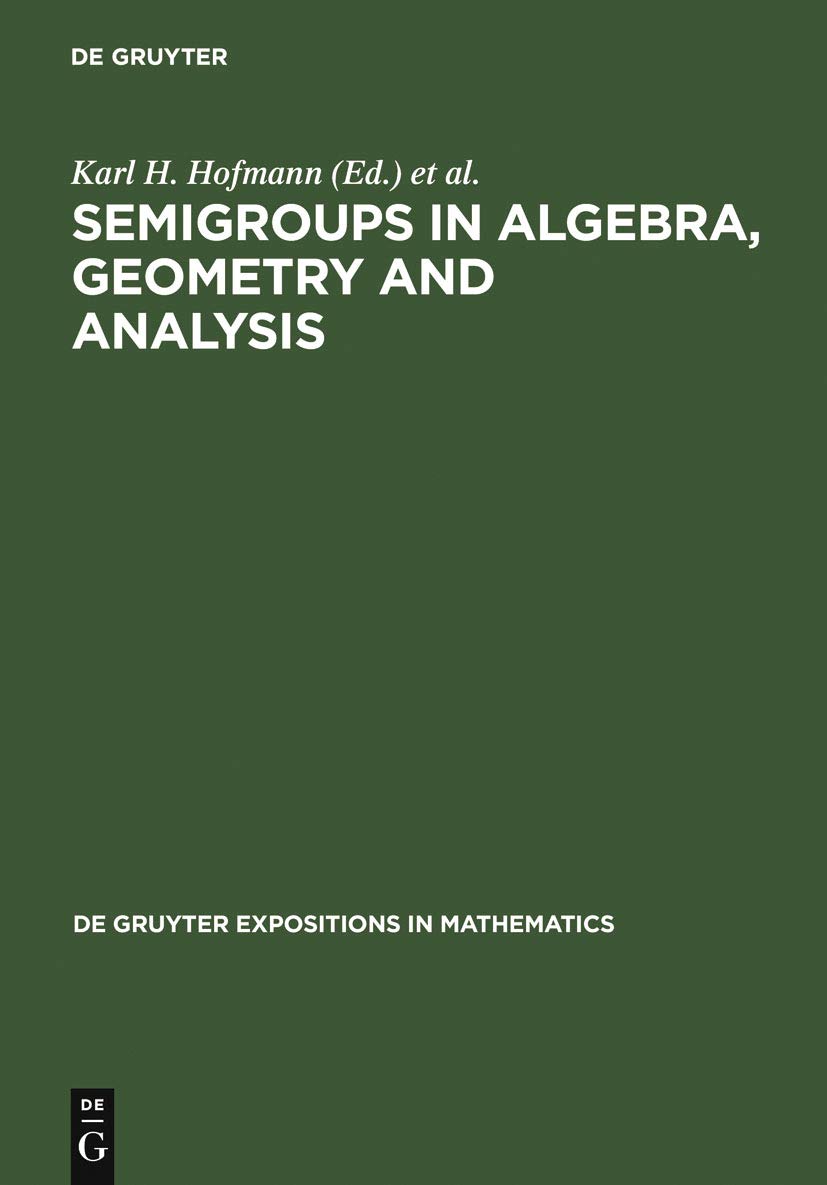
Semigroups in Algebra, Geometry and Analysis: 20 (De Gruyter Expositions in Mathematics, 20)
Mathematics
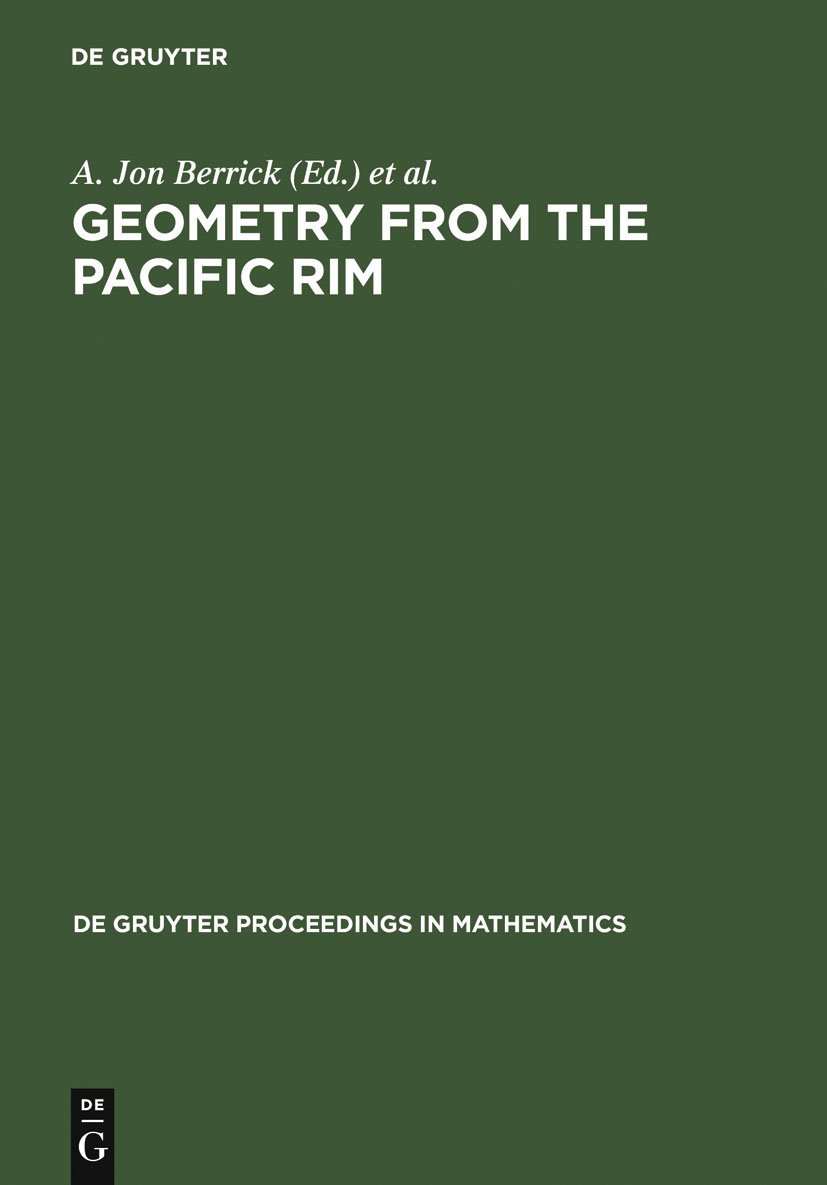
Geometry from the Pacific Rim: Proceedings of the Pacific Rim Geometry Conference held at National University of Singapore, Republic of Singapore, ... 1994 (De Gruyter Proceedings in Mathematics)
Mathematics
First International Tainan-Moscow Algebra Workshop: Proceedings of the International Conference held at National Cheng Kung University Tainan, Taiwan, ... 1994 (De Gruyter Proceedings in Mathematics)
Mathematics
Differential Geometry - Proceedings of the VIII International Colloquium (English, Jesus A. Alvarez Lopez | Eduardo Garcia-Rio)
Mathematics
Mathematical Theory of Optimal Processes (Classics of Soviet Mathematics)
Related Products
View AllMathematics
Mathematical Theory of Optimal Processes (Classics of Soviet Mathematics)
Mathematics
Stereotype Spaces and Algebras: 73 (De Gruyter Expositions in Mathematics, 73)
Mathematics
Semigroups in Algebra, Geometry and Analysis: 20 (De Gruyter Expositions in Mathematics, 20)
Mathematics
Geometry from the Pacific Rim: Proceedings of the Pacific Rim Geometry Conference held at National University of Singapore, Republic of Singapore, ... 1994 (De Gruyter Proceedings in Mathematics)
Mathematics
First International Tainan-Moscow Algebra Workshop: Proceedings of the International Conference held at National Cheng Kung University Tainan, Taiwan, ... 1994 (De Gruyter Proceedings in Mathematics)
Mathematics