
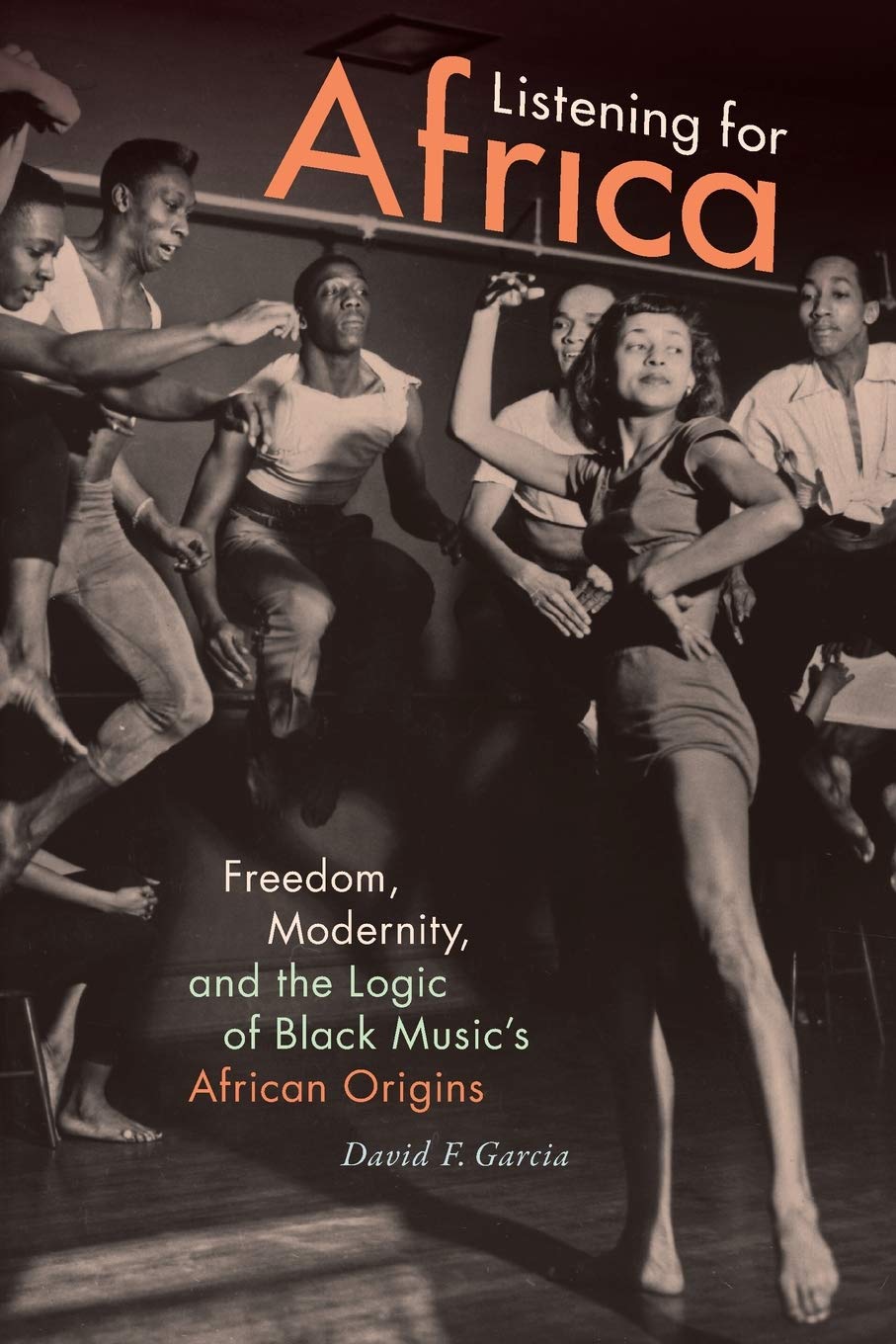
Listening for Africa: Freedom, Modernity, and the Logic of Black Music's African Origins by David F. Garcia
Inclusive of all applicable taxes. FREE shipping on all orders.
Available Offers
- 🚚Free Delivery — Free shipping on all orders
- 💵Cash on Delivery — Pay when your order arrives
- ↩️15-Day Easy Returns — Hassle-free return policy
- 🔒Cash on Delivery — Pay safely when your order arrives
Check Delivery
Product Description
Introduction
In 'Listening for Africa: Freedom, Modernity, and the Logic of Black Music's African Origins', David F. Garcia presents a groundbreaking exploration of how black music and dance became powerful tools in the struggle for freedom and modernity between the 1930s and 1950s. This meticulously researched hardcover from Duke University Press is an essential read for students, scholars, and anyone passionate about the cultural and political dimensions of African diasporic arts. Garcia weaves together the stories of musicians, dancers, academics, and activists who sought to link black expressive culture with its African roots, revealing both the promise and the paradoxes of that quest.
Book Overview
Garcia examines the work of influential figures such as Melville J. Herskovits, Katherine Dunham, Asadata Dafora, Duke Ellington, and Dámaso Pérez Prado. These individuals believed that by connecting black music and dance to Africa and nature, they could help realize modernity's promises of freedom in an era marked by fascism, racism, colonialism, and the early Cold War. The book traces how their efforts, while well-intentioned, often unintentionally reinforced binary oppositions between the West and Africa, white and black, modern and primitive, science and magic, and rural and urban. Garcia argues that modernity's determinations of unraced, heteronormative, and productive bodies shaped these engagements in complex ways.
Key Highlights
- Interdisciplinary Approach: Blends musicology, dance studies, anthropology, and critical race theory to offer a holistic understanding of black music's African origins.
- Rich Historical Context: Situates the discussion within the turbulent mid-20th century, addressing fascism in Europe, racism in the Americas, colonialism in Africa, and the nuclear threat.
- Critical Analysis: Goes beyond celebration to critically examine how the search for African roots sometimes reinforced the very hierarchies it sought to dismantle.
- Global Perspective: Covers figures and movements across the United States, the Caribbean, Latin America, and Europe, offering a truly transnational view.
Inside the Book
The book is divided into thematic chapters that explore different facets of the discourse on African origins. Garcia delves into the work of anthropologists like Herskovits, who sought to scientifically prove African retentions in the Americas. He examines the choreographic innovations of Katherine Dunham and Asadata Dafora, who brought African and Caribbean dance to concert stages. The musical contributions of Duke Ellington and Dámaso Pérez Prado are analyzed for their incorporation of African rhythms and aesthetics. Each chapter reveals the tensions between authenticity and appropriation, agency and objectification, as artists and intellectuals navigated the politics of representation.
Key Topics
- Black music and dance as sites of freedom and resistance
- The politics of African retentions and cultural memory
- Modernity and its contradictions in the African diaspora
- Race, gender, and the body in performance
- Transnational networks of artists, scholars, and activists
- The role of primitivism and exoticism in shaping perceptions of black culture
Reader Benefits
Readers will gain a deep understanding of how black music and dance have been central to debates about freedom, identity, and modernity. The book challenges simplistic narratives of cultural continuity and instead offers a nuanced view of the struggles and compromises involved in claiming African roots. It provides a critical lens for examining contemporary discussions about cultural appropriation, authenticity, and the global circulation of black art forms. Indian readers, in particular, will find parallels in the ways postcolonial societies grapple with tradition and modernity.
Learning Outcomes
- Analyze the historical and political contexts of black music and dance from the 1930s to the 1950s.
- Critically evaluate the concept of 'African origins' and its implications for identity and politics.
- Understand the intersections of race, gender, and modernity in performance practices.
- Identify key figures and movements in the African diaspora's cultural history.
- Apply interdisciplinary methods to study the relationship between art and social change.
Who Should Read
This book is ideal for students and scholars of musicology, dance studies, African American studies, anthropology, and postcolonial studies. It is also highly recommended for musicians, dancers, and cultural activists interested in the politics of heritage and representation. General readers with a passion for history, culture, and the arts will find 'Listening for Africa' both enlightening and thought-provoking.
About the Author
David F. Garcia is a distinguished scholar of musicology and African diaspora studies. His research focuses on the intersections of music, race, and politics in the Americas and the Caribbean. He has published extensively on Latin jazz, Afro-Cuban music, and the cultural politics of performance. Garcia's work is known for its rigorous archival research and its ability to connect historical analysis with contemporary concerns.
About the Publisher
Duke University Press is a leading academic publisher known for its groundbreaking titles in the humanities and social sciences. With a strong commitment to critical theory, cultural studies, and postcolonial scholarship, Duke University Press has become a vital platform for voices that challenge conventional wisdom and expand our understanding of the world. This hardcover edition is a testament to their dedication to producing high-quality, impactful works.
Conclusion
'Listening for Africa' is a vital contribution to the study of black music and dance, offering a sophisticated and critical examination of the quest for African origins. David F. Garcia masterfully reveals the hopes, contradictions, and unintended consequences that shaped this search for freedom and modernity. For anyone seeking to understand the deep cultural and political currents that run through black expressive culture, this book is an indispensable resource. Order your copy today from Bookshops.in and add this essential work to your library.
Quick Summary
Listening for Africa by David F. Garcia is a rigorous academic exploration of how a diverse group of musicians, dancers, and intellectuals between the 1930s and 1950s sought to connect black music and dance with African origins. The book delves into the work of figures like Katherine Dunham, Duke Ellington, and Melville Herskovits, showing how their efforts were intertwined with the desire to realize modernity's promises of freedom amid fascism, racism, colonialism, and Cold War anxieties. Garcia critically reveals how these attempts often inadvertently reinforced the binary oppositions between the West and Africa. Ideal for students and scholars of musicology, African diaspora studies, dance history, and cultural theory, this book offers a deep, nuanced understanding of the politics of cultural origins. Readers will learn about the complex dynamics of identity, power, and resistance in mid-20th century transatlantic culture. By purchasing from Bookshops.in, you get a premium hardcover edition from Duke University Press, ensuring a high-quality reading experience with fast delivery across India.
Book Highlights
Book Specifications
| ISBN-13 | 9780822363705 |
| ISBN-10 | 0822363704 |
| Publisher | Duke University Press |
| Language | English |
| Dimensions | 15.24 x 1.96 x 22.86 cm |
| Weight | 564 g |
| Country | India |
| Category | Performing Arts › Music |
| Genre | Musicology, Cultural Studies, African Diaspora Studies |
| Reading Age | Adult |
| Original Language | English |
Frequently Asked Questions
What is Listening for Africa about?
Who is the author of Listening for Africa?
Which publisher released this book?
Is this book suitable for Indian readers?
What is the ISBN of this book?
What is the price of Listening for Africa?
What is the publication date?
What is the binding type?
Is this book available in digital format?
Who are some key figures discussed in the book?
What themes does the book cover?
What is the rating of this book?
How does this book differ from others on black music?
Readers Also Search For
Customers Also Bought
Art History
The Italian Renaissance in Art

Art History
Photovoltaic Design & Installation For Dummies | by Mayfield | ForDummies | by Mayfield | ForDummies | by Mayfield | ForDummies | by Mayfield | ForDummies | by Mayfield | ForDummies | by Mayfield | ForDummies | by Mayfield | ForDummies | by Mayfield | ForDummies | by Mayfield | ForDummies | by Mayfield | ForDummies | by Mayfield | ForDummies | by Mayfield | ForDummies | by Mayfield | ForDummies | by Mayfield | ForDummies | by Mayfield | ForDummies | by Mayfield | ForDummies | by Mayfield | ForDu
Art History
Designing School Systems for All Students (English, Robert J. Manley | Richard J. Hawkins)

Art History
Routledge Library Editions: Art and Culture in the Nineteenth Century

Art History
An Errant Design (English, S. H. Long)

Art History
Distributed System Design | by Jie Wu | CRC Press | by Jie Wu | CRC Press | by Jie Wu | CRC Press | by Jie Wu | CRC Press | by Jie Wu | CRC Press | by Jie Wu | CRC Press | by Jie Wu | CRC Press | by Jie Wu | CRC Press | by Jie Wu | CRC Press | by Jie Wu | CRC Press | by Jie Wu | CRC Press | by Jie Wu | CRC Press | by Jie Wu | CRC Press | by Jie Wu | CRC Press | by Jie Wu | CRC Press | by Jie Wu | CRC Press | by Jie Wu | CRC Press | by Jie Wu | CRC Press | by Jie Wu | CRC Press | by Jie Wu | CRC
Related Products
View All
Music
The Cambridge Companion to Michael Tippett by Kenneth Gloag – Music Analysis
Music
Making Light: Haydn, Musical Camp, and the Long Shadow of German Idealism
Music
Music and the Crises of the Modern Subject by Michael L. Klein – Music Theory & Criticism
Music
Opera and Drama in Eighteenth-Century London: The King's Theatre, Garrick and the Business of Perfor
Music
Music in Theory and Practice Volume 1 | by Bruce Benward | Marilyn Saker | McGraw-Hill Companies | by Bruce Benward | Marilyn Saker | McGraw-Hill Companies | by Bruce Benward | Marilyn Saker | McGraw-Hill Companies | by Bruce Benward | Marilyn Saker | McGraw-Hill Companies | by Bruce Benward | Marilyn Saker | McGraw-Hill Companies | by Bruce Benward | Marilyn Saker | McGraw-Hill Companies | by Bruce Benward | Marilyn Saker | McGraw-Hill Companies | by Bruce Benward | Marilyn Saker | McGraw-Hill

Music