
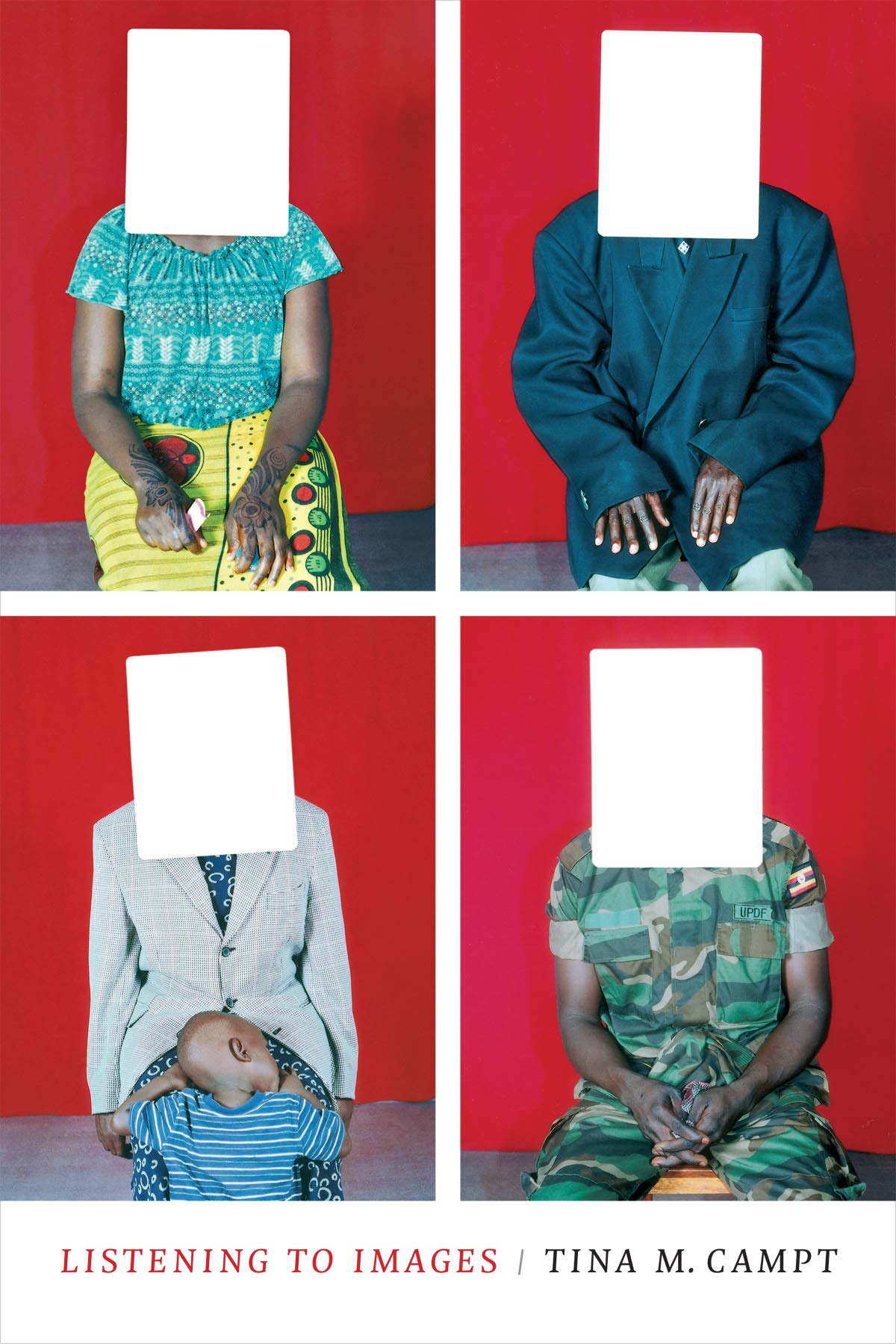
Listening to Images by Tina M. Campt – A Sonic Exploration of Photography, Refusal, and the Black Diaspora
Inclusive of all applicable taxes. FREE shipping on all orders.
Available Offers
- 🚚Free Delivery — Free shipping on all orders
- 💵Cash on Delivery — Pay when your order arrives
- ↩️15-Day Easy Returns — Hassle-free return policy
- 🔒Cash on Delivery — Pay safely when your order arrives
Check Delivery
Product Description
Introduction
Photographs are more than visual artifacts—they carry rhythms, silences, and whispers that speak to histories of resistance and survival. In Listening to Images, Tina M. Campt invites readers to engage with photography through an auditory lens, uncovering the quiet frequencies of defiance embedded in images of Black subjects from across the diaspora. This groundbreaking work challenges conventional ways of seeing, urging us to listen to what photographs reveal about colonialism, subjugation, and the everyday acts of refusal that shape Black life.
Book Overview
Published by Duke University Press, Listening to Images delves into lost archives of photographs that were historically dismissed or used to control and dehumanize Black individuals. Campt examines images ranging from late nineteenth-century ethnographic portraits of rural African women to early twentieth-century prison photographs from Cape Town, postwar passport photos from Birmingham, England, and 1960s mug shots of the Freedom Riders. Through a practice of sonic attunement, she hears the “quiet intensity” and “quotidian practices of refusal” that these images emit—a low hum of resistance, the buzz of tension, and the anticipation of futures yet to come. The book reimagines photography as a multisensory experience, where sound becomes a tool for accessing affective registers often overlooked.
Key Highlights
- Innovative methodology: Introduces a groundbreaking approach of “listening to images” as a way to access hidden emotional and political dimensions.
- Archival recovery: Brings to light neglected photographic archives from the Black diaspora, including colonial-era and state surveillance images.
- Interdisciplinary scope: Bridges art history, Black studies, sound studies, and visual culture to offer fresh perspectives.
- Affective analysis: Focuses on the subtle frequencies of resistance, subversion, and hope in images meant to dehumanize.
- Global context: Covers photographic practices across Africa, Europe, and the United States, connecting transnational histories of oppression and agency.
Inside the Book
The book is structured around close readings of specific photographs, each chapter unpacking the sonic and affective dimensions of a particular archive. Campt examines how these images register the “softly buzzing tension” of colonial rule, the “low hum” of everyday resistance, and the performative anticipation of a liberated future. She engages with the materiality of photographs—their textures, surfaces, and traces—to argue that they are not static records but dynamic sites of encounter. Through meticulous analysis, she reveals how subjects in these images actively negotiated their own representation, even within oppressive frameworks. The book also includes reproductions of the photographs discussed, allowing readers to see and “hear” along with the author.
Key Topics
- Photography and colonial power structures
- Sound studies and visual culture
- Black diaspora and transnational resistance
- Archival silence and marginalized histories
- Affect theory and sensory perception
- State surveillance and the politics of the mug shot
- Everyday acts of refusal and agency
- Gender, race, and representation in photography
Reader Benefits
This book offers a transformative way of engaging with visual media, equipping readers with a new analytical toolset. By learning to “listen” to images, readers gain the ability to uncover layers of meaning that traditional visual analysis misses. The work deepens understanding of how oppressed communities have used photography to assert dignity and resistance, even in the most constrained circumstances. It also provides a model for interdisciplinary research that can be applied to other archives and media. For students and scholars, it opens up fresh pathways for exploring the intersections of race, sound, and visual culture.
Learning Outcomes
- Develop the ability to analyze photographs through sensory and affective frameworks.
- Understand the historical role of photography in colonialism, surveillance, and racialization.
- Identify practices of resistance and refusal in visual archives of the Black diaspora.
- Apply sound studies concepts to the interpretation of visual materials.
- Critically engage with the politics of archival selection and preservation.
Who Should Read
Listening to Images is essential for students and scholars of art history, visual culture, Black studies, postcolonial studies, and sound studies. It is also highly relevant for photographers, curators, and archivists interested in decolonizing visual archives. General readers passionate about photography, social justice, and the hidden histories of resistance will find this book deeply enlightening. Indian readers, particularly those engaged with postcolonial and diaspora studies, will appreciate its parallels with local histories of visual representation and subaltern agency.
About the Author
Tina M. Campt is a renowned scholar of visual culture and Black studies, currently a professor at Princeton University. She is known for her innovative work on photography, diaspora, and the politics of looking. Her research consistently pushes the boundaries of how we understand images, particularly those of Black subjects, by incorporating sound, affect, and embodiment. Campt’s previous works include Image Matters and Other Germans, both of which have been influential in rethinking racialized visual archives.
About the Publisher
Duke University Press is a prestigious academic publisher based in Durham, North Carolina, known for its influential titles in the humanities and social sciences. It has a strong commitment to publishing works that challenge conventional thinking, particularly in the fields of cultural studies, critical theory, and postcolonial studies. This book is part of their acclaimed series that foregrounds innovative scholarship on race, visuality, and power.
Conclusion
Listening to Images is a vital and original contribution to the study of photography and Black diaspora history. By teaching us to hear what we usually only see, Tina M. Campt transforms our relationship with visual archives and reveals the quiet, persistent sounds of resistance that have always been there. This book is not just read—it is listened to, felt, and remembered. It belongs on the shelf of anyone committed to understanding the full spectrum of human expression and struggle.
Quick Summary
Listening to Images by Tina M. Campt is a transformative work that redefines how we engage with photography by introducing a sonic and affective approach. Campt turns her attention to overlooked archives of black diaspora photographs—ranging from late 19th-century ethnographic images of rural African women to early 20th-century Cape Town prison portraits, postwar passport photos from Birmingham, England, and 1960s mug shots of Freedom Riders. Rather than seeing these images as mere records of dehumanization, she 'listens' to their quiet intensity and uncovers everyday acts of refusal. The book is ideal for students and scholars of visual culture, race studies, sound studies, and diaspora studies. Readers will learn to attune their senses to the emotional and political frequencies that photographs emit, gaining a new methodology for archival analysis. By purchasing from Bookshops.in, Indian readers receive a premium hardcover edition with reliable delivery and authentic stock, supporting a trusted local bookstore.
Book Highlights
Book Specifications
| ISBN-13 | 9780822362555 |
| ISBN-10 | 0822362554 |
| Publisher | Duke University Press |
| Language | English |
| Dimensions | 15.24 x 1.27 x 23.11 cm |
| Weight | 363 g |
| Category | World › Civilization & Culture |
| Genre | Nonfiction |
| Reading Age | Adult |
| Original Language | English |
Frequently Asked Questions
What is Listening to Images about?
Who is the author of Listening to Images?
What type of photographs does the book analyze?
Is this book suitable for Indian readers?
What is the main argument of the book?
How does the book use sound?
What is the ISBN?
What is the price in India?
Who is the publisher?
What is the rating of this book?
What are some related topics?
Where can I buy this book in India?
Readers Also Search For
Related Products
View All
History
The Information Revolution: Transforming the World Through Technology (World History)

History
Human Nature and the French Revolution: From the Enlightenment to the Napoleonic Code: 3 (Polygons: Cultural Diversities and Intersections, 3)
History
The Unmaking of Home in Contemporary Art (Cultural Spaces)

History
Handbook to Life in Medieval and Early Modern Japan | by William E. Deal | Oxford University Press | by William E. Deal | Oxford University Press | by William E. Deal | Oxford University Press | by William E. Deal | Oxford University Press | by William E. Deal | Oxford University Press | by William E. Deal | Oxford University Press | by William E. Deal | Oxford University Press | by William E. Deal | Oxford University Press | by William E. Deal | Oxford University Press | by William E. Deal | Ox

History
The Narrators of Barbarian History (A.D. 550-800) | by Walter Goffart | University of Notre Dame Press | by Walter Goffart | University of Notre Dame Press | by Walter Goffart | University of Notre Dame Press | by Walter Goffart | University of Notre Dame Press | by Walter Goffart | University of Notre Dame Press | by Walter Goffart | University of Notre Dame Press | by Walter Goffart | University of Notre Dame Press | by Walter Goffart | University of Notre Dame Press | by Walter Goffart | Univ

History