
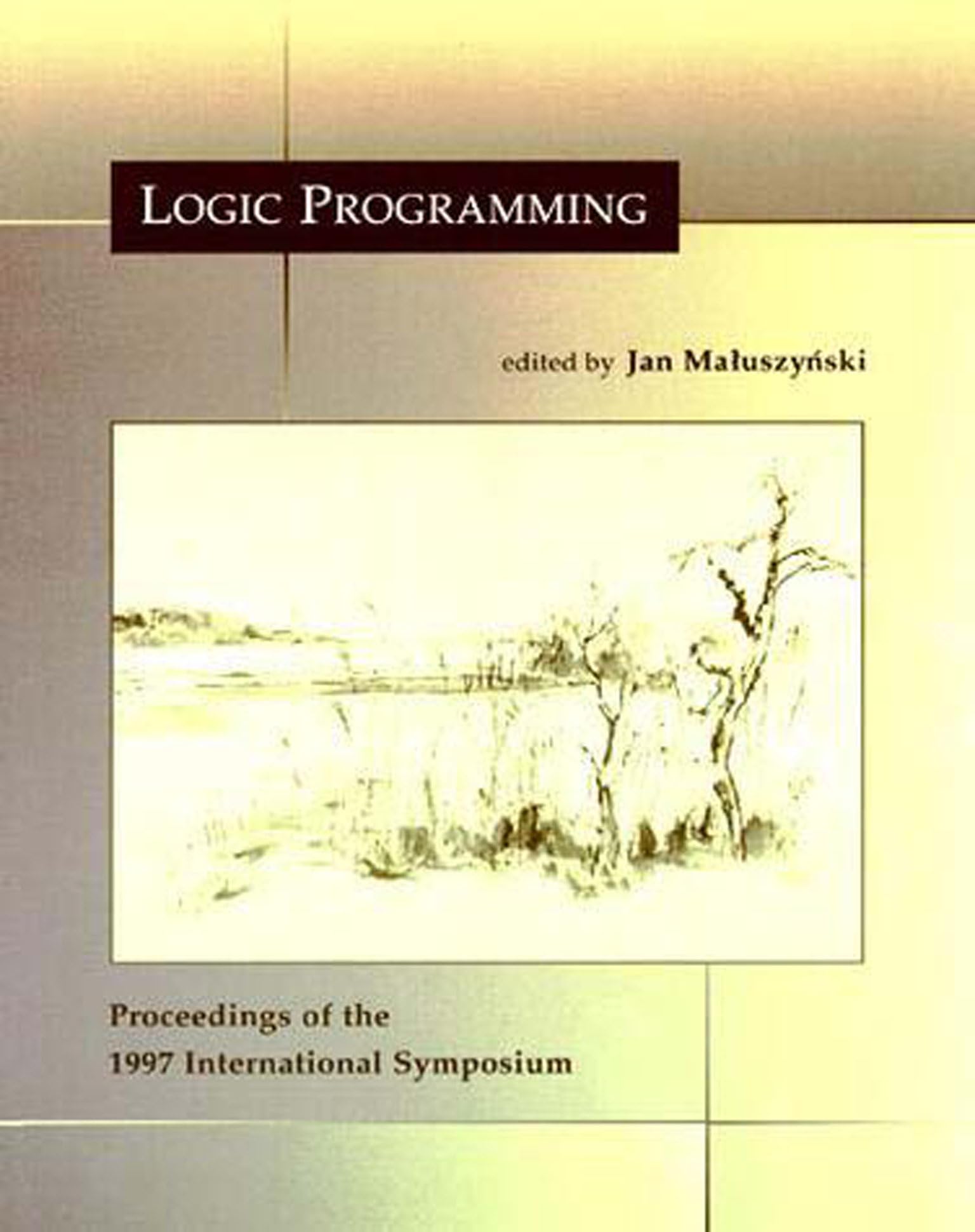
Logic Programming: The 1997 International Symposium by Jan Maluszynski – Advanced Research in Logic Programming, Constra
Inclusive of all applicable taxes. FREE shipping on all orders.
Available Offers
- 🚚Free Delivery — Free shipping on all orders
- 💵Cash on Delivery — Pay when your order arrives
- ↩️15-Day Easy Returns — Hassle-free return policy
- 🔒Cash on Delivery — Pay safely when your order arrives
Check Delivery
Product Description
Introduction
Logic programming has long been a cornerstone of artificial intelligence, computational linguistics, and advanced database systems. For students, researchers, and practitioners in India's growing computer science community, understanding the theoretical and practical developments in this field is essential. Logic Programming: The 1997 International Symposium, edited by Jan Maluszynski and published by MIT Press, captures the cutting-edge research presented at one of the most prestigious conferences in the discipline. This hardbound volume offers a comprehensive snapshot of the state of logic programming in the late 1990s, with insights that remain relevant for modern computing challenges.
Book Overview
This book is a curated collection of peer-reviewed papers from the 1997 International Logic Programming Symposium, an event traditionally held in North America and sponsored by the Association for Logic Programming. The symposium brought together leading academics and industry experts to discuss new theoretical frameworks, practical implementations, and emerging research directions. The volume covers foundational topics such as constraints, concurrency, parallelism, deductive databases, and nonmonotonic reasoning, while also exploring the intersection of logic programming with the internet and other computer science domains. It serves as both a reference work and a source of inspiration for anyone working with logic-based systems.
Key Highlights
- Authoritative Content: Features contributions from top researchers in logic programming, ensuring high-quality, peer-reviewed material.
- Broad Coverage: Addresses theoretical foundations, language design, implementation techniques, and real-world applications.
- Timeless Relevance: Despite being from 1997, the core concepts and problem-solving approaches remain foundational for AI, databases, and formal methods.
- Hardcover Durability: A sturdy MIT Press edition designed for frequent use in libraries, labs, and personal collections.
Inside the Book
The volume is organized into thematic sections that reflect the symposium's main tracks. Readers will find detailed papers on constraint logic programming, which integrates efficient constraint solving with logical deduction. There are extensive discussions on concurrent and parallel logic programming models, including the use of committed-choice languages and distributed computation. Deductive databases receive significant attention, with papers on query optimization, integrity constraints, and recursive query processing. The book also delves into nonmonotonic reasoning, exploring default logic, answer set programming, and negation-as-failure. Additionally, a forward-looking section examines the role of logic programming in internet applications, such as intelligent agents and semantic web precursors.
Key Topics
- Theoretical Foundations: Semantics of logic programs, fixpoint theory, and proof procedures.
- Constraints: Constraint satisfaction, solving techniques, and integration with logic languages.
- Concurrency and Parallelism: Parallel execution models, synchronization, and distributed logic programming.
- Deductive Databases: Recursive query evaluation, view maintenance, and database integration.
- Language Design and Implementation: Abstract machines, compilation techniques, and runtime systems.
- Nonmonotonic Reasoning: Default logic, circumscription, and stable model semantics.
- Logic Programming and the Internet: Web-based reasoning, intelligent agents, and information retrieval.
Reader Benefits
By studying this book, readers gain a deep understanding of how logic programming can model complex problems and automate reasoning. The papers provide concrete algorithms and theoretical insights that can be directly applied to research projects or advanced coursework. Indian students preparing for competitive examinations or pursuing postgraduate studies in computer science will find the material invaluable for strengthening their grasp of formal methods. Professionals working in AI, database management, or software engineering can leverage these concepts to design more robust and declarative systems. The book also encourages cross-disciplinary thinking, showing how logic programming connects with other fields like linguistics, philosophy, and mathematics.
Learning Outcomes
- Master core concepts: Understand the semantics and proof theory underlying logic programs.
- Analyze constraint systems: Learn how to integrate constraints with logical deduction for efficient problem solving.
- Design concurrent systems: Explore models for parallel and distributed logic programming.
- Query databases effectively: Grasp advanced techniques for recursive query processing and integrity maintenance.
- Implement languages: Gain insights into compilation and runtime support for logic programming languages.
- Reason nonmonotonically: Handle incomplete information and default assumptions using formal frameworks.
- Apply to modern domains: See how logic programming principles underpin internet technologies and intelligent systems.
Who Should Read
This book is ideal for graduate students and researchers in computer science, particularly those specializing in artificial intelligence, databases, programming languages, or formal methods. Faculty members teaching advanced courses on logic programming or computational logic will find it a valuable resource for course material and reference. Practicing software engineers and system architects who wish to explore declarative paradigms beyond object-oriented or functional programming will also benefit. Additionally, professionals in data science and knowledge representation can draw inspiration from the logical foundations presented. While the content is technical, it assumes a basic familiarity with logic and programming concepts, making it accessible to dedicated learners at the postgraduate level.
About the Author
Jan Maluszynski is a distinguished computer scientist known for his extensive contributions to logic programming, constraint handling, and formal semantics. He has served as a professor and researcher at leading European universities, and his editorial work on this symposium volume reflects his deep commitment to advancing the field. His expertise ensures that the selected papers represent the highest standards of scholarship and innovation.
About the Publisher
MIT Press is one of the world's most respected academic publishers, known for producing authoritative texts in science, technology, and engineering. With a rigorous peer-review process and a legacy of publishing seminal works in computer science, MIT Press guarantees that this volume meets the highest editorial and production standards. Indian readers can trust the accuracy and depth of content from this prestigious imprint.
Conclusion
Logic Programming: The 1997 International Symposium is more than a historical record; it is a treasure trove of ideas that continue to shape modern computing. Whether you are a student seeking foundational knowledge, a researcher exploring new frontiers, or a professional aiming to apply logic-based techniques, this book offers enduring value. Add this hardcover edition to your library and engage with the brilliant minds that defined an era of logic programming.
Quick Summary
Logic Programming: The 1997 International Symposium, edited by Jan Maluszynski and published by MIT Press, is a collection of research papers presented at the annual International Logic Programming Symposium. This volume captures the state of the art in logic programming from that year, covering theoretical foundations, constraint logic programming, concurrency and parallelism, deductive databases, language design and implementation, nonmonotonic reasoning, and the emerging intersection of logic programming with the internet. The book is intended for researchers, graduate students, and professionals in computer science who want to deepen their understanding of logic programming's theoretical and practical aspects. Readers will gain insights into classic problems and solutions that have shaped the field. Purchasing this hardcover from Bookshops.in ensures you receive a premium physical copy from a trusted Indian bookstore, perfect for academic libraries or personal collections.
Book Highlights
Book Specifications
| ISBN-13 | 9780262631808 |
| ISBN-10 | 0262631806 |
| Publisher | Mit Pr |
| Language | English |
| Dimensions | 17.27 x 2.54 x 22.61 cm |
| Weight | 680 g |
| Country | India |
| Category | Languages › C & C++ |
| Genre | Non-fiction |
| Original Language | English |
Frequently Asked Questions
What is this book about?
Who edited this book?
What topics are covered?
Is this book suitable for beginners?
Does the book include practical examples?
Is this a hardcover or paperback?
What is the ISBN?
Who sponsors the symposium?
Can I use this for my PhD research?
Does it cover Prolog?
Is the book available in Indian bookstores?
What is the price in India?
Readers Also Search For
Customers Also Bought

Programming
Algorithmische Sprache Und Programmentwicklung | by H. Partsch | F. L. Bauer | P. Pepper | Springer | by H. Partsch | F. L. Bauer | P. Pepper | Springer | by H. Partsch | F. L. Bauer | P. Pepper | Springer | by H. Partsch | F. L. Bauer | P. Pepper | Springer | by H. Partsch | F. L. Bauer | P. Pepper | Springer | by H. Partsch | F. L. Bauer | P. Pepper | Springer | by H. Partsch | F. L. Bauer | P. Pepper | Springer | by H. Partsch | F. L. Bauer | P. Pepper | Springer | by H. Partsch | F. L. Bauer
Programming
Distributed Algorithms | by Jean-Claude Bermond | Michel Raynal | Springer | by Jean-Claude Bermond | Michel Raynal | Springer | by Jean-Claude Bermond | Michel Raynal | Springer | by Jean-Claude Bermond | Michel Raynal | Springer | by Jean-Claude Bermond | Michel Raynal | Springer | by Jean-Claude Bermond | Michel Raynal | Springer | by Jean-Claude Bermond | Michel Raynal | Springer | by Jean-Claude Bermond | Michel Raynal | Springer | by Jean-Claude Bermond | Michel Raynal | Springer | by Jean
Programming
Meta-Level Control for Deductive Database Systems | by Helmut Schmidt | Springer | by Helmut Schmidt | Springer | by Helmut Schmidt | Springer | by Helmut Schmidt | Springer | by Helmut Schmidt | Springer | by Helmut Schmidt | Springer | by Helmut Schmidt | Springer | by Helmut Schmidt | Springer | by Helmut Schmidt | Springer | by Helmut Schmidt | Springer | by Helmut Schmidt | Springer | by Helmut Schmidt | Springer | by Helmut Schmidt | Springer | by Helmut Schmidt | Springer | by Helmut Schm
Programming
Java Web Services | by David A. Chappell | Tyler Jewell | O'Reilly Media | by David A. Chappell | Tyler Jewell | O'Reilly Media | by David A. Chappell | Tyler Jewell | O'Reilly Media | by David A. Chappell | Tyler Jewell | O'Reilly Media | by David A. Chappell | Tyler Jewell | O'Reilly Media | by David A. Chappell | Tyler Jewell | O'Reilly Media | by David A. Chappell | Tyler Jewell | O'Reilly Media | by David A. Chappell | Tyler Jewell | O'Reilly Media | by David A. Chappell | Tyler Jewell | O'
Programming
Database in Depth | by Chris J. Date | O'Reilly Media | by Chris J. Date | O'Reilly Media | by Chris J. Date | O'Reilly Media | by Chris J. Date | O'Reilly Media | by Chris J. Date | O'Reilly Media | by Chris J. Date | O'Reilly Media | by Chris J. Date | O'Reilly Media | by Chris J. Date | O'Reilly Media | by Chris J. Date | O'Reilly Media | by Chris J. Date | O'Reilly Media | by Chris J. Date | O'Reilly Media | by Chris J. Date | O'Reilly Media | by Chris J. Date | O'Reilly Media | by Chris J.
Programming
Integration of AI and OR Techniques in Constraint Programming for Combinatorial Optimization Problem | by Nicolas Beldiceanu | Narendra Jussien | Eric Pinson | Springer | by Nicolas Beldiceanu | Narendra Jussien | Eric Pinson | Springer | by Nicolas Beldiceanu | Narendra Jussien | Eric Pinson | Springer | by Nicolas Beldiceanu | Narendra Jussien | Eric Pinson | Springer | by Nicolas Beldiceanu | Narendra Jussien | Eric Pinson | Springer | by Nicolas Beldiceanu | Narendra Jussien | Eric Pinson |
Related Products
View All
Computers & Internet
Modern Full-Stack React Projects by Daniel Bugl
Computers & Internet
Mootools 1.2 Beginner's Guide (English, Jacob Gube)
Computers & Internet
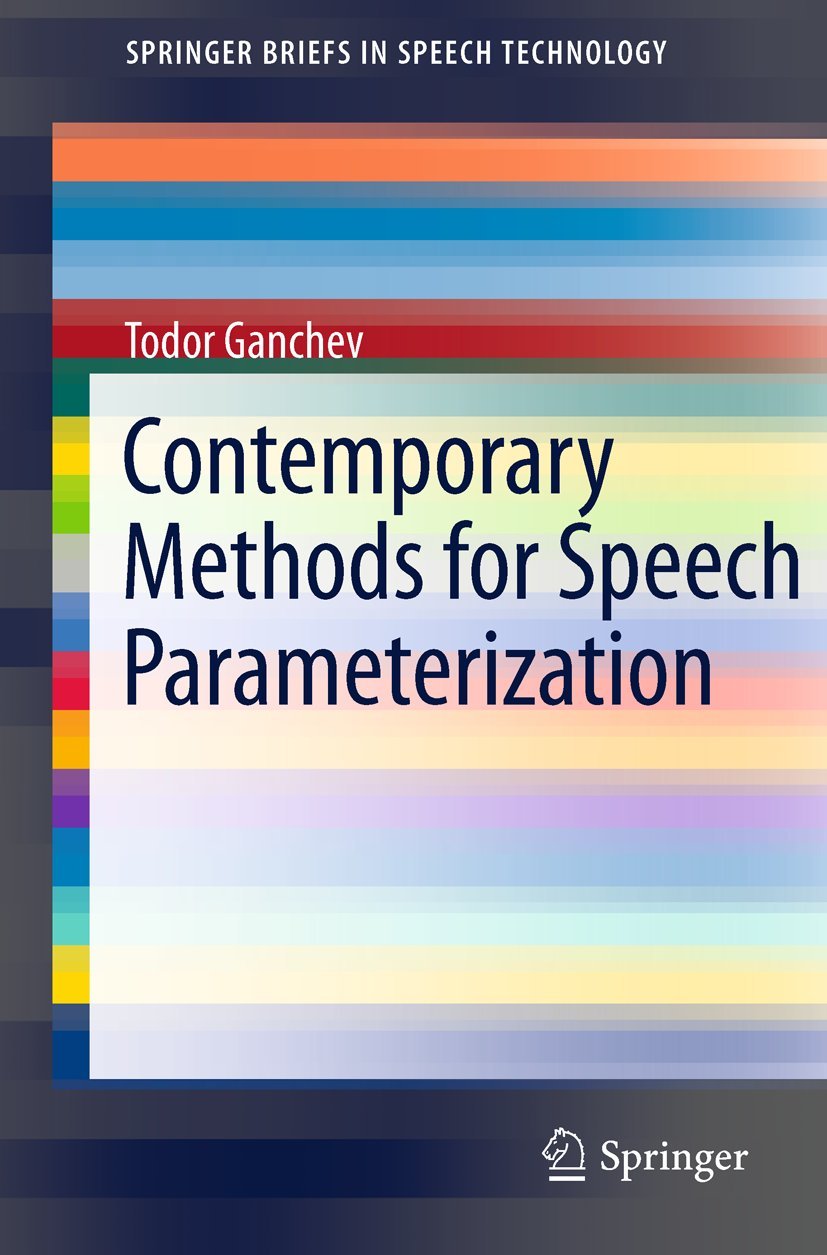
Contemporary Methods for Speech Parameterization (Springerbriefs in Electrical and Computer Engineering / Springerbriefs in Speech Technology)

Computers & Internet
Information Technology and Lawyers | by Arno R. Lodder | Anja Oskamp | Springer | by Arno R. Lodder | Anja Oskamp | Springer | by Arno R. Lodder | Anja Oskamp | Springer | by Arno R. Lodder | Anja Oskamp | Springer | by Arno R. Lodder | Anja Oskamp | Springer | by Arno R. Lodder | Anja Oskamp | Springer | by Arno R. Lodder | Anja Oskamp | Springer | by Arno R. Lodder | Anja Oskamp | Springer | by Arno R. Lodder | Anja Oskamp | Springer | by Arno R. Lodder | Anja Oskamp | Springer | by Arno R. Lo

Computers & Internet
Digital Analysis of Remotely Sensed Imagery | by Jay Gao | McGraw-Hill Companies | by Jay Gao | McGraw-Hill Companies | by Jay Gao | McGraw-Hill Companies | by Jay Gao | McGraw-Hill Companies | by Jay Gao | McGraw-Hill Companies | by Jay Gao | McGraw-Hill Companies | by Jay Gao | McGraw-Hill Companies | by Jay Gao | McGraw-Hill Companies | by Jay Gao | McGraw-Hill Companies | by Jay Gao | McGraw-Hill Companies | by Jay Gao | McGraw-Hill Companies | by Jay Gao | McGraw-Hill Companies | by Jay Gao

Computers & Internet