
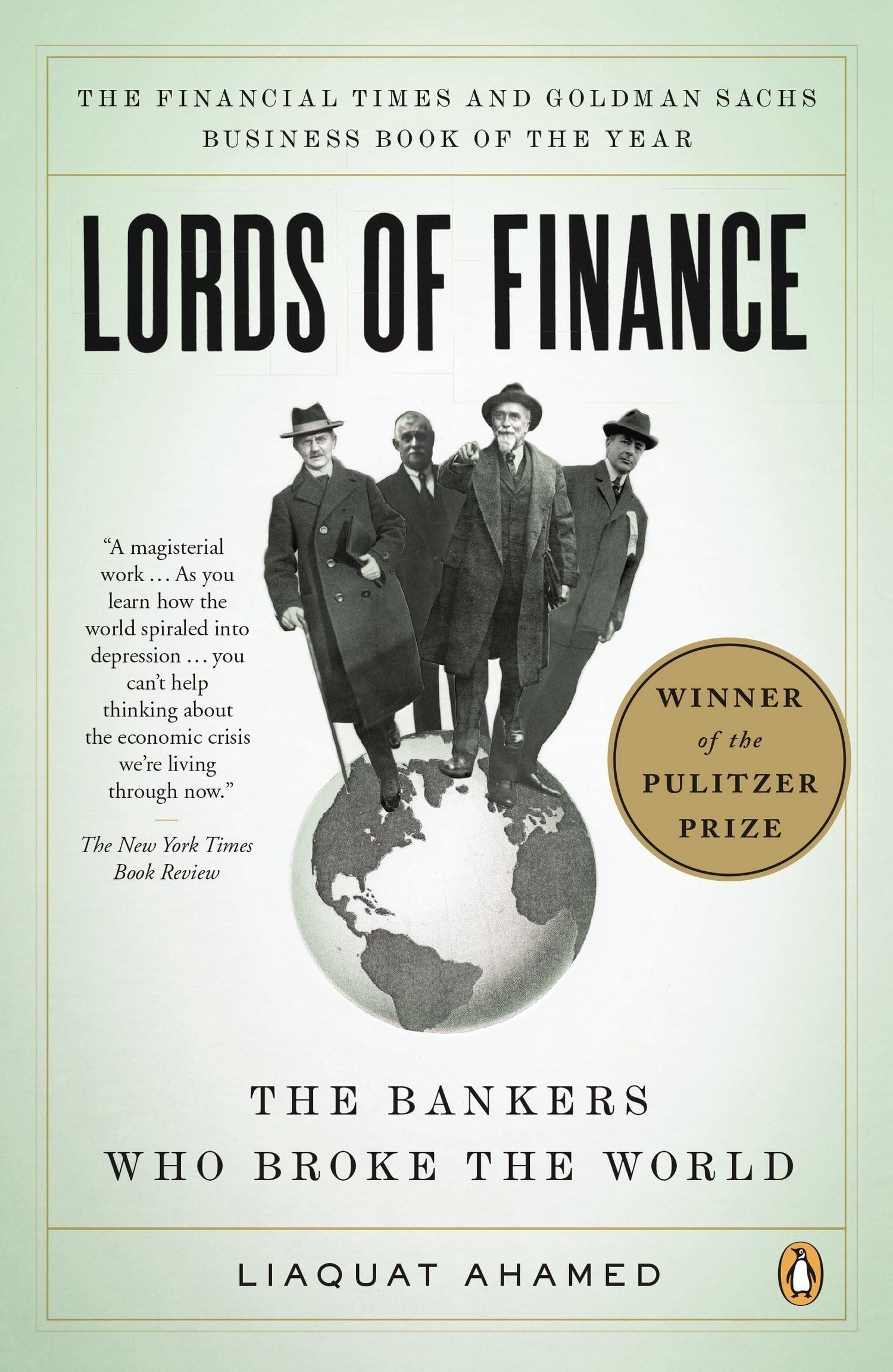
Lords of Finance: The Bankers Who Broke the World by Liaquat Ahamed – A Pulitzer Prize-Winning History of the Great Depr
Inclusive of all applicable taxes. FREE shipping on all orders.
Available Offers
- 🚚Free Delivery — Free shipping on all orders
- 💵Cash on Delivery — Pay when your order arrives
- ↩️15-Day Easy Returns — Hassle-free return policy
- 🔒Cash on Delivery — Pay safely when your order arrives
Check Delivery
Product Description
Introduction
In the annals of economic history, few periods are as hauntingly instructive as the Great Depression. Liaquat Ahamed’s Pulitzer Prize-winning masterpiece, Lords of Finance, offers a gripping narrative that unravels the human decisions behind one of the twentieth century’s worst financial catastrophes. For Indian readers, students of economics, and history enthusiasts alike, this hardcover edition from Penguin Books is not just a history lesson—it is a timeless warning about the power of a few men to shape global fortunes.
Book Overview
Lords of Finance is a compelling work of macroeconomic history that focuses on the four most powerful central bankers of the 1920s: Montagu Norman of the Bank of England, Émile Moreau of the Banque de France, Hjalmar Schacht of the Reichsbank, and Benjamin Strong of the Federal Reserve Bank of New York. Ahamed meticulously traces how these men, driven by pride, dogma, and miscalculation, steered the world into the Great Depression. The book argues that the crash of 1929 and the subsequent global slump were not inevitable—they were the direct result of flawed policies and personal rivalries among these “lords of finance.”
Key Highlights
- Winner of the Pulitzer Prize for General Nonfiction, a testament to its scholarly depth and narrative brilliance.
- Vivid character-driven storytelling that brings historical figures to life, making complex economics accessible and engaging.
- Relevance to modern crises: The book draws striking parallels between the 1930s and contemporary financial turmoil, including the 2008 recession and ongoing global debt challenges.
- Meticulous research based on archives, diaries, and private papers, offering an insider’s view of high-stakes decision-making.
Inside the Book
Spanning over 500 pages, Lords of Finance is divided into five parts, beginning with the aftermath of World War I and the flawed attempts to restore the gold standard. Ahamed takes readers inside the smoke-filled rooms where central bankers debated currency devaluations, interest rates, and war reparations. The narrative crescendos with the stock market crash of 1929 and the descent into global depression, revealing how each banker’s stubbornness amplified the disaster. The book also explores the human cost—unemployment, poverty, and the rise of extremism that paved the way for World War II.
Key Topics
- The gold standard and its fatal rigidity
- War reparations and the Treaty of Versailles
- Hyperinflation in Weimar Germany
- The role of central banks in economic stability
- The psychology of financial elites
- Lessons for preventing future depressions
Reader Benefits
This book offers Indian readers a deeper understanding of how global economic forces affect local markets. Students of economics, finance, and history will gain clarity on concepts like monetary policy, exchange rates, and fiscal discipline through real-world examples. Professionals in banking and policymaking will find valuable insights into the dangers of dogmatic thinking. Above all, Lords of Finance is a riveting read that turns abstract economic theory into a human drama of ambition, error, and consequence.
Learning Outcomes
- Understand the root causes of the Great Depression beyond the stock market crash.
- Analyze the interplay between political decisions and economic outcomes.
- Recognize the warning signs of financial instability in any era.
- Appreciate the importance of humility and collaboration among global leaders.
- Develop critical thinking about modern central banking and monetary policy.
Who Should Read
Lords of Finance is ideal for undergraduate and postgraduate students of economics, history, and political science. It is equally valuable for finance professionals, bankers, investors, and policy analysts who wish to learn from history’s mistakes. General readers who enjoy narrative nonfiction—especially fans of books like The Big Short or Flash Boys—will find this book equally gripping. For Indian students preparing for competitive exams such as UPSC, RBI Grade B, or NTA NET in economics, this book provides a rich context for understanding global economic history.
About the Author
Liaquat Ahamed is an acclaimed British-American author and economist. He holds degrees from Harvard University and Cambridge University and has worked as an investment manager and consultant. Ahamed’s deep understanding of financial markets and history shines through in his writing. Lords of Finance, his debut book, won the prestigious Pulitzer Prize for General Nonfiction in 2010 and has been translated into multiple languages, cementing his reputation as a master storyteller of economic history.
About the Publisher
Penguin Books, a hallmark of quality publishing since 1935, brings this definitive hardcover edition to Indian readers. Known for its commitment to intellectual rigor and accessible writing, Penguin has published works by Nobel laureates, historians, and thought leaders worldwide. This edition features high-quality paper, durable binding, and clear typography—perfect for students and collectors alike.
Conclusion
Lords of Finance is more than a history book—it is a mirror held up to our own times. As India navigates its own economic challenges, the lessons from Ahamed’s narrative are more relevant than ever. Whether you are a student, a professional, or a curious reader, this book will change the way you think about money, power, and the fragile architecture of the global economy. Add this Pulitzer Prize-winning hardcover to your library today from Bookshops.in.
Quick Summary
Lords of Finance by Liaquat Ahamed is a Pulitzer Prize-winning narrative that uncovers the human story behind the Great Depression. The book focuses on four central bankers – Montagu Norman of the Bank of England, Benjamin Strong of the Federal Reserve, Hjalmar Schacht of the Reichsbank, and Émile Moreau of the Banque de France – whose decisions and rivalries inadvertently triggered the worst economic crisis of the 20th century. Ahamed masterfully weaves biography with macroeconomic history, showing how personality, pride, and flawed policies turned a recession into a global depression. The book is ideal for Indian students and professionals in economics, finance, and history, as well as general readers who enjoy compelling nonfiction. It offers timeless lessons on monetary policy, the dangers of the gold standard, and the importance of international cooperation. By reading Lords of Finance, you will understand not only the past but also the recurring patterns that lead to financial crises. Buy your copy from Bookshops.in, India's trusted source for premium books, and enjoy fast delivery across the country.
Book Highlights
Book Specifications
| ISBN-13 | 9780143116806 |
| ISBN-10 | 0143116800 |
| Publisher | Penguin Books |
| Language | English |
| Dimensions | 13.79 x 2.97 x 21.23 cm |
| Weight | 1 kg 50 g |
| Country | USA |
| Category | Americas › United States |
| Genre | Nonfiction |
| Reading Age | 18+ |
| Original Language | English |
Frequently Asked Questions
What is Lords of Finance about?
Who wrote Lords of Finance?
Did Lords of Finance win any awards?
Which bankers are profiled in the book?
Is this book suitable for beginners in economics?
What is the ISBN-13 of this book?
Can Indian readers benefit from this book?
What is the publication date?
Does the book cover the 2008 financial crisis?
Is this book used in university courses?
What is the price in India?
How is the book rated?
Where can I buy Lords of Finance in India?
Readers Also Search For
Related Products
View All
History
The Information Revolution: Transforming the World Through Technology (World History)

History
Human Nature and the French Revolution: From the Enlightenment to the Napoleonic Code: 3 (Polygons: Cultural Diversities and Intersections, 3)

History
The Unmaking of Home in Contemporary Art (Cultural Spaces)

History
Handbook to Life in Medieval and Early Modern Japan | by William E. Deal | Oxford University Press | by William E. Deal | Oxford University Press | by William E. Deal | Oxford University Press | by William E. Deal | Oxford University Press | by William E. Deal | Oxford University Press | by William E. Deal | Oxford University Press | by William E. Deal | Oxford University Press | by William E. Deal | Oxford University Press | by William E. Deal | Oxford University Press | by William E. Deal | Ox

History
The Narrators of Barbarian History (A.D. 550-800) | by Walter Goffart | University of Notre Dame Press | by Walter Goffart | University of Notre Dame Press | by Walter Goffart | University of Notre Dame Press | by Walter Goffart | University of Notre Dame Press | by Walter Goffart | University of Notre Dame Press | by Walter Goffart | University of Notre Dame Press | by Walter Goffart | University of Notre Dame Press | by Walter Goffart | University of Notre Dame Press | by Walter Goffart | Univ

History