
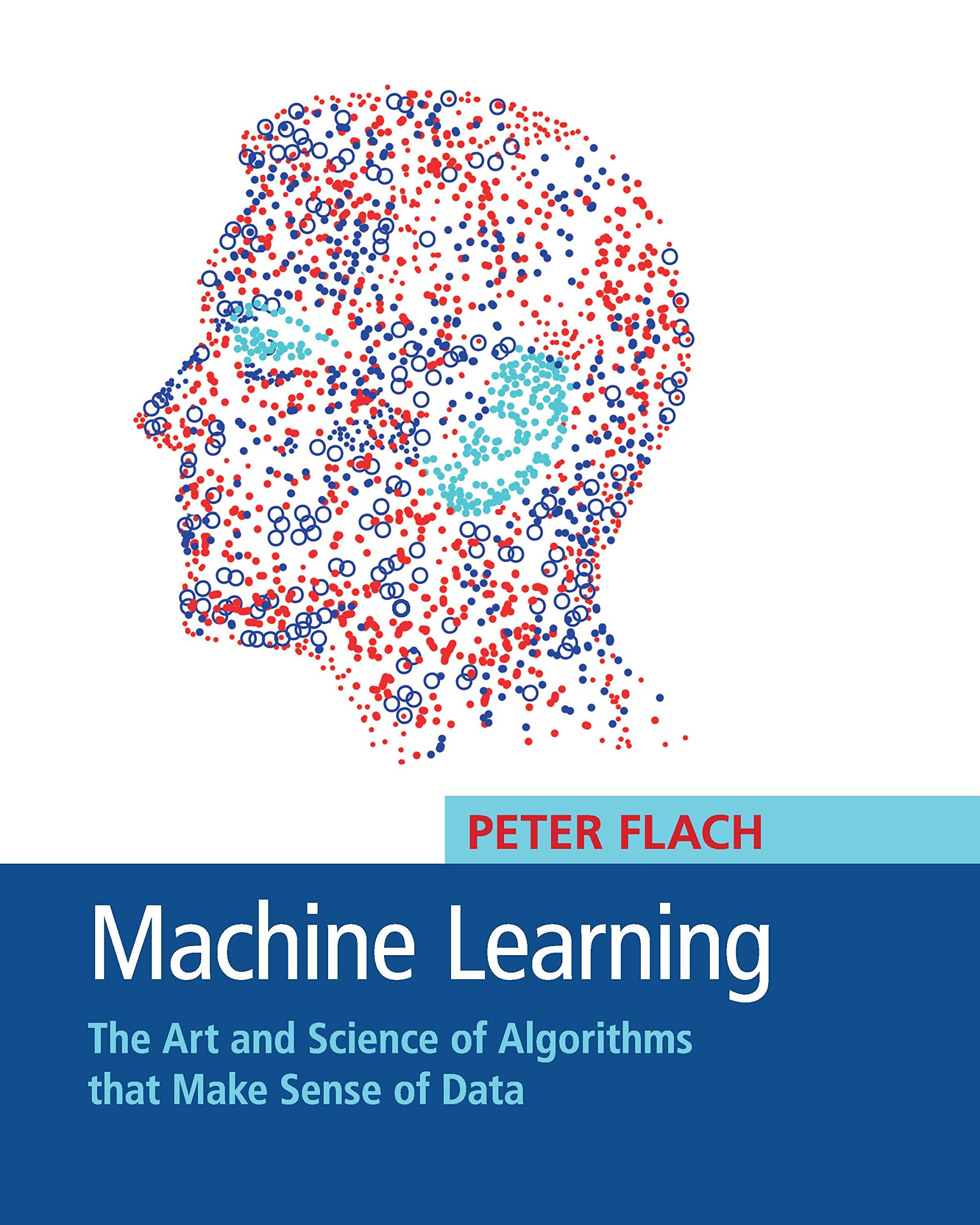
Machine Learning: The Art and Science of Algorithms that Make Sense of Data
Inclusive of all applicable taxes. FREE shipping on all orders.
Available Offers
- 🚚Free Delivery — Free shipping on all orders
- 💵Cash on Delivery — Pay when your order arrives
- ↩️15-Day Easy Returns — Hassle-free return policy
- 🔒Cash on Delivery — Pay safely when your order arrives
Check Delivery
Product Description
Introduction
Machine learning is no longer a futuristic concept—it is the engine behind spam filters, recommendation systems, fraud detection, and even self-driving cars. For Indian students, researchers, and professionals eager to understand this transformative field, Machine Learning: The Art and Science of Algorithms that Make Sense of Data by Peter Flach offers a rigorous yet accessible entry point. Published by Cambridge University Press, this hardcover edition is a definitive guide that balances theory with real-world application, making it an indispensable resource for classrooms and self-study alike.
Book Overview
This book is a comprehensive exploration of machine learning, designed to reveal both the art and science behind algorithms that learn from data. Peter Flach begins with a simple, relatable example—how a spam filter works—to demystify complex concepts without overwhelming the reader. From there, he builds a structured journey through logical, geometric, and statistical models, ensuring that readers grasp the unifying principles that tie the field together. The text is rich with case studies, illustrations, and examples that grow in complexity, mirroring the way a student naturally learns.
Key Highlights
- Example-driven approach: Starts with a spam filter to introduce core ideas in a practical, low-tech manner.
- Comprehensive coverage: Includes logical models (decision trees, rule learners), geometric models (support vector machines, nearest neighbours), and statistical models (Bayesian networks, probabilistic graphical models).
- State-of-the-art topics: Explores matrix factorisation, ROC analysis, and ensemble methods, keeping readers abreast of cutting-edge developments.
- Focus on features: Emphasises the central role of feature engineering and selection—a critical skill often overlooked in introductory texts.
- Balanced terminology: Introduces new concepts while respecting established jargon, with helpful background summaries for revision.
Inside the Book
The book is structured to guide readers from foundational principles to advanced techniques. Early chapters lay the groundwork with supervised learning, using intuitive examples to explain classification and regression. Mid-section chapters dive into unsupervised learning, clustering, and dimensionality reduction. Later chapters tackle cutting-edge topics like matrix factorisation for recommendation systems and ROC analysis for model evaluation. Each chapter concludes with exercises and pointers to further reading, making it ideal for both classroom use and independent study.
Key Topics
- Supervised learning: decision trees, rule induction, support vector machines
- Unsupervised learning: clustering, association rules, anomaly detection
- Probabilistic models: Bayesian networks, hidden Markov models
- Ensemble methods: boosting, bagging, random forests
- Model evaluation: cross-validation, ROC curves, cost-sensitive learning
- Feature engineering: selection, extraction, transformation
- Matrix factorisation and recommender systems
Reader Benefits
Indian students and professionals will find this book especially valuable because it bridges the gap between theory and practice. The clear, example-based narrative reduces the intimidation factor often associated with machine learning. The inclusion of background material—such as probability, linear algebra, and optimisation—means readers can refresh their fundamentals without needing separate texts. The focus on features and evaluation metrics prepares readers for real-world challenges, from building predictive models for e-commerce to analysing healthcare data.
Learning Outcomes
- Understand the core principles behind different machine learning paradigms.
- Design and implement algorithms for classification, regression, and clustering.
- Evaluate model performance using metrics like precision, recall, and ROC curves.
- Engineer effective features to improve model accuracy and interpretability.
- Apply matrix factorisation and ensemble methods to complex datasets.
- Critically assess trade-offs between model complexity, interpretability, and performance.
Who Should Read
This book is ideal for undergraduate and postgraduate students in computer science, data science, and artificial intelligence programmes across Indian universities. It also serves as a refresher for software engineers, data analysts, and researchers transitioning into machine learning. Professionals in banking, healthcare, e-commerce, and telecommunications who wish to leverage data for decision-making will find the practical case studies highly relevant. No prior machine learning experience is required, though a basic understanding of programming and mathematics will be beneficial.
About the Author
Peter Flach is a professor of artificial intelligence at the University of Bristol, UK, with over two decades of research experience in machine learning and data mining. He has published extensively on topics such as ROC analysis, rule learning, and predictive modelling. His teaching philosophy emphasises clarity and intuition, which is evident in the accessible yet rigorous style of this book. Flach’s work has influenced both academic research and industrial applications, making him a trusted voice in the field.
About the Publisher
Cambridge University Press is one of the world’s oldest and most respected academic publishers. Known for producing authoritative textbooks and reference works, Cambridge ensures that each title meets the highest standards of scholarly accuracy and educational value. This hardcover edition is printed on quality paper with durable binding, making it suitable for years of heavy reference in libraries, labs, and personal collections.
Conclusion
Machine Learning: The Art and Science of Algorithms that Make Sense of Data is more than a textbook—it is a companion for anyone serious about mastering machine learning. Peter Flach’s ability to weave together theory, examples, and practical insights makes this book a standout choice for Indian readers. Whether you are a student preparing for exams, a researcher exploring new algorithms, or a professional deploying models in production, this volume will equip you with the knowledge and confidence to succeed. Order your copy from Bookshops.in today and take the first step towards becoming a machine learning expert.
Quick Summary
Machine Learning: The Art and Science of Algorithms that Make Sense of Data by Peter Flach is a comprehensive and accessible textbook that introduces the rich landscape of machine learning through a unifying lens. It begins with a relatable spam filter example, gradually moving to complex case studies covering logical, geometric, and statistical models. The book places special emphasis on the role of features and includes advanced topics like matrix factorization and ROC analysis. Written for Indian students, data scientists, and professionals, it balances theoretical depth with practical insight. Readers will learn to understand, compare, and apply a wide range of algorithms, from decision trees to support vector machines, and evaluate them effectively. This hardcover edition from Cambridge University Press is a durable reference for academic courses and self-study. Buying from Bookshops.in ensures you receive a genuine print copy at a competitive price, with reliable delivery across India.
Book Highlights
Book Specifications
| ISBN-13 | 9781107096394 |
| ISBN-10 | 1107096391 |
| Publisher | Cambridge University Press |
| Language | English |
| Dimensions | 18.42 x 1.91 x 24.13 cm |
| Weight | 1 kg 40 g |
| Country | India |
| Category | Programming & Software Development › Algorithms |
| Genre | Non-fiction |
| Original Language | English |
Frequently Asked Questions
Is this book suitable for beginners in machine learning?
Does this book cover deep learning?
What programming language is used in the examples?
Is this book used in Indian university courses?
Does the book include exercises?
Can I use this book for self-study?
Does the book cover ROC analysis in detail?
What makes this book different from other ML textbooks?
Is there a focus on Indian or real-world datasets?
What is the price of this book on Bookshops.in?
Does the book include matrix factorization?
Who is the author Peter Flach?
Is the book available in paperback?
Readers Also Search For
Customers Also Bought

Programming
Algorithmische Sprache Und Programmentwicklung | by H. Partsch | F. L. Bauer | P. Pepper | Springer | by H. Partsch | F. L. Bauer | P. Pepper | Springer | by H. Partsch | F. L. Bauer | P. Pepper | Springer | by H. Partsch | F. L. Bauer | P. Pepper | Springer | by H. Partsch | F. L. Bauer | P. Pepper | Springer | by H. Partsch | F. L. Bauer | P. Pepper | Springer | by H. Partsch | F. L. Bauer | P. Pepper | Springer | by H. Partsch | F. L. Bauer | P. Pepper | Springer | by H. Partsch | F. L. Bauer
Programming
Distributed Algorithms | by Jean-Claude Bermond | Michel Raynal | Springer | by Jean-Claude Bermond | Michel Raynal | Springer | by Jean-Claude Bermond | Michel Raynal | Springer | by Jean-Claude Bermond | Michel Raynal | Springer | by Jean-Claude Bermond | Michel Raynal | Springer | by Jean-Claude Bermond | Michel Raynal | Springer | by Jean-Claude Bermond | Michel Raynal | Springer | by Jean-Claude Bermond | Michel Raynal | Springer | by Jean-Claude Bermond | Michel Raynal | Springer | by Jean
Programming
Meta-Level Control for Deductive Database Systems | by Helmut Schmidt | Springer | by Helmut Schmidt | Springer | by Helmut Schmidt | Springer | by Helmut Schmidt | Springer | by Helmut Schmidt | Springer | by Helmut Schmidt | Springer | by Helmut Schmidt | Springer | by Helmut Schmidt | Springer | by Helmut Schmidt | Springer | by Helmut Schmidt | Springer | by Helmut Schmidt | Springer | by Helmut Schmidt | Springer | by Helmut Schmidt | Springer | by Helmut Schmidt | Springer | by Helmut Schm
Programming
Java Web Services | by David A. Chappell | Tyler Jewell | O'Reilly Media | by David A. Chappell | Tyler Jewell | O'Reilly Media | by David A. Chappell | Tyler Jewell | O'Reilly Media | by David A. Chappell | Tyler Jewell | O'Reilly Media | by David A. Chappell | Tyler Jewell | O'Reilly Media | by David A. Chappell | Tyler Jewell | O'Reilly Media | by David A. Chappell | Tyler Jewell | O'Reilly Media | by David A. Chappell | Tyler Jewell | O'Reilly Media | by David A. Chappell | Tyler Jewell | O'
Programming
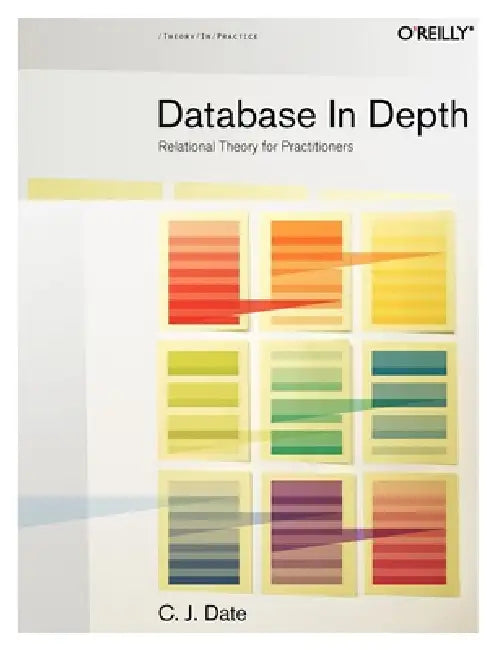
Database in Depth | by Chris J. Date | O'Reilly Media | by Chris J. Date | O'Reilly Media | by Chris J. Date | O'Reilly Media | by Chris J. Date | O'Reilly Media | by Chris J. Date | O'Reilly Media | by Chris J. Date | O'Reilly Media | by Chris J. Date | O'Reilly Media | by Chris J. Date | O'Reilly Media | by Chris J. Date | O'Reilly Media | by Chris J. Date | O'Reilly Media | by Chris J. Date | O'Reilly Media | by Chris J. Date | O'Reilly Media | by Chris J. Date | O'Reilly Media | by Chris J.
Programming
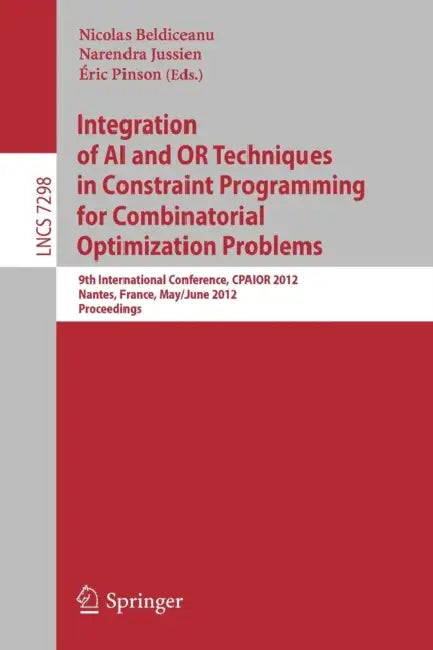
Integration of AI and OR Techniques in Constraint Programming for Combinatorial Optimization Problem | by Nicolas Beldiceanu | Narendra Jussien | Eric Pinson | Springer | by Nicolas Beldiceanu | Narendra Jussien | Eric Pinson | Springer | by Nicolas Beldiceanu | Narendra Jussien | Eric Pinson | Springer | by Nicolas Beldiceanu | Narendra Jussien | Eric Pinson | Springer | by Nicolas Beldiceanu | Narendra Jussien | Eric Pinson | Springer | by Nicolas Beldiceanu | Narendra Jussien | Eric Pinson |
Related Products
View All
Computers & Internet
Modern Full-Stack React Projects by Daniel Bugl
Computers & Internet
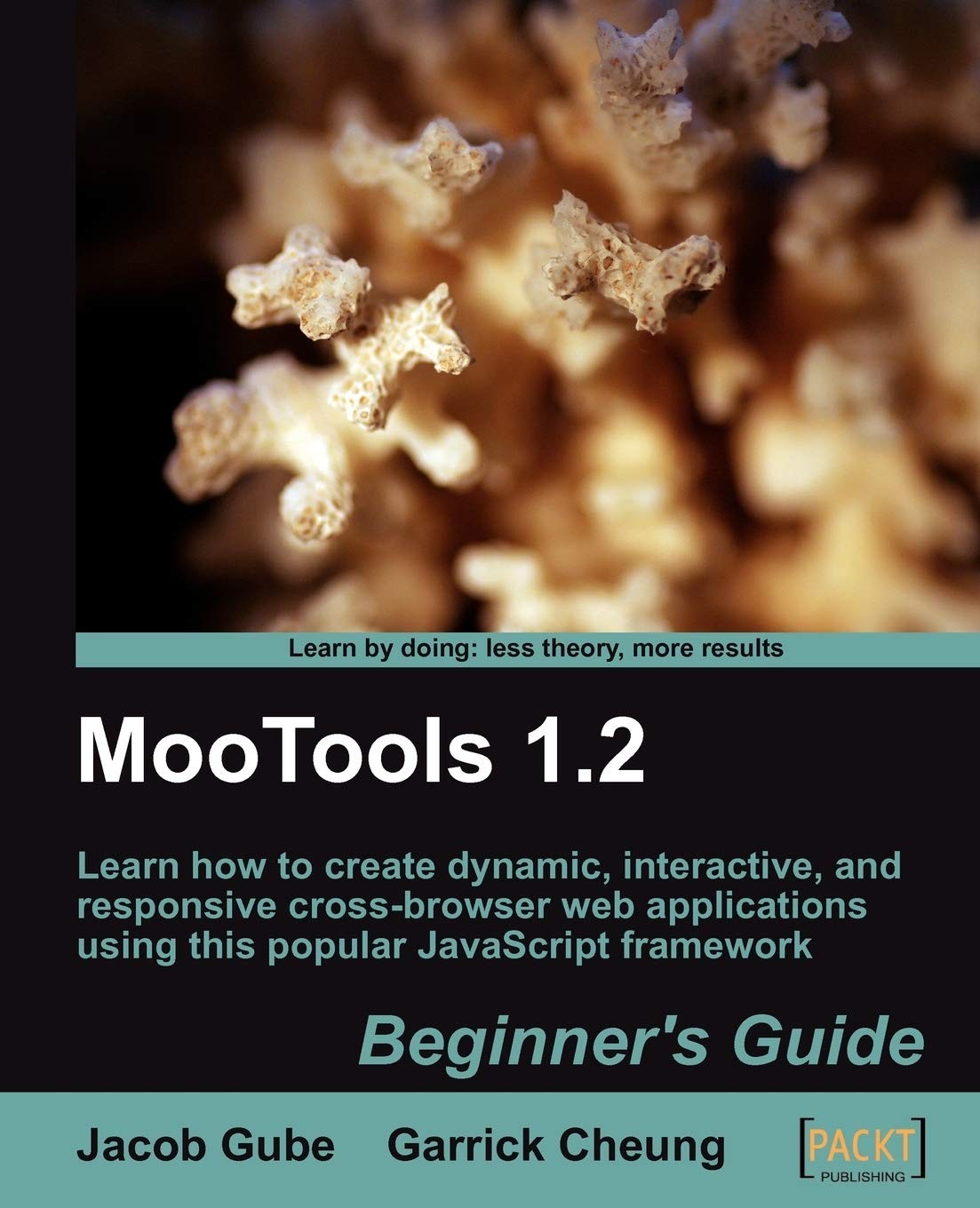
Mootools 1.2 Beginner's Guide (English, Jacob Gube)
Computers & Internet
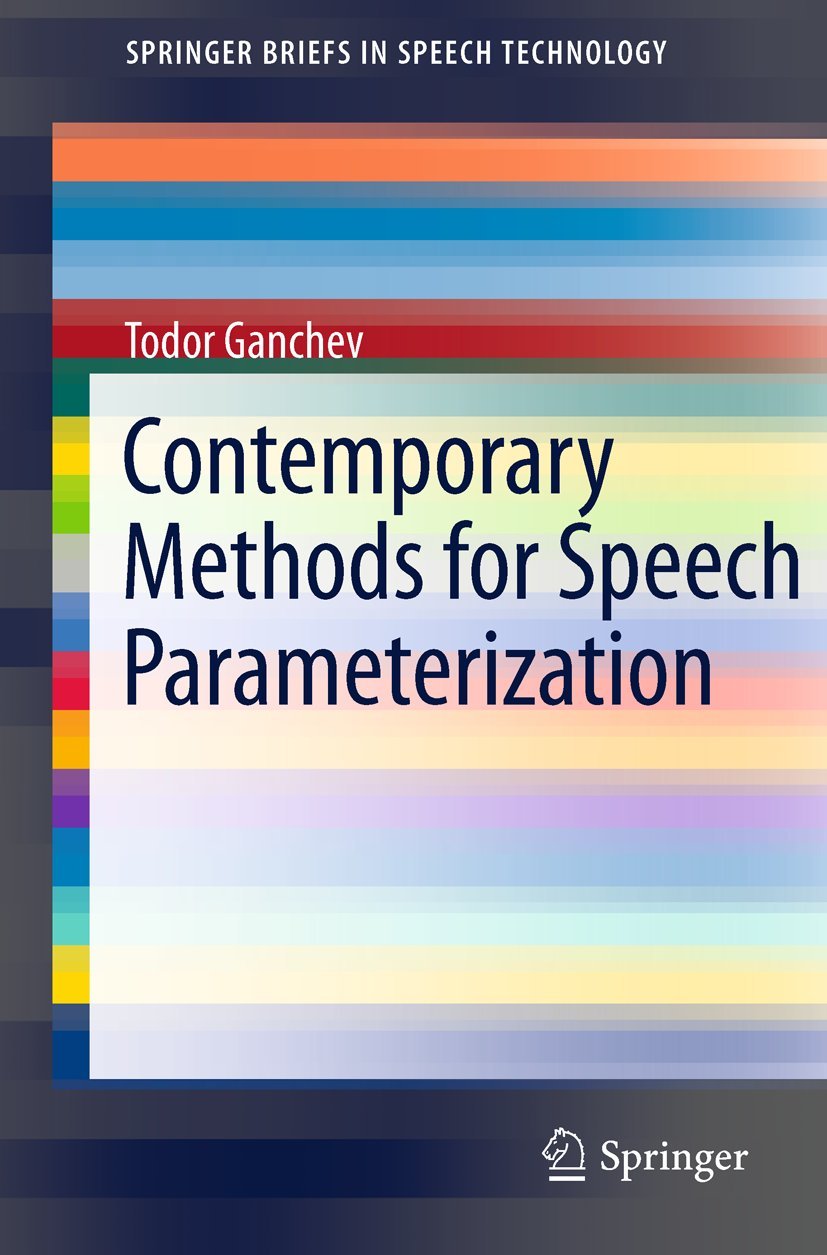
Contemporary Methods for Speech Parameterization (Springerbriefs in Electrical and Computer Engineering / Springerbriefs in Speech Technology)

Computers & Internet
Information Technology and Lawyers | by Arno R. Lodder | Anja Oskamp | Springer | by Arno R. Lodder | Anja Oskamp | Springer | by Arno R. Lodder | Anja Oskamp | Springer | by Arno R. Lodder | Anja Oskamp | Springer | by Arno R. Lodder | Anja Oskamp | Springer | by Arno R. Lodder | Anja Oskamp | Springer | by Arno R. Lodder | Anja Oskamp | Springer | by Arno R. Lodder | Anja Oskamp | Springer | by Arno R. Lodder | Anja Oskamp | Springer | by Arno R. Lodder | Anja Oskamp | Springer | by Arno R. Lo

Computers & Internet
Digital Analysis of Remotely Sensed Imagery | by Jay Gao | McGraw-Hill Companies | by Jay Gao | McGraw-Hill Companies | by Jay Gao | McGraw-Hill Companies | by Jay Gao | McGraw-Hill Companies | by Jay Gao | McGraw-Hill Companies | by Jay Gao | McGraw-Hill Companies | by Jay Gao | McGraw-Hill Companies | by Jay Gao | McGraw-Hill Companies | by Jay Gao | McGraw-Hill Companies | by Jay Gao | McGraw-Hill Companies | by Jay Gao | McGraw-Hill Companies | by Jay Gao | McGraw-Hill Companies | by Jay Gao

Computers & Internet