
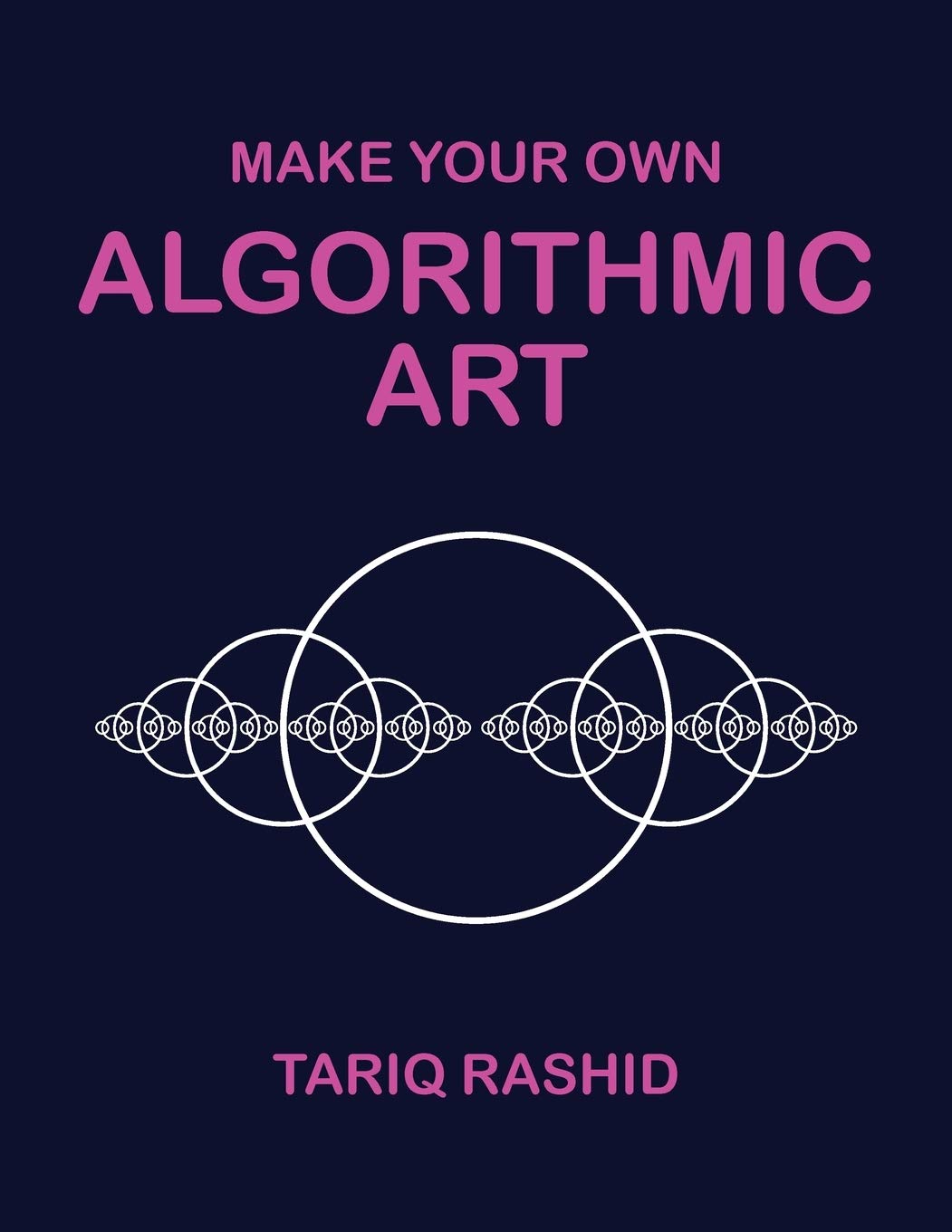
Make Your Own Algorithmic Art: A Gentle Introduction to Creative Coding with p5js by Tariq Rashid
Inclusive of all applicable taxes. FREE shipping on all orders.
Available Offers
- 🚚Free Delivery — Free shipping on all orders
- 💵Cash on Delivery — Pay when your order arrives
- ↩️15-Day Easy Returns — Hassle-free return policy
- 🔒Cash on Delivery — Pay safely when your order arrives
Check Delivery
Product Description
Introduction
Welcome to the enchanting world where code meets canvas. Make Your Own Algorithmic Art by Tariq Rashid is a beautifully crafted hardcover guide that invites artists, students, and curious minds to explore the magic of creative coding. This book is your gentle companion in learning how to turn mathematical recipes into stunning visual art, using the popular p5.js framework. Whether you are a complete beginner or someone with a spark of curiosity, this book will help you create, share, and celebrate art born from algorithms.
Book Overview
This is not just another programming textbook. It is a hands-on, step-by-step journey designed for people who love art but have never written a line of code. The author, Tariq Rashid, takes you from the very basics of how computers create images to writing your own algorithms that generate beautiful, unpredictable patterns. The book uses p5.js, a web-friendly version of the Processing language, making it easy to run your creations in any browser. Every concept is explained with visual examples, gentle language, and plenty of encouragement. By the end, you will have the confidence to experiment, make mistakes, and discover your own artistic voice through code.
Key Highlights
- Gentle Learning Curve: No prior coding experience needed. The book starts with simple shapes and gradually builds up to complex generative art.
- Visual and Creative Approach: Every chapter is filled with illustrations, code snippets, and output examples that make abstract concepts tangible.
- Focus on p5.js: Learn a modern, browser-based tool that allows you to share your art instantly with anyone online.
- Algorithmic Thinking: Develop a deep appreciation for how simple mathematical rules can create intricate and surprising visuals.
- Project-Based Learning: Work through complete projects that demonstrate the entire creative process — from inspiration to finished art.
Inside the Book
Open the book and you will find a warm, welcoming introduction to the fundamentals. The first chapters explain how computers represent images using pixels and colours. Then, you learn to draw basic shapes — circles, lines, rectangles — and control them with code. As you progress, you will explore variables, loops, and conditionals, all while creating visually interesting outputs. The middle section dives into randomness, noise, and transformations, showing you how to add organic, lifelike qualities to your digital art. Later chapters introduce recursion, fractals, and interactive elements, allowing your art to respond to mouse movements or keyboard inputs. Each project is broken down into clear steps, with plenty of tips and troubleshooting advice.
Key Topics
- Understanding the coordinate system and colour models (RGB, HSB)
- Drawing primitives and custom shapes
- Using loops to create repetitive patterns
- Randomness, Perlin noise, and organic motion
- Transformations: translate, rotate, scale
- Creating interactive art with mouse and keyboard events
- Recursion and fractal generation
- Arrays and arrays of objects for complex compositions
- Exporting and sharing your creations
Reader Benefits
- Build Confidence: Start from zero and watch yourself grow into a creator of algorithmic art.
- Unlock Creativity: Use code as a new medium for self-expression, just like a paintbrush or a camera.
- Learn Practical Skills: Gain foundational programming knowledge that applies to many other fields.
- Join a Community: The p5.js ecosystem is vast and welcoming, with endless resources to continue learning.
- Create Shareable Art: Your finished pieces can be hosted online and viewed by anyone with a web browser.
Learning Outcomes
By the time you finish this book, you will be able to: write your own p5.js sketches from scratch; understand and modify existing algorithmic art examples; apply mathematical concepts like randomness, noise, and recursion to create visual effects; design interactive art pieces that respond to user input; and confidently share your work with the world. Most importantly, you will have developed a creative mindset that sees code not as a cold set of instructions, but as a playful, expressive tool.
Who Should Read
- Artists and Designers who want to add a digital dimension to their practice
- Students in art, design, or digital media programmes looking for a gentle introduction to coding
- Teachers and Parents seeking an engaging, visual way to introduce computer science concepts
- Technologists and Engineers who wish to explore their creative side
- Anyone curious about how beautiful digital art is made
About the Author
Tariq Rashid is a passionate educator, technologist, and creative coder. With years of experience teaching programming to non-traditional audiences, he has a gift for making complex ideas simple and fun. His workshops and online tutorials have inspired countless beginners to fall in love with algorithmic art. This book is the culmination of his belief that everyone can learn to code — and that coding can be a joyful, artistic endeavour.
About the Publisher
This book is published by Tariq Rashid himself, reflecting a personal commitment to quality and accessibility. The self-published route allows the author to maintain complete creative control, ensuring that every page is crafted with the reader's learning journey in mind. The result is a polished, thoughtfully designed hardcover that feels as good in your hands as the ideas it contains.
Conclusion
Make Your Own Algorithmic Art is more than a book — it is an invitation. It invites you to play, to experiment, to fail, and to create something uniquely yours. Whether you want to make mesmerising patterns, interactive installations, or simply understand how generative art works, this book will be your trusted guide. Pick up your copy from Bookshops.in today and start your journey from coder to artist.
Quick Summary
Make Your Own Algorithmic Art by Tariq Rashid is a gentle, step-by-step introduction to creative coding designed specifically for artists, designers, digital media students, and anyone curious about blending art with technology. Starting from the absolute basics, this book teaches you how computers create digital images, how to code using p5js (a web-friendly version of Processing), and how to develop algorithms—mathematical recipes—that can produce surprisingly beautiful and unique artworks. You'll learn to share your creations on the web, reaching a global audience. The book is perfect for those with no prior coding experience, offering clear explanations, visual examples, and hands-on projects. It also serves as an excellent resource for teachers and parents looking for engaging ways to introduce computer science. By the end, readers will have a solid foundation in algorithmic art and the confidence to experiment further. Choosing Bookshops.in ensures you receive a genuine hardcover copy with prompt delivery across India, supporting a local bookstore dedicated to quality service.
Book Highlights
Book Specifications
| ISBN-13 | 9781999655709 |
| ISBN-10 | 1999655702 |
| Publisher | Tariq Rashid |
| Language | English |
| Dimensions | 21.59 x 3.99 x 27.94 cm |
| Weight | 1 kg 780 g |
| Country | India |
| Category | Programming & Software Development › Algorithms |
| Genre | Non-fiction |
| Reading Age | Adult |
| Original Language | English |
Frequently Asked Questions
What is Make Your Own Algorithmic Art about?
Who is the author of this book?
Do I need prior coding experience?
What programming language does the book use?
Can I share my art online after learning?
Is this book suitable for Indian students?
What format is this book available in?
What is the ISBN?
Is this book only for artists?
Will I learn to create generative art?
Does the book cover mathematical concepts?
Can I use this book for teaching?
Why buy from Bookshops.in?
Readers Also Search For
Customers Also Bought

Programming
Algorithmische Sprache Und Programmentwicklung | by H. Partsch | F. L. Bauer | P. Pepper | Springer | by H. Partsch | F. L. Bauer | P. Pepper | Springer | by H. Partsch | F. L. Bauer | P. Pepper | Springer | by H. Partsch | F. L. Bauer | P. Pepper | Springer | by H. Partsch | F. L. Bauer | P. Pepper | Springer | by H. Partsch | F. L. Bauer | P. Pepper | Springer | by H. Partsch | F. L. Bauer | P. Pepper | Springer | by H. Partsch | F. L. Bauer | P. Pepper | Springer | by H. Partsch | F. L. Bauer
Programming
Distributed Algorithms | by Jean-Claude Bermond | Michel Raynal | Springer | by Jean-Claude Bermond | Michel Raynal | Springer | by Jean-Claude Bermond | Michel Raynal | Springer | by Jean-Claude Bermond | Michel Raynal | Springer | by Jean-Claude Bermond | Michel Raynal | Springer | by Jean-Claude Bermond | Michel Raynal | Springer | by Jean-Claude Bermond | Michel Raynal | Springer | by Jean-Claude Bermond | Michel Raynal | Springer | by Jean-Claude Bermond | Michel Raynal | Springer | by Jean
Programming
Meta-Level Control for Deductive Database Systems | by Helmut Schmidt | Springer | by Helmut Schmidt | Springer | by Helmut Schmidt | Springer | by Helmut Schmidt | Springer | by Helmut Schmidt | Springer | by Helmut Schmidt | Springer | by Helmut Schmidt | Springer | by Helmut Schmidt | Springer | by Helmut Schmidt | Springer | by Helmut Schmidt | Springer | by Helmut Schmidt | Springer | by Helmut Schmidt | Springer | by Helmut Schmidt | Springer | by Helmut Schmidt | Springer | by Helmut Schm
Programming
Java Web Services | by David A. Chappell | Tyler Jewell | O'Reilly Media | by David A. Chappell | Tyler Jewell | O'Reilly Media | by David A. Chappell | Tyler Jewell | O'Reilly Media | by David A. Chappell | Tyler Jewell | O'Reilly Media | by David A. Chappell | Tyler Jewell | O'Reilly Media | by David A. Chappell | Tyler Jewell | O'Reilly Media | by David A. Chappell | Tyler Jewell | O'Reilly Media | by David A. Chappell | Tyler Jewell | O'Reilly Media | by David A. Chappell | Tyler Jewell | O'
Programming
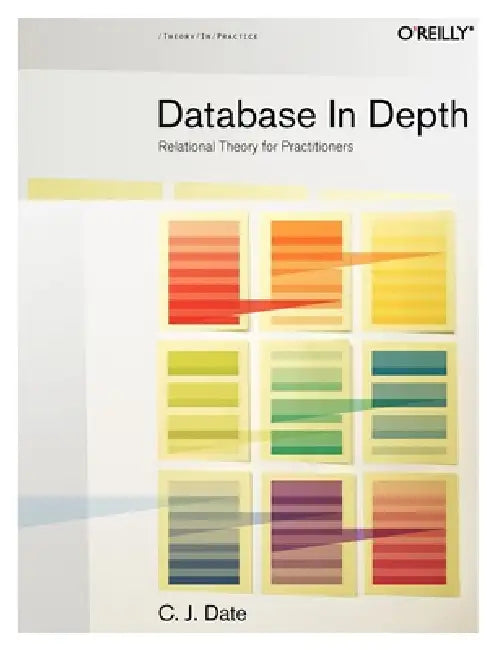
Database in Depth | by Chris J. Date | O'Reilly Media | by Chris J. Date | O'Reilly Media | by Chris J. Date | O'Reilly Media | by Chris J. Date | O'Reilly Media | by Chris J. Date | O'Reilly Media | by Chris J. Date | O'Reilly Media | by Chris J. Date | O'Reilly Media | by Chris J. Date | O'Reilly Media | by Chris J. Date | O'Reilly Media | by Chris J. Date | O'Reilly Media | by Chris J. Date | O'Reilly Media | by Chris J. Date | O'Reilly Media | by Chris J. Date | O'Reilly Media | by Chris J.
Programming
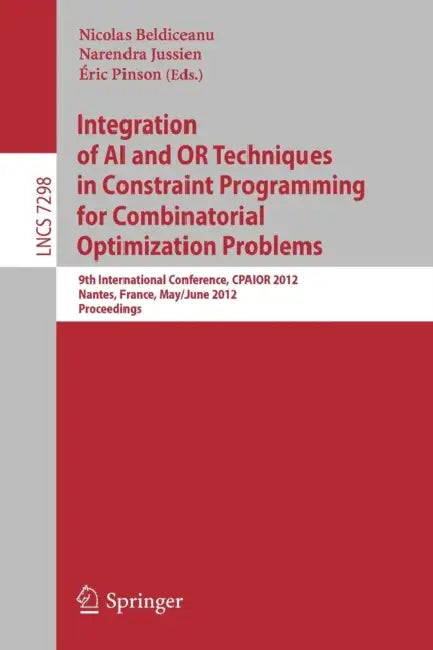
Integration of AI and OR Techniques in Constraint Programming for Combinatorial Optimization Problem | by Nicolas Beldiceanu | Narendra Jussien | Eric Pinson | Springer | by Nicolas Beldiceanu | Narendra Jussien | Eric Pinson | Springer | by Nicolas Beldiceanu | Narendra Jussien | Eric Pinson | Springer | by Nicolas Beldiceanu | Narendra Jussien | Eric Pinson | Springer | by Nicolas Beldiceanu | Narendra Jussien | Eric Pinson | Springer | by Nicolas Beldiceanu | Narendra Jussien | Eric Pinson |
Related Products
View All
Computers & Internet
Modern Full-Stack React Projects by Daniel Bugl
Computers & Internet
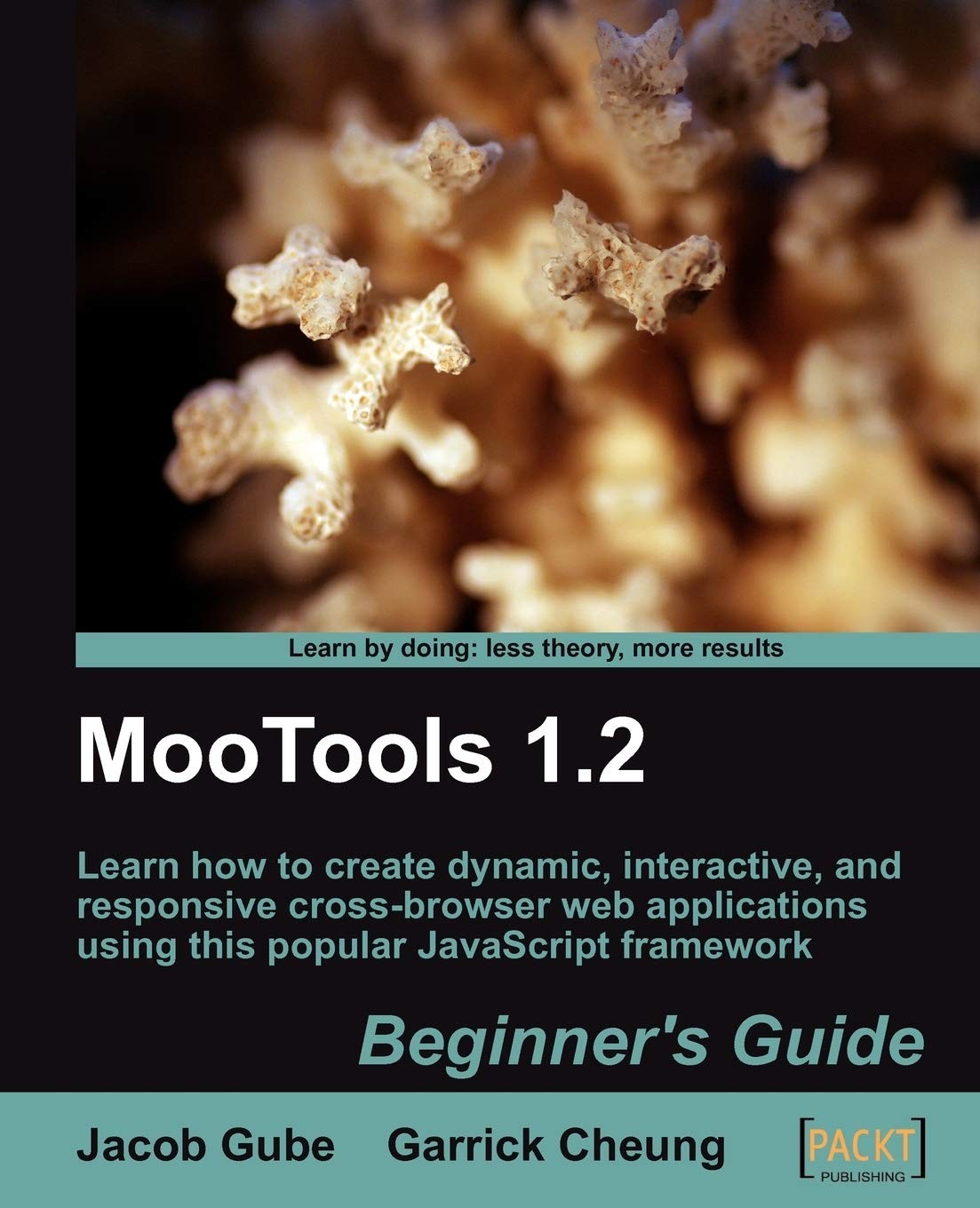
Mootools 1.2 Beginner's Guide (English, Jacob Gube)
Computers & Internet
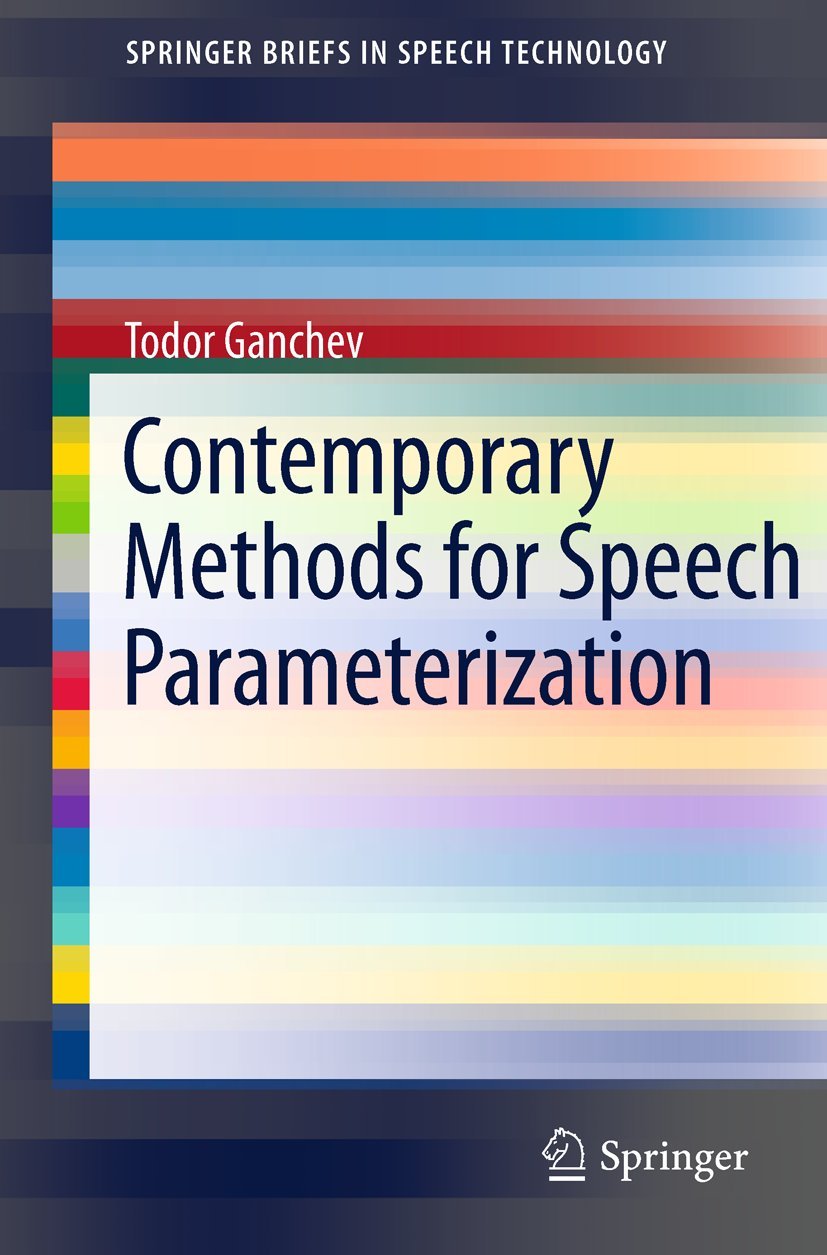
Contemporary Methods for Speech Parameterization (Springerbriefs in Electrical and Computer Engineering / Springerbriefs in Speech Technology)

Computers & Internet
Information Technology and Lawyers | by Arno R. Lodder | Anja Oskamp | Springer | by Arno R. Lodder | Anja Oskamp | Springer | by Arno R. Lodder | Anja Oskamp | Springer | by Arno R. Lodder | Anja Oskamp | Springer | by Arno R. Lodder | Anja Oskamp | Springer | by Arno R. Lodder | Anja Oskamp | Springer | by Arno R. Lodder | Anja Oskamp | Springer | by Arno R. Lodder | Anja Oskamp | Springer | by Arno R. Lodder | Anja Oskamp | Springer | by Arno R. Lodder | Anja Oskamp | Springer | by Arno R. Lo
Computers & Internet
Digital Analysis of Remotely Sensed Imagery | by Jay Gao | McGraw-Hill Companies | by Jay Gao | McGraw-Hill Companies | by Jay Gao | McGraw-Hill Companies | by Jay Gao | McGraw-Hill Companies | by Jay Gao | McGraw-Hill Companies | by Jay Gao | McGraw-Hill Companies | by Jay Gao | McGraw-Hill Companies | by Jay Gao | McGraw-Hill Companies | by Jay Gao | McGraw-Hill Companies | by Jay Gao | McGraw-Hill Companies | by Jay Gao | McGraw-Hill Companies | by Jay Gao | McGraw-Hill Companies | by Jay Gao

Computers & Internet