
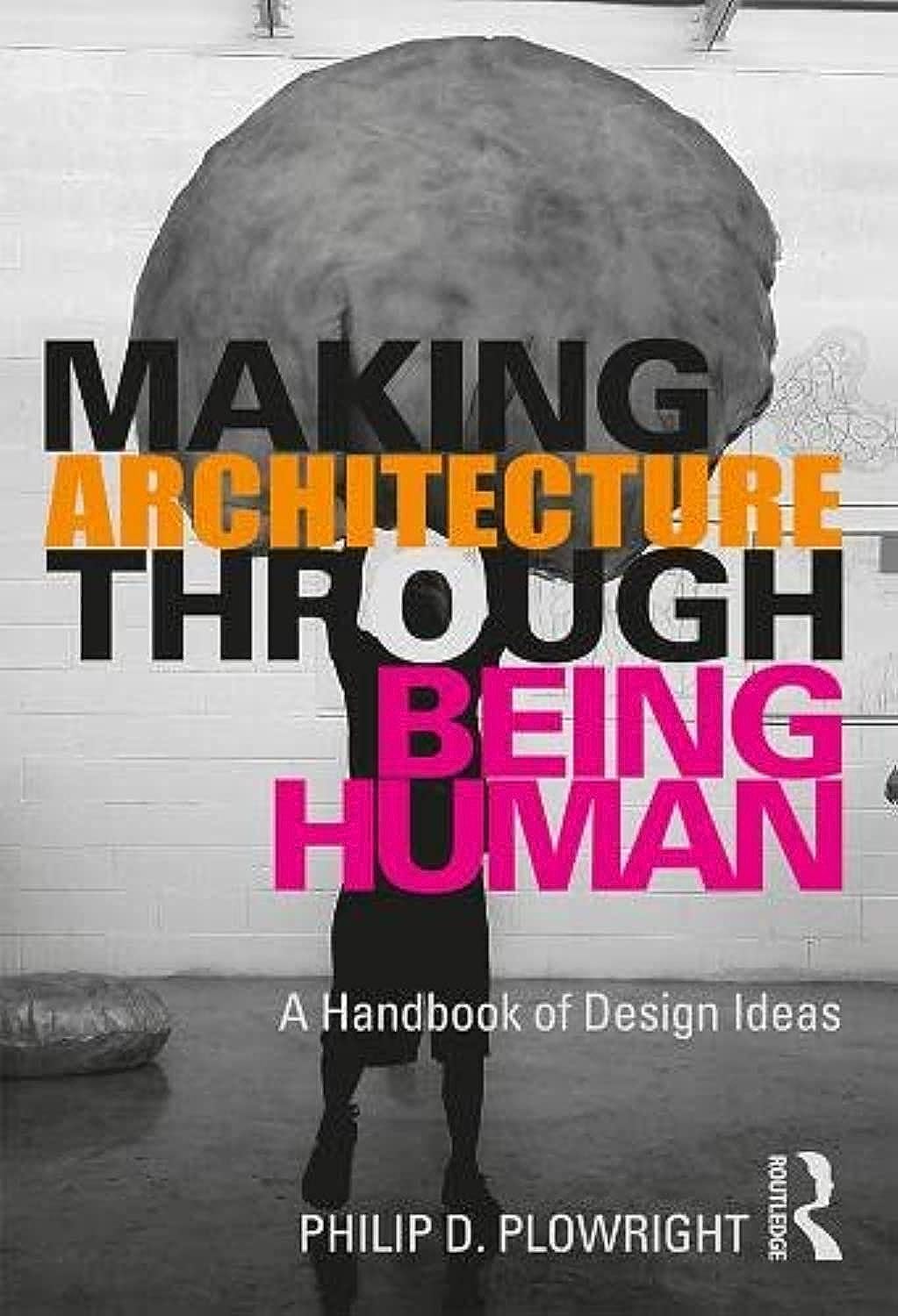
Making Architecture Through Being Human: A Handbook of Design Ideas
Inclusive of all applicable taxes. FREE shipping on all orders.
Available Offers
- 🚚Free Delivery — Free shipping on all orders
- 💵Cash on Delivery — Pay when your order arrives
- ↩️15-Day Easy Returns — Hassle-free return policy
- 🔒Cash on Delivery — Pay safely when your order arrives
Check Delivery
Product Description
Introduction
Architecture is often perceived as a complex, abstract discipline reserved for experts with years of training. But at its core, it is simply the design of human environments—places where we live, work, learn, and connect. Making Architecture Through Being Human: A Handbook of Design Ideas by Philip D. Plowright demystifies this process by starting with what we all share: our humanity. This book is not just another textbook; it is a practical guide that reconnects architectural design with the fundamental ways we think, feel, and interact with the world around us. For Indian students and professionals navigating the vibrant yet challenging field of architecture, this handbook offers a refreshing, accessible entry point into creating meaningful spaces.
Book Overview
Published by Routledge, this hardcover edition is a comprehensive reference work that presents 51 distinct concepts, notions, ideas, and actions that are essential to human cognition and environmental interpretation. Rather than overwhelming readers with jargon or abstract theory, Plowright breaks down each idea into clear, digestible sections. The book focuses on how these foundational human principles can be directly applied by architectural designers to produce spaces that resonate with people on a deeper level. Whether you are sketching your first design or refining your professional portfolio, this book serves as a constant companion for translating human experience into built form.
Key Highlights
- 51 Core Design Ideas: Each concept is isolated for clarity, making it easy to reference and apply in real-world projects.
- Human-Centered Approach: Shifts the focus from abstract aesthetics to how people actually perceive, use, and feel in spaces.
- Practical Application: Bridges theory and practice, offering actionable insights for design studios and classrooms.
- Accessible Language: Written in a conversational yet precise style, ideal for both beginners and experienced architects.
- Indian Context Relevance: While universal in scope, the principles align well with India’s rich tradition of context-sensitive architecture.
Inside the Book
Each of the 51 chapters follows a consistent structure: a clear definition of the concept, its psychological and cultural roots, and specific ways to integrate it into architectural design. Topics range from perception and memory to orientation, scale, and social interaction. Plowright uses relatable examples and avoids overly technical diagrams, making the book visually and intellectually engaging. The hardcover binding ensures durability for repeated use in studios, libraries, or fieldwork.
Key Topics
- Embodied Cognition: How our bodies shape our understanding of space.
- Perception and Senses: Designing for sight, sound, touch, and even smell.
- Memory and Meaning: Creating spaces that evoke personal and cultural narratives.
- Social Interaction: Facilitating community and connection through layout.
- Orientation and Wayfinding: Helping people navigate intuitively.
- Scale and Proportion: Relating building dimensions to human experience.
- Materiality and Texture: Choosing materials that resonate with users.
- Light and Shadow: Using natural and artificial light to shape mood.
Reader Benefits
This handbook empowers readers to move beyond rote learning and design with empathy. You will develop a deeper understanding of why certain spaces feel welcoming while others feel alienating. By internalizing these 51 ideas, you can approach any design challenge—from a small home in Mumbai to a public plaza in Delhi—with confidence and creativity. The book also helps you communicate your design decisions more effectively to clients, peers, and professors.
Learning Outcomes
- Identify the human factors that influence architectural design.
- Apply psychological and cultural insights to create user-centered spaces.
- Analyze existing buildings through the lens of human experience.
- Synthesize multiple design ideas into cohesive, meaningful projects.
- Evaluate your own work using criteria rooted in human cognition and behavior.
Who Should Read
- Architecture Students: A perfect supplement to studio courses and theory classes.
- Young Architects: Those starting their practice and seeking a human-centric design philosophy.
- Interior Designers: Professionals looking to deepen their understanding of spatial psychology.
- Urban Planners: Anyone involved in shaping public spaces and communities.
- Educators: Teachers who want a structured, accessible resource for their curriculum.
- Self-Learners: Enthusiasts curious about how design affects daily life.
About the Author
Philip D. Plowright is an accomplished educator and researcher in architecture. With years of experience teaching design theory at leading institutions, he brings a rare ability to distill complex ideas into practical wisdom. His work emphasizes the intersection of cognition, culture, and built form, making him a trusted voice for students and professionals alike. Plowright’s writing is known for its clarity and relevance, avoiding unnecessary abstraction while honoring the depth of architectural thought.
About the Publisher
Routledge is a globally respected academic publisher specializing in architecture, art, and design. Known for producing high-quality, peer-reviewed content, Routledge books are staples in university libraries and professional collections worldwide. This hardcover edition reflects their commitment to durability and scholarly excellence, ensuring that Making Architecture Through Being Human remains a lasting resource on your shelf.
Conclusion
Architecture is, at its heart, about people. Making Architecture Through Being Human: A Handbook of Design Ideas is the essential guide for anyone who wants to design spaces that truly matter. By grounding 51 powerful concepts in human experience, Philip D. Plowright offers a roadmap to creating environments that are not only functional and beautiful but also deeply meaningful. Whether you are a student in Chennai, a professional in Bengaluru, or a self-taught designer anywhere in India, this book will transform the way you think about the built world. Add it to your library today and start designing with humanity at the center.
Quick Summary
Making Architecture Through Being Human is a refreshingly accessible handbook that demystifies architectural design by starting with something we all share: our human experience. Written by Philip D. Plowright, this book introduces 51 core design ideas that emerge from how we think, feel, and interact with our surroundings. Rather than diving into complex jargon, it builds a foundation from everyday human engagement with space, showing how meaning, relationships, and even abstract concepts arise from our embodied existence. Designed primarily for architecture students encountering design theory for the first time, the book serves as both a reference and a creative companion. It helps readers develop their own design philosophy while providing practical notions and actions to apply in studio work. Indian students will find the human-centred approach particularly valuable, as it aligns with traditional Indian philosophies of space and living. By purchasing from Bookshops.in, you get a genuine hardcover edition delivered across India with reliable service. This book is not just about learning architecture—it’s about understanding how being human shapes the world we build.
Book Highlights
Book Specifications
| ISBN-13 | 9780367204778 |
| ISBN-10 | 0367204770 |
| Publisher | Routledge |
| Language | English |
| Dimensions | 12.07 x 1.27 x 18.42 cm |
| Weight | 249 g |
| Category | Arts, Film & Photography › Architecture |
| Genre | Non-fiction |
| Reading Age | Adult |
| Original Language | English |
Frequently Asked Questions
What is Making Architecture Through Being Human about?
Who is the author of this book?
Is this book suitable for beginners in architecture?
How many design concepts are covered in the book?
What makes this book different from other architecture textbooks?
Can this book help me with my architecture assignments?
Is the book used in Indian architecture schools?
What language is the book written in?
Does the book include illustrations or diagrams?
How can I buy this book in India?
What is the price of the book?
Is this book only for architecture students?
Does the book offer practical design exercises?
Readers Also Search For
Customers Also Bought
Art History
The Italian Renaissance in Art
Art History
Photovoltaic Design & Installation For Dummies | by Mayfield | ForDummies | by Mayfield | ForDummies | by Mayfield | ForDummies | by Mayfield | ForDummies | by Mayfield | ForDummies | by Mayfield | ForDummies | by Mayfield | ForDummies | by Mayfield | ForDummies | by Mayfield | ForDummies | by Mayfield | ForDummies | by Mayfield | ForDummies | by Mayfield | ForDummies | by Mayfield | ForDummies | by Mayfield | ForDummies | by Mayfield | ForDummies | by Mayfield | ForDummies | by Mayfield | ForDu
Art History
Designing School Systems for All Students (English, Robert J. Manley | Richard J. Hawkins)
Art History
Routledge Library Editions: Art and Culture in the Nineteenth Century
Art History
An Errant Design (English, S. H. Long)
Art History
Distributed System Design | by Jie Wu | CRC Press | by Jie Wu | CRC Press | by Jie Wu | CRC Press | by Jie Wu | CRC Press | by Jie Wu | CRC Press | by Jie Wu | CRC Press | by Jie Wu | CRC Press | by Jie Wu | CRC Press | by Jie Wu | CRC Press | by Jie Wu | CRC Press | by Jie Wu | CRC Press | by Jie Wu | CRC Press | by Jie Wu | CRC Press | by Jie Wu | CRC Press | by Jie Wu | CRC Press | by Jie Wu | CRC Press | by Jie Wu | CRC Press | by Jie Wu | CRC Press | by Jie Wu | CRC Press | by Jie Wu | CRC
Related Products
View All
Architecture
Literatur Und Buhn: Tamil Literature: 2 (Hanbuch Der Orientalistik - Abeilung - Indien, Vol 2/1)
Architecture
Handbook of Synagogue Architecture: 29 (Brown Judaic Studies)

Architecture
Houses, Cottages & Bungalows: A Selection of Representative Examples ... Edited by F. Chatterton. Illustrations and Plans, With Explanatory Text
Architecture
Sport and Architecture (Frontiers of Sport)
Architecture
Britain's New Towns: an Experiment in Living

Architecture