
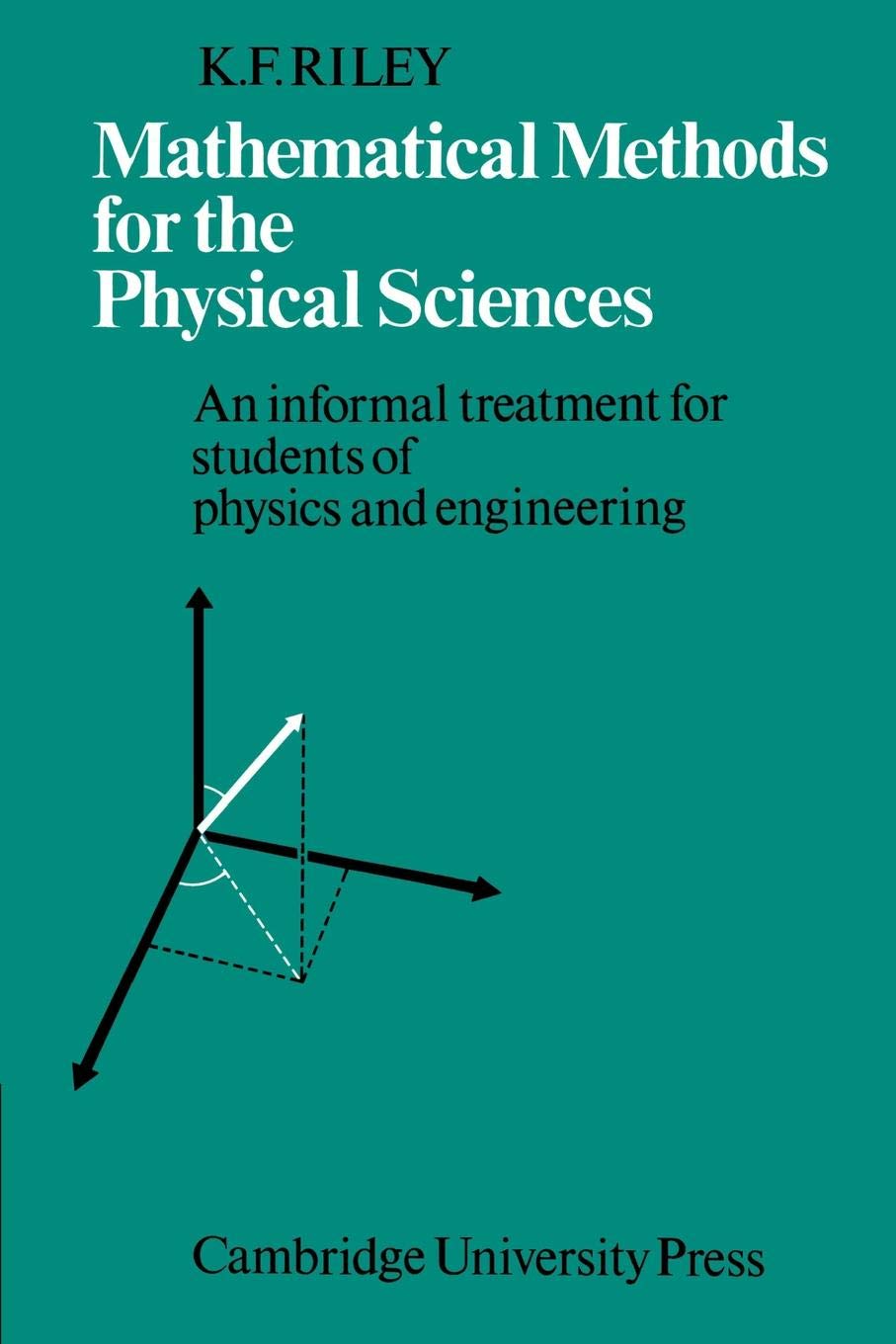
Mathematical Methods for the Physical Sciences: An Informal Treatment for Students of Physics and Engineering by K. F. R
Inclusive of all applicable taxes. FREE shipping on all orders.
Available Offers
- 🚚Free Delivery — Free shipping on all orders
- 💵Cash on Delivery — Pay when your order arrives
- ↩️15-Day Easy Returns — Hassle-free return policy
- 🔒Cash on Delivery — Pay safely when your order arrives
Check Delivery
Product Description
Introduction
For generations of Indian students pursuing physics, engineering, and applied sciences, the transition from school-level mathematics to the rigorous quantitative methods required at the university level has been a formidable challenge. K. F. Riley’s Mathematical Methods for the Physical Sciences: An Informal Treatment for Students of Physics and Engineering (published by Cambridge University Press) is a time-tested companion that bridges this gap with clarity, patience, and a deep respect for the learner’s journey. This hardbound edition is an essential addition to any serious student’s library in India, offering a foundation that lasts well beyond the first two years of undergraduate study.
Book Overview
This book is not a dry compendium of theorems; it is a carefully crafted guide that speaks directly to the student who needs to use mathematics, not just prove it. Riley’s informal yet rigorous approach ensures that every concept is introduced in a way that feels natural and connected to real physical problems. The text is structured in three stages for each topic: a qualitative, intuitive introduction; a more formal presentation; and an explicit check or worked example that ties everything together. This three-step method builds confidence progressively, making even advanced topics accessible. With hundreds of exercises embedded throughout, the book encourages active learning and self-assessment, making it ideal for both classroom use and self-study in the Indian academic context.
Key Highlights
- Three-stage learning approach: Qualitative introduction, formal treatment, and explicit worked examples for every major topic.
- Physical relevance stressed throughout: Mathematics is never taught in isolation—every method is linked to a real physical or engineering context.
- Pictorial and verbal explanations: Uses diagrams and clear verbal descriptions alongside compact notation to aid understanding.
- Extensive exercises: Hundreds of problems integrated into the text to test comprehension and build problem-solving skills.
- Hardcover durability: A sturdy binding that withstands years of heavy use in classrooms, libraries, and study desks.
- Designed for Indian syllabi: Covers topics commonly found in B.Sc. (Physics), B.E./B.Tech., and M.Sc. entrance preparation.
Inside the Book
The book systematically covers the core mathematical methods that every physical science and engineering student must master. It begins with foundational topics such as vectors, matrices, and coordinate systems, then progresses to differential and integral calculus of several variables. Later chapters delve into series solutions, Fourier series and transforms, ordinary and partial differential equations, complex analysis, and probability. Each chapter is self-contained enough to allow selective reading, yet the progression is logical and cumulative. The worked examples are particularly valuable—they show not just the answer, but the reasoning process, common pitfalls, and alternative approaches. The exercises range from straightforward drills to challenging problems that require synthesis of multiple concepts, preparing students for both semester exams and competitive tests like GATE, JEST, and TIFR.
Key Topics
- Vector algebra and calculus – including gradient, divergence, curl, and integral theorems
- Matrix theory – eigenvalues, eigenvectors, and applications to linear systems
- Ordinary differential equations – first-order and second-order, with physical examples
- Partial differential equations – separation of variables, wave, heat, and Laplace equations
- Fourier series and transforms – from periodic functions to frequency analysis
- Complex analysis – analytic functions, contour integration, and residue theorem
- Probability and statistics – distributions, mean, variance, and error analysis
- Numerical methods – interpolation, integration, and solving equations
Reader Benefits
- Builds mathematical maturity: Gradually moves from intuitive understanding to formal manipulation, preparing students for advanced courses.
- Enhances problem-solving ability: The three-stage method and extensive exercises develop analytical thinking and perseverance.
- Connects theory to practice: Every technique is tied to a physical or engineering problem, making learning meaningful and memorable.
- Supports self-study: Clear explanations and fully worked examples allow students to learn independently without constant guidance.
- Exam-ready preparation: Covers the exact mathematical toolkit required for university exams, entrance tests, and research in physics and engineering.
Learning Outcomes
By working through this book, students will be able to confidently apply vector calculus to electromagnetic fields, solve differential equations arising in mechanics and circuit theory, use Fourier methods for signal analysis, and handle complex variables in quantum mechanics and fluid dynamics. They will develop the ability to translate physical problems into mathematical models and to choose the appropriate method for solving them. The book also instils a sense of mathematical rigor without intimidation—students learn to check their work, to understand the limits of approximations, and to appreciate the elegance of mathematical reasoning in the physical world.
Who Should Read
- First- and second-year undergraduate students in physics, applied physics, and engineering (all branches) at Indian universities, IITs, NITs, and state colleges.
- Students preparing for postgraduate entrance exams such as GATE (Physics and Engineering), JEST, TIFR, IISc, and IIT-JAM.
- Self-learners and enthusiasts who want a solid, intuitive foundation in mathematical methods without getting lost in abstract proofs.
- Teachers and tutors looking for a structured, student-friendly textbook that emphasizes conceptual clarity and problem-solving.
- Professionals returning to academia who need to refresh their mathematical skills for research or advanced studies.
About the Author
K. F. Riley is a renowned physicist and educator who has spent decades teaching mathematical methods to undergraduate students at the University of Cambridge. His experience with generations of students from diverse backgrounds informs every page of this book. Riley is also the co-author of the widely used Mathematical Methods for Physics and Engineering (with Hobson and Bence), but this volume stands apart for its informal, student-centric tone. He understands the anxieties that students face when confronting abstract mathematics and addresses them with patience, humour, and a wealth of practical examples. His writing style is conversational yet precise, making even the most daunting topics feel approachable.
About the Publisher
Cambridge University Press (CUP) is one of the world’s oldest and most respected academic publishers, with a history dating back to 1534. Known for its rigorous editorial standards and commitment to educational excellence, CUP has been a trusted partner for students and researchers in India for decades. This hardcover edition is printed on high-quality paper with a durable binding, ensuring that it remains a reliable reference for years. The Press’s global network of academic reviewers ensures that every title meets the highest standards of accuracy, clarity, and pedagogical value. For Indian students, a Cambridge University Press book carries a legacy of scholarly trust that is unmatched.
Conclusion
Mathematical Methods for the Physical Sciences is more than a textbook—it is a mentor that guides students through the mathematical landscape that underpins all of modern physics and engineering. K. F. Riley’s informal, patient, and physically grounded approach has helped countless students in India and around the world not just to survive their mathematics courses, but to excel in them. Whether you are a first-year B.Sc. student struggling with vector calculus or a final-year engineering student preparing for GATE, this book will serve as a dependable companion. Invest in this hardcover edition from Bookshops.in and give yourself the mathematical foundation that will support your entire career in science or engineering.
Quick Summary
Mathematical Methods for the Physical Sciences by K. F. Riley is a time-tested textbook designed to help first and second year undergraduates in physics and engineering master the essential mathematics they need. Unlike many dry, formal texts, this book uses an informal, intuitive approach that emphasises the physical meaning behind mathematical techniques. It covers a wide range of topics including vector calculus, linear algebra, ordinary and partial differential equations, Fourier series and transforms, complex analysis, and numerical methods. Each topic is introduced with a qualitative overview, followed by a more rigorous treatment, and concludes with worked examples that reinforce understanding. The book is particularly valuable for Indian students because it aligns closely with university syllabi and competitive exam patterns. Published by Cambridge University Press, it carries the authority of one of the world's leading academic publishers. Whether you are a student struggling with mathematical concepts or a teacher looking for a reliable course text, this book provides a clear path to proficiency. Buying from Bookshops.in ensures you receive a genuine, high-quality hardcover edition at a fair price, with fast delivery across India.
Book Highlights
Book Specifications
| ISBN-13 | 9780521098397 |
| ISBN-10 | 0521098394 |
| Publisher | Cambridge Univ Pr |
| Language | English |
| Dimensions | 15.24 x 3.51 x 22.86 cm |
| Weight | 662 g |
| Country | USA |
| Category | Mathematics › Calculus |
| Genre | Science & Mathematics |
| Reading Age | 18+ |
| Original Language | English |
Frequently Asked Questions
What topics does this book cover?
Is this book suitable for Indian university courses?
Does the book include solved examples?
What is the level of mathematics required?
Is this book useful for competitive exams like GATE?
How is this book different from other mathematical methods books?
Can I use this book for self-study?
Who is the author?
Does the book cover numerical methods?
What is the language of the book?
Is the book available in hardcover?
What is the price in India?
Where can I buy this book?
Readers Also Search For
Customers Also Bought
Mathematics
Stereotype Spaces and Algebras: 73 (De Gruyter Expositions in Mathematics, 73)
Mathematics
Semigroups in Algebra, Geometry and Analysis: 20 (De Gruyter Expositions in Mathematics, 20)
Mathematics
Geometry from the Pacific Rim: Proceedings of the Pacific Rim Geometry Conference held at National University of Singapore, Republic of Singapore, ... 1994 (De Gruyter Proceedings in Mathematics)
Mathematics
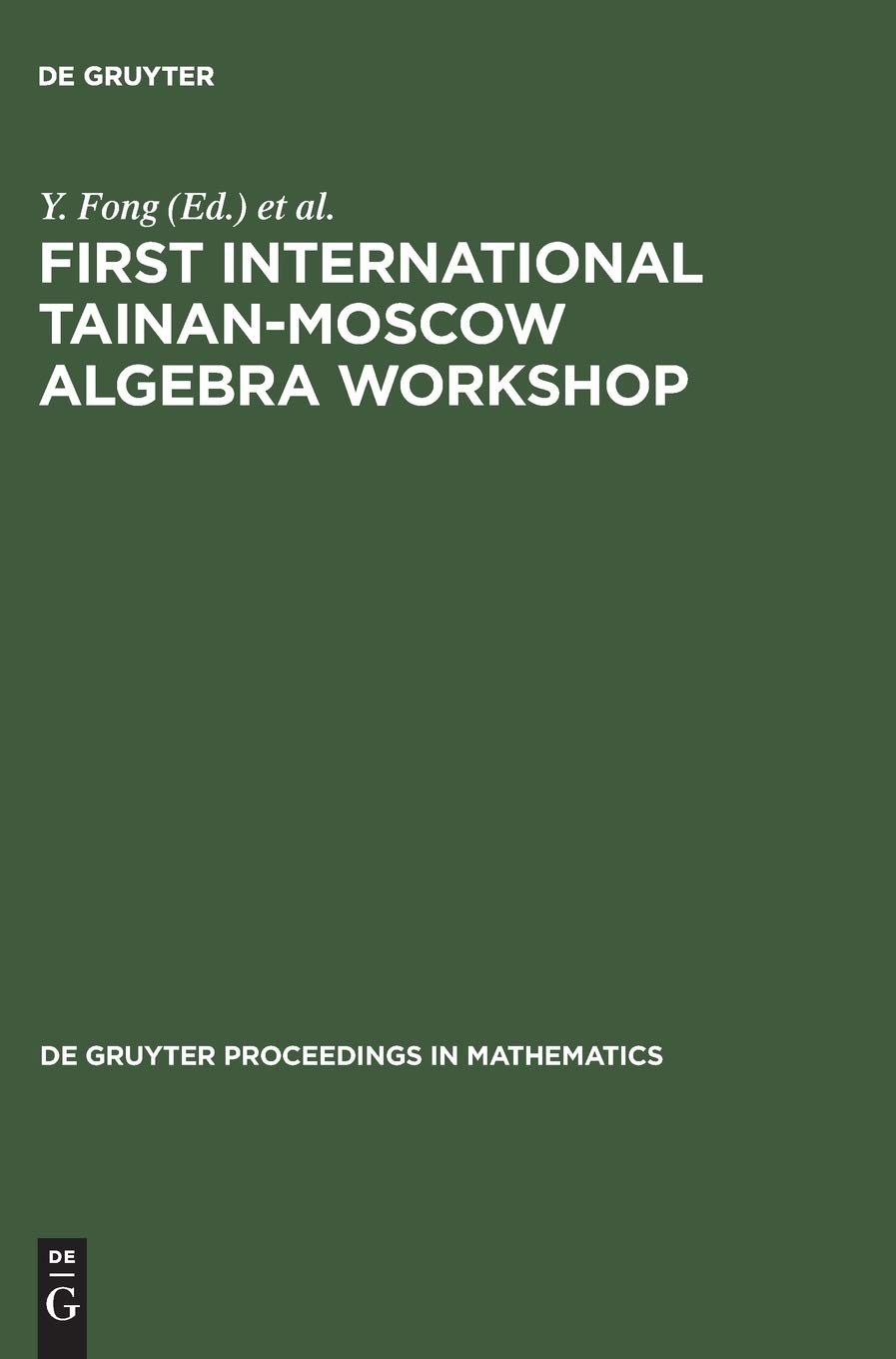
First International Tainan-Moscow Algebra Workshop: Proceedings of the International Conference held at National Cheng Kung University Tainan, Taiwan, ... 1994 (De Gruyter Proceedings in Mathematics)
Mathematics
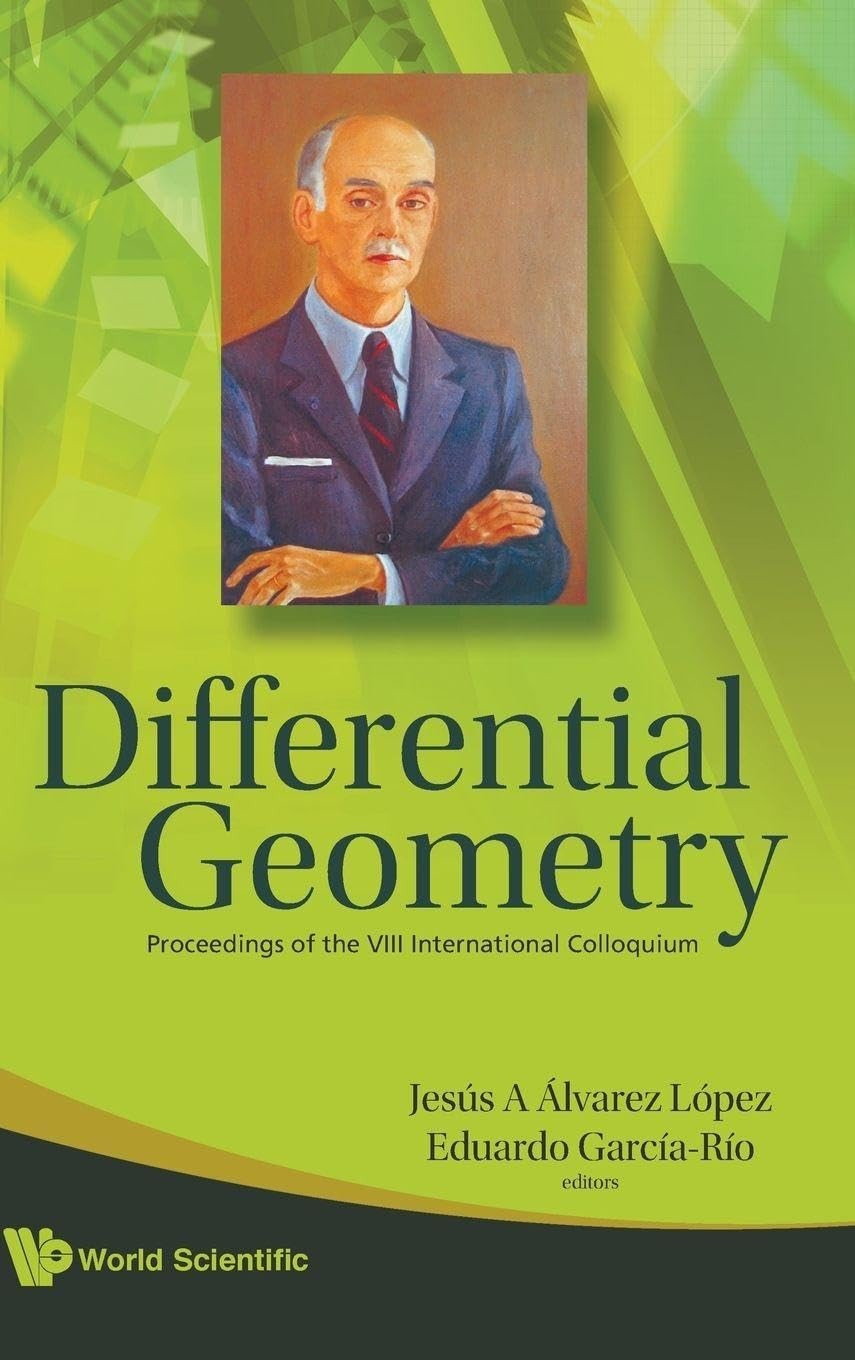
Differential Geometry - Proceedings of the VIII International Colloquium (English, Jesus A. Alvarez Lopez | Eduardo Garcia-Rio)
Mathematics
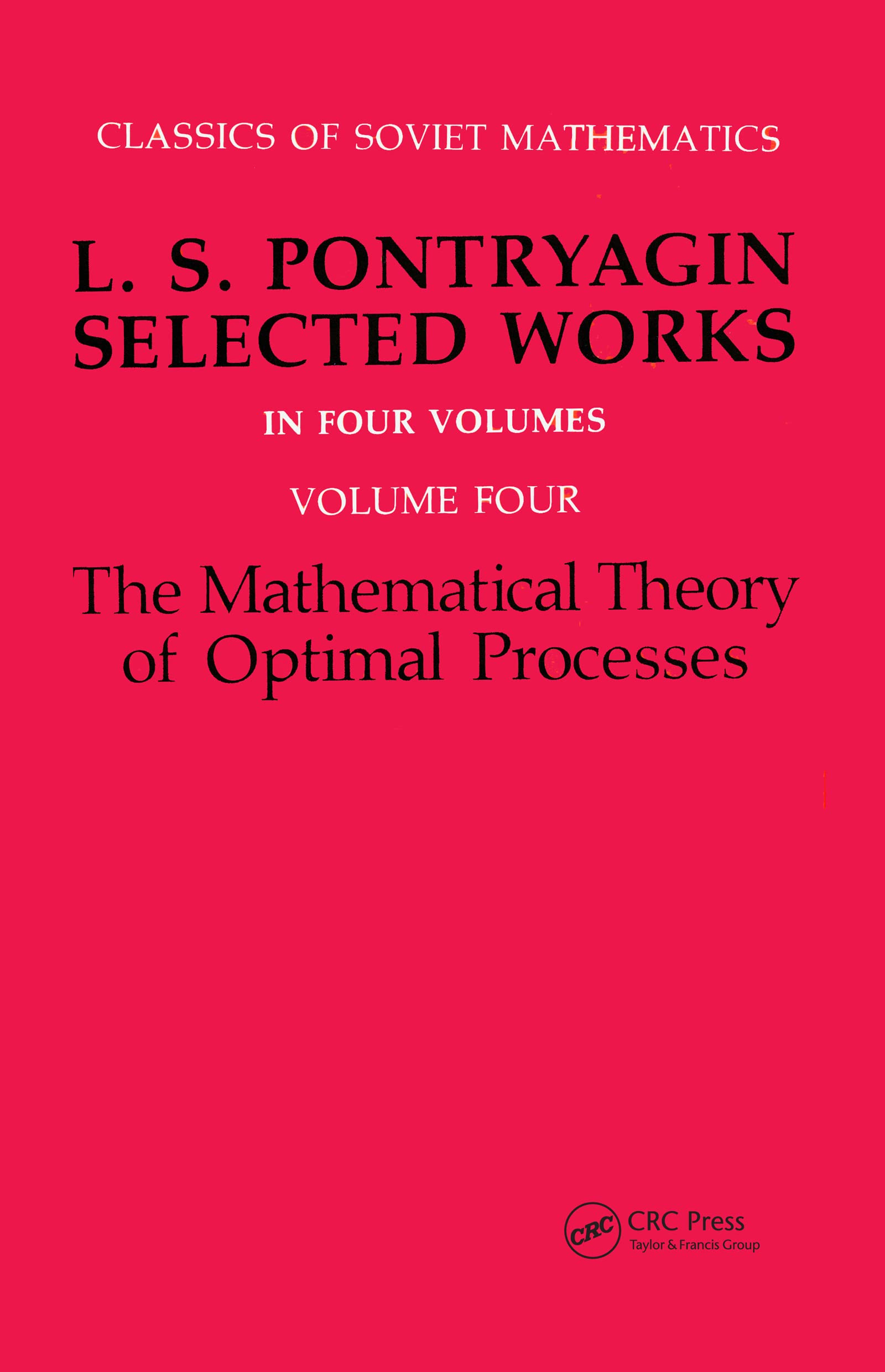
Mathematical Theory of Optimal Processes (Classics of Soviet Mathematics)
Related Products
View AllMathematics
Mathematical Theory of Optimal Processes (Classics of Soviet Mathematics)
Mathematics
Stereotype Spaces and Algebras: 73 (De Gruyter Expositions in Mathematics, 73)
Mathematics
Semigroups in Algebra, Geometry and Analysis: 20 (De Gruyter Expositions in Mathematics, 20)
Mathematics
Geometry from the Pacific Rim: Proceedings of the Pacific Rim Geometry Conference held at National University of Singapore, Republic of Singapore, ... 1994 (De Gruyter Proceedings in Mathematics)
Mathematics
First International Tainan-Moscow Algebra Workshop: Proceedings of the International Conference held at National Cheng Kung University Tainan, Taiwan, ... 1994 (De Gruyter Proceedings in Mathematics)
Mathematics