
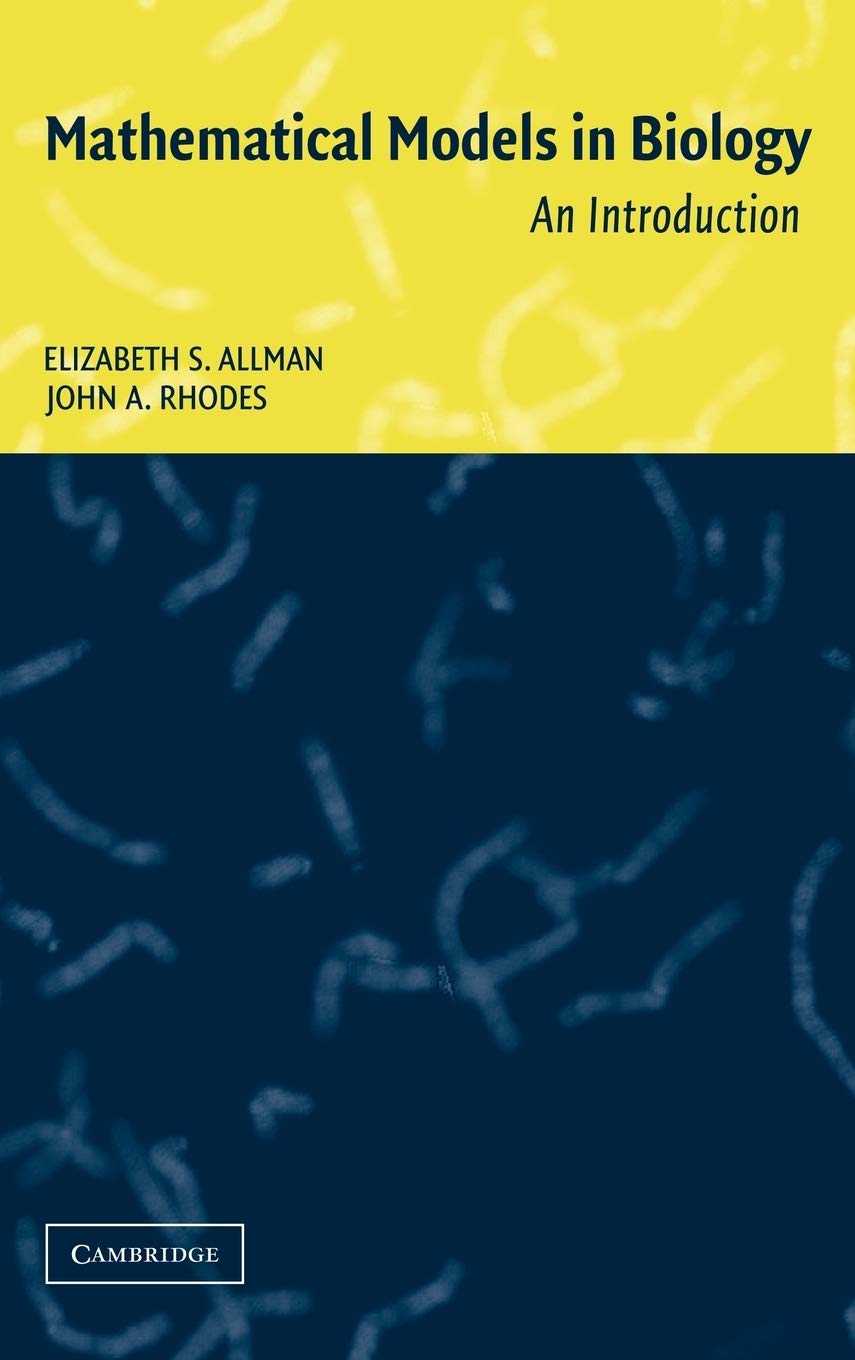
Mathematical Models in Biology: An Introduction by John A. Rhodes – A Foundational Textbook on Discrete Biological Model
Inclusive of all applicable taxes. FREE shipping on all orders.
Available Offers
- 🚚Free Delivery — Free shipping on all orders
- 💵Cash on Delivery — Pay when your order arrives
- ↩️15-Day Easy Returns — Hassle-free return policy
- 🔒Cash on Delivery — Pay safely when your order arrives
Check Delivery
Product Description
Introduction
Mathematical biology sits at the intersection of quantitative reasoning and life sciences, offering powerful tools to decode patterns in nature. John A. Rhodes’ Mathematical Models in Biology: An Introduction (Cambridge University Press) provides a rigorous yet accessible gateway for Indian students and researchers eager to explore how mathematics illuminates biological phenomena. This hardcover edition is ideal for university libraries, postgraduate courses, and self-study, bridging theory with hands-on computational practice using MATLAB.
Book Overview
This textbook focuses on discrete mathematical models applied across diverse biological subdisciplines—from population dynamics to molecular evolution. Unlike many introductory texts, it uniquely covers phylogenetic tree construction from DNA sequence data and Markov models of molecular evolution, making it a standout resource for modern biology curricula. The book integrates MATLAB exercises and projects throughout, enabling readers to simulate and analyse models directly. Minimal mathematical prerequisites are assumed, as concepts like matrix algebra, eigenvector analysis, and basic probability are developed within biological contexts.
Key Highlights
- Discrete models emphasis — tailored for understanding stepwise biological processes such as gene mutations, population generations, and disease spread.
- Unique coverage of molecular evolution and phylogenetics — rare at this introductory level, perfect for Indian bioinformatics and genetics students.
- MATLAB integration — every chapter includes computer investigations, exercises, and extended projects for experiential learning.
- Self-contained mathematical development — no prior advanced math required; all tools are motivated by real biological questions.
- Comprehensive biological applications — linear and nonlinear population models, infectious disease modelling, genetics, and Markov chains.
Inside the Book
The book is structured to build confidence gradually. Each chapter opens with a biological problem, introduces the necessary mathematics, and then applies the model to data. MATLAB code snippets are woven into the narrative, and end-of-chapter exercises range from pencil-and-paper calculations to full programming projects. Topics progress from simple population growth to complex phylogenetic inference, ensuring a coherent learning arc.
Key Topics
- Linear and nonlinear models of population dynamics
- Markov models of molecular evolution
- Phylogenetic tree construction from DNA sequences
- Infectious disease modelling (SIR and beyond)
- Population genetics and allele frequency changes
- Matrix algebra and eigenvector analysis in biological contexts
- Basic probability and stochastic processes for biology
Reader Benefits
- Bridging disciplines — ideal for biology students who want quantitative skills and for mathematicians interested in biological applications.
- Hands-on learning — MATLAB projects allow you to test models and visualise outcomes, reinforcing theoretical understanding.
- Career readiness — skills in mathematical modelling are increasingly sought after in Indian research, pharma, and biotech sectors.
- Self-paced study — clear explanations and minimal prerequisites make it suitable for independent learners.
Learning Outcomes
By working through this book, readers will be able to formulate biological problems as discrete mathematical models, analyse them using matrix algebra and probability, implement simulations in MATLAB, and interpret results in a biological context. They will gain proficiency in constructing phylogenetic trees from sequence data and understanding the dynamics of infectious diseases—skills directly applicable to research projects and advanced studies.
Who Should Read
This book is designed for undergraduate and postgraduate students in biology, biotechnology, bioinformatics, and mathematics. It is also highly useful for researchers entering computational biology, teachers designing interdisciplinary courses, and professionals in public health or evolutionary biology who need a solid modelling foundation. Indian students preparing for competitive exams like GATE, CSIR-NET, or JRF in life sciences will find the quantitative focus invaluable.
About the Author
John A. Rhodes is a respected academic with extensive experience in mathematical biology and education. His approach emphasises clarity and biological relevance, making complex concepts accessible to a broad audience. His work reflects a deep commitment to equipping students with the analytical tools needed to tackle real-world biological challenges.
About the Publisher
Cambridge University Press is a world-leading academic publisher with a strong presence in India. Known for its rigorous peer-review and high-quality educational resources, Cambridge ensures that titles like this one meet the highest standards of accuracy and pedagogical effectiveness. This hardcover edition is built to last through years of reference and study.
Conclusion
Mathematical Models in Biology: An Introduction is more than a textbook—it is a practical companion for anyone seeking to understand life through numbers. With its unique focus on molecular evolution, hands-on MATLAB integration, and minimal prerequisites, it stands as an essential addition to the library of every Indian student and researcher in the life sciences. Order your copy from Bookshops.in today and step into the fascinating world where mathematics meets biology.
Quick Summary
Mathematical Models in Biology: An Introduction by John A. Rhodes is a comprehensive textbook designed to introduce undergraduate and postgraduate students to discrete mathematical models in biology. Published by Cambridge University Press, this book bridges the gap between mathematics and life sciences, covering essential topics such as linear and nonlinear population models, Markov models of molecular evolution, phylogenetic tree construction from DNA sequences, genetics, and infectious disease dynamics. What sets this book apart is its unique coverage of molecular evolution and phylogenetic methods, which are rarely found in introductory texts. The inclusion of MATLAB programs and computer investigations provides hands-on experience, helping readers develop computational skills alongside theoretical understanding. Mathematical tools like matrix algebra, eigenvector analysis, and probability are introduced in a biological context, making them accessible to students without advanced math backgrounds. This book is ideal for Indian students pursuing degrees in biology, bioinformatics, ecology, or applied mathematics, as well as researchers entering the field. By purchasing from Bookshops.in, customers receive an authentic print edition with reliable service and competitive pricing. Overall, this textbook equips readers with the foundational knowledge and practical skills needed to explore the growing interdisciplinary field of mathematical biology.
Book Highlights
Book Specifications
| ISBN-13 | 9780521819800 |
| ISBN-10 | 0521819806 |
| Publisher | Cambridge University Press |
| Language | English |
| Dimensions | 16.51 x 3.18 x 24.13 cm |
| Weight | 650 g |
| Category | Biology & Life Sciences › Biology |
| Genre | Non-fiction |
| Original Language | English |
Frequently Asked Questions
What is the primary focus of this book?
Do I need a strong mathematics background to read this book?
Does the book include computer programming exercises?
Is this book suitable for Indian university courses?
What makes this book different from other mathematical biology textbooks?
Can I use this book for self-study?
What biological topics are covered?
Are there any prerequisites for using the MATLAB programs?
Is this book only for biology students?
Does the book cover infectious disease modeling?
Is this book available in paperback?
Can I use this book for competitive exam preparation?
Why should I buy this book from Bookshops.in?
Readers Also Search For
Customers Also Bought
Mathematics
Stereotype Spaces and Algebras: 73 (De Gruyter Expositions in Mathematics, 73)

Mathematics
Semigroups in Algebra, Geometry and Analysis: 20 (De Gruyter Expositions in Mathematics, 20)

Mathematics
Geometry from the Pacific Rim: Proceedings of the Pacific Rim Geometry Conference held at National University of Singapore, Republic of Singapore, ... 1994 (De Gruyter Proceedings in Mathematics)
Mathematics
First International Tainan-Moscow Algebra Workshop: Proceedings of the International Conference held at National Cheng Kung University Tainan, Taiwan, ... 1994 (De Gruyter Proceedings in Mathematics)
Mathematics
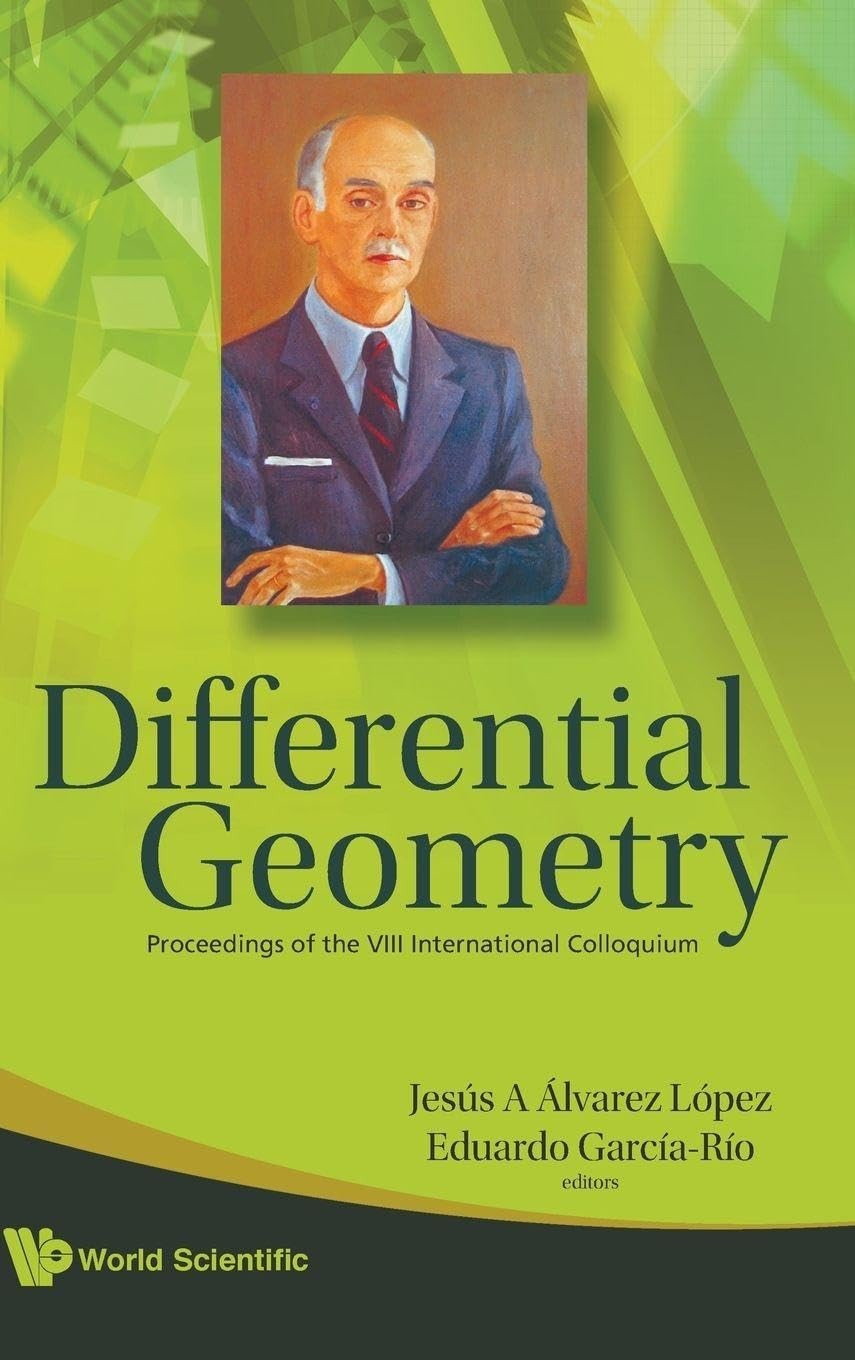
Differential Geometry - Proceedings of the VIII International Colloquium (English, Jesus A. Alvarez Lopez | Eduardo Garcia-Rio)
Mathematics
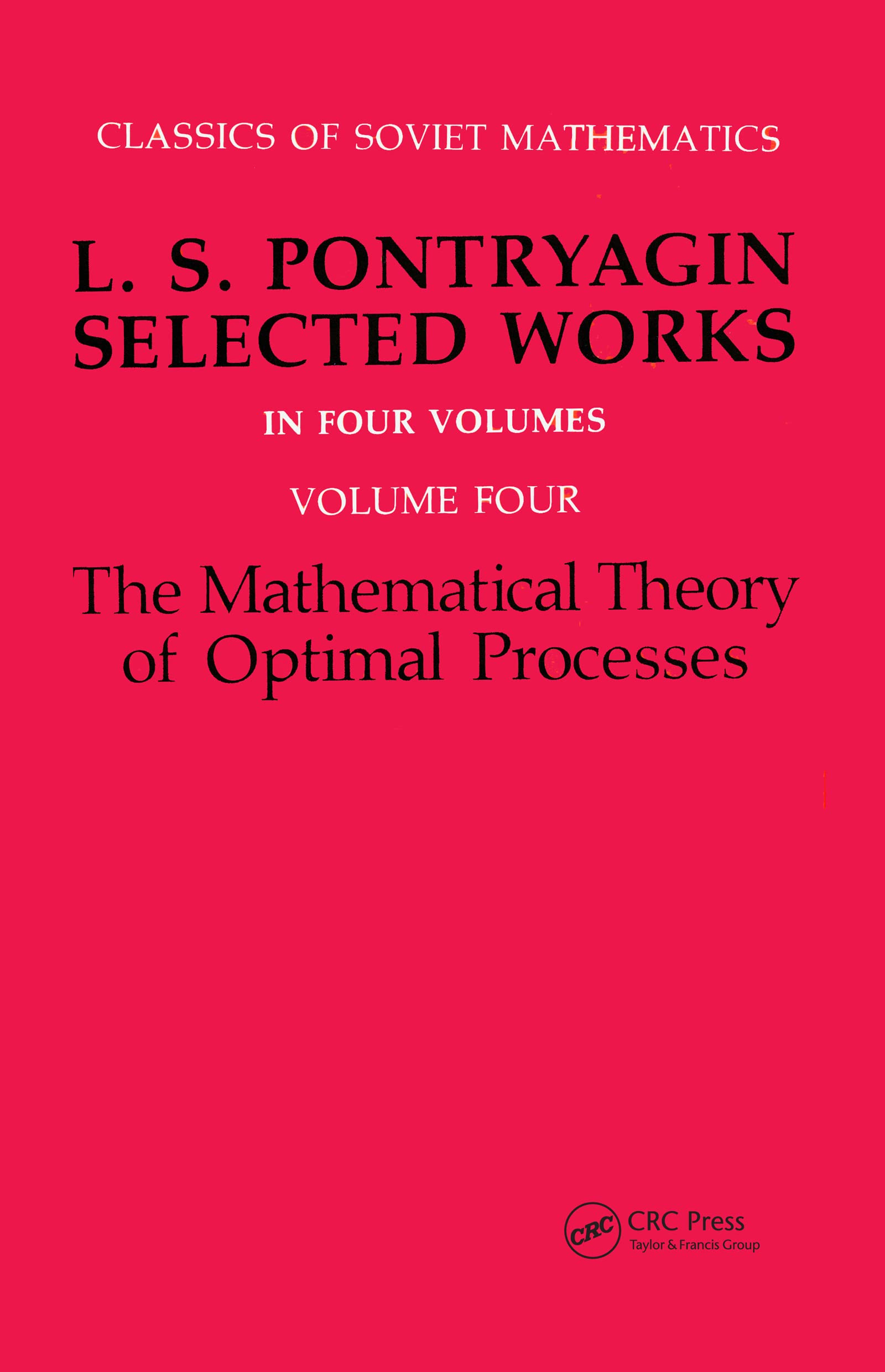
Mathematical Theory of Optimal Processes (Classics of Soviet Mathematics)
Related Products
View All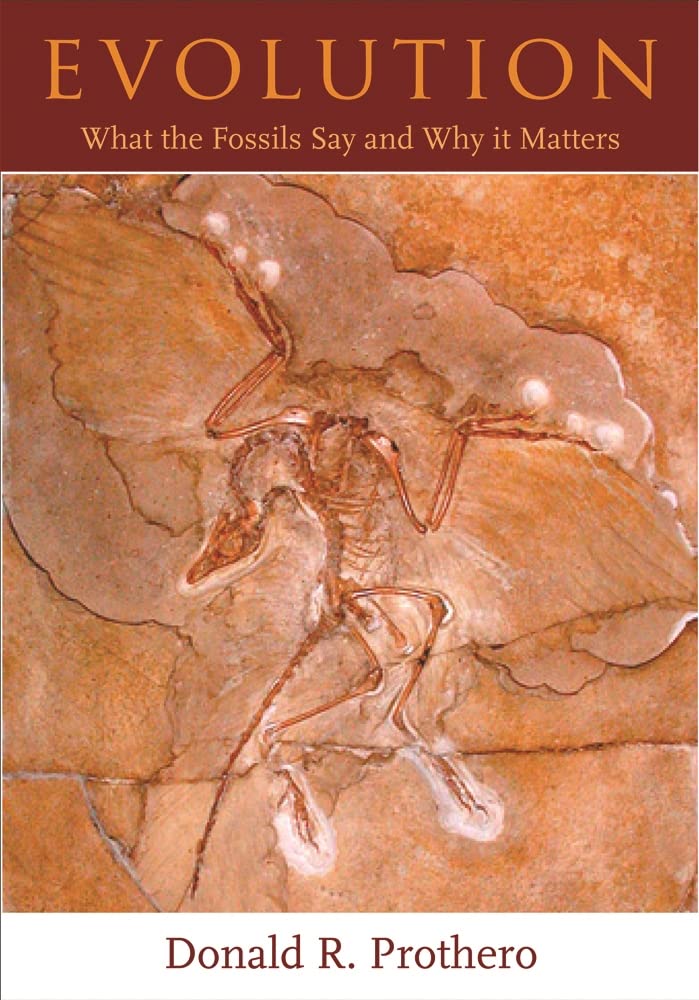
Biology
Evolution: What the Fossils Say and Why It Matters by Donald R. Prothero
Biology
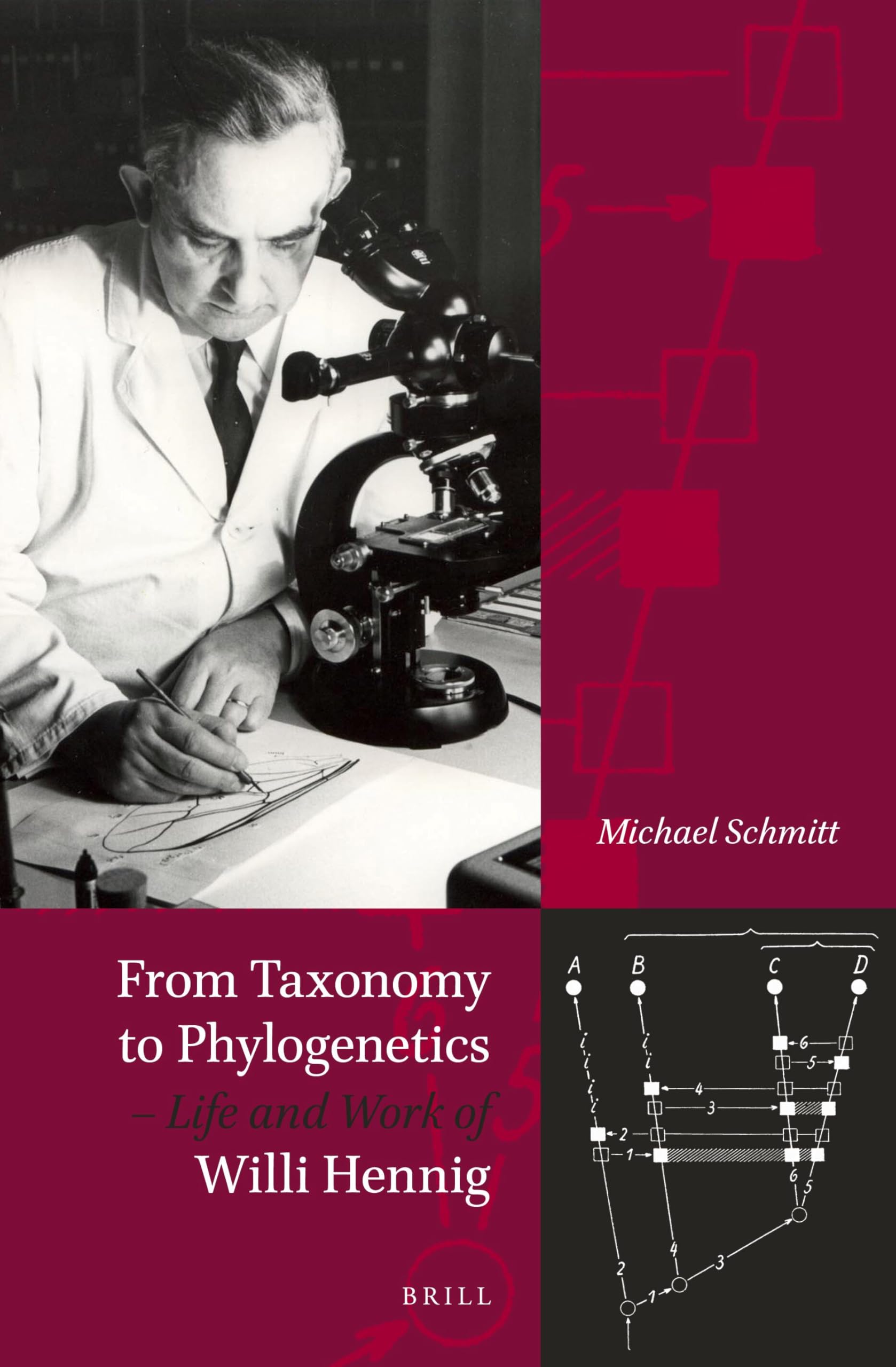
From Taxonomy to Phylogenetics – Life and Work of Willi Hennig

Biology
The Marine Biology of the South China Sea
Biology
Genetics Meets Metabolomics: from Experiment to Systems Biology
Biology
The Elements of Natural or Experimental Philosophy: 2
Biology