
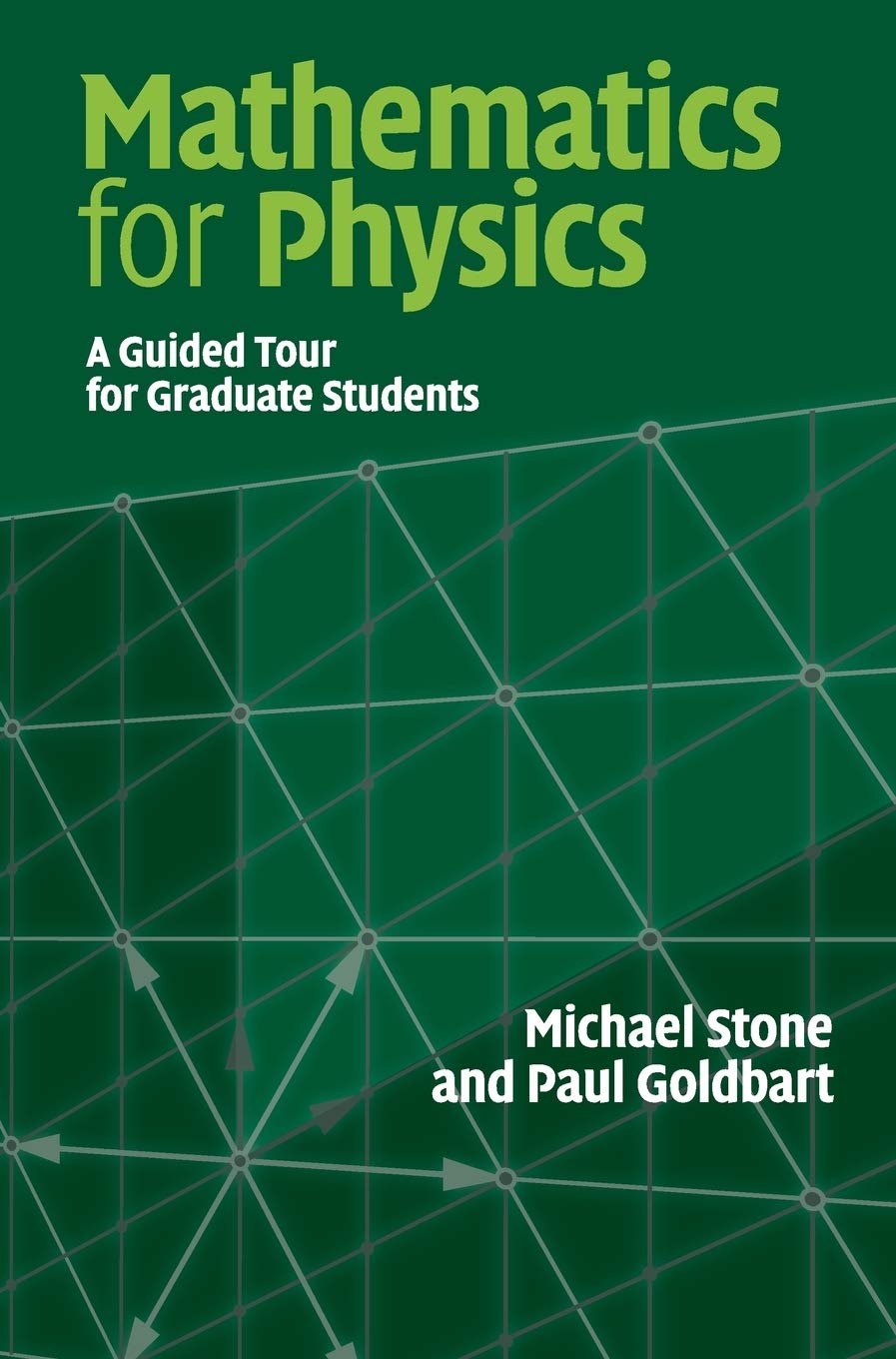
Mathematics for Physics: A Guided Tour for Graduate Students by Michael Stone – A Comprehensive Mathematical Methods Tex
Inclusive of all applicable taxes. FREE shipping on all orders.
Available Offers
- 🚚Free Delivery — Free shipping on all orders
- 💵Cash on Delivery — Pay when your order arrives
- ↩️15-Day Easy Returns — Hassle-free return policy
- 🔒Cash on Delivery — Pay safely when your order arrives
Check Delivery
Product Description
Introduction
Mathematics is the language of physics, and for graduate students stepping into advanced research, fluency in this language is non-negotiable. Mathematics for Physics: A Guided Tour for Graduate Students by Michael Stone is a meticulously crafted resource that bridges the gap between undergraduate mathematical methods and the sophisticated tools required for modern theoretical physics. Published by Cambridge University Press, this hardbound edition is designed to serve as both a classroom textbook and a self-study companion for Indian students pursuing postgraduate studies in physics or related sciences.
Book Overview
This book offers a comprehensive yet accessible journey through the mathematical landscape that underpins contemporary physics. Rather than overwhelming the reader with abstract formalism, Michael Stone adopts a guided-tour approach, explaining each concept with clarity and purpose. The text is divided into two halves: the first covers traditional mathematical methods such as differential equations, integral equations, Fourier series, and the calculus of variations. The second half ventures into advanced territories including differential geometry, topology, and complex variables. Throughout, the author emphasizes intuitive understanding without sacrificing rigor, ensuring that subtle but crucial points are addressed in a manner that is both enlightening and practical.
Key Highlights
- Dual Structure: The book is organized into two distinct parts—foundational methods and advanced topics—allowing students to build a solid base before tackling more complex ideas.
- Physics-First Pedagogy: Every mathematical technique is introduced through realistic physics problems, making the material immediately relevant and engaging.
- Problem-Driven Learning: Carefully chosen examples, exercises, and problems drawn from actual research settings reinforce learning and develop problem-solving skills.
- Self-Study Friendly: The author’s engaging writing style and step-by-step explanations make this book ideal for independent learners alongside classroom use.
- Instructor Support: Password-protected solutions to exercises are available for instructors, facilitating effective teaching and assessment.
Inside the Book
The journey begins with a thorough treatment of ordinary and partial differential equations, Fourier analysis, and variational principles—tools that are indispensable in classical mechanics, electrodynamics, and quantum theory. The second half ventures into differential geometry, where readers explore manifolds, tensors, and curvature, followed by an introduction to topology that covers homotopy, homology, and their applications in physics. The final chapters on complex variables delve into analytic functions, contour integration, and asymptotic methods. Each chapter is populated with worked examples and end-of-chapter problems that challenge the reader to apply concepts in novel contexts, mirroring the demands of real research.
Key Topics
- Ordinary and partial differential equations
- Integral equations and Green's functions
- Fourier series and transforms
- Calculus of variations and Lagrangian mechanics
- Differential geometry and tensor calculus
- Topology: manifolds, homotopy, and homology
- Complex analysis: analytic functions, contour integration, and asymptotic expansions
- Group theory and representation theory basics
- Linear algebra in infinite-dimensional spaces
- Probability and stochastic processes in physics
Reader Benefits
- Conceptual Clarity: Gain a deep understanding of why mathematical tools work, not just how to apply them mechanically.
- Research Readiness: Equip yourself with the mathematical arsenal needed to tackle advanced topics in quantum field theory, general relativity, condensed matter physics, and beyond.
- Problem-Solving Confidence: The extensive collection of physics-inspired exercises builds the analytical skills essential for academic success and research.
- Time Efficiency: The guided tour format saves students from wading through overly rigorous mathematics texts, focusing instead on what is directly useful for physicists.
- Exam Preparation: Ideal for preparing for comprehensive exams, qualifying exams, and coursework in master's and PhD programs.
Learning Outcomes
By the end of this book, readers will be able to confidently formulate and solve differential equations arising in physical systems, apply variational principles to derive equations of motion, manipulate tensors and differential forms on curved spaces, use topological invariants to classify physical phenomena, and employ complex analysis to evaluate integrals and solve boundary value problems. These skills form the bedrock of a physicist's mathematical toolkit and are directly transferable to research in theoretical, experimental, and applied physics.
Who Should Read
This book is primarily aimed at graduate students in physics, but it is equally valuable for advanced undergraduates who have completed introductory mathematical methods courses. It also serves as a refresher for postdoctoral researchers and faculty members who wish to strengthen their mathematical foundations. Students in engineering, astronomy, and applied mathematics who deal with physical problems will find the content highly relevant. Indian students preparing for JEST, GATE, or NET in physics will benefit immensely from the problem-solving approach and depth of coverage.
About the Author
Michael Stone is a professor of physics at the University of Illinois at Urbana-Champaign, where he has taught for decades. His research interests span condensed matter theory, quantum Hall effects, and topological phases of matter. He brings a wealth of teaching experience and a passion for making advanced mathematics accessible to physicists. His clear, conversational writing style reflects his commitment to student learning and his belief that mathematics should be a tool, not a barrier, in the study of physics.
About the Publisher
Cambridge University Press is one of the world’s oldest and most respected academic publishers, with a distinguished history dating back to 1534. Known for its rigorous editorial standards and commitment to scholarly excellence, Cambridge University Press produces textbooks and monographs that are trusted by universities and research institutions globally. This hardbound edition upholds the publisher’s reputation for quality, with durable binding and clear typesetting that make it a lasting addition to any student’s library.
Conclusion
Mathematics for Physics: A Guided Tour for Graduate Students is more than a textbook—it is a trusted companion for anyone serious about mastering the mathematics that drives modern physics. With its balanced approach, physics-centric examples, and coverage of both classical and cutting-edge topics, this book stands as an essential resource for graduate students in India and around the world. Whether you are preparing for exams, starting research, or simply seeking to deepen your understanding, Michael Stone’s guided tour will illuminate the path.
Quick Summary
Mathematics for Physics: A Guided Tour for Graduate Students by Michael Stone is a comprehensive and accessible textbook designed to equip physics graduate students with the mathematical tools essential for research. The book is divided into two parts: the first half covers traditional methods such as differential and integral equations, Fourier series, and the calculus of variations, all presented with clarity and practical examples. The second half delves into more advanced topics including differential geometry, topology, and complex variables, providing a solid foundation for modern theoretical physics. What sets this book apart is its engaging writing style that avoids unnecessary rigor while still explaining subtle but important concepts often overlooked in elementary texts. Each chapter is enriched with carefully chosen exercises and problems drawn from realistic physics scenarios, making it an ideal resource for both classroom use and self-study. Indian graduate students and researchers will find this book invaluable for bridging the gap between undergraduate mathematics and research-level applications. By purchasing from Bookshops.in, you get a high-quality physical copy delivered to your doorstep, backed by reliable service and competitive pricing.
Book Highlights
Book Specifications
| ISBN-13 | 9780521854030 |
| ISBN-10 | 0521854032 |
| Publisher | Cambridge University Press |
| Language | English |
| Dimensions | 17.78 x 4.45 x 24.77 cm |
| Weight | 1 kg 570 g |
| Country | India |
| Category | Science & Mathematics › Physics |
| Genre | Non-Fiction |
| Reading Age | Adult |
| Original Language | English |
Frequently Asked Questions
What is Mathematics for Physics about?
Who is the author of this book?
Is this book suitable for Indian graduate students?
What level of mathematics is required to read this book?
Does the book include exercises?
What topics are covered in the first half of the book?
What advanced topics are in the second half?
Is this book a textbook or a reference?
How is this book different from other mathematical methods books?
What is the ISBN-13 of this book?
Can I use this book for self-study?
Does this book cover group theory?
Is this book available in paperback?
Why should I buy this book from Bookshops.in?
Readers Also Search For
Customers Also Bought
Mathematics
Stereotype Spaces and Algebras: 73 (De Gruyter Expositions in Mathematics, 73)
Mathematics
Semigroups in Algebra, Geometry and Analysis: 20 (De Gruyter Expositions in Mathematics, 20)
Mathematics
Geometry from the Pacific Rim: Proceedings of the Pacific Rim Geometry Conference held at National University of Singapore, Republic of Singapore, ... 1994 (De Gruyter Proceedings in Mathematics)
Mathematics
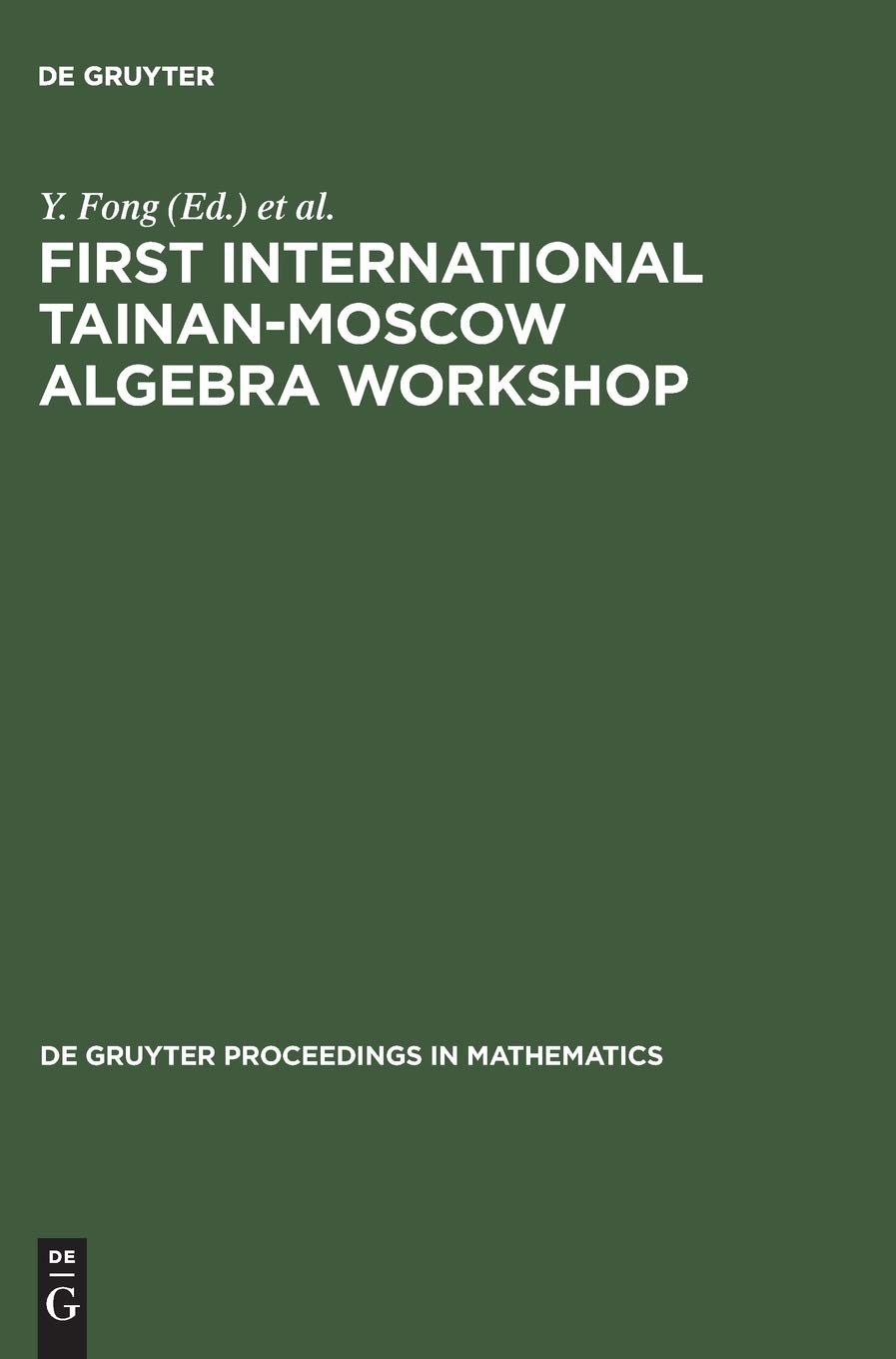
First International Tainan-Moscow Algebra Workshop: Proceedings of the International Conference held at National Cheng Kung University Tainan, Taiwan, ... 1994 (De Gruyter Proceedings in Mathematics)
Mathematics
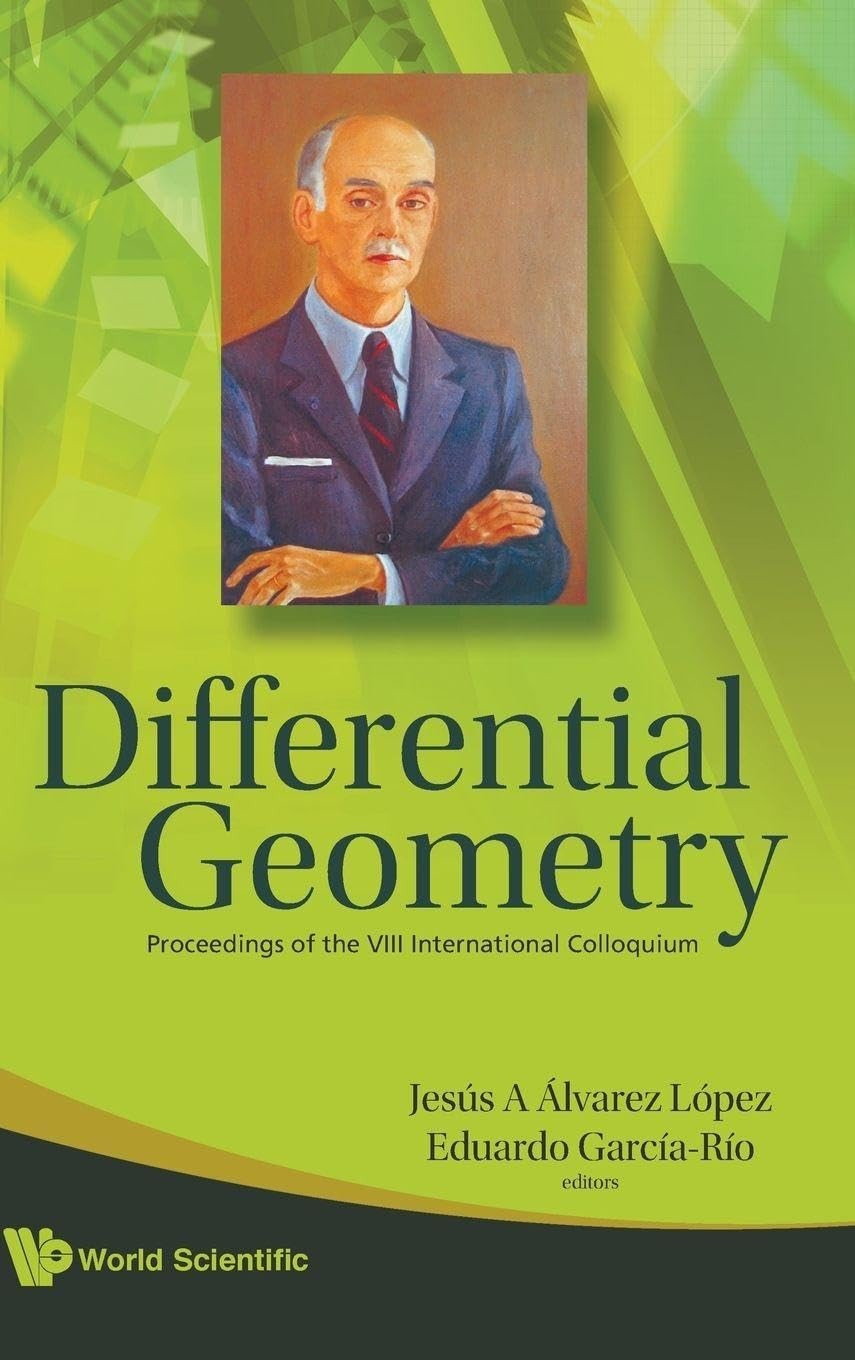
Differential Geometry - Proceedings of the VIII International Colloquium (English, Jesus A. Alvarez Lopez | Eduardo Garcia-Rio)
Mathematics
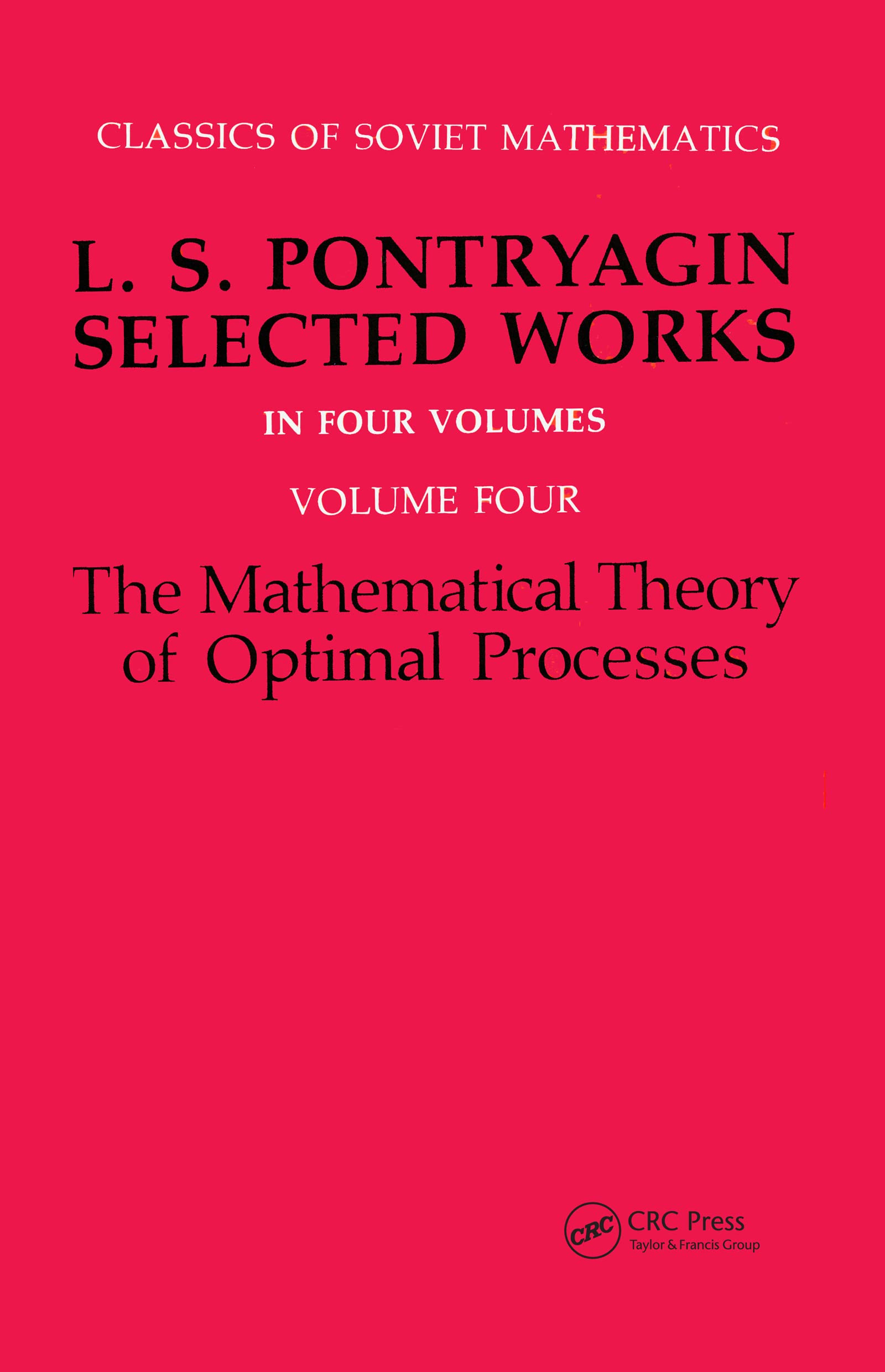
Mathematical Theory of Optimal Processes (Classics of Soviet Mathematics)
Related Products
View All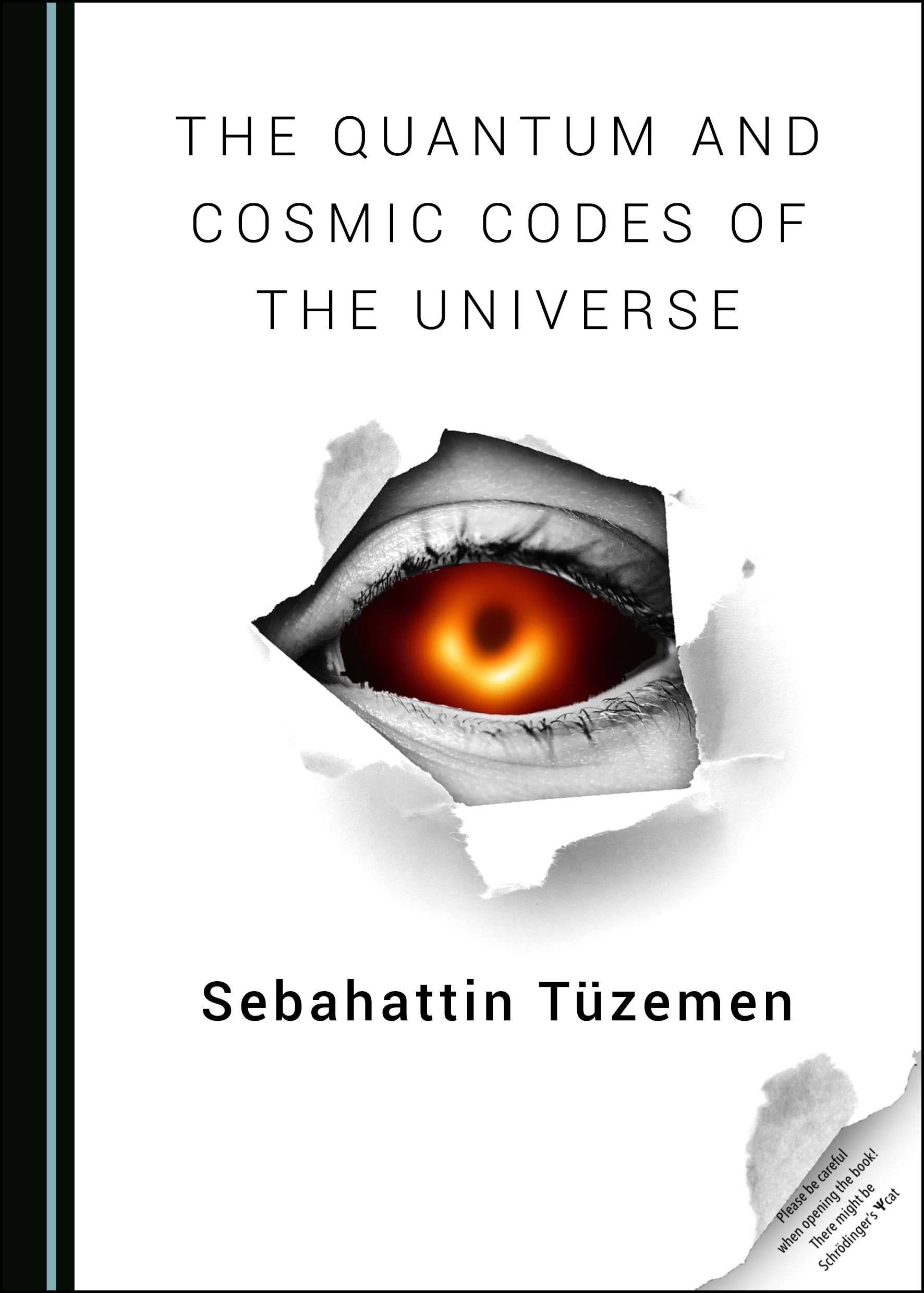
Physics
The Quantum and Cosmic Codes of the Universe
Physics
Physics for You by Keith Johnson – GCSE Physics Textbook
Physics
Experimental Techniques in Nuclear Physics
Physics
Essential Physics I

Physics
Modern Foundations of Quantum Optics
Physics