
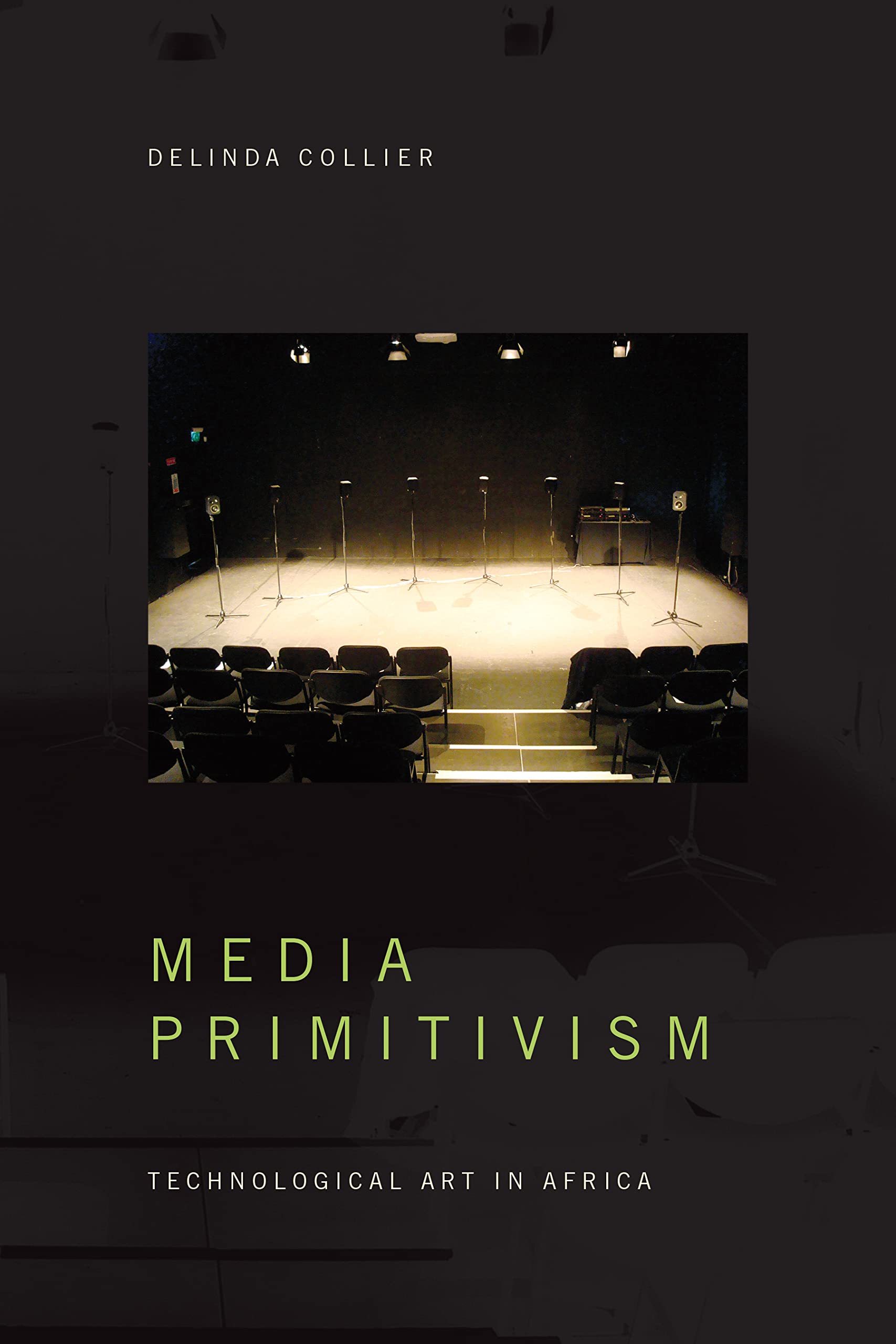
Media Primitivism: Technological Art in Africa by Delinda Collier – A Groundbreaking Study of African Media Art and Colo
Inclusive of all applicable taxes. FREE shipping on all orders.
Available Offers
- 🚚Free Delivery — Free shipping on all orders
- 💵Cash on Delivery — Pay when your order arrives
- ↩️15-Day Easy Returns — Hassle-free return policy
- 🔒Cash on Delivery — Pay safely when your order arrives
Check Delivery
Product Description
Introduction
In a world where African art is often framed through the lens of tradition and the primitive, Delinda Collier’s Media Primitivism: Technological Art in Africa arrives as a bold and necessary rethinking. This hardcover volume from Duke University Press challenges readers to see African artistic expression not as a static relic of the past, but as a dynamic, technologically engaged force. Collier dismantles the colonial assumption that African art is unmediated or natural, revealing instead a rich history of media experimentation, electronic sound, and digital innovation. For Indian readers, students, and scholars of postcolonial studies, this book offers a powerful comparative lens through which to examine how technology, aesthetics, and history intersect in non-Western contexts.
Book Overview
Media Primitivism is a scholarly yet accessible work that reorients the study of African art within a global framework of media theory and technological change. Collier examines key artworks—from Halim El-Dabh’s 1944 electronic composition Ta’abir Al-Zaar to Souleymane Cissé’s 1987 film Yeelen and contemporary digital art—to argue that African media practices cannot be separated from histories of extraction, electricity, and colonial transfer. The book insists that African art is not a footnote to Western media history but a vital, transformative participant in the story of technology and aesthetics.
Key Highlights
- Groundbreaking thesis: Challenges the idea that African art is “primitive” or unmediated, showing its deep engagement with technology and media.
- Wide historical scope: Covers works from the 1940s to the present, including electronic music, cinema, and digital art.
- Interdisciplinary approach: Merges art history, media studies, postcolonial theory, and philosophy of technology.
- Focus on overlooked artists: Brings attention to figures like Halim El-Dabh, whose 1944 work is one of the earliest known pieces of electronic music.
- Critical of colonial narratives: Examines how extractive mining, electricity, and colonial power shaped the conditions for African media art.
Inside the Book
The book is structured around close readings of pivotal artworks, each chosen to illustrate a different facet of media primitivism. Collier begins with El-Dabh’s compositional use of the wire recorder, moving through Cissé’s cinematic fusion of Bambara cosmology and film technology, and into contemporary digital works that question the boundaries between the natural and the constructed. Each chapter weaves together historical context, theoretical analysis, and aesthetic critique, making the book both intellectually rigorous and engaging. The prose is clear and avoids unnecessary jargon, making it suitable for advanced undergraduates as well as specialists.
Key Topics
- Media theory and African art
- Electronic music and sound technology in Africa
- Film and visual culture in postcolonial contexts
- Colonialism, extraction, and technological infrastructure
- Philosophies of mediation and transmutation
- Digital art and contemporary African aesthetics
- Primitivism as a critical concept in art history
Reader Benefits
This book equips readers with a fresh vocabulary for understanding African art beyond the tired binaries of traditional/modern or primitive/technological. It provides concrete case studies that demonstrate how African artists have actively shaped media history, not merely responded to it. Readers will gain critical tools to analyze the political and material conditions under which art is made, and to question the Eurocentric assumptions that still dominate art criticism. For Indian readers, the parallels with India’s own postcolonial media landscapes—from early sound recording to digital activism—offer rich comparative insights.
Learning Outcomes
- Understand the historical and theoretical foundations of media primitivism.
- Analyze key African artworks through the lens of technology and mediation.
- Critically evaluate colonial narratives that frame non-Western art as “natural” or “unmediated.”
- Connect African media practices to global histories of extraction, electricity, and digital culture.
- Develop a nuanced perspective on the relationship between art, technology, and power in postcolonial contexts.
Who Should Read
This book is ideal for students and scholars of art history, media studies, African studies, postcolonial theory, and philosophy of technology. It is also highly recommended for curators, artists, and cultural critics interested in expanding their understanding of global modernism and contemporary art. Indian readers engaged with debates around decolonizing knowledge, digital divides, and cultural representation will find this work particularly resonant.
About the Author
Delinda Collier is a professor of art history at the School of the Art Institute of Chicago. Her research focuses on modern and contemporary African art, media theory, and the politics of technology. She is known for her rigorous, interdisciplinary approach that bridges art history with sound studies, film theory, and postcolonial critique. Collier’s work has been widely published in academic journals and anthologies, and Media Primitivism represents a culmination of her long-standing engagement with African media art.
About the Publisher
Duke University Press is a leading academic publisher known for its contributions to critical theory, cultural studies, and postcolonial scholarship. With a strong list in African studies and media theory, Duke UP consistently publishes works that challenge disciplinary boundaries and offer new perspectives on global modernity. This hardcover edition reflects the press’s commitment to high-quality production and intellectual depth.
Conclusion
Media Primitivism: Technological Art in Africa is an essential read for anyone seeking to understand the complex interplay between technology, art, and colonial history. Delinda Collier’s meticulous research and bold arguments make this book a landmark contribution to the field. By rethinking what African art can do, she opens up new possibilities for thinking about media, aesthetics, and power in a globalized world. For Indian readers, this book offers not just knowledge about Africa but a mirror for reflecting on our own postcolonial technological journeys.
Quick Summary
Media Primitivism by Delinda Collier is a transformative academic work that rethinks the relationship between technology and African art. Moving beyond stereotypes of African art as primitive or natural, Collier examines key works such as Halim El-Dabh's pioneering electronic composition Ta'abir Al-Zaar (1944) and Souleymane Cissé's film Yeelen (1987), alongside contemporary digital art. She argues that African media must be understood within colonial and postcolonial histories of extraction, electricity, and transmutation. This book is ideal for scholars and advanced students in art history, media studies, and postcolonial theory who seek a nuanced understanding of African artistic practices. Readers will learn how African artists have engaged with technology on their own terms, challenging Western narratives. By purchasing from Bookshops.in, Indian readers gain access to a premium hardcover edition of this critically acclaimed work, delivered reliably across the country.
Book Highlights
Book Specifications
| ISBN-13 | 9781478008835 |
| ISBN-10 | 1478008830 |
| Publisher | Duke University Press |
| Language | English |
| Dimensions | 15.24 x 1.75 x 22.86 cm |
| Weight | 612 g |
| Category | Communication & Journalism › Communications |
| Genre | Nonfiction |
| Original Language | English |
Frequently Asked Questions
What is Media Primitivism about?
Who is the author Delinda Collier?
Which artworks are discussed in the book?
Is this book suitable for undergraduate students?
Does the book cover only visual art?
How does the book connect media to colonialism?
Is the book available in Indian bookstores?
What is the price of this book?
Does the book include illustrations?
Can I use this book for my PhD research?
What is the main argument of the book?
Is the book written in English?
Does the book discuss Indian or Asian art?
Why should I buy from Bookshops.in?
Readers Also Search For
Customers Also Bought
Taylor & Francis Ltd
Oppositional Voices (English, Kronitiris Tina)

Routledge
Ordinary People and Extra-Ordinary Protections (English, Judith L. Mitrani)

Cambridge University Press
Jane Austen and the Enlightenment (English, Peter Knox-Shaw)

de Gruyter
Produktionswirtschaft (English, Günther Zäpfel)

de Gruyter
Register (English, Max Ebert)
Packt Publishing
Keyshot 3D Rendering (English, Jei Lee Jo)
Related Products
View All
Duke University Press
The Human in Bits: Graphical Computers, Black Abstractions

Duke University Press
Figures of Time: Affect and the Television of Preemption (Thought in the Act)

Duke University Press
Tourist Distractions: Traveling and Feeling in Transnational Hallyu Cinema by Youngmin Choe

Duke University Press
Partisan Canons (English, Anna Brzyski)

Duke University Press
Impersonal Passion (English, Denise Riley)
Duke University Press