
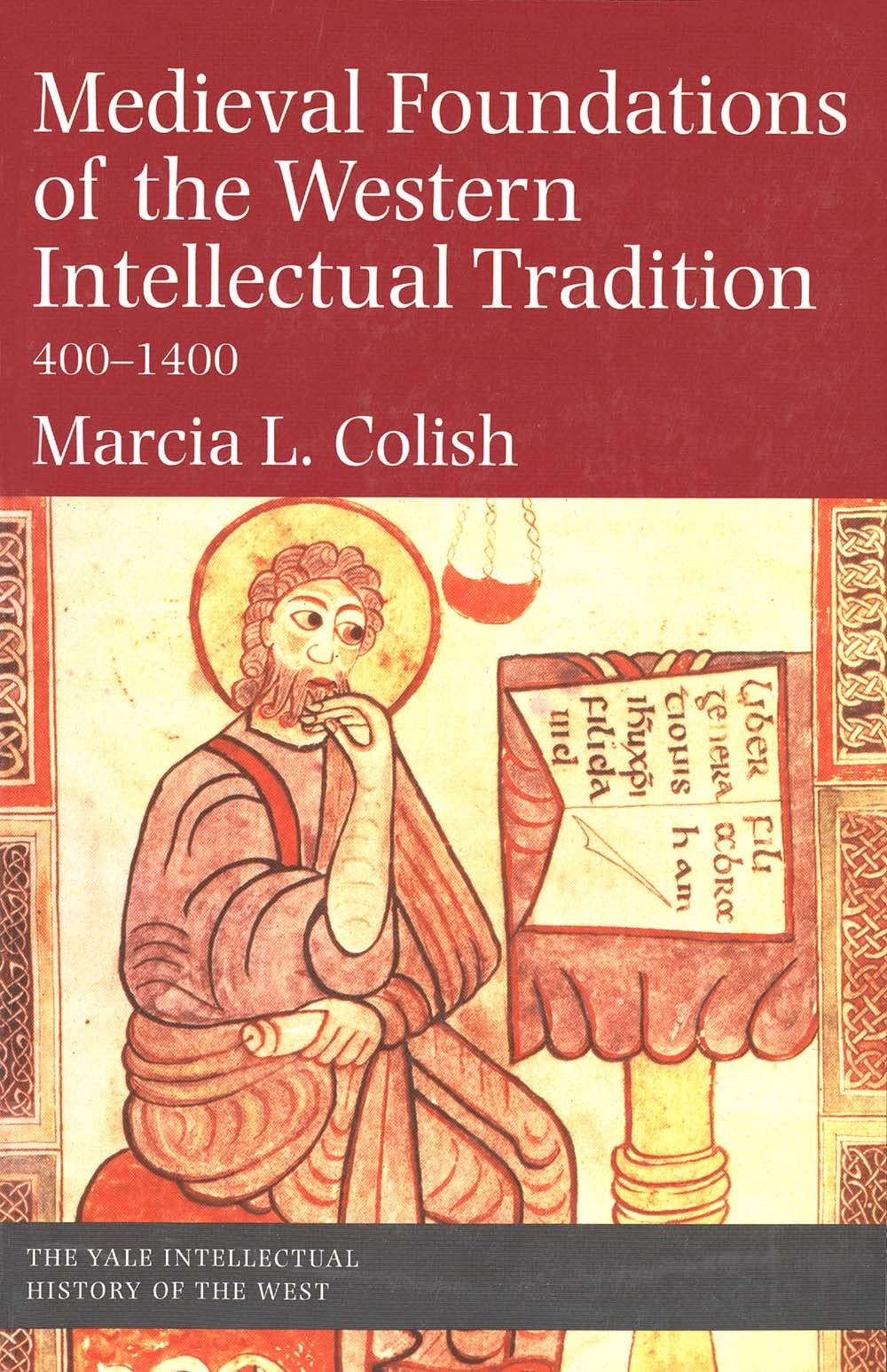
Medieval Foundations of the Western Intellectual Tradition, 400-1400 by Marcia L. Colish – A Deep Dive into Medieval Tho
Inclusive of all applicable taxes. FREE shipping on all orders.
Available Offers
- 🚚Free Delivery — Free shipping on all orders
- 💵Cash on Delivery — Pay when your order arrives
- ↩️15-Day Easy Returns — Hassle-free return policy
- 🔒Cash on Delivery — Pay safely when your order arrives
Check Delivery
Product Description
Introduction
In the vast landscape of historical scholarship, few works challenge conventional wisdom as boldly as Marcia L. Colish's Medieval Foundations of the Western Intellectual Tradition, 400-1400. This magisterial hardcover volume, published by Yale University Press, invites Indian readers and students to rethink the very origins of Western thought. Colish presents a compelling argument that the Middle Ages—not classical antiquity or the Judeo-Christian era—laid the true bedrock of Western intellectual culture. For anyone seeking to understand the roots of modern philosophy, science, and education, this book is an indispensable guide.
Book Overview
Spanning a thousand years of history, this book offers a panoramic view of intellectual life across three major civilizations: Byzantine, Latin-Christian, and Muslim. Colish meticulously traces how these cultures shaped modes of thought, from theology and law to natural philosophy and literature. The narrative unfolds in two distinct parts: the first examines the comparative intellectual frameworks of these societies up to the eleventh century, while the second delves into the vibrant revival of learning that followed, leading into the high Middle Ages and beyond. This structure allows readers to see how Western intellectual culture not only matured but also projected its influence far beyond the borders of Christendom.
Key Highlights
- Revisionist Thesis: Colish argues that the Western intellectual tradition found its formative identity in the medieval period, not in earlier eras.
- Comparative Approach: The book uniquely juxtaposes Byzantine, Latin-Christian, and Muslim intellectual traditions, highlighting their interactions and divergences.
- Comprehensive Scope: Covers philosophy, theology, law, science, and vernacular literature, offering a holistic view of medieval thought.
- Accessible Scholarship: Despite its depth, the writing is clear and engaging, making complex ideas understandable for students and general readers alike.
- Authoritative Publisher: Yale University Press ensures rigorous academic standards, making this a trusted resource for research and study.
Inside the Book
Readers will journey through the intellectual landscapes of the Byzantine Empire, where Greek philosophy was preserved and transformed; the Latin-Christian West, where monastic and cathedral schools nurtured learning; and the Islamic world, where scholars advanced mathematics, medicine, and Aristotelian thought. Colish also explores the vernacular and oral cultures of medieval Europe, giving voice to traditions often overlooked in standard histories. The second half of the book examines the rise of universities, the rediscovery of Aristotle, and the flourishing of scholasticism, culminating in the works of thinkers like Thomas Aquinas and Dante Alighieri. Each chapter is filled with astute observations on how medieval thinkers developed a unique set of tolerances, tastes, and sensibilities that distinguished their era.
Key Topics
- Byzantine Intellectual Culture: The role of Constantinople in preserving classical texts and shaping Orthodox theology.
- Latin-Christian Thought: From Augustine to Anselm, the development of early medieval philosophy and theology.
- Islamic Golden Age: Contributions of Muslim philosophers, scientists, and translators to global knowledge.
- Revival of Learning (11th-12th Centuries): The rebirth of education, the rise of cathedral schools, and the birth of universities.
- Scholasticism and Natural Philosophy: The systematic methods of medieval thinkers and their inquiries into nature and ethics.
- Vernacular Literature and Oral Culture: How local languages and folk traditions shaped intellectual life across Europe.
Reader Benefits
By engaging with this book, readers will gain a nuanced understanding of why the Middle Ages matter. It challenges the stereotype of the 'Dark Ages' and reveals a period of dynamic intellectual ferment. Students of history will find their perspectives broadened, while philosophy enthusiasts will appreciate the deep roots of Western rationalism. The comparative sections on Islamic and Byzantine thought are especially valuable for Indian readers, offering insights into civilizations that interacted with South Asia through trade and scholarship. Moreover, the book’s focus on oral and vernacular cultures makes it relevant for those interested in the intersections of elite and popular knowledge.
Learning Outcomes
- Understand the foundational role of medieval thinkers in shaping modern Western intellectual frameworks.
- Analyze the comparative contributions of Byzantine, Latin-Christian, and Muslim cultures to global intellectual history.
- Trace the evolution of key concepts in philosophy, theology, and science from late antiquity to the Renaissance.
- Recognize the importance of medieval universities, translations, and scholastic methods in the history of education.
- Evaluate the impact of vernacular cultures on the development of national literatures and identities.
Who Should Read
This book is ideal for undergraduate and postgraduate students of history, philosophy, and religious studies in Indian universities. It is also a must-read for scholars researching medieval studies, comparative civilizations, or the history of ideas. General readers with a curiosity about the origins of Western thought will find it both enlightening and accessible. Additionally, educators teaching courses on world history or intellectual traditions will discover a rich resource for lectures and discussions.
About the Author
Marcia L. Colish is one of the most distinguished historians of medieval intellectual history. A professor emerita at Oberlin College, she has authored numerous influential works on medieval philosophy, theology, and historiography. Her scholarship is renowned for its clarity, depth, and willingness to challenge established narratives. In this book, Colish brings decades of expertise to bear, offering readers a masterful synthesis that remains essential reading decades after its initial publication.
About the Publisher
Yale University Press is a prestigious academic publisher known for producing high-quality works in history, philosophy, and the humanities. With a commitment to scholarly excellence, Yale University Press ensures that each title meets rigorous editorial standards. This hardcover edition is built to last, making it a durable addition to any personal or institutional library.
Conclusion
Medieval Foundations of the Western Intellectual Tradition, 400-1400 is not just a history book—it is a paradigm-shifting work that redefines how we understand the past. Marcia L. Colish’s erudite yet accessible prose, combined with her comparative and revisionist approach, makes this volume a treasure for Indian readers eager to explore the deep roots of global intellectual culture. Whether you are a student, a scholar, or a lifelong learner, this book will enrich your understanding of the medieval world and its enduring legacy. Order your hardcover copy from Bookshops.in today and embark on a journey through the intellectual foundations of the West.
Quick Summary
Medieval Foundations of the Western Intellectual Tradition, 400-1400 by Marcia L. Colish is a landmark work that reorients our understanding of Western intellectual history. Colish argues convincingly that the true foundations of Western thought were laid during the Middle Ages, not in classical antiquity or the Judeo-Christian era. The book is divided into two parts: the first surveys the comparative intellectual modes of Byzantine, Latin Christian, and Muslim cultures, revealing their distinct contributions. The second part traces the revival of learning in the eleventh century, the rise of universities, and the flowering of scholasticism in the high Middle Ages. Readers will learn how medieval thinkers developed enduring tolerances, tastes, and concerns that continue to shape the West. This book is ideal for Indian students and scholars of history, philosophy, and cultural studies who want a rigorous yet accessible analysis. By purchasing from Bookshops.in, you get a genuine hardcover edition at a competitive price, delivered across India. It is a must-have for any serious library on intellectual history.
Book Highlights
Book Specifications
| ISBN-13 | 9780300078527 |
| ISBN-10 | 0300078528 |
| Publisher | Yale Univ Pr |
| Language | English |
| Dimensions | 23.55 x 15.54 x 2.97 cm |
| Weight | 748 g |
| Category | World › History of Ideas |
| Genre | History |
| Reading Age | Adult |
| Original Language | English |
Frequently Asked Questions
What is the main thesis of Medieval Foundations of the Western Intellectual Tradition?
Who is the author of this book?
What time period does the book cover?
Is this book suitable for beginners in medieval history?
Does the book include Islamic and Byzantine perspectives?
What is the ISBN-13 of this edition?
What language is the book written in?
What is the price in India?
Is this book available in paperback?
Why should Indian students read this book?
Does the book cover the eleventh-century revival of learning?
Are there any reviews for this book?
Can I use this book for research?
Readers Also Search For
Related Products
View All
History
The Narrators of Barbarian History (A.D. 550-800) | by Walter Goffart | University of Notre Dame Press | by Walter Goffart | University of Notre Dame Press | by Walter Goffart | University of Notre Dame Press | by Walter Goffart | University of Notre Dame Press | by Walter Goffart | University of Notre Dame Press | by Walter Goffart | University of Notre Dame Press | by Walter Goffart | University of Notre Dame Press | by Walter Goffart | University of Notre Dame Press | by Walter Goffart | Univ

History
The Russian Moment in World History | by Marshall T. Poe | Princeton University Press | by Marshall T. Poe | Princeton University Press | by Marshall T. Poe | Princeton University Press | by Marshall T. Poe | Princeton University Press | by Marshall T. Poe | Princeton University Press | by Marshall T. Poe | Princeton University Press | by Marshall T. Poe | Princeton University Press | by Marshall T. Poe | Princeton University Press | by Marshall T. Poe | Princeton University Press | by Marshall
History
Chapters in the Formative History of Judaism, Eighth Series | by Jacob Neusner | University Press of America | by Jacob Neusner | University Press of America | by Jacob Neusner | University Press of America | by Jacob Neusner | University Press of America | by Jacob Neusner | University Press of America | by Jacob Neusner | University Press of America | by Jacob Neusner | University Press of America | by Jacob Neusner | University Press of America | by Jacob Neusner | University Press of America

History
Semi-Detached Empire | by Todd Kuchta | University of Virginia Press | by Todd Kuchta | University of Virginia Press | by Todd Kuchta | University of Virginia Press | by Todd Kuchta | University of Virginia Press | by Todd Kuchta | University of Virginia Press | by Todd Kuchta | University of Virginia Press | by Todd Kuchta | University of Virginia Press | by Todd Kuchta | University of Virginia Press | by Todd Kuchta | University of Virginia Press | by Todd Kuchta | University of Virginia Press
History
Making History | by Institute of American Indian Arts | Nancy Marie Mithlo | Mar | Unm Press | by Institute of American Indian Arts | Nancy Marie Mithlo | Mar | Unm Press | by Institute of American Indian Arts | Nancy Marie Mithlo | Mar | Unm Press | by Institute of American Indian Arts | Nancy Marie Mithlo | Mar | Unm Press | by Institute of American Indian Arts | Nancy Marie Mithlo | Mar | Unm Press | by Institute of American Indian Arts | Nancy Marie Mithlo | Mar | Unm Press | by Institute of

History