
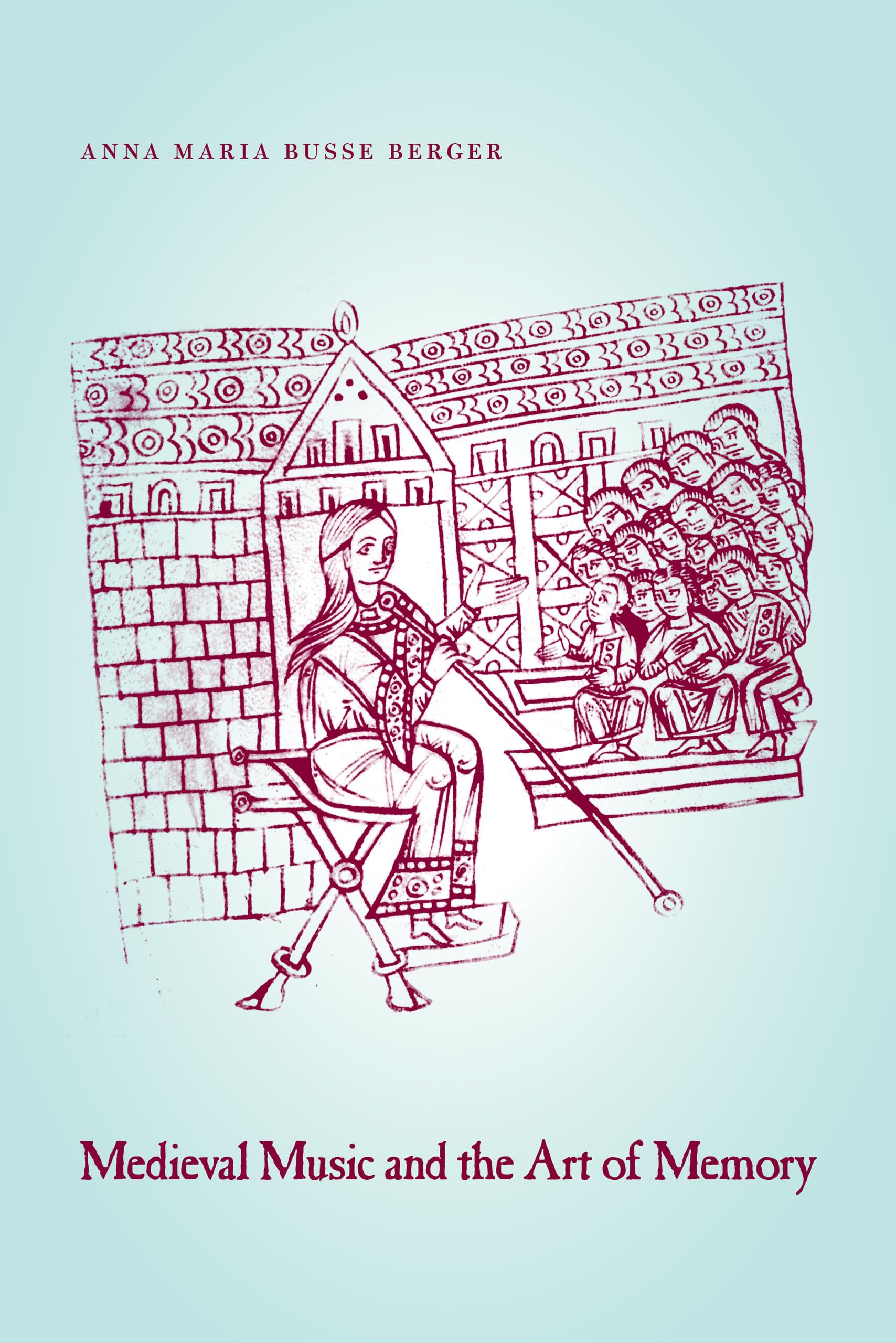
Medieval Music And The Art Of Memory: How Orality and Literacy Shaped Composition by Anna Maria Busse Berger
Inclusive of all applicable taxes. FREE shipping on all orders.
Available Offers
- 🚚Free Delivery — Free shipping on all orders
- 💵Cash on Delivery — Pay when your order arrives
- ↩️15-Day Easy Returns — Hassle-free return policy
- 🔒Cash on Delivery — Pay safely when your order arrives
Check Delivery
Product Description
Introduction
In the vast landscape of medieval scholarship, few works have dared to challenge the very foundations of how we understand music from the Middle Ages. Medieval Music And The Art Of Memory by Anna Maria Busse Berger is a groundbreaking study that reimagines the relationship between oral tradition and written composition. For Indian readers passionate about history, musicology, or the evolution of human cognition, this book offers a fascinating journey into a world where memory was as vital as manuscript. Published by University of California Press, this hardcover edition is an essential addition to any serious library.
Book Overview
This bold and provocative work disputes the long-held assumption that medieval music was purely a product of literacy. Instead, Busse Berger presents a complex picture where orality and literacy intertwined in dynamic ways. The book asks fundamental questions: How did singers memorize vast repertoires without modern notation? How did composing in the mind rather than on parchment shape musical style? Through meticulous research, the author demonstrates that writing did not replace memory but instead created new techniques for committing music to memory. This is not just a book about music—it is a study of how the human mind works in creative and cultural contexts.
Key Highlights
- Challenges conventional narratives about medieval music and literacy, offering a fresh perspective that resonates with contemporary debates on oral traditions in India.
- Explores the art of memory as a cognitive tool, revealing how singers and composers used mnemonic systems to preserve and transmit complex polyphonic works.
- Bridges musicology and intellectual history, making it accessible to readers from diverse backgrounds including history, philosophy, and anthropology.
- Based on extensive primary sources from the twelfth century onward, providing a rigorous yet engaging analysis.
Inside the Book
The book delves into the practical and theoretical dimensions of memory in medieval music. Busse Berger examines how written notation allowed composers to work out intricate pieces in the mind, yet memorization remained indispensable. She shows that the interplay between writing and memory led to unique stylistic features in polyphonic music. The author also critiques the German philological tradition that shaped modern understanding of medieval music, arguing that it overemphasized written transmission. Instead, she proposes a model where performance, improvisation, and oral pedagogy were central. Each chapter builds a compelling case for rethinking the creative process of medieval musicians.
Key Topics
- The role of memory in the composition and transmission of medieval polyphony.
- Interaction between oral and literate cultures in medieval Europe.
- Mnemonic techniques used by singers and composers.
- The impact of writing on musical style and structure.
- Critical examination of philological approaches to medieval music history.
Reader Benefits
For Indian readers, this book offers a unique lens to understand the universal human practice of memorization in artistic creation. Whether you are a student of music, a historian, or simply someone fascinated by how knowledge was preserved before the digital age, this work provides deep insights. It encourages readers to think about the relationship between tradition and innovation, a theme that resonates strongly in India's own rich oral and written heritage. The hardcover edition is durable and elegant, perfect for repeated reference or gifting to a fellow scholar.
Learning Outcomes
- Understand the sophisticated memory systems that underpinned medieval musical practice.
- Gain a nuanced perspective on the transition from orality to literacy in European history.
- Learn to critically evaluate assumptions about historical music transmission.
- Appreciate the cognitive and cultural dimensions of musical creativity.
Who Should Read
This book is ideal for students and scholars of medieval history, musicology, ethnomusicology, and cognitive science. It will also appeal to Indian classical musicians and teachers who are familiar with oral traditions such as gurukul teaching methods. Anyone interested in the art of memory—from ancient rhetoricians to modern mnemonists—will find this work enlightening. The accessible prose makes it suitable for advanced undergraduates and postgraduate researchers alike.
About the Author
Anna Maria Busse Berger is a distinguished professor of music at the University of California, Davis. Her research focuses on medieval music, memory studies, and the history of music theory. She has published extensively on topics ranging from notation to performance practice, earning international recognition for her innovative approaches. Her work challenges established dogmas and opens new pathways for understanding the past.
About the Publisher
University of California Press is a leading academic publisher known for its rigorous scholarship and elegant book design. With a history spanning over a century, it has published seminal works in the humanities and sciences. This hardcover edition reflects the press's commitment to quality, featuring durable binding and clear typography that will withstand years of study.
Conclusion
Medieval Music And The Art Of Memory is not merely a book about music—it is a profound meditation on how human beings create, remember, and transform culture. By challenging long-held assumptions, Anna Maria Busse Berger invites us to listen to the past with fresh ears. For Indian readers who value intellectual depth and historical nuance, this volume is an invaluable resource. Order your copy today from Bookshops.in and embark on a journey that will forever change how you think about music and memory.
Quick Summary
Medieval Music And The Art Of Memory by Anna Maria Busse Berger is a transformative scholarly work that overturns long-held assumptions about the role of literacy in medieval music. Instead of viewing the Middle Ages as a purely oral or purely literate culture, Berger reveals a nuanced world where memory and writing coexisted and influenced each other. The book asks fundamental questions: How did medieval singers memorise vast repertoires of chant and polyphony? How did composing in the mind rather than on parchment affect musical style? Drawing on the classical art of memory tradition and modern cognitive research, Berger shows that writing did not replace memorisation but actually enabled new and powerful mnemonic strategies. This study is essential for musicologists, medieval historians, and anyone fascinated by the intersection of cognition, culture, and creativity. Readers will come away with a richer understanding of how medieval musicians learned, created, and transmitted their art. Available in hardcover at Bookshops.in, this is a must-have for serious students of music history.
Book Highlights
Book Specifications
| ISBN-13 | 9780520240285 |
| ISBN-10 | 0520240286 |
| Publisher | Univ of California Pr |
| Language | English |
| Dimensions | 15.84 x 2.41 x 23.46 cm |
| Weight | 590 g |
| Category | Performing Arts › Music |
| Genre | History |
| Original Language | English |
Frequently Asked Questions
What is the main argument of Medieval Music And The Art Of Memory?
Who is Anna Maria Busse Berger?
Is this book suitable for undergraduate students?
Does the book cover Gregorian chant?
What is the art of memory?
How does the book relate to cognitive science?
Are there musical examples in the book?
Is this book only for music specialists?
What period of medieval music does it focus on?
Does the book discuss Indian or non-Western music?
What makes this book different from other medieval music histories?
Can I use this book for a research paper?
Is the book available in Indian bookstores?
Does the book include a CD or audio?
Readers Also Search For
Customers Also Bought
Art History
The Italian Renaissance in Art

Art History
Photovoltaic Design & Installation For Dummies | by Mayfield | ForDummies | by Mayfield | ForDummies | by Mayfield | ForDummies | by Mayfield | ForDummies | by Mayfield | ForDummies | by Mayfield | ForDummies | by Mayfield | ForDummies | by Mayfield | ForDummies | by Mayfield | ForDummies | by Mayfield | ForDummies | by Mayfield | ForDummies | by Mayfield | ForDummies | by Mayfield | ForDummies | by Mayfield | ForDummies | by Mayfield | ForDummies | by Mayfield | ForDummies | by Mayfield | ForDu
Art History
Designing School Systems for All Students (English, Robert J. Manley | Richard J. Hawkins)
Art History
Routledge Library Editions: Art and Culture in the Nineteenth Century

Art History
An Errant Design (English, S. H. Long)

Art History
Distributed System Design | by Jie Wu | CRC Press | by Jie Wu | CRC Press | by Jie Wu | CRC Press | by Jie Wu | CRC Press | by Jie Wu | CRC Press | by Jie Wu | CRC Press | by Jie Wu | CRC Press | by Jie Wu | CRC Press | by Jie Wu | CRC Press | by Jie Wu | CRC Press | by Jie Wu | CRC Press | by Jie Wu | CRC Press | by Jie Wu | CRC Press | by Jie Wu | CRC Press | by Jie Wu | CRC Press | by Jie Wu | CRC Press | by Jie Wu | CRC Press | by Jie Wu | CRC Press | by Jie Wu | CRC Press | by Jie Wu | CRC
Related Products
View All
Music
The Cambridge Companion to Michael Tippett by Kenneth Gloag – Music Analysis

Music
Making Light: Haydn, Musical Camp, and the Long Shadow of German Idealism
Music
Music and the Crises of the Modern Subject by Michael L. Klein – Music Theory & Criticism
Music
Opera and Drama in Eighteenth-Century London: The King's Theatre, Garrick and the Business of Perfor
Music
Music in Theory and Practice Volume 1 | by Bruce Benward | Marilyn Saker | McGraw-Hill Companies | by Bruce Benward | Marilyn Saker | McGraw-Hill Companies | by Bruce Benward | Marilyn Saker | McGraw-Hill Companies | by Bruce Benward | Marilyn Saker | McGraw-Hill Companies | by Bruce Benward | Marilyn Saker | McGraw-Hill Companies | by Bruce Benward | Marilyn Saker | McGraw-Hill Companies | by Bruce Benward | Marilyn Saker | McGraw-Hill Companies | by Bruce Benward | Marilyn Saker | McGraw-Hill
Music