
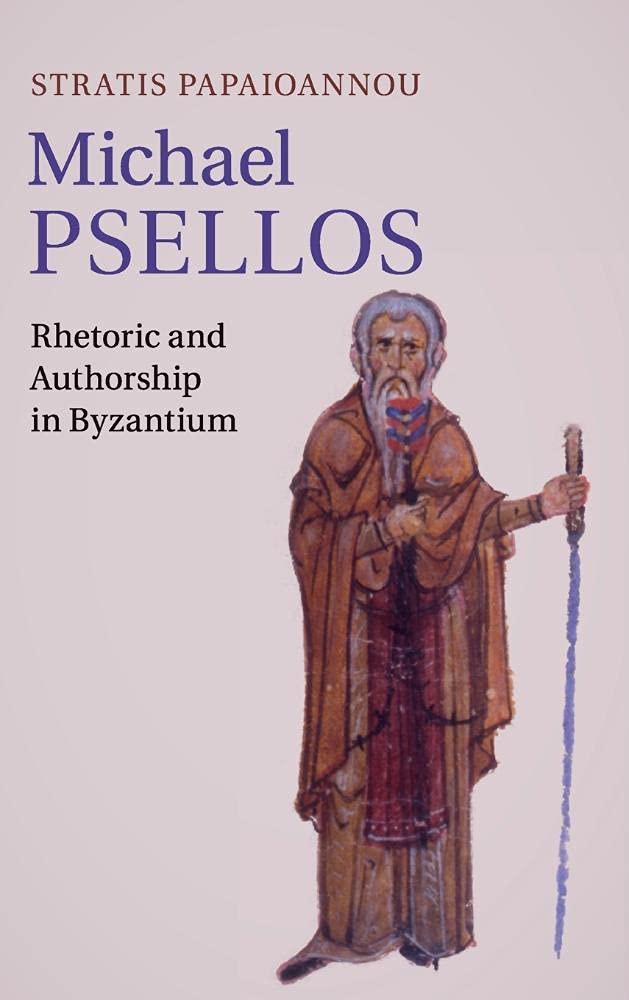
Michael Psellos: Rhetoric and Authorship in Byzantium by Stratis Papaioannou – A Cambridge University Press Classic on B
Inclusive of all applicable taxes. FREE shipping on all orders.
Available Offers
- 🚚Free Delivery — Free shipping on all orders
- 💵Cash on Delivery — Pay when your order arrives
- ↩️15-Day Easy Returns — Hassle-free return policy
- 🔒Cash on Delivery — Pay safely when your order arrives
Check Delivery
Product Description
Introduction
Step into the vibrant intellectual world of Byzantium with Michael Psellos: Rhetoric and Authorship in Byzantium, a masterful study by Stratis Papaioannou. This hardcover volume from Cambridge University Press offers a fresh and rigorous examination of one of the most fascinating figures of medieval Greek culture. For students, scholars, and lovers of classical and Byzantine literature, this book is an indispensable guide to understanding how rhetoric shaped identity, creativity, and self-expression in the Eastern Roman Empire.
Book Overview
This scholarly work repositions Michael Psellos—an eleventh-century philosopher, historian, and courtier—within the rich tradition of Greek rhetoric. Rather than viewing him as either a pompous stylist or a lone genius, Papaioannou reveals Psellos as a masterful literary architect who used language to craft his own persona and influence his audience. The book delves into Psellos’ letters, speeches, lectures, and historical writings, showing how he drew on earlier models like Plato, Hermogenes, Gregory of Nazianzos, and Synesios of Cyrene. It also explores Byzantine book culture, the social dynamics of Constantinople’s elite, and the subtle interplay between emotion, gender, and authorship. The result is a nuanced portrait of a writer who was both a product of his time and a transformative force in Byzantine letters.
Key Highlights
- Original Analysis: Avoids the tired binary of Psellos as rhetorician versus thinker, offering a balanced, text-based interpretation.
- Close Readings: In-depth examination of Psellos’ personal letters, speeches, lectures, and historiographical narratives.
- Classical Roots: Connects Psellos to earlier Greek authors and rhetorical theorists, including Plato, Hermogenes, Gregory of Nazianzos, and Synesios.
- Cultural Context: Situates Psellos within the elite social fabric of Constantinople, showing how rhetoric served as both art and social currency.
- Innovative Themes: Explores authorial creativity, performative mimesis, and the aesthetics of the self in Byzantine literature.
Inside the Book
The book is structured to guide readers through Psellos’ multifaceted oeuvre. It begins with an overview of Byzantine rhetoric and its misunderstood place in history, then moves to detailed case studies of Psellos’ writings. You will find careful analyses of his epistolary style, his public speeches, his classroom lectures, and his historical works. Papaioannou also examines how Psellos engaged with earlier texts—copying, imitating, and transforming them—to assert his own authorial voice. The volume includes discussions of emotion and gender in Byzantine writing, revealing how Psellos used rhetoric to express personal feelings and challenge social norms. Each chapter builds a picture of a writer who was deeply aware of his literary predecessors and boldly innovative in his self-presentation.
Key Topics
- Byzantine rhetoric and its discursive traditions
- Authorial self-representation and subjectivity
- Performative mimesis in medieval Greek literature
- The social role of rhetoric in Constantinopolitan elite culture
- Classical and early Byzantine models of authorship
- Emotion, gender, and the aesthetics of the self
- Book culture and manuscript transmission in Byzantium
Reader Benefits
This book offers more than historical insight—it provides tools for understanding how rhetoric functions as a creative and social force. Readers will gain a deeper appreciation for Byzantine literary culture, often overshadowed by classical antiquity. The close readings of Psellos’ texts will sharpen your analytical skills and introduce you to a sophisticated literary voice. Scholars of rhetoric, classics, and medieval studies will find new frameworks for thinking about authorship and performance. For Indian readers interested in comparative literature or the history of self-expression, this volume opens a window onto a world where language was both art and identity.
Learning Outcomes
- Understand the evolution of Greek rhetoric from antiquity through Byzantium
- Analyze how Michael Psellos used rhetoric to construct his authorial persona
- Identify key themes of creativity, mimesis, and self-aesthetics in Byzantine texts
- Recognize the social and political functions of rhetoric in elite Byzantine culture
- Explore the interplay between emotion, gender, and literary expression in medieval writing
- Trace the influence of classical authors on Byzantine literary practices
Who Should Read
This hardcover edition is ideal for advanced undergraduate and postgraduate students of Byzantine studies, classical rhetoric, medieval literature, and Greek philology. It will also appeal to historians of the medieval Mediterranean world, scholars of literary theory interested in authorship and performance, and anyone fascinated by the intellectual life of Constantinople. Indian readers with a passion for classical traditions, cross-cultural literary history, or the philosophy of language will find this book both challenging and rewarding.
About the Author
Stratis Papaioannou is a leading scholar of Byzantine literature and rhetoric. He has taught at the University of Crete and Brown University, and his research focuses on the intersection of text, self, and society in medieval Greek culture. His work brings fresh perspectives to Byzantine authors, combining philological rigor with theoretical sophistication.
About the Publisher
Cambridge University Press is one of the world’s oldest and most prestigious academic publishers. Known for its rigorous peer review and high-quality scholarship, Cambridge publishes works that shape research and teaching across the humanities and sciences. This volume is part of their distinguished list in classical and Byzantine studies.
Conclusion
Michael Psellos: Rhetoric and Authorship in Byzantium is a landmark study that redefines our understanding of a pivotal Byzantine writer. By weaving together close textual analysis, cultural history, and rhetorical theory, Stratis Papaioannou offers a compelling portrait of Psellos as a creative, self-aware author. Whether you are a seasoned scholar or a curious student, this book will deepen your appreciation for the art of rhetoric and the complexity of Byzantine literary culture. Add this essential hardcover to your collection and explore the rich world of medieval Greek letters.
Quick Summary
Michael Psellos: Rhetoric and Authorship in Byzantium by Stratis Papaioannou is a scholarly monograph that delves into the life and works of Michael Psellos, a key figure in Byzantine literature. The book examines Psellos' innovative use of rhetoric and self-representation, offering close readings of his personal letters, speeches, lectures, and historiographical narratives. Papaioannou situates Psellos within the broader context of Byzantine elite culture in Constantinople, drawing on classical models such as Gregory of Nazianzos, Synesios of Cyrene, Hermogenes, and Plato. This study is essential for students and researchers of medieval Greek literature, Byzantine history, and rhetorical traditions. Readers will gain a nuanced understanding of how Psellos navigated the tension between being a rhetorician and a thinker, and how his work shaped Byzantine literary culture. Published by Cambridge University Press, this hardcover edition is a durable addition to any academic library. Buy from Bookshops.in for reliable delivery across India.
Book Highlights
Book Specifications
| ISBN-13 | 9781107026223 |
| ISBN-10 | 1107026229 |
| Publisher | Cambridge University Press |
| Language | English |
| Dimensions | 15.88 x 2.54 x 23.5 cm |
| Weight | 670 g |
| Country | India |
| Category | World Literature › European |
| Genre | History |
| Original Language | English |
Frequently Asked Questions
What is the main focus of Michael Psellos: Rhetoric and Authorship in Byzantium?
Who is the author of this book?
Is this book suitable for Indian students?
What format is this book available in?
Does the book cover other Byzantine authors besides Psellos?
What is the ISBN-13?
What language is the book written in?
What is the price of the book?
Is this book part of a series?
What makes this book different from other studies on Psellos?
Can I use this book for my PhD research?
Where can I buy this book in India?
Readers Also Search For
Customers Also Bought
Taylor & Francis Ltd
Oppositional Voices (English, Kronitiris Tina)
Routledge
Ordinary People and Extra-Ordinary Protections (English, Judith L. Mitrani)
Cambridge University Press
Jane Austen and the Enlightenment (English, Peter Knox-Shaw)

de Gruyter
Produktionswirtschaft (English, Günther Zäpfel)

de Gruyter
Register (English, Max Ebert)
Packt Publishing
Keyshot 3D Rendering (English, Jei Lee Jo)
Related Products
View AllCambridge University Press
Jane Austen and the Enlightenment (English, Peter Knox-Shaw)

Cambridge University Press
Children of the Queen's Revels (English, Lucy Munro)
Cambridge University Press
Site Automation | by Thomas Bock | Thomas Linner | Cambridge University Press | by Thomas Bock | Thomas Linner | Cambridge University Press | by Thomas Bock | Thomas Linner | Cambridge University Press | by Thomas Bock | Thomas Linner | Cambridge University Press | by Thomas Bock | Thomas Linner | Cambridge University Press | by Thomas Bock | Thomas Linner | Cambridge University Press | by Thomas Bock | Thomas Linner | Cambridge University Press | by Thomas Bock | Thomas Linner | Cambridge Unive
Cambridge University Press
Complex Analysis | by Ian Stewart | David Tall | Cambridge University Press | by Ian Stewart | David Tall | Cambridge University Press | by Ian Stewart | David Tall | Cambridge University Press | by Ian Stewart | David Tall | Cambridge University Press | by Ian Stewart | David Tall | Cambridge University Press | by Ian Stewart | David Tall | Cambridge University Press | by Ian Stewart | David Tall | Cambridge University Press | by Ian Stewart | David Tall | Cambridge University Press | by Ian St
Cambridge University Press
Taming Intuition | by Kevin Arceneaux | Ryan J. Vander Wielen | Cambridge University Press | by Kevin Arceneaux | Ryan J. Vander Wielen | Cambridge University Press | by Kevin Arceneaux | Ryan J. Vander Wielen | Cambridge University Press | by Kevin Arceneaux | Ryan J. Vander Wielen | Cambridge University Press | by Kevin Arceneaux | Ryan J. Vander Wielen | Cambridge University Press | by Kevin Arceneaux | Ryan J. Vander Wielen | Cambridge University Press | by Kevin Arceneaux | Ryan J. Vander W
Cambridge University Press