
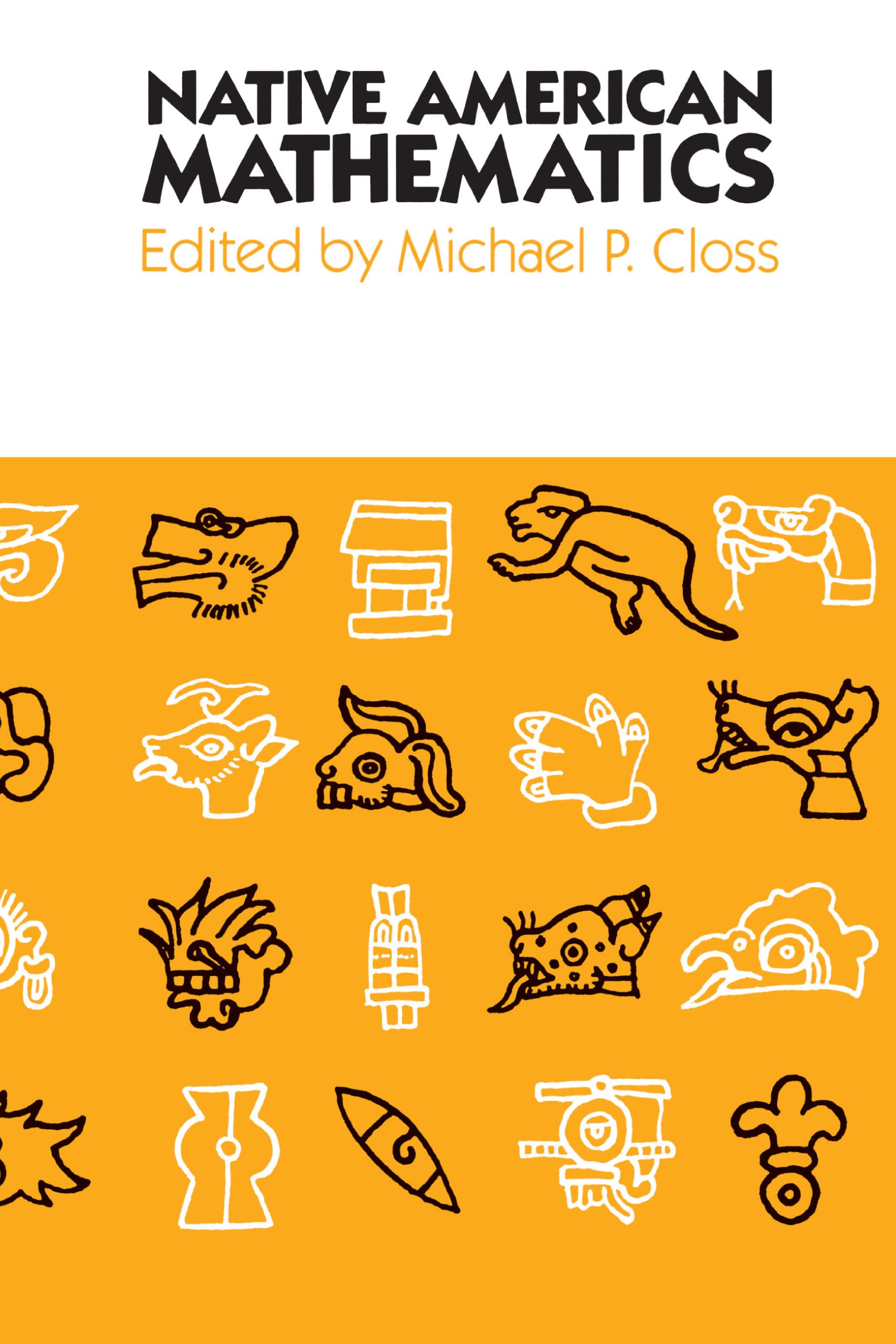
Native American Mathematics: Indigenous Numerical Systems and Cultural Geometry by Michael P. Closs
Inclusive of all applicable taxes. FREE shipping on all orders.
Available Offers
- 🚚Free Delivery — Free shipping on all orders
- 💵Cash on Delivery — Pay when your order arrives
- ↩️15-Day Easy Returns — Hassle-free return policy
- 🔒Cash on Delivery — Pay safely when your order arrives
Check Delivery
Product Description
Introduction
Native American mathematics is a fascinating and often overlooked field of study that challenges the conventional understanding of mathematical thought. In this landmark volume, editor Michael P. Closs brings together a collection of insightful essays that explore the rich and diverse mathematical traditions of indigenous peoples across the Americas. From the ancient Maya and Aztec to the Inuit and Ojibway, this book reveals how native cultures developed unique systems of counting, measurement, geometry, and calendrical computation long before European contact. For students, researchers, and anyone curious about the history of mathematics, Native American Mathematics offers a compelling journey into the mathematical mind of the New World.
Book Overview
Published by the University of Texas Press, this hardcover edition is the first comprehensive work dedicated solely to mathematical development indigenous to the Americas. The book spans prehistoric times to the present, presenting thirteen scholarly essays that draw from a wide range of cultures including the Chumash of Southern California, the Nootka of the Pacific Northwest, the Inca of South America, and the Jibaro of the Amazon. Each essay examines how numbers, shapes, and mathematical concepts were expressed in culturally specific ways, often intertwined with art, astronomy, and ritual. Unlike modern universal notation, these systems reveal a deeply contextual and practical approach to mathematics.
Key Highlights
- First of its kind: The first book to focus exclusively on mathematical traditions native to the Americas.
- Broad cultural coverage: Includes studies from North, Central, and South America, from the Arctic to the Andes.
- Interdisciplinary perspective: Blends anthropology, archaeology, ethnomathematics, and history.
- Rich illustrations: Features diagrams, charts, and photographs that bring ancient counting systems and geometric patterns to life.
- Authoritative scholarship: Contributions from leading experts in the field of ethnomathematics.
Inside the Book
The book is structured around thirteen distinct essays, each focusing on a specific culture or mathematical theme. Readers will explore the sophisticated base-20 number system of the Maya and their complex calendar calculations, the quipu (knotted cord) recording system of the Inca, and the geometric patterns found in Native American basketry and pottery. Other chapters delve into the counting methods of the Inuit, the astronomical knowledge of the Chumash, and the mathematical concepts embedded in the art and mythology of the Ojibway and Nootka. The essays are richly annotated, providing a gateway to further research.
Key Topics
- Maya mathematics: Base-20 numeration, zero concept, and calendar systems.
- Inca quipu: Knot-based recording and data storage.
- Indigenous geometry: Symmetry and patterns in textiles, pottery, and architecture.
- Astronomical mathematics: Celestial observations and timekeeping among the Chumash and Aztec.
- Counting and measurement: Body-based and object-based systems across North American tribes.
- Cultural context: How mathematics was integrated into ritual, trade, and daily life.
Reader Benefits
Reading this book will broaden your understanding of what mathematics can be. It challenges the Eurocentric narrative that often dominates the history of science, showing that mathematical thinking is a universal human trait expressed in diverse ways. For Indian readers, who come from a civilization with its own rich mathematical heritage, this book offers a valuable comparative perspective. It also provides practical insights for educators looking to incorporate multicultural perspectives into their teaching of mathematics.
Learning Outcomes
- Understand the variety of number systems used by native cultures, including vigesimal (base-20) and quinary (base-5) systems.
- Analyze how mathematical concepts were encoded in material culture like textiles, ceramics, and knotted cords.
- Appreciate the role of astronomy and calendrics in the development of mathematical knowledge.
- Critically evaluate the biases in traditional histories of mathematics.
- Gain a deeper respect for the intellectual achievements of indigenous peoples.
Who Should Read
This book is ideal for undergraduate and graduate students of mathematics, anthropology, and history. It is also a must-read for educators seeking to diversify their curriculum, researchers in ethnomathematics, and general readers with an interest in indigenous knowledge systems. If you are a student of Indian mathematics or comparative cultural studies, you will find this volume especially enlightening.
About the Author
Michael P. Closs is a distinguished mathematician and historian of mathematics. He served as a professor at the University of Ottawa and is renowned for his pioneering work in the field of ethnomathematics. His research has focused on the mathematical traditions of the Maya and other indigenous cultures of the Americas. Closs has edited several influential volumes and contributed extensively to scholarly journals, making him one of the foremost authorities on Native American mathematical systems.
About the Publisher
University of Texas Press is a leading academic publisher known for its high-quality works in the humanities, social sciences, and natural sciences. With a strong commitment to publishing innovative and culturally significant scholarship, the press has produced many landmark titles in anthropology, history, and ethnomathematics. This hardcover edition reflects the press’s dedication to durable, beautifully produced books that stand the test of time.
Conclusion
Native American Mathematics is an essential addition to any serious library of mathematical history or indigenous studies. It opens a window into worlds where numbers were woven into fabric, carved into stone, and tied into knots. By celebrating the mathematical ingenuity of the Americas, this book enriches our global understanding of human intellect. Order your hardcover copy today from Bookshops.in and explore the hidden mathematical heritage of the New World.
Quick Summary
Native American Mathematics, edited by Michael P. Closs, is a landmark scholarly collection that unveils the rich and diverse mathematical traditions of the indigenous peoples of the Americas. Spanning thirteen essays, the book covers everything from the base-20 counting systems of the Maya and the knot-based quipu records of the Inca to geometric patterns in Native American art and architecture. It demonstrates that mathematics was not a European import but a vibrant, independent development across New World cultures. This book is ideal for students, researchers, and educators in mathematics, anthropology, and history who wish to broaden their understanding of global mathematical heritage. Readers will learn how numbers were conceptualized without written notation, how calendars were astronomically precise, and how geometry was embedded in daily life. By purchasing from Bookshops.in, you get a premium hardcover edition delivered across India, perfect for academic libraries or personal collections. This book is a vital addition to any ethnomathematics curriculum and a fascinating read for anyone curious about the intellectual achievements of native civilizations.
Book Highlights
Book Specifications
| ISBN-13 | 9780292711853 |
| ISBN-10 | 0292711859 |
| Publisher | Univ of Texas Pr |
| Language | English |
| Dimensions | 23.11 x 15.32 x 2.51 cm |
| Weight | 703 g |
| Country | India |
| Category | Americas › United States |
| Genre | Non-fiction |
| Original Language | English |
Frequently Asked Questions
What is Native American Mathematics about?
Who edited Native American Mathematics?
Which cultures are covered in the book?
Is this book suitable for Indian students?
Does the book include the Maya concept of zero?
What is a quipu?
How many essays are in the book?
Is this book a textbook?
Does the book cover contemporary Native American mathematics?
What is the binding of the book?
Can I use this book for research?
Are there illustrations in the book?
What is the price in India?
Why is this book important?
Readers Also Search For
Related Products
View All
History
The Information Revolution: Transforming the World Through Technology (World History)
History
Human Nature and the French Revolution: From the Enlightenment to the Napoleonic Code: 3 (Polygons: Cultural Diversities and Intersections, 3)
History
The Unmaking of Home in Contemporary Art (Cultural Spaces)

History
Handbook to Life in Medieval and Early Modern Japan | by William E. Deal | Oxford University Press | by William E. Deal | Oxford University Press | by William E. Deal | Oxford University Press | by William E. Deal | Oxford University Press | by William E. Deal | Oxford University Press | by William E. Deal | Oxford University Press | by William E. Deal | Oxford University Press | by William E. Deal | Oxford University Press | by William E. Deal | Oxford University Press | by William E. Deal | Ox

History
The Narrators of Barbarian History (A.D. 550-800) | by Walter Goffart | University of Notre Dame Press | by Walter Goffart | University of Notre Dame Press | by Walter Goffart | University of Notre Dame Press | by Walter Goffart | University of Notre Dame Press | by Walter Goffart | University of Notre Dame Press | by Walter Goffart | University of Notre Dame Press | by Walter Goffart | University of Notre Dame Press | by Walter Goffart | University of Notre Dame Press | by Walter Goffart | Univ
History