
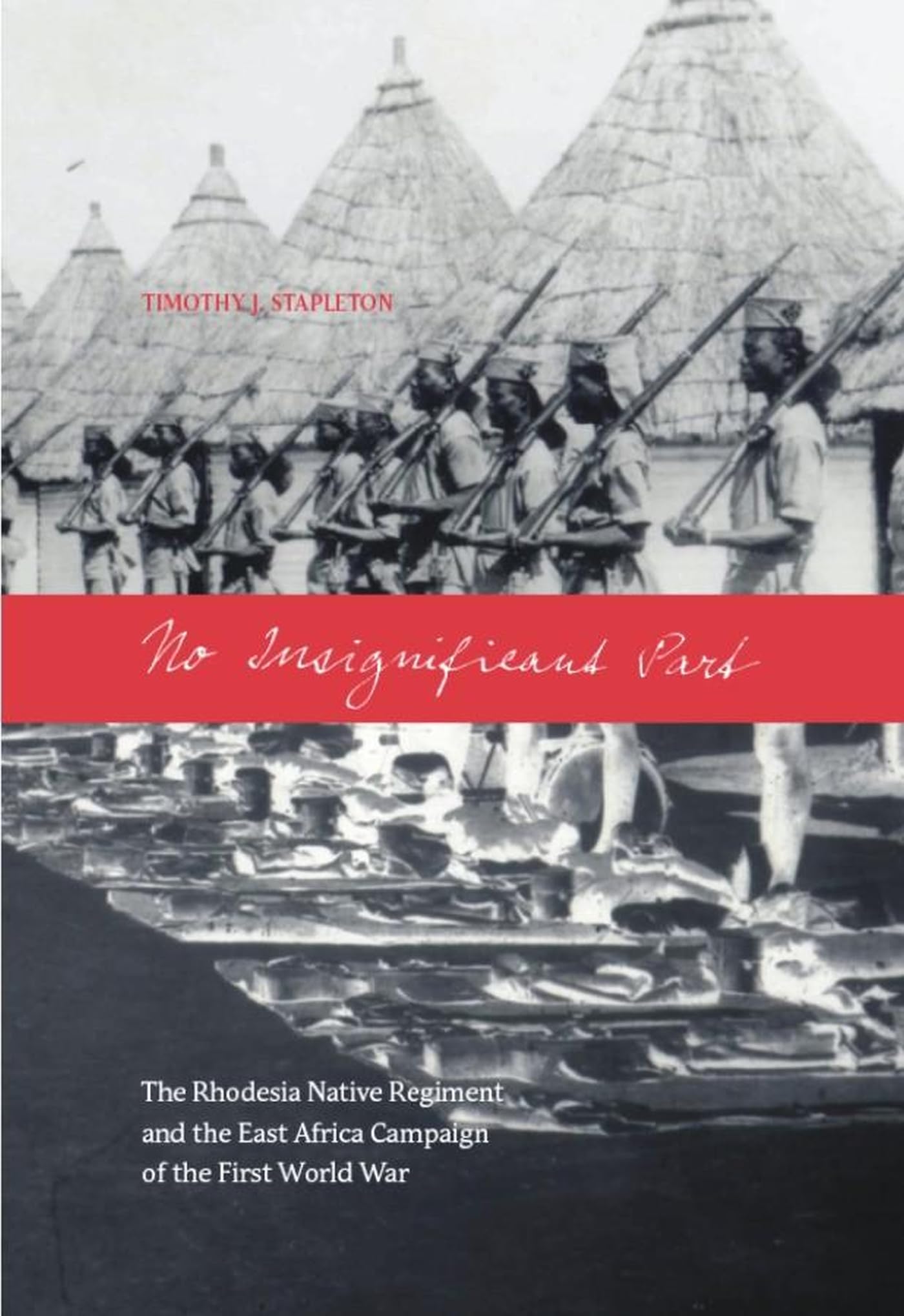
No Insignificant Part: The Rhodesia Native Regiment in the East Africa Campaign of the First World War by Timothy J. Sta
Inclusive of all applicable taxes. FREE shipping on all orders.
Available Offers
- 🚚Free Delivery — Free shipping on all orders
- 💵Cash on Delivery — Pay when your order arrives
- ↩️15-Day Easy Returns — Hassle-free return policy
- 🔒Cash on Delivery — Pay safely when your order arrives
Check Delivery
Product Description
Introduction
In the vast tapestry of World War I history, the stories of African soldiers have long remained in the shadows. Timothy J. Stapleton’s No Insignificant Part: The Rhodesia Native Regiment in the East Africa Campaign of the First World War brings to light a deeply significant yet overlooked chapter. This meticulously researched hardcover volume is an essential addition for students, scholars, and general readers interested in African military history, colonial studies, and the global dimensions of the Great War. Published by Wilfrid Laurier University Press, the book offers a compelling narrative that challenges Eurocentric perspectives and highlights the courage, sacrifice, and complex realities of African troops.
Book Overview
This is the first comprehensive history of the Rhodesia Native Regiment (RNR), the only primarily African military unit from what is now Zimbabwe to fight in the First World War. Stapleton traces the regiment’s formation, recruitment, and deployment in the grueling East Africa campaign. The soldiers were drawn from the migrant labour networks of Southern and Central Africa—men who worked as miners and farm labourers in present-day Zimbabwe, Zambia, Mozambique, and Malawi. They enlisted for varied reasons: escaping low wages, harsh working conditions, or seeking adventure. The book follows them through the dense bush, swamps, and mountains of German East Africa, where they faced tropical diseases, exhaustion, and meager rations, all while serving under a small cadre of European officers from the Native Affairs Department and the British South Africa Police. Stapleton does not shy away from the pervasive racism that defined the regiment, where black soldiers endured harsher discipline and fewer privileges than their white counterparts.
Key Highlights
- First in-depth study of the Rhodesia Native Regiment, filling a crucial gap in World War I historiography.
- Draws on archival sources, including military records, personal diaries, and official reports from Zimbabwe, Zambia, and the United Kingdom.
- Explores the motivations of African soldiers, their combat experiences, and the harsh realities of colonial military service.
- Examines the racial dynamics within the regiment, contrasting the treatment of black soldiers and white officers.
- Provides a vivid account of the East Africa campaign’s later phase, including key engagements and the devastating impact of disease.
Inside the Book
The narrative is structured chronologically, beginning with the recruitment of African labourers and the formation of the RNR in 1916. Stapleton details the grueling march through the African bush, the skirmishes with German askari forces, and the constant struggle against malaria, dysentery, and hunger. The book also delves into the social world of the soldiers—their songs, camaraderie, and the ways they navigated colonial authority. A significant portion is devoted to the post-war period, examining how the veterans were treated upon return, the pensions they were denied, and the erasure of their contributions from official memory. The author’s rigorous analysis is balanced with human stories, making the history both scholarly and deeply moving.
Key Topics
- Colonial military recruitment and labour migration in Southern Africa.
- The East Africa campaign of World War I, 1916–1918.
- Race, hierarchy, and discipline in colonial armies.
- African soldier experiences: motivation, morale, and survival.
- Memory and commemoration of African troops after the war.
- Comparative perspectives on African participation in the Great War.
Reader Benefits
Readers will gain a nuanced understanding of how African soldiers were both agents and subjects in the colonial war machine. The book challenges the stereotype of passive African participation, showing instead a complex interplay of coercion, economic necessity, and limited agency. It also provides critical insights into the lasting impact of war on colonial societies, the roots of African nationalism, and the politics of historical memory. For students of military history, African studies, and postcolonial theory, this volume serves as a model of how to write inclusive, rigorous history that centres marginalized voices.
Learning Outcomes
- Understand the role of African soldiers in World War I beyond the Western Front.
- Analyse the social and economic factors that led to African enlistment.
- Critically evaluate the racial structures within colonial military institutions.
- Identify the long-term consequences of war service for African veterans and their communities.
- Appreciate the methodological challenges of recovering subaltern histories.
Who Should Read
This book is ideal for undergraduate and postgraduate students of African history, military history, and colonial studies. It will also appeal to researchers focusing on World War I, labour migration, and race relations. General readers with an interest in lesser-known aspects of the Great War will find it accessible and eye-opening. History enthusiasts, museum curators, and educators looking to diversify their curriculum will benefit from this essential work.
About the Author
Timothy J. Stapleton is a professor of history at the University of Calgary, Canada, with a specialization in African military history and colonial warfare. He has written extensively on the social and political dimensions of armed conflict in Africa, including works on Zimbabwe, South Africa, and the British Empire. His research combines archival depth with a commitment to telling the stories of those often left out of mainstream narratives.
About the Publisher
Wilfrid Laurier University Press, based in Waterloo, Ontario, Canada, is renowned for publishing rigorous academic works in the humanities and social sciences. Their catalogue includes significant titles in African studies, military history, and colonial/postcolonial scholarship. The press is committed to producing high-quality hardcover editions that stand the test of time.
Conclusion
No Insignificant Part is more than a military history—it is a testament to the resilience of African soldiers who fought and died in a war that was not their own, yet whose contributions were anything but insignificant. Stapleton’s work restores dignity and visibility to these men, offering a powerful reminder that history is incomplete without all voices. For anyone seeking to understand the full scope of World War I, this book is indispensable.
Quick Summary
No Insignificant Part: The Rhodesia Native Regiment in the East Africa Campaign of the First World War by Timothy J. Stapleton is a groundbreaking historical work that recovers the overlooked story of African soldiers in World War I. The book focuses on the Rhodesia Native Regiment (RNR), the only military unit from Zimbabwe composed almost entirely of black Africans. Recruited from the migrant labour network, these men were miners, farm workers, and labourers from what are now Zimbabwe, Zambia, Mozambique, and Malawi. They joined the British colonial army to escape harsh working conditions and low pay. The RNR fought in several key battles of the German East Africa campaign, enduring tropical diseases, severe exhaustion, and minimal rations under the command of a small group of European officers. Stapleton uses archival sources to reconstruct their experiences, motivations, and sacrifices, challenging the Eurocentric narratives of the Great War. This book is ideal for Indian students and scholars of African history, military history, and colonial studies. By purchasing from Bookshops.in, readers get a premium hardcover edition with fast delivery across India.
Book Highlights
Book Specifications
| ISBN-13 | 9780889204980 |
| ISBN-10 | 0889204985 |
| Publisher | Wilfrid Laurier Univ Pr |
| Language | English |
| Dimensions | 15.8 x 1.75 x 23.55 cm |
| Weight | 431 g |
| Country | India |
| Category | Region & Countries › Africa |
| Genre | History |
| Reading Age | Adult |
| Original Language | English |
Frequently Asked Questions
What is 'No Insignificant Part' about?
Who is the author?
Why is this book important?
Where did the soldiers come from?
What campaign does the book cover?
What conditions did the soldiers face?
Who should read this book?
Does the book include primary sources?
How does this book differ from other WWI histories?
Is the book available in India?
What language is the book written in?
Does the book discuss post-war impacts?
Readers Also Search For
Related Products
View All
History
The Information Revolution: Transforming the World Through Technology (World History)
History
Human Nature and the French Revolution: From the Enlightenment to the Napoleonic Code: 3 (Polygons: Cultural Diversities and Intersections, 3)
History
The Unmaking of Home in Contemporary Art (Cultural Spaces)

History
Handbook to Life in Medieval and Early Modern Japan | by William E. Deal | Oxford University Press | by William E. Deal | Oxford University Press | by William E. Deal | Oxford University Press | by William E. Deal | Oxford University Press | by William E. Deal | Oxford University Press | by William E. Deal | Oxford University Press | by William E. Deal | Oxford University Press | by William E. Deal | Oxford University Press | by William E. Deal | Oxford University Press | by William E. Deal | Ox

History
The Narrators of Barbarian History (A.D. 550-800) | by Walter Goffart | University of Notre Dame Press | by Walter Goffart | University of Notre Dame Press | by Walter Goffart | University of Notre Dame Press | by Walter Goffart | University of Notre Dame Press | by Walter Goffart | University of Notre Dame Press | by Walter Goffart | University of Notre Dame Press | by Walter Goffart | University of Notre Dame Press | by Walter Goffart | University of Notre Dame Press | by Walter Goffart | Univ
History