
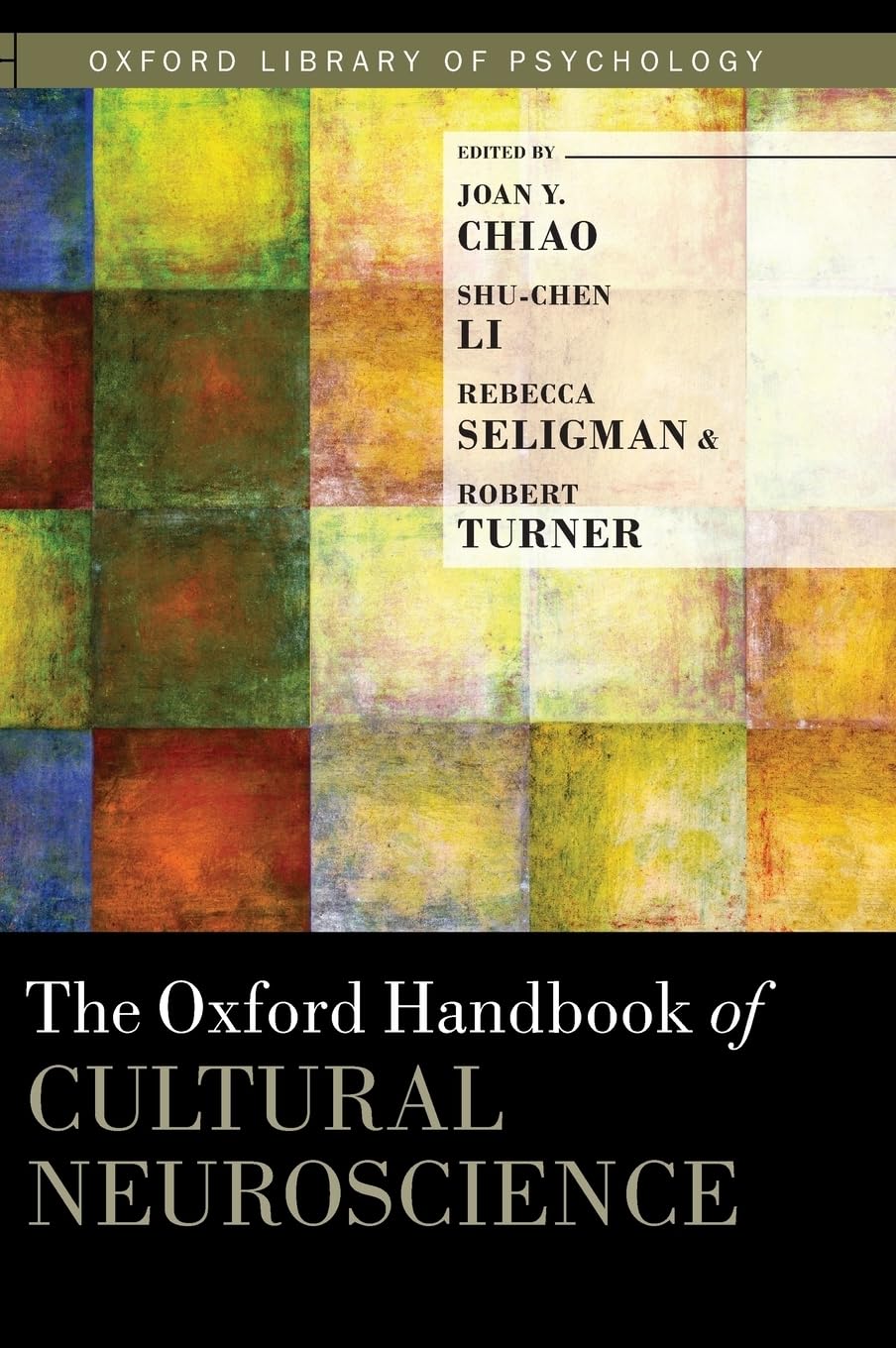
The Oxford Handbook of Cultural Neuroscience: Understanding Cultural, Biological, and Environmental Factors in Health by
Inclusive of all applicable taxes. FREE shipping on all orders.
Available Offers
- 🚚Free Delivery — Free shipping on all orders
- 💵Cash on Delivery — Pay when your order arrives
- ↩️15-Day Easy Returns — Hassle-free return policy
- 🔒Cash on Delivery — Pay safely when your order arrives
Check Delivery
Product Description
Introduction
In an increasingly interconnected world, understanding how culture shapes the human brain and influences mental and physical health has become essential. The Oxford Handbook of Cultural Neuroscience, edited by the distinguished scholar Joan Chiao, offers a pioneering exploration into the dynamic interplay between cultural contexts, neural mechanisms, and biological processes. This authoritative volume is the first of its kind to bring together cutting-edge research from the International Cultural Neuroscience Consortium (ICNC), making it an indispensable resource for students, researchers, and professionals across psychology, anthropology, epidemiology, and population genetics.
Book Overview
Published by the globally respected Oxford University Press, this hardbound edition presents a comprehensive synthesis of theoretical frameworks and methodological innovations in cultural neuroscience. The handbook delves into how cultural values, practices, and institutions interact with genetic and environmental factors to shape human cognition, emotion, and behaviour. It also addresses pressing public health disparities by examining how cultural and governmental policies influence mental and physical health outcomes across diverse populations. With contributions from leading international scholars, the book provides a roadmap for stabilising societal health through a culturally informed neuroscience lens.
Key Highlights
- First of its kind: The inaugural collection from the International Cultural Neuroscience Consortium, uniting interdisciplinary expertise.
- Broad scope: Covers topics from cultural epigenetics and gene-culture coevolution to neuroimaging of cultural values.
- Applied focus: Translates research into actionable insights for public health policy and clinical practice.
- Global perspective: Includes studies from diverse cultural settings, including Indian, East Asian, Western, and Indigenous populations.
- Rigorous scholarship: Features peer-reviewed chapters by leading experts in neuroscience, anthropology, and epidemiology.
Inside the Book
This handbook is structured into thematic sections that guide the reader from foundational concepts to advanced applications. Early chapters introduce the core principles of cultural neuroscience, including the neural basis of cultural learning and the role of social norms. Later sections explore how cultural factors shape brain development, emotional regulation, and mental health disorders. The book also dedicates significant attention to health disparities, examining how cultural beliefs and systemic inequalities contribute to differential outcomes in conditions such as depression, anxiety, cardiovascular disease, and chronic stress. Each chapter includes empirical data, theoretical models, and critical discussions of methodology.
Key Topics
- Gene-culture coevolution and its neural correlates
- Cultural influences on brain structure and function
- Epigenetic mechanisms in cultural transmission
- Neuroscience of social identity and intergroup relations
- Cultural determinants of mental health and illness
- Impact of governmental policies on population health
- Methodological innovations: cross-cultural neuroimaging, cultural priming, and ecological sampling
- Applications in global mental health and community interventions
Reader Benefits
Readers will gain a deep, evidence-based understanding of how culture and biology jointly shape the human mind. The book equips students and professionals with the conceptual tools to design culturally sensitive research and interventions. It also offers practical insights for clinicians, educators, and policymakers seeking to address health disparities in multicultural societies like India. By bridging the gap between the social and biological sciences, this handbook fosters a holistic view of human behaviour that is both scientifically rigorous and culturally aware.
Learning Outcomes
- Understand the theoretical foundations of cultural neuroscience and its historical development
- Analyse how cultural contexts modulate neural processes underlying cognition and emotion
- Evaluate the role of epigenetic and genetic factors in cultural adaptation
- Identify mechanisms linking cultural practices to mental and physical health outcomes
- Critically assess research methods for studying culture-brain interactions
- Apply cultural neuroscience principles to public health challenges and clinical settings
- Develop culturally informed hypotheses for future research
Who Should Read
This handbook is ideal for graduate students and advanced undergraduates in psychology, neuroscience, anthropology, and public health. It is equally valuable for professional scholars, researchers, and clinicians who wish to incorporate cultural perspectives into their work. Policymakers and practitioners in mental health, community medicine, and social work will also benefit from the evidence-based strategies outlined in the book. Indian readers, in particular, will find the discussions on collectivism, family structures, and health disparities highly relevant to the country's diverse sociocultural landscape.
About the Author
Joan Chiao is a leading figure in cultural neuroscience and a professor at Northwestern University. Her research focuses on how cultural values shape brain function and behaviour, particularly in the domains of emotion, social cognition, and mental health. She has published extensively in top-tier journals and is the founder of the International Cultural Neuroscience Consortium. Her work has been instrumental in establishing cultural neuroscience as a distinct field that bridges the gap between cultural psychology and cognitive neuroscience.
About the Publisher
Oxford University Press (OUP) is a globally renowned academic publisher with a legacy of excellence spanning over five centuries. OUP is committed to advancing knowledge through rigorous scholarship and publishes authoritative works across all disciplines. This handbook reflects OUP's dedication to fostering interdisciplinary dialogue and disseminating high-impact research to the academic community worldwide.
Conclusion
The Oxford Handbook of Cultural Neuroscience is a landmark publication that redefines our understanding of the human mind in its cultural context. It is an essential addition to any academic library and a must-read for anyone committed to improving mental and physical health in our diverse world. Order your copy today from Bookshops.in and embark on a journey into the fascinating intersection of culture, brain, and society.
Quick Summary
The Oxford Handbook of Cultural Neuroscience, edited by Joan Chiao, is a definitive reference that delves into the dynamic interplay between culture, biology, and environment in shaping human health. This comprehensive volume brings together cutting-edge research and theoretical frameworks to explain how cultural factors contribute to public health disparities, mental health outcomes, and population well-being. It covers methodological advances, gene-culture interactions, and policy implications, making it an indispensable resource for graduate students, academics, and professionals in psychology, neuroscience, public health, and population genetics. Readers will gain a nuanced understanding of how societal and biological forces converge to affect the mind, brain, and behavior. By purchasing from Bookshops.in, Indian readers receive a genuine hardcover edition with reliable delivery and competitive pricing, supporting local scholarship and academic growth.
Book Highlights
Book Specifications
| ISBN-13 | 9780199357376 |
| ISBN-10 | 0199357374 |
| Publisher | OUP USA |
| Language | English |
| Dimensions | 3.05 x 18.03 x 25.65 cm |
| Weight | 934 g |
| Category | Basic Sciences › Neuroscience |
| Genre | Science & Mathematics |
| Original Language | English |
Frequently Asked Questions
What is The Oxford Handbook of Cultural Neuroscience about?
Who is the author of this book?
Is this book suitable for Indian students?
What is the price of this book?
Which publisher released this handbook?
What is the ISBN of this book?
What format is this book available in?
What is the language of the book?
Who should read this handbook?
Does the book cover public health disparities?
Is this book used in academic courses?
Can policy makers benefit from this book?
Where can I buy this book in India?
Readers Also Search For
Related Products
View All
Science & Mathematics
Stereotype Spaces and Algebras: 73 (De Gruyter Expositions in Mathematics, 73)

Science & Mathematics
Elements of Pelagos Biology: With Focus on the Mediterranean Sea

Science & Mathematics
Mathematical Theory of Optimal Processes (Classics of Soviet Mathematics)

Science & Mathematics
Cambridge IGCSE and O Level Additional Mathematics by Val Hanrahan – Textbook for 0606/4037

Science & Mathematics
Theorie der algebraischen Gleichungen: 9 (Gschens Lehrbcherei/ Gruppe I: Reine Und Angewandte Mathematik)

Science & Mathematics