
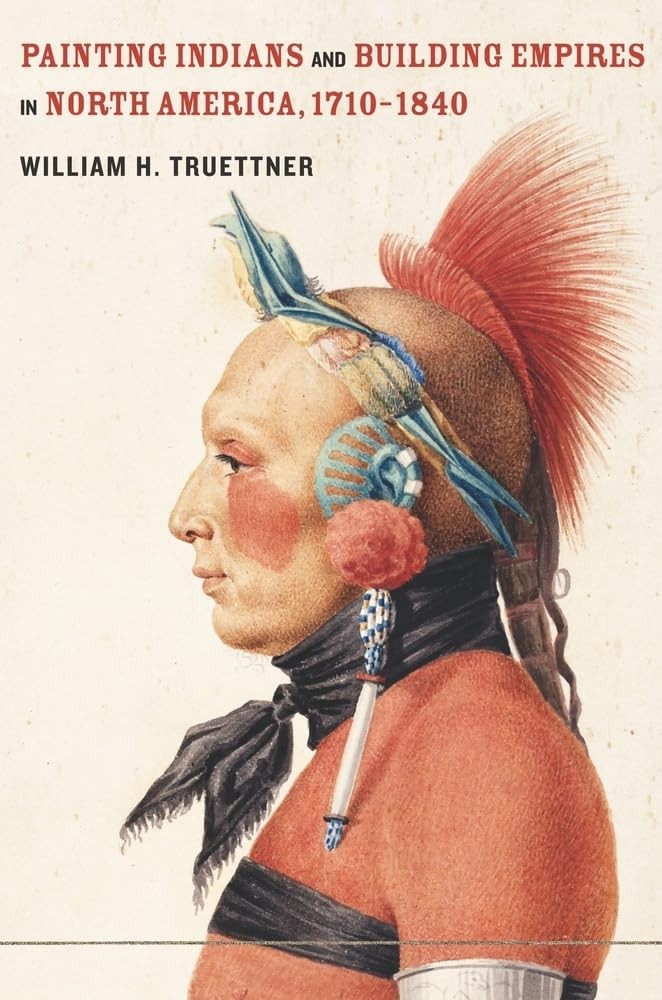
Painting Indians and Building Empires in North America, 1710-1840 by William H. Truettner – Art, Empire, and Indigenous
Inclusive of all applicable taxes. FREE shipping on all orders.
Available Offers
- 🚚Free Delivery — Free shipping on all orders
- 💵Cash on Delivery — Pay when your order arrives
- ↩️15-Day Easy Returns — Hassle-free return policy
- 🔒Cash on Delivery — Pay safely when your order arrives
Check Delivery
Product Description
Introduction
Painting Indians and Building Empires in North America, 1710-1840 by William H. Truettner is a riveting exploration of how early Euro-American artists shaped the visual narrative of Native American peoples during a transformative period in North American history. For Indian readers and students interested in colonial encounters, art history, and the politics of representation, this hardcover volume offers a unique lens to understand how images were used to justify expansion, forge identities, and build empires. Published by the prestigious University of California Press, this book is a must-have for anyone seeking to decode the hidden stories behind iconic paintings.
Book Overview
This meticulously researched work examines over a century of paintings created by European and American artists who encountered Native American tribes. From the early 1700s to the mid-1800s, artists like Benjamin West, Gilbert Stuart, Charles Bird King, and George Catlin produced works that both reflected and influenced the political and social currents of their time. Truettner reveals how these images—often romanticized, sometimes sympathetic, frequently distorted—served as tools of empire-building, shaping public opinion and policy toward indigenous peoples. The book connects art to the broader story of westward expansion, treaties, and cultural clashes, offering readers a fresh perspective on a pivotal era.
Key Highlights
- Rich Visual Analysis: In-depth readings of major paintings, from ceremonial portraits to dramatic battle scenes.
- Historical Context: Links each artwork to specific events, such as the American Revolution, the Louisiana Purchase, and the Trail of Tears.
- Artist Focus: Dedicated sections on Benjamin West, Gilbert Stuart, Charles Bird King, John Mix Stanley, and George Catlin.
- Empire as Theme: Explores how art supported colonial ambitions and the erasure of Native sovereignty.
- Indian Perspective: Discusses how tribes themselves sometimes participated in or resisted these visual representations.
Inside the Book
The book is structured chronologically and thematically. Early chapters cover the 1710 delegation of Iroquois chiefs to London, whose portraits by John Verelst became symbols of diplomacy. Later chapters analyze the post-Revolutionary era, when artists like Catlin traveled the frontier to document tribes before they were displaced. Truettner includes dozens of full-colour reproductions, making it easy to follow his arguments. The text is accessible yet scholarly, with footnotes that guide further reading. Readers will find detailed discussions of how clothing, weaponry, and landscapes were manipulated to convey messages about civilization and savagery.
Key Topics
- Visual representation and colonial power
- Portraiture as a tool of diplomacy and domination
- The romanticization of the “noble savage”
- Art and the ideology of Manifest Destiny
- Cross-cultural encounters in early America
- Gender and race in frontier painting
- The role of exhibitions and print culture in shaping public opinion
Reader Benefits
This book deepens your understanding of how images can shape history. It challenges you to look beyond the surface of famous paintings and ask who created them, for whom, and why. For Indian readers, it offers parallels to colonial visual cultures in South Asia, where British artists also depicted local communities through a colonial lens. The book sharpens critical thinking about art, propaganda, and identity. It also provides a wealth of material for essays, debates, and classroom discussions in history, art history, and postcolonial studies.
Learning Outcomes
- Analyze how Euro-American artists constructed stereotypes of Native Americans.
- Understand the political uses of art in the context of empire-building.
- Identify key artists and their contributions to early American visual culture.
- Connect visual representations to historical events like treaties and removals.
- Critically evaluate the relationship between art and power in colonial contexts.
Who Should Read
This book is ideal for undergraduate and postgraduate students of history, art history, American studies, and cultural studies. It is also valuable for researchers examining colonialism, representation, and indigenous studies. General readers with an interest in American history, painting, or the politics of imagery will find it engaging and enlightening. Art collectors and museum professionals will appreciate its scholarly rigour and fresh insights.
About the Author
William H. Truettner is a renowned art historian and curator. He served as the curator of American painting and sculpture at the Smithsonian American Art Museum for many years. His expertise lies in the intersection of art, culture, and politics in the United States. He has written extensively on westward expansion and visual culture, and his work is considered foundational in the field of American art history.
About the Publisher
University of California Press is one of the most respected academic publishers in the world. Based in Oakland, California, it has a long tradition of publishing groundbreaking scholarship in history, art, and the humanities. Its books are known for their rigorous editing, beautiful production, and commitment to intellectual excellence.
Conclusion
Painting Indians and Building Empires in North America, 1710-1840 is an indispensable resource for anyone who wants to understand how art and empire are intertwined. By examining the visual records left by early artists, Truettner opens a window into a complex and often painful history. This hardcover edition from University of California Press is a lasting addition to any library. Order your copy today from Bookshops.in and discover the powerful stories hidden in plain sight.
Quick Summary
Painting Indians and Building Empires in North America, 1710-1840 by William H. Truettner is a compelling art history book that explores how Euro-American artists visually represented Native Americans during the era of colonial expansion. Through detailed analysis of works by Benjamin West, Gilbert Stuart, Charles Bird King, and George Catlin, Truettner reveals how these paintings were not merely aesthetic objects but powerful tools that shaped public perception and justified westward expansion and empire building. The book covers both pre- and post-Revolutionary War periods, linking artistic choices to political events and social attitudes. It is ideal for students of art history, American studies, and colonial history, as well as general readers interested in indigenous representation. Written in an accessible yet scholarly style, it offers a critical lens on how visual culture contributed to the displacement and marginalization of Native American tribes. Buying from Bookshops.in ensures you receive a genuine hardcover copy with prompt delivery across India, supporting a trusted local bookstore.
Book Highlights
Book Specifications
| ISBN-13 | 9780520266315 |
| ISBN-10 | 0520266315 |
| Publisher | Univ of California Pr |
| Language | English |
| Dimensions | 15.24 x 2.03 x 22.86 cm |
| Weight | 590 g |
| Country | USA |
| Category | Humanities › Art History |
| Genre | Art History |
| Original Language | English |
Frequently Asked Questions
What is the main focus of this book?
Who is the author?
Which artists are discussed in detail?
Is this book suitable for Indian readers?
Does the book include images?
What time period does the book cover?
Is this book academic or popular?
How does the book relate to empire building?
Can I use this book for a university course?
What is the publisher?
Is this book available in India?
What is the language of the book?
Does the book cover Native American perspectives?
Why should I buy this book?
Readers Also Search For
Customers Also Bought
Art History
The Italian Renaissance in Art
Art History
Photovoltaic Design & Installation For Dummies | by Mayfield | ForDummies | by Mayfield | ForDummies | by Mayfield | ForDummies | by Mayfield | ForDummies | by Mayfield | ForDummies | by Mayfield | ForDummies | by Mayfield | ForDummies | by Mayfield | ForDummies | by Mayfield | ForDummies | by Mayfield | ForDummies | by Mayfield | ForDummies | by Mayfield | ForDummies | by Mayfield | ForDummies | by Mayfield | ForDummies | by Mayfield | ForDummies | by Mayfield | ForDummies | by Mayfield | ForDu
Art History
Designing School Systems for All Students (English, Robert J. Manley | Richard J. Hawkins)

Art History
Routledge Library Editions: Art and Culture in the Nineteenth Century
Art History
An Errant Design (English, S. H. Long)

Art History
Distributed System Design | by Jie Wu | CRC Press | by Jie Wu | CRC Press | by Jie Wu | CRC Press | by Jie Wu | CRC Press | by Jie Wu | CRC Press | by Jie Wu | CRC Press | by Jie Wu | CRC Press | by Jie Wu | CRC Press | by Jie Wu | CRC Press | by Jie Wu | CRC Press | by Jie Wu | CRC Press | by Jie Wu | CRC Press | by Jie Wu | CRC Press | by Jie Wu | CRC Press | by Jie Wu | CRC Press | by Jie Wu | CRC Press | by Jie Wu | CRC Press | by Jie Wu | CRC Press | by Jie Wu | CRC Press | by Jie Wu | CRC
Related Products
View AllArt History
Distributed System Design | by Jie Wu | CRC Press | by Jie Wu | CRC Press | by Jie Wu | CRC Press | by Jie Wu | CRC Press | by Jie Wu | CRC Press | by Jie Wu | CRC Press | by Jie Wu | CRC Press | by Jie Wu | CRC Press | by Jie Wu | CRC Press | by Jie Wu | CRC Press | by Jie Wu | CRC Press | by Jie Wu | CRC Press | by Jie Wu | CRC Press | by Jie Wu | CRC Press | by Jie Wu | CRC Press | by Jie Wu | CRC Press | by Jie Wu | CRC Press | by Jie Wu | CRC Press | by Jie Wu | CRC Press | by Jie Wu | CRC
Art History
The Italian Renaissance in Art
Art History
Photovoltaic Design & Installation For Dummies | by Mayfield | ForDummies | by Mayfield | ForDummies | by Mayfield | ForDummies | by Mayfield | ForDummies | by Mayfield | ForDummies | by Mayfield | ForDummies | by Mayfield | ForDummies | by Mayfield | ForDummies | by Mayfield | ForDummies | by Mayfield | ForDummies | by Mayfield | ForDummies | by Mayfield | ForDummies | by Mayfield | ForDummies | by Mayfield | ForDummies | by Mayfield | ForDummies | by Mayfield | ForDummies | by Mayfield | ForDu
Art History
Designing School Systems for All Students (English, Robert J. Manley | Richard J. Hawkins)
Art History
Routledge Library Editions: Art and Culture in the Nineteenth Century
Art History