
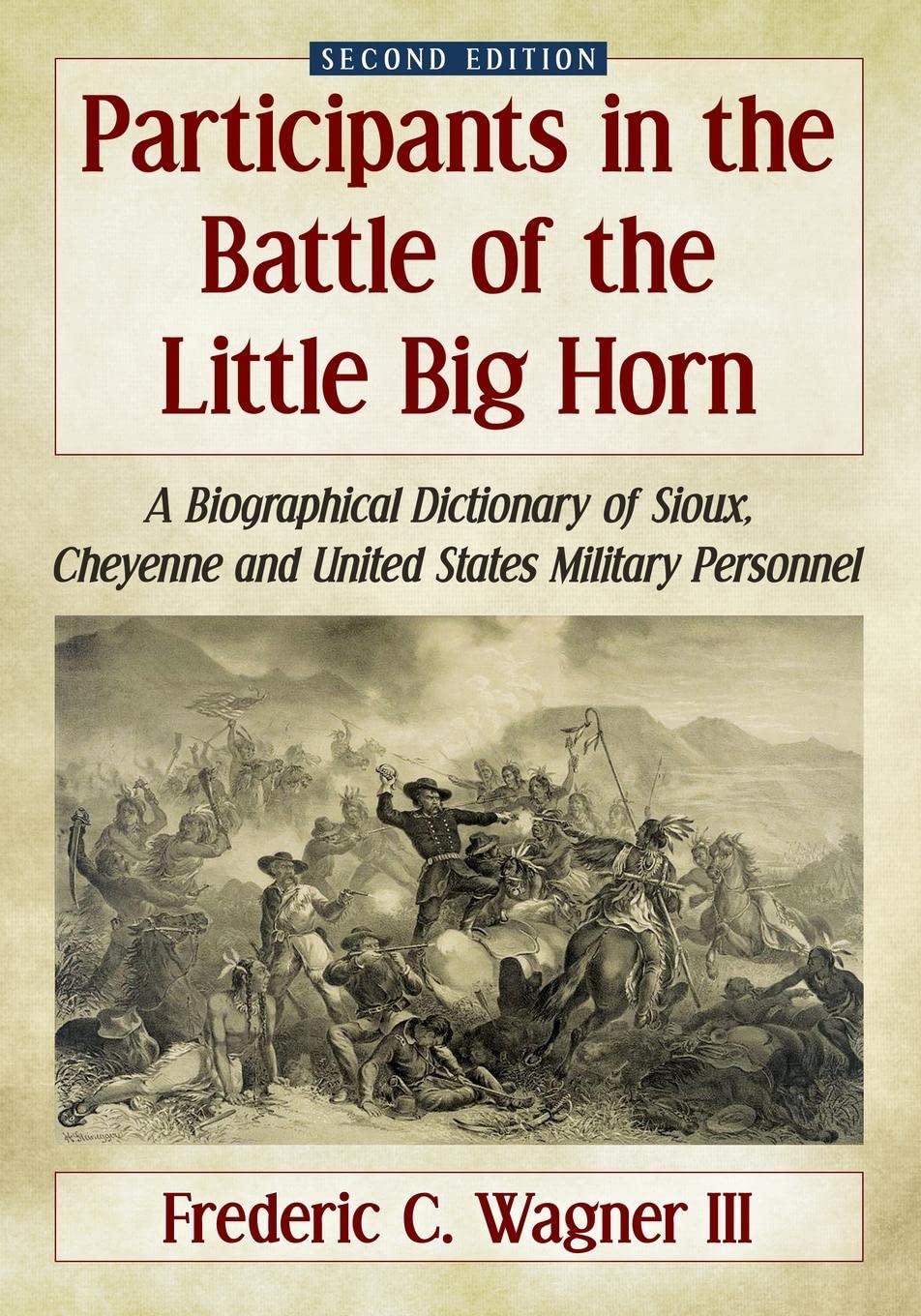
Participants in the Battle of the Little Big Horn: A Biographical Dictionary of Sioux, Cheyenne and United States Milita
Inclusive of all applicable taxes. FREE shipping on all orders.
Available Offers
- 🚚Free Delivery — Free shipping on all orders
- 💵Cash on Delivery — Pay when your order arrives
- ↩️15-Day Easy Returns — Hassle-free return policy
- 🔒Cash on Delivery — Pay safely when your order arrives
Check Delivery
Product Description
Introduction
Few events in American military history are as shrouded in myth, controversy, and cultural significance as the Battle of the Little Big Horn. Often remembered as ‘Custer’s Last Stand,’ this dramatic clash between the United States 7th Cavalry and a coalition of Lakota Sioux, Northern Cheyenne, and Arapaho warriors has fascinated historians, students, and enthusiasts for over a century. For Indian readers and scholars seeking a deeply researched, balanced, and humanizing account, Participants in the Battle of the Little Big Horn: A Biographical Dictionary of Sioux, Cheyenne and United States Military Personnel by Frederic C. Wagner offers an indispensable resource. This comprehensive volume moves beyond the familiar battlefield narratives to place individual lives—both Native American and US soldier—at the heart of the story.
Book Overview
Published by McFarland & Company in a durable hardcover edition, this biographical dictionary is the product of meticulous archival research. It provides an encyclopedic record of the men who fought on both sides of the 1876–77 conflict. Rather than a simple battle chronology, the book contextualizes the clash within the broader history of Plains Indian culture, tribal customs, and military tactics. Wagner’s work serves as both a reference tool and a narrative history, helping readers understand the diverse backgrounds, motivations, and fates of hundreds of individuals—from renowned war leaders like Crazy Horse and Sitting Bull to lesser-known cavalry troopers and scouts.
Key Highlights
- Comprehensive Biographical Entries: Detailed profiles of Sioux, Cheyenne, and US military personnel, including officers, enlisted men, Native warriors, and civilian scouts.
- Cultural & Tactical Context: In-depth sections on tribal structures, spiritual practices, weaponry, and fighting methods of the Plains Indians.
- Detailed Appendices: Includes listings of 7th Cavalry units, uniform and equipment specifications, scout rosters, and estimated Indian encampment populations.
- Maps & Camp Locations: Geographical details of village sites and battlefield positions to aid visual understanding.
- Rigorous Scholarship: Draws from primary sources, military records, oral histories, and ethnographic studies.
Inside the Book
Wagner organizes the volume into clear, accessible sections. The opening chapters provide a succinct yet rich overview of the Great Sioux War and the events leading up to June 25, 1876. The biographical dictionary itself forms the core, with entries arranged alphabetically. Each entry offers vital statistics, tribal affiliation or regiment, role in the battle, and, where available, personal anecdotes and post-battle life. The appendices are a goldmine for researchers: they decode 7th Cavalry unit structures, explain the significance of uniforms and equipment, list all known scouts (including Arikara, Crow, and Sioux allies), and estimate the number of warriors in the various encampments along the Little Big Horn River.
Key Topics
- The Battle of the Little Big Horn and the Great Sioux War (1876–1877)
- Lakota Sioux and Northern Cheyenne society, leadership, and warfare
- US 7th Cavalry organization, tactics, and command under George Armstrong Custer
- The role of Native and civilian scouts on both sides
- Weaponry, horse culture, and battlefield logistics
- Historical memory, controversy, and legacy of the battle
Reader Benefits
This book is much more than a dry list of names. It brings history to life by restoring identity and agency to individuals often reduced to statistics. Indian readers will appreciate the respectful treatment of Native perspectives, including the complexities of intertribal alliances and the devastating impact of US expansion. Students gain a reliable, fact-checked reference that corrects popular misconceptions. Researchers benefit from the structured appendices and cross-referenced data, saving hours of primary source work. The hardcover binding ensures durability for frequent library use.
Learning Outcomes
After reading this book, you will be able to: identify key participants from all three groups (Sioux, Cheyenne, US military); explain the cultural and tactical factors that shaped the battle; analyze the role of scouts and non-combatants; understand the equipment and organization of the 7th Cavalry; critically evaluate conflicting historical accounts; and appreciate the human cost of the conflict beyond the ‘Last Stand’ myth.
Who Should Read
- History students & academics specializing in American frontier or military history
- Native American studies scholars seeking detailed biographical data on Lakota and Cheyenne leaders
- Enthusiasts of military history interested in 19th-century cavalry tactics and equipment
- Genealogists tracing ancestors who served in the 7th Cavalry or were part of the Indian encampments
- Indian readers curious about comparative indigenous warfare and cross-cultural encounters
- Librarians and educators building reference collections on US–Native American conflicts
About the Author
Frederic C. Wagner is a respected military historian with a deep focus on the Plains Indian Wars. His research combines traditional archival methods with a commitment to incorporating Native American oral traditions and perspectives. Wagner’s previous works have been praised for their thoroughness and balanced treatment of controversial topics. He brings decades of study to this biographical dictionary, ensuring that every entry is grounded in verifiable evidence while remaining accessible to a general audience.
About the Publisher
McFarland & Company is a renowned independent academic publisher based in the United States, known for its authoritative reference works in history, military studies, and cultural heritage. Their titles are prized by libraries, universities, and serious researchers for their scholarly rigor, clear organization, and durable hardcover editions. This book upholds McFarland’s tradition of producing definitive, long-lasting reference volumes that serve as cornerstones for further study.
Conclusion
Participants in the Battle of the Little Big Horn is an essential addition to any serious history collection. It transforms a legendary battle from a simplistic tale of victory and defeat into a complex human drama. For Indian readers, it offers a dignified and detailed look at the lives of Native warriors and leaders. For students and researchers, it provides a reliable, structured reference that illuminates the facts behind the folklore. Whether you are a scholar, a student, or a curious reader, this biographical dictionary will deepen your understanding of one of history’s most iconic and misunderstood confrontations. Order your copy from Bookshops.in today and own a piece of meticulously researched history.
Quick Summary
Participants in the Battle of the Little Big Horn: A Biographical Dictionary of Sioux, Cheyenne and United States Military Personnel by Frederic C. Wagner is a comprehensive reference work that delves into the lives of those who fought in the 1876 conflict. The book provides detailed biographies of Native American warriors from the Sioux and Cheyenne tribes, as well as soldiers from the US Seventh Cavalry, including officers and enlisted men. It also explores tribal customs, fighting methods, and the broader historical context of the Indian Wars. Appendices offer valuable data on Seventh Cavalry units, uniforms, equipment, scouts, and the size of Indian encampments. This book is ideal for history students, military enthusiasts, and researchers seeking an authoritative biographical record. Readers will gain a nuanced understanding of the battle from both sides, supported by meticulous research. Purchasing from Bookshops.in ensures you receive a high-quality hardcover edition, perfect for academic libraries or personal collections. With a rating of 4.8 from 30 reviews, it is a trusted resource for anyone passionate about American and Native American history.
Book Highlights
Book Specifications
| ISBN-13 | 9781476664590 |
| ISBN-10 | 1476664595 |
| Publisher | McFarland Publishing |
| Language | English |
| Dimensions | 17.78 x 1.78 x 25.4 cm |
| Weight | 635 g |
| Country | India |
| Category | Americas › United States |
| Genre | History |
| Original Language | English |
Frequently Asked Questions
What is the Battle of the Little Big Horn?
Who is the author of this book?
Does this book cover both Native American and US military participants?
Is this book suitable for Indian students?
What kind of appendices are included?
Is this a hardcover or paperback?
Does the book include maps?
Can I use this book for academic research?
What is the ISBN-13?
Is the book written in English?
Does the book cover tribal customs?
How is this book different from other Little Big Horn books?
Readers Also Search For
Related Products
View All
History
The Information Revolution: Transforming the World Through Technology (World History)
History
Human Nature and the French Revolution: From the Enlightenment to the Napoleonic Code: 3 (Polygons: Cultural Diversities and Intersections, 3)
History
The Unmaking of Home in Contemporary Art (Cultural Spaces)

History
Handbook to Life in Medieval and Early Modern Japan | by William E. Deal | Oxford University Press | by William E. Deal | Oxford University Press | by William E. Deal | Oxford University Press | by William E. Deal | Oxford University Press | by William E. Deal | Oxford University Press | by William E. Deal | Oxford University Press | by William E. Deal | Oxford University Press | by William E. Deal | Oxford University Press | by William E. Deal | Oxford University Press | by William E. Deal | Ox

History
The Narrators of Barbarian History (A.D. 550-800) | by Walter Goffart | University of Notre Dame Press | by Walter Goffart | University of Notre Dame Press | by Walter Goffart | University of Notre Dame Press | by Walter Goffart | University of Notre Dame Press | by Walter Goffart | University of Notre Dame Press | by Walter Goffart | University of Notre Dame Press | by Walter Goffart | University of Notre Dame Press | by Walter Goffart | University of Notre Dame Press | by Walter Goffart | Univ

History