
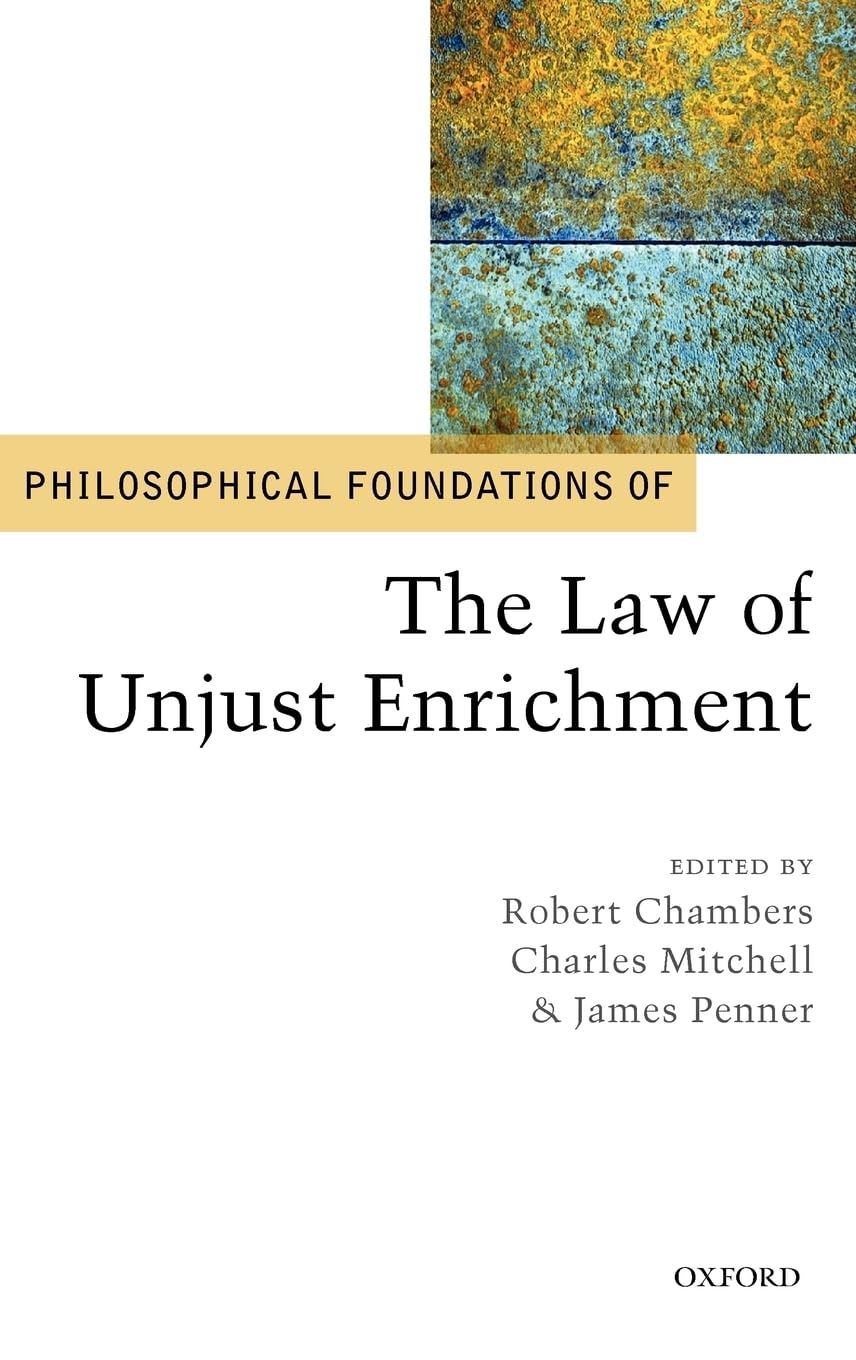
Philosophical Foundations of the Law of Unjust Enrichment by Robert Chambers – A Comprehensive Exploration of Private La
Inclusive of all applicable taxes. FREE shipping on all orders.
Available Offers
- 🚚Free Delivery — Free shipping on all orders
- 💵Cash on Delivery — Pay when your order arrives
- ↩️15-Day Easy Returns — Hassle-free return policy
- 🔒Cash on Delivery — Pay safely when your order arrives
Check Delivery
Product Description
Introduction
The law of unjust enrichment has undergone profound transformation in recent decades, emerging as a distinct and vital branch of private law. Philosophical Foundations of the Law of Unjust Enrichment, edited by Robert Chambers, offers a rigorous and thought-provoking exploration of the theoretical underpinnings that shape this dynamic field. This volume is indispensable for legal scholars, students, and practitioners who seek to understand not just the rules but the deeper principles that justify and structure the law of restitution. Published by OUP Oxford, this hardcover edition brings together leading private law theorists to examine the normative questions at the heart of unjust enrichment.
Book Overview
This collection of original essays takes stock of the rapid developments in unjust enrichment law over the last decade. Rather than merely describing case law, the contributors delve into the philosophical foundations that give the law its coherence and moral force. The book addresses how unjust enrichment relates to other areas of private law, such as contract, tort, and property, and considers the role of corrective justice, the concept of enrichment itself, and the mental elements required for liability. It is a work that bridges abstract theory and practical legal reasoning, making it essential for anyone engaged with the intellectual architecture of private law.
Key Highlights
- Original Contributions: Features new essays from leading private law theorists worldwide, offering fresh perspectives on enduring questions.
- Interdisciplinary Approach: Connects legal doctrine with moral philosophy, political theory, and property theory to enrich understanding.
- Critical Analysis: Challenges conventional assumptions about restitution and enrichment, encouraging deeper reflection on legal principles.
- Comprehensive Scope: Covers foundational concepts, remedial structures, and the relationship between unjust enrichment and other legal categories.
- Authoritative Publisher: Published by OUP Oxford, ensuring high academic standards and editorial excellence.
Inside the Book
The volume is structured around thematic clusters that probe the most pressing theoretical issues. Contributors examine whether unjust enrichment is best understood as a cause of action or a unifying principle, how the concept of 'enrichment' relates to property rights, and what role intention, knowledge, and fault should play in determining liability. The essays also explore the remedy of restitution from the standpoint of corrective and distributive justice, and consider how unjust enrichment interacts with contract law, tort law, and fiduciary obligations. Each chapter is self-contained yet contributes to a cohesive dialogue, making the book suitable for both selective reading and sustained study.
Key Topics
- The normative foundations of unjust enrichment as a distinct area of private law
- Relationship between enrichment and property theory
- Corrective justice and the remedial structure of restitution
- Mental elements: intention, knowledge, and fault in unjust enrichment claims
- Interaction with contract, tort, and fiduciary duties
- The role of policy and moral reasoning in shaping liability
- Comparative perspectives from common law and civil law traditions
Reader Benefits
- Deepen Theoretical Understanding: Gain clarity on the philosophical justifications that underpin legal rules.
- Enhance Analytical Skills: Learn to critically evaluate judicial reasoning and legislative developments.
- Stay Current: Engage with the latest scholarly debates in a rapidly evolving field.
- Practical Insight: Understand how theoretical principles influence real-world litigation and legal advice.
- Academic Excellence: Access cutting-edge research from internationally renowned scholars.
Learning Outcomes
Readers will emerge with a sophisticated grasp of the foundational questions that animate the law of unjust enrichment. They will be able to articulate the normative arguments for and against treating unjust enrichment as a separate category, evaluate the coherence of restitutionary remedies, and apply philosophical concepts to concrete legal problems. The book equips scholars and students with the tools to contribute meaningfully to ongoing academic and judicial conversations.
Who Should Read
- Law Students: Particularly those studying private law, restitution, or legal theory at postgraduate or advanced undergraduate levels.
- Legal Academics: Scholars in jurisprudence, private law theory, and comparative law will find rich material for research and teaching.
- Practitioners: Lawyers and judges seeking a deeper understanding of the principles behind unjust enrichment claims.
- Philosophers: Those interested in the intersection of moral philosophy and legal doctrine.
- Indian Legal Professionals: With the growing importance of unjust enrichment in Indian contract and restitution law, this book offers valuable comparative insights.
About the Author
Robert Chambers is a distinguished legal scholar known for his expertise in the law of restitution, property, and equity. He has contributed significantly to the theoretical development of unjust enrichment, and his editorial work brings together diverse voices in a coherent and stimulating collection. His scholarship is widely cited and respected in common law jurisdictions, including India, the UK, Canada, and Australia.
About the Publisher
OUP Oxford is one of the world's oldest and most prestigious academic publishers. With a reputation for rigorous peer review and high editorial standards, OUP produces authoritative works that shape legal education and practice globally. This hardcover edition reflects the publisher's commitment to durable, high-quality books that serve as lasting resources for scholars and professionals.
Conclusion
Philosophical Foundations of the Law of Unjust Enrichment is more than a collection of essays—it is a vital contribution to the ongoing intellectual project of making sense of private law. By examining the deepest normative questions, it illuminates the moral and conceptual architecture that supports the law of restitution. For anyone serious about understanding why we have this area of law and how it should develop, this book is an essential addition to their library. Order your hardcover copy from Bookshops.in today and engage with the ideas that are shaping the future of private law.
Quick Summary
Philosophical Foundations of the Law of Unjust Enrichment, edited by Robert Chambers, is a seminal collection of essays that critically examines the theoretical underpinnings of unjust enrichment law. Published by OUP Oxford, this hardcover volume brings together leading private law theorists to address fundamental questions: How should unjust enrichment be demarcated as a separate area of law? What is the relationship between enrichment and property theory? How does restitution relate to corrective justice? And what role do mental elements play? The book is ideal for Indian legal scholars, postgraduate law students, and practitioners who seek a deep, philosophical understanding beyond mere black-letter rules. Readers will learn to appreciate the normative foundations that drive judicial decisions and legislative reforms. By engaging with these essays, they will enhance their ability to analyze complex restitution cases and contribute to legal scholarship. Choosing Bookshops.in ensures you receive an authentic hardcover copy delivered anywhere in India, backed by reliable customer service and competitive pricing.
Book Highlights
Book Specifications
| ISBN-13 | 9780199567751 |
| ISBN-10 | 0199567751 |
| Publisher | Oxford Univ Pr on Demand |
| Language | English |
| Dimensions | 23.39 x 2.54 x 15.6 cm |
| Weight | 862 g |
| Category | Language, Linguistics & Writing › Linguistics |
| Genre | Law |
| Original Language | English |
Frequently Asked Questions
What is the main theme of this book?
Who is the author of this book?
Is this book suitable for Indian law students?
Does this book cover Indian law specifically?
What is the ISBN of this book?
Is this book available in hardcover?
What language is the book in?
Can I use this book for my LLM dissertation?
Does the book discuss restitution remedies?
What makes this book different from other law books?
Is this book recommended for legal practitioners?
Where can I buy this book in India?
Readers Also Search For
Customers Also Bought

Journalism
Rock Critic Law (English, Michael Azerrad)
Journalism
What Is Sustainable Journalism?: Integrating the Environmental, Social, and Economic Challenges of Journalism

Journalism
The Power of Sports: Media and Spectacle in American Culture: 23 (Postmillennial Pop)

Journalism
Research Guide to People's Daily Editorials, 1949-1975

Vocabulary
Prince Edward Island Sayings (Heritage)

Vocabulary
Grammar Survival for Primary Teachers: A Practical Toolkit by Jo Shackleton
Related Products
View All
Language, Linguistics & Writing
The Language of Turn and Sequence | by Cecilia E. Ford | Barbara A. Fox | Sandra A. Thompson | Oxford University Press | by Cecilia E. Ford | Barbara A. Fox | Sandra A. Thompson | Oxford University Press | by Cecilia E. Ford | Barbara A. Fox | Sandra A. Thompson | Oxford University Press | by Cecilia E. Ford | Barbara A. Fox | Sandra A. Thompson | Oxford University Press | by Cecilia E. Ford | Barbara A. Fox | Sandra A. Thompson | Oxford University Press | by Cecilia E. Ford | Barbara A. Fox | S

Language, Linguistics & Writing
Handbook of Color Psychology by Andrew J. Elliot
Language, Linguistics & Writing
The Language of Postcolonial Literatures (English, Ismail S. Talib)

Language, Linguistics & Writing
The Other Side of Language | by Gemma Corradi Fiumara | Routledge | by Gemma Corradi Fiumara | Routledge | by Gemma Corradi Fiumara | Routledge | by Gemma Corradi Fiumara | Routledge | by Gemma Corradi Fiumara | Routledge | by Gemma Corradi Fiumara | Routledge | by Gemma Corradi Fiumara | Routledge | by Gemma Corradi Fiumara | Routledge | by Gemma Corradi Fiumara | Routledge | by Gemma Corradi Fiumara | Routledge | by Gemma Corradi Fiumara | Routledge | by Gemma Corradi Fiumara | Routledge | by
Language, Linguistics & Writing
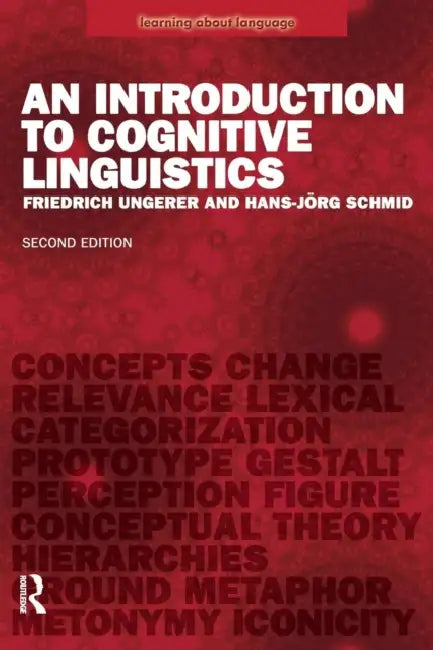
An Introduction to Cognitive Linguistics | by Friedrich Ungerer | Hans-Jorg Schmid | Routledge | by Friedrich Ungerer | Hans-Jorg Schmid | Routledge | by Friedrich Ungerer | Hans-Jorg Schmid | Routledge | by Friedrich Ungerer | Hans-Jorg Schmid | Routledge | by Friedrich Ungerer | Hans-Jorg Schmid | Routledge | by Friedrich Ungerer | Hans-Jorg Schmid | Routledge | by Friedrich Ungerer | Hans-Jorg Schmid | Routledge | by Friedrich Ungerer | Hans-Jorg Schmid | Routledge | by Friedrich Ungerer | Ha
Language, Linguistics & Writing