
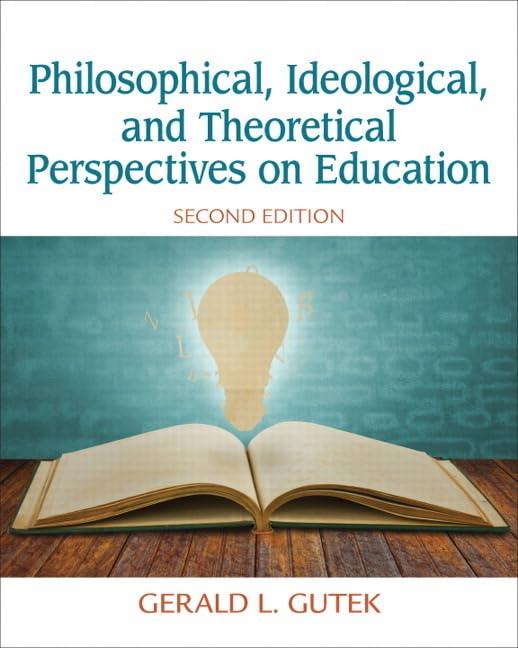
Philosophical, Ideological and Theoretical Perspectives on Education by Gerald Gutek – A Systems Approach for Indian Tea
Inclusive of all applicable taxes. FREE shipping on all orders.
Available Offers
- 🚚Free Delivery — Free shipping on all orders
- 💵Cash on Delivery — Pay when your order arrives
- ↩️15-Day Easy Returns — Hassle-free return policy
- 🔒Cash on Delivery — Pay safely when your order arrives
Check Delivery
Product Description
Introduction
In the ever-evolving landscape of education, understanding the philosophical and ideological foundations that shape teaching and learning is essential for every educator, student, and policymaker. Philosophical, Ideological and Theoretical Perspectives on Education by Gerald Gutek offers a comprehensive and systematic exploration of the major schools of thought that have influenced educational practices across the globe. This hardcover edition, published by Pearson, is an indispensable resource for Indian students, teachers, and researchers who seek a deeper grasp of how ideas transform into classroom realities.
Book Overview
This book adopts a unique systems approach to examine the interplay between philosophy, ideology, and theory in education. Gerald Gutek masterfully guides readers through the major philosophical traditions—idealism, realism, pragmatism, and existentialism—and connects them to influential ideologies such as nationalism, liberalism, conservatism, and Marxism. The text then bridges these concepts to educational theories like essentialism, perennialism, social reconstruction, and critical theory. Each chapter is structured to provide clear definitions, historical context, key contributors, and practical applications to schools, curriculum, instruction, and the roles of teachers and students. This systematic framework makes complex ideas accessible and relevant, especially for those preparing for competitive exams like UGC NET, CTET, or B.Ed./M.Ed. programs in India.
Key Highlights
- Systems Approach: A unique organizational framework that connects philosophy, ideology, and theory in a coherent manner.
- Comprehensive Coverage: Explores major philosophical schools, political ideologies, and educational theories in depth.
- Historical and Contemporary Insights: Traces the evolution of ideas from ancient thinkers to modern reformers.
- Practical Applications: Each chapter relates concepts to real-world educational settings, including Indian contexts.
- Clear Structure: Consistent chapter format with definitions, historical antecedents, discussion, and educational implications.
Inside the Book
This hardcover volume is divided into three major parts. The first part delves into philosophy of education, covering idealism, realism, pragmatism, and existentialism. The second part examines ideologies—nationalism, liberalism, conservatism, and Marxism—and their impact on education. The third part focuses on educational theories: essentialism, perennialism, social reconstruction, and critical theory. Each chapter includes a glossary of key terms, profiles of influential thinkers, and thought-provoking questions for reflection. The book also features a comprehensive index and bibliography, making it an excellent reference for research and study.
Key Topics
- Foundations of educational philosophy: idealism, realism, pragmatism, existentialism
- Political ideologies and their educational implications: nationalism, liberalism, conservatism, Marxism
- Educational theories: essentialism, perennialism, social reconstruction, critical theory
- Relationship between philosophy, ideology, and educational practice
- Role of schools, curriculum, and instruction in shaping society
- Historical contributions of philosophers and educators from East and West
Reader Benefits
This book empowers readers to critically analyze educational systems and practices. By understanding the philosophical and ideological roots of various approaches, educators can make informed decisions about curriculum design, teaching methods, and classroom management. Students will gain clarity on how different worldviews shape educational goals and outcomes. The systematic presentation helps in building a strong conceptual foundation, which is particularly beneficial for those pursuing teacher education programs in India. Additionally, the book encourages reflective thinking and fosters a deeper appreciation for diversity in educational thought.
Learning Outcomes
- Analyze major philosophical schools and their influence on education
- Evaluate the role of political ideologies in shaping educational policies
- Compare and contrast different educational theories and their applications
- Apply theoretical knowledge to real-world teaching and learning scenarios
- Develop a personal educational philosophy grounded in critical inquiry
- Understand the historical and cultural contexts of educational ideas
Who Should Read
This book is ideal for undergraduate and postgraduate students of education, especially those enrolled in B.Ed., M.Ed., and MA Education programs in Indian universities. It is also highly recommended for teachers, school administrators, curriculum developers, and education policymakers who wish to deepen their theoretical understanding. Aspirants preparing for competitive examinations such as UGC NET, SET, CTET, and state-level teacher eligibility tests will find this book an invaluable study resource. Researchers and academics in the field of philosophy of education will also benefit from its comprehensive and systematic treatment of the subject.
About the Author
Gerald Gutek is a renowned scholar in the field of philosophy and history of education. With decades of teaching and research experience, he has authored several influential textbooks that are widely used in universities around the world. His clear writing style and ability to synthesize complex ideas have made his works accessible to students and educators alike. Gutek’s expertise in comparative education and his deep understanding of Western and non-Western educational traditions lend credibility and depth to this book.
About the Publisher
Pearson is a global leader in educational publishing, known for producing high-quality academic and professional resources. With a strong presence in India, Pearson offers a wide range of textbooks that cater to the needs of students, teachers, and researchers. Their commitment to accuracy, clarity, and pedagogical excellence ensures that every book, including this one, meets the highest standards of academic integrity and usability.
Conclusion
Philosophical, Ideological and Theoretical Perspectives on Education is more than just a textbook—it is a gateway to understanding the deeper forces that drive educational change. Whether you are a student preparing for exams, a teacher seeking to enrich your practice, or a scholar exploring the foundations of education, this book provides the tools and insights needed to navigate the complex world of educational thought. Order your copy today from Bookshops.in and embark on a journey of intellectual discovery that will transform your perspective on education forever.
Quick Summary
Philosophical, Ideological and Theoretical Perspectives on Education by Gerald Gutek is a comprehensive textbook that employs a systems approach to explore the philosophical, ideological, and theoretical underpinnings of education. It is designed for graduate and postgraduate students in teacher education programs, particularly B.Ed. and M.Ed. courses in India. The book systematically examines major schools of philosophy—Idealism, Realism, Pragmatism, Existentialism—and then connects them to influential ideologies such as Nationalism, Liberalism, Conservatism, and Marxism. It further analyzes how these foundations give rise to educational theories like Essentialism, Perennialism, Social Reconstruction, and Critical Theory. Each chapter provides clear definitions, historical context, key contributors, and practical applications to schools, curriculum, and instruction. Readers will learn to critically evaluate different educational approaches and develop a coherent personal philosophy. The book is ideal for Indian students preparing for competitive exams like UGC NET and for educators seeking to deepen their theoretical understanding. Buying from Bookshops.in ensures you receive an authentic Pearson hardcover edition, delivered across India with reliable service.
Book Highlights
Book Specifications
| ISBN-13 | 9780132852388 |
| ISBN-10 | 0132852381 |
| Publisher | Pearson |
| Language | English |
| Dimensions | 27.43 x 20.83 x 2.29 cm |
| Weight | 753 g |
| Category | Teaching & Education › Educational Philosophy |
| Genre | Nonfiction |
| Reading Age | Adult |
| Original Language | English |
Frequently Asked Questions
What is the main focus of this book?
Who is the author of this book?
Is this book suitable for Indian B.Ed. students?
Does the book cover Indian educational philosophies?
What are the major theories discussed?
How is the book structured?
Is this book useful for UGC NET Education preparation?
What is the ISBN-13 of this book?
Is this a hardcover or paperback?
Can I use this book for comparative education studies?
Does the book include discussion of contemporary issues?
Is the language easy to understand?
How does this book help in developing a personal teaching philosophy?
Readers Also Search For
Customers Also Bought

Sociology
Imagination Beyond Nation: Latin American Popular Culture: 349 (Pitt Latin American Series)

Sociology
Boomer Volunteer Engagement: Facilitator's Tool Kit

Sociology
Making a Success of Marriage: Planning for Happily Ever After

Sociology
Causal Mediation Analysis (Analytical Methods for Social Research)

Sociology
Marriage and the Moral Imagination (New Departures in Anthropology)

Sociology
Social Change, Resistance and Social Practices: 19 (Studies in Critical Social Sciences, 19)
Related Products
View All
Society & Social Sciences
Oxford Studies in Epistemology, Volume 3 | by Tamar Szabo Gendler | John Hawthorne | OUP UK | by Tamar Szabo Gendler | John Hawthorne | OUP UK | by Tamar Szabo Gendler | John Hawthorne | OUP UK | by Tamar Szabo Gendler | John Hawthorne | OUP UK | by Tamar Szabo Gendler | John Hawthorne | OUP UK | by Tamar Szabo Gendler | John Hawthorne | OUP UK | by Tamar Szabo Gendler | John Hawthorne | OUP UK | by Tamar Szabo Gendler | John Hawthorne | OUP UK | by Tamar Szabo Gendler | John Hawthorne | OUP UK
Society & Social Sciences
Sidgwick's Ethics and Victorian Moral Philosophy | by J. B. Schneewind | Jerome B. Schneewind | OUP Oxford | by J. B. Schneewind | Jerome B. Schneewind | OUP Oxford | by J. B. Schneewind | Jerome B. Schneewind | OUP Oxford | by J. B. Schneewind | Jerome B. Schneewind | OUP Oxford | by J. B. Schneewind | Jerome B. Schneewind | OUP Oxford | by J. B. Schneewind | Jerome B. Schneewind | OUP Oxford | by J. B. Schneewind | Jerome B. Schneewind | OUP Oxford | by J. B. Schneewind | Jerome B. Schneewind
Society & Social Sciences
Cognitive Phenomenology | by Tim Bayne | Michelle Montague | OUP UK | by Tim Bayne | Michelle Montague | OUP UK | by Tim Bayne | Michelle Montague | OUP UK | by Tim Bayne | Michelle Montague | OUP UK | by Tim Bayne | Michelle Montague | OUP UK | by Tim Bayne | Michelle Montague | OUP UK | by Tim Bayne | Michelle Montague | OUP UK | by Tim Bayne | Michelle Montague | OUP UK | by Tim Bayne | Michelle Montague | OUP UK | by Tim Bayne | Michelle Montague | OUP UK | by Tim Bayne | Michelle Montague |
Society & Social Sciences
Alasdair MacIntyre on Practical Philosophy | by Kelvin Knight | Peter Wicks | University of Notre Dame Press | by Kelvin Knight | Peter Wicks | University of Notre Dame Press | by Kelvin Knight | Peter Wicks | University of Notre Dame Press | by Kelvin Knight | Peter Wicks | University of Notre Dame Press | by Kelvin Knight | Peter Wicks | University of Notre Dame Press | by Kelvin Knight | Peter Wicks | University of Notre Dame Press | by Kelvin Knight | Peter Wicks | University of Notre Dame P
Society & Social Sciences
Philosophical Historicism and the Betrayal of First Philosophy | by Carl Page | Penn State University Press | by Carl Page | Penn State University Press | by Carl Page | Penn State University Press | by Carl Page | Penn State University Press | by Carl Page | Penn State University Press | by Carl Page | Penn State University Press | by Carl Page | Penn State University Press | by Carl Page | Penn State University Press | by Carl Page | Penn State University Press | by Carl Page | Penn State Univ
Society & Social Sciences