
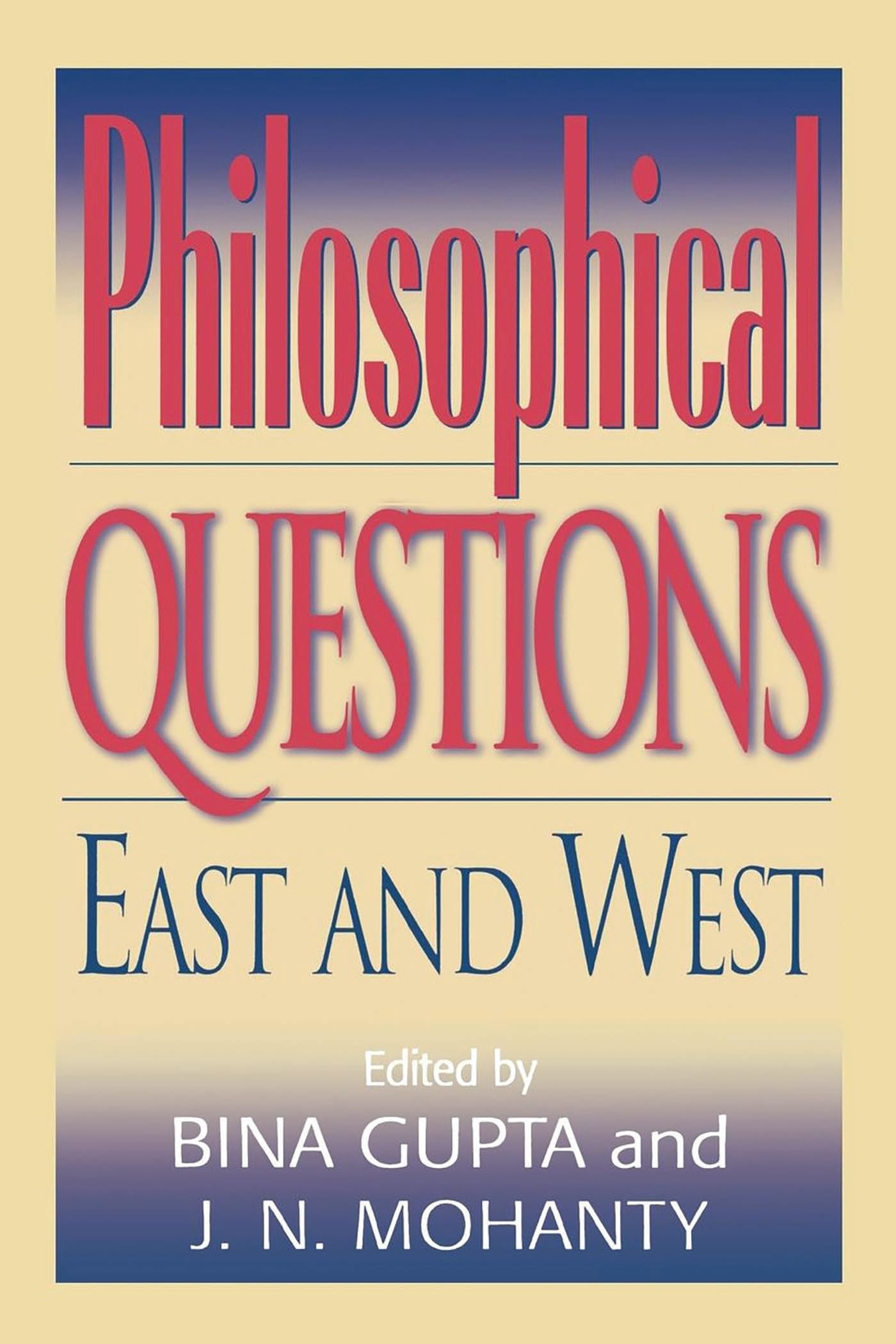
Philosophical Questions: East and West – A Comparative Philosophy Anthology by Bina Gupta
Inclusive of all applicable taxes. FREE shipping on all orders.
Available Offers
- 🚚Free Delivery — Free shipping on all orders
- 💵Cash on Delivery — Pay when your order arrives
- ↩️15-Day Easy Returns — Hassle-free return policy
- 🔒Cash on Delivery — Pay safely when your order arrives
Check Delivery
Product Description
Introduction
In a world increasingly interconnected yet culturally diverse, the need to understand philosophical traditions beyond one's own has never been more urgent. Philosophical Questions: East and West by Bina Gupta offers a rare and enriching journey into the heart of comparative philosophy, bringing together the profound insights of Indian, Chinese, Japanese, Islamic, and Western thought. This hardcover volume is not merely an anthology; it is an invitation to engage with the timeless questions that have shaped human civilization—questions about knowledge, reality, ethics, divinity, beauty, and what it means to be human. For Indian students, scholars, and curious readers, this book provides a unique opportunity to see their own intellectual heritage in dialogue with global traditions, fostering a deeper, more inclusive understanding of philosophy.
Book Overview
Published by Rowman & Littlefield Publishers, Philosophical Questions: East and West is a carefully curated collection of primary source readings drawn from the great works of the Indian, Chinese, Japanese, Islamic, and Western intellectual traditions. The book is structured around the most enduring questions in philosophy, presenting answers from multiple cultural perspectives. Rather than offering a superficial comparison, the anthology encourages readers to discard familiar clichés and approach each tradition with fresh, unprejudiced eyes. The readings are arranged under major philosophical branches—epistemology, metaphysics, ethics, philosophy of religion, aesthetics, and the nature of human being—making it an ideal resource for comparative courses in philosophy, religion, and the humanities.
Key Highlights
- Authentic primary sources from Indian, Chinese, Japanese, Islamic, and Western philosophical traditions, allowing direct engagement with original thinkers.
- Thematic organization around fundamental questions, making cross-cultural comparisons intuitive and meaningful.
- Introductory essays for each section that provide an overview of the leading questions and how different traditions have addressed them.
- Scholarly yet accessible presentation, suitable for both classroom use and independent study.
- Hardcover binding ensures durability for long-term reference and repeated reading.
Inside the Book
The book opens with a compelling argument for the need to study philosophy comparatively, free from preconceived notions. Each of the six major sections—Epistemology, Metaphysics, Ethics, Philosophy of Religion, Aesthetics, and the Nature of Human Being—begins with a detailed introductory essay by Bina Gupta. These essays set the stage by posing central questions such as: What is knowledge? What is reality? How should we live? Does God exist? What is beauty? What does it mean to be human? Following each introduction, carefully selected readings from diverse traditions offer contrasting and complementary answers. Readers will encounter excerpts from the Upanishads, the Bhagavad Gita, Confucius, Laozi, Dogen, Rumi, Ibn Sina, Plato, Aristotle, Descartes, Kant, and many others, all brought together in a single volume.
Key Topics
- Epistemology: Theories of knowledge, perception, and truth across Eastern and Western schools.
- Metaphysics: Concepts of reality, being, causality, and the nature of the self.
- Ethics: Moral frameworks, virtue, duty, and the good life in different cultural contexts.
- Philosophy of Religion: Arguments for and against the existence of God, religious experience, and faith.
- Aesthetics: Beauty, art, and the sublime in Indian, Chinese, Japanese, Islamic, and Western thought.
- Philosophical Anthropology: The nature of human beings, freedom, consciousness, and mortality.
Reader Benefits
- Broadens intellectual horizons by exposing readers to multiple philosophical traditions in one comprehensive volume.
- Develops critical thinking through comparative analysis of different answers to the same questions.
- Enhances cultural literacy by providing context for the philosophical underpinnings of major world civilizations.
- Supports academic success for students of philosophy, religion, Asian studies, and the humanities.
- Encourages empathy and open-mindedness by challenging ethnocentric assumptions about wisdom and truth.
Learning Outcomes
By engaging with Philosophical Questions: East and West, readers will be able to: identify key philosophical questions that have persisted across cultures; compare and contrast how different traditions approach epistemology, metaphysics, ethics, and aesthetics; analyse primary source texts with greater depth and nuance; articulate the value of comparative philosophy in addressing contemporary global issues; and develop a more inclusive and reflective understanding of the human quest for meaning.
Who Should Read
- Students of philosophy, religion, and the humanities seeking a comprehensive comparative textbook.
- Teachers and professors looking for a reliable source of primary readings for courses on Eastern and Western thought.
- General readers with a curiosity about how different cultures answer life's deepest questions.
- Indian readers interested in exploring their own philosophical heritage alongside global traditions.
- Book clubs and discussion groups focused on cross-cultural understanding and intellectual growth.
About the Author
Bina Gupta is a distinguished scholar of comparative philosophy, with extensive expertise in Indian and Western philosophical traditions. Her academic work has focused on bridging the gap between Eastern and Western thought, and she has taught at leading universities, inspiring generations of students to think beyond cultural boundaries. Her deep understanding of primary texts, combined with her ability to present complex ideas with clarity, makes her an ideal guide for this intellectual journey.
About the Publisher
Rowman & Littlefield Publishers is a respected academic and trade publisher known for producing high-quality works in philosophy, religion, history, and the social sciences. With a commitment to scholarly excellence and accessible writing, Rowman & Littlefield has published many influential titles that have shaped contemporary discourse. This hardcover edition reflects their dedication to durable, well-edited books that serve as lasting resources for students and scholars alike.
Conclusion
Philosophical Questions: East and West is more than a textbook—it is a bridge between worlds. In a time when polarized thinking often dominates, this anthology reminds us that the great questions of life have been asked and answered in myriad ways across cultures. By bringing together the voices of Indian sages, Chinese philosophers, Japanese Zen masters, Islamic mystics, and Western thinkers, Bina Gupta offers a truly global perspective that enriches the mind and soul. For Indian readers, this book is particularly valuable as it places our own philosophical traditions in a wider, more respectful context. Whether you are a student, a teacher, or a lifelong learner, this volume will transform the way you think about philosophy and its relevance to our shared humanity. Order your copy today from Bookshops.in and begin a journey that spans continents and centuries.
Quick Summary
Philosophical Questions: East and West, edited by Bina Gupta, is a landmark comparative philosophy anthology that brings together foundational primary source readings from Indian, Chinese, Japanese, Islamic, and Western intellectual traditions. Organized around timeless questions in epistemology, metaphysics, ethics, philosophy of religion, aesthetics, and human nature, this volume provides a structured yet expansive exploration of how different cultures have addressed life's deepest inquiries. Each section features an introductory essay that contextualizes the readings and highlights points of convergence and divergence. This book is ideal for undergraduate and postgraduate students in India studying philosophy, comparative religion, or humanities, as well as for scholars and general readers seeking a deeper cross-cultural understanding. By engaging directly with original texts, readers develop critical thinking and analytical skills while appreciating the richness of global philosophical heritage. Published by Rowman & Littlefield, this hardcover edition is a durable addition to any academic library. Purchasing from Bookshops.in ensures a reliable, high-quality print copy delivered to your doorstep.
Book Highlights
Book Specifications
| ISBN-13 | 9780847692859 |
| ISBN-10 | 084769285X |
| Publisher | Rowman & Littlefield |
| Language | English |
| Dimensions | 15.24 x 2.77 x 22.86 cm |
| Weight | 635 g |
| Country | USA |
| Category | Philosophy › History & Surveys |
| Genre | Philosophy |
| Original Language | English |
Frequently Asked Questions
What is Philosophical Questions: East and West about?
Who is the author of this book?
Which topics are covered in this book?
Is this book suitable for Indian university courses?
Does the book include only Western philosophy?
What is the format of the book?
Who is the publisher?
What is the ISBN of this book?
Is there an introductory essay for each section?
Can this book help with understanding Indian philosophy?
Is this book only for philosophy majors?
Does the book include readings from Islamic philosophy?
What is the price of this book?
Where can I buy this book in India?
Readers Also Search For
Related Products
View All
Society & Social Sciences
Cognitive Phenomenology | by Tim Bayne | Michelle Montague | OUP UK | by Tim Bayne | Michelle Montague | OUP UK | by Tim Bayne | Michelle Montague | OUP UK | by Tim Bayne | Michelle Montague | OUP UK | by Tim Bayne | Michelle Montague | OUP UK | by Tim Bayne | Michelle Montague | OUP UK | by Tim Bayne | Michelle Montague | OUP UK | by Tim Bayne | Michelle Montague | OUP UK | by Tim Bayne | Michelle Montague | OUP UK | by Tim Bayne | Michelle Montague | OUP UK | by Tim Bayne | Michelle Montague |

Society & Social Sciences
Oxford Studies in Epistemology, Volume 3 | by Tamar Szabo Gendler | John Hawthorne | OUP UK | by Tamar Szabo Gendler | John Hawthorne | OUP UK | by Tamar Szabo Gendler | John Hawthorne | OUP UK | by Tamar Szabo Gendler | John Hawthorne | OUP UK | by Tamar Szabo Gendler | John Hawthorne | OUP UK | by Tamar Szabo Gendler | John Hawthorne | OUP UK | by Tamar Szabo Gendler | John Hawthorne | OUP UK | by Tamar Szabo Gendler | John Hawthorne | OUP UK | by Tamar Szabo Gendler | John Hawthorne | OUP UK

Society & Social Sciences
Alasdair MacIntyre on Practical Philosophy | by Kelvin Knight | Peter Wicks | University of Notre Dame Press | by Kelvin Knight | Peter Wicks | University of Notre Dame Press | by Kelvin Knight | Peter Wicks | University of Notre Dame Press | by Kelvin Knight | Peter Wicks | University of Notre Dame Press | by Kelvin Knight | Peter Wicks | University of Notre Dame Press | by Kelvin Knight | Peter Wicks | University of Notre Dame Press | by Kelvin Knight | Peter Wicks | University of Notre Dame P

Society & Social Sciences
Philosophical Historicism and the Betrayal of First Philosophy | by Carl Page | Penn State University Press | by Carl Page | Penn State University Press | by Carl Page | Penn State University Press | by Carl Page | Penn State University Press | by Carl Page | Penn State University Press | by Carl Page | Penn State University Press | by Carl Page | Penn State University Press | by Carl Page | Penn State University Press | by Carl Page | Penn State University Press | by Carl Page | Penn State Univ

Society & Social Sciences
American and European Philosophy | by David Farrell Krell | Penn State University Press | by David Farrell Krell | Penn State University Press | by David Farrell Krell | Penn State University Press | by David Farrell Krell | Penn State University Press | by David Farrell Krell | Penn State University Press | by David Farrell Krell | Penn State University Press | by David Farrell Krell | Penn State University Press | by David Farrell Krell | Penn State University Press | by David Farrell Krell |

Society & Social Sciences