
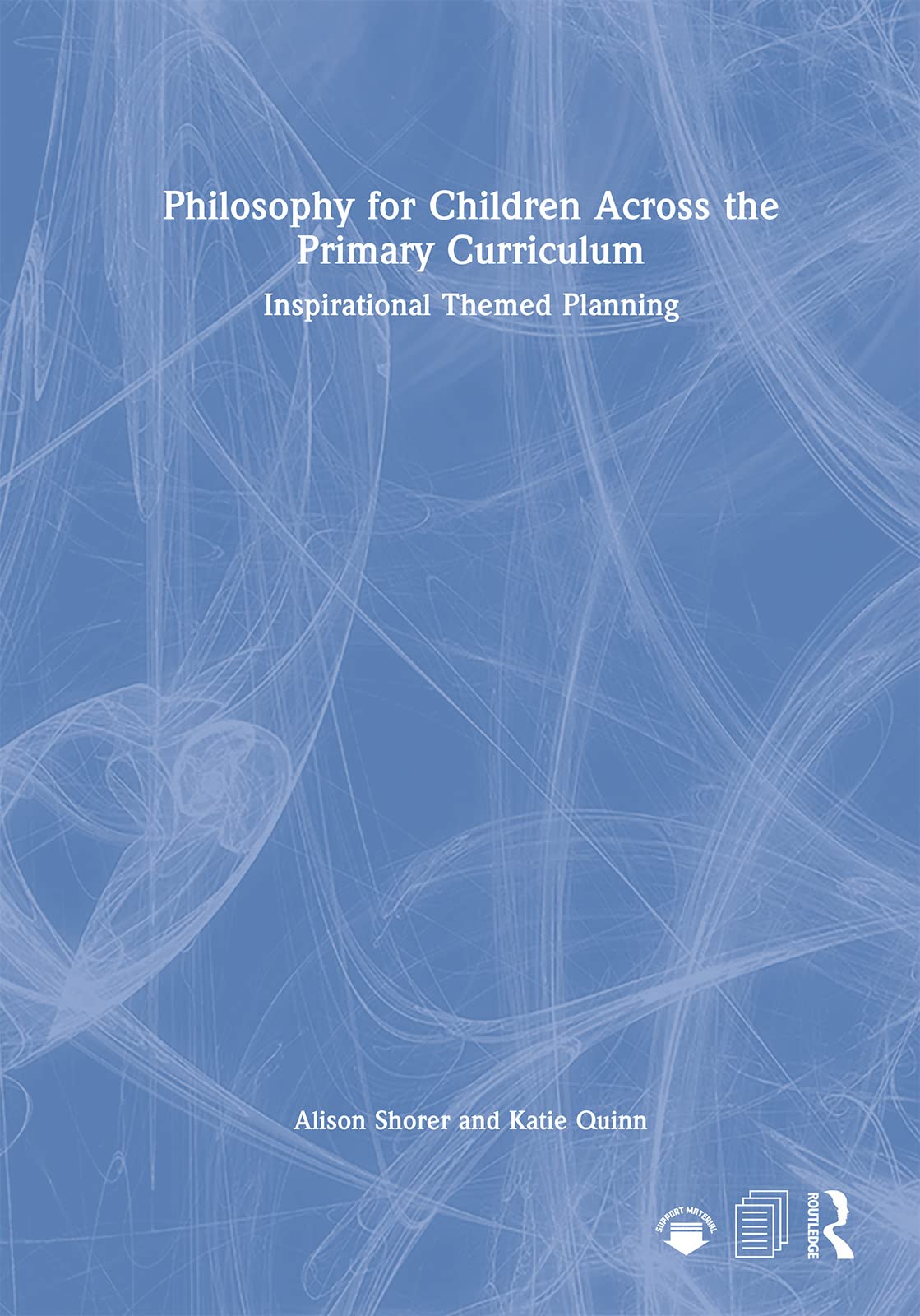
Philosophy for Children Across the Primary Curriculum: Inspirational Themed Planning by Shorer Alison – A Complete P4C R
Inclusive of all applicable taxes. FREE shipping on all orders.
Available Offers
- 🚚Free Delivery — Free shipping on all orders
- 💵Cash on Delivery — Pay when your order arrives
- ↩️15-Day Easy Returns — Hassle-free return policy
- 🔒Cash on Delivery — Pay safely when your order arrives
Check Delivery
Product Description
Introduction
In the rapidly evolving landscape of primary education, fostering critical thinking, empathy, and philosophical inquiry in young learners has become more essential than ever. Philosophy for Children Across the Primary Curriculum: Inspirational Themed Planning by Shorer Alison offers a groundbreaking resource for Indian educators and parents seeking to integrate Philosophy for Children (P4C) into everyday classroom practice. This hardcover volume from Routledge provides a structured yet flexible approach to embedding philosophical exploration across subjects, making it an indispensable tool for primary school teachers, curriculum designers, and homeschooling advocates in India.
Book Overview
This practical, theme-based resource book is designed for P4C practitioners working with children aged 5 to 11. It covers ten popular themes that resonate with both current affairs and enduring curriculum topics, including artificial intelligence, biodiversity, resilience, and waste management. Each theme offers detailed planning for every primary subject, linked to the English national curriculum expectations, but easily adaptable to the Indian CBSE, ICSE, or state board frameworks. The book can be used as a year-long roadmap or dipped into for quick, inspiring sessions. It also includes links to video clips, websites, and stories that serve as springboards for concept exploration and enquiry-based learning.
Key Highlights
- Ten Themed Units: Each theme is fully developed with cross-curricular links, philosophical questions, and activity ideas.
- Ready-to-Use Planning: Step-by-step session outlines save teachers hours of preparation time.
- Multimedia Integration: References to curated online resources enhance engagement without relying on digital copies.
- Curriculum Alignment: While based on the English national curriculum, the content is easily transferable to Indian educational standards.
- Philosophical Depth: Introduces key philosophical ideas from thinkers like Socrates, Plato, and contemporary ethicists in age-appropriate ways.
Inside the Book
The book is organized into ten thematic chapters, each beginning with an engaging stimulus—such as a story, video clip, or real-world scenario—followed by a series of enquiry-based activities. For example, the theme of artificial intelligence explores questions like “Can a machine think?” and “What makes us human?” through debates, art projects, and science experiments. The biodiversity theme encourages children to consider their role in protecting the environment through nature walks, data collection, and ethical discussions. Every chapter includes assessment ideas, vocabulary lists, and differentiation strategies for diverse learners. The final section provides a glossary of philosophical terms and a list of recommended children’s books for further exploration.
Key Topics
- Artificial Intelligence and Ethics
- Biodiversity and Environmental Stewardship
- Resilience and Growth Mindset
- Waste and Sustainability
- Identity and Community
- Fairness and Justice
- Truth and Lies
- Friendship and Belonging
- Change and Time
- Imagination and Creativity
Reader Benefits
Indian primary educators will find this book a treasure trove of ideas that go beyond rote learning. It helps develop students’ higher-order thinking skills, emotional intelligence, and collaborative abilities. Teachers can use the themes to address real-world issues relevant to Indian contexts—such as waste management in urban areas, conservation of local biodiversity, or the ethical implications of technology in daily life. The planning is flexible enough to be used in single-subject lessons or integrated into project-based learning weeks. Parents and homeschoolers will appreciate the clear structure and the emphasis on dialogue over lectures, making philosophy accessible even to young children.
Learning Outcomes
- Critical Thinking: Students learn to ask probing questions, evaluate arguments, and consider multiple perspectives.
- Empathy and Perspective-Taking: Through structured dialogues, children develop the ability to understand others’ viewpoints.
- Communication Skills: Regular philosophical discussions improve verbal reasoning and active listening.
- Ethical Awareness: Children grapple with moral dilemmas and learn to justify their positions.
- Creativity: Open-ended enquiries encourage imaginative problem-solving.
- Self-Reflection: Journaling and metacognitive activities help students connect philosophy to their own lives.
Who Should Read
- Primary School Teachers in India looking to enrich their curriculum with philosophical enquiry.
- Curriculum Coordinators designing interdisciplinary units for grades 1 to 5.
- Homeschooling Parents seeking structured yet flexible resources for philosophical education.
- Teacher Trainers and B.Ed. Students interested in innovative pedagogical approaches.
- School Librarians who want to integrate discussion-based learning into reading programs.
- Educational Researchers exploring the impact of P4C on child development.
About the Author
Shorer Alison is an experienced primary educator and P4C trainer with over two decades of classroom practice. She has worked extensively with schools across the UK to embed philosophical enquiry into everyday teaching. Her approach is grounded in the belief that children are natural philosophers, capable of engaging with complex ideas when given the right tools and environment. Alison is also a published author of several educational resources and regularly conducts workshops for teachers on facilitating philosophical discussions.
About the Publisher
Routledge is a world-renowned academic publisher with a strong focus on education, social sciences, and humanities. Known for its rigorous editorial standards and commitment to innovative scholarship, Routledge has been a trusted name in educational publishing for over 150 years. This book is part of their growing collection of practical resources for primary educators, reflecting their dedication to supporting teachers with research-informed, classroom-ready materials.
Conclusion
Philosophy for Children Across the Primary Curriculum: Inspirational Themed Planning is more than just a lesson plan book—it is a gateway to nurturing thoughtful, empathetic, and resilient young minds. For Indian educators striving to move beyond textbook-based learning, this resource offers a proven pathway to integrate philosophy into the heart of the primary curriculum. Whether you are a seasoned P4C practitioner or a newcomer to philosophical enquiry, this hardcover edition will inspire you to transform your classroom into a community of thinkers. Order your copy from Bookshops.in today and embark on a journey of meaningful learning with your students.
Quick Summary
Philosophy for Children Across the Primary Curriculum: Inspirational Themed Planning by Shorer Alison is a comprehensive, easy-to-use resource designed for primary school teachers who want to integrate Philosophy for Children (P4C) into their daily lessons. The book covers ten engaging themes—including artificial intelligence, biodiversity, resilience, and waste—that reflect current affairs and enduring curriculum topics. Each theme provides detailed planning across all primary subjects, with clear links to the English National Curriculum. Teachers can use the book for step-by-step sessions or dip into it for quick inspiration. The resource also includes references to video clips, websites, and stories to support concept exploration and philosophical enquiry. Ideal for both novice and experienced P4C facilitators, this book helps educators foster critical thinking, ethical reasoning, and collaborative dialogue in young learners. By purchasing from Bookshops.in, Indian teachers gain access to a premium hardcover edition that will last through years of classroom use, delivered reliably to their doorstep.
Book Highlights
Book Specifications
| ISBN-13 | 9780367207113 |
| ISBN-10 | 0367207117 |
| Publisher | Routledge |
| Language | English |
| Dimensions | 20.96 x 1.91 x 29.21 cm |
| Weight | 1 kg 40 g |
| Country | India |
| Category | Teaching & Education › Educational Philosophy |
| Genre | Education |
| Original Language | English |
Frequently Asked Questions
What is Philosophy for Children Across the Primary Curriculum about?
Who wrote this book?
Is this book suitable for all primary age groups?
Does the book include lesson plans for specific subjects?
Are there digital resources included?
How is this book different from other P4C resources?
Can I use this book if I am new to Philosophy for Children?
Does the book align with any specific curriculum?
What themes are covered in the book?
Is this a hardcover book?
What age group is this book intended for?
Can this book be used for home-schooling?
Does the book include activities for group discussions?
Why should I buy this book from Bookshops.in?
Readers Also Search For
Related Products
View All
Society & Social Sciences
Cognitive Phenomenology | by Tim Bayne | Michelle Montague | OUP UK | by Tim Bayne | Michelle Montague | OUP UK | by Tim Bayne | Michelle Montague | OUP UK | by Tim Bayne | Michelle Montague | OUP UK | by Tim Bayne | Michelle Montague | OUP UK | by Tim Bayne | Michelle Montague | OUP UK | by Tim Bayne | Michelle Montague | OUP UK | by Tim Bayne | Michelle Montague | OUP UK | by Tim Bayne | Michelle Montague | OUP UK | by Tim Bayne | Michelle Montague | OUP UK | by Tim Bayne | Michelle Montague |
Society & Social Sciences
Oxford Studies in Epistemology, Volume 3 | by Tamar Szabo Gendler | John Hawthorne | OUP UK | by Tamar Szabo Gendler | John Hawthorne | OUP UK | by Tamar Szabo Gendler | John Hawthorne | OUP UK | by Tamar Szabo Gendler | John Hawthorne | OUP UK | by Tamar Szabo Gendler | John Hawthorne | OUP UK | by Tamar Szabo Gendler | John Hawthorne | OUP UK | by Tamar Szabo Gendler | John Hawthorne | OUP UK | by Tamar Szabo Gendler | John Hawthorne | OUP UK | by Tamar Szabo Gendler | John Hawthorne | OUP UK
Society & Social Sciences
Alasdair MacIntyre on Practical Philosophy | by Kelvin Knight | Peter Wicks | University of Notre Dame Press | by Kelvin Knight | Peter Wicks | University of Notre Dame Press | by Kelvin Knight | Peter Wicks | University of Notre Dame Press | by Kelvin Knight | Peter Wicks | University of Notre Dame Press | by Kelvin Knight | Peter Wicks | University of Notre Dame Press | by Kelvin Knight | Peter Wicks | University of Notre Dame Press | by Kelvin Knight | Peter Wicks | University of Notre Dame P
Society & Social Sciences
Philosophical Historicism and the Betrayal of First Philosophy | by Carl Page | Penn State University Press | by Carl Page | Penn State University Press | by Carl Page | Penn State University Press | by Carl Page | Penn State University Press | by Carl Page | Penn State University Press | by Carl Page | Penn State University Press | by Carl Page | Penn State University Press | by Carl Page | Penn State University Press | by Carl Page | Penn State University Press | by Carl Page | Penn State Univ
Society & Social Sciences
American and European Philosophy | by David Farrell Krell | Penn State University Press | by David Farrell Krell | Penn State University Press | by David Farrell Krell | Penn State University Press | by David Farrell Krell | Penn State University Press | by David Farrell Krell | Penn State University Press | by David Farrell Krell | Penn State University Press | by David Farrell Krell | Penn State University Press | by David Farrell Krell | Penn State University Press | by David Farrell Krell |
Society & Social Sciences