
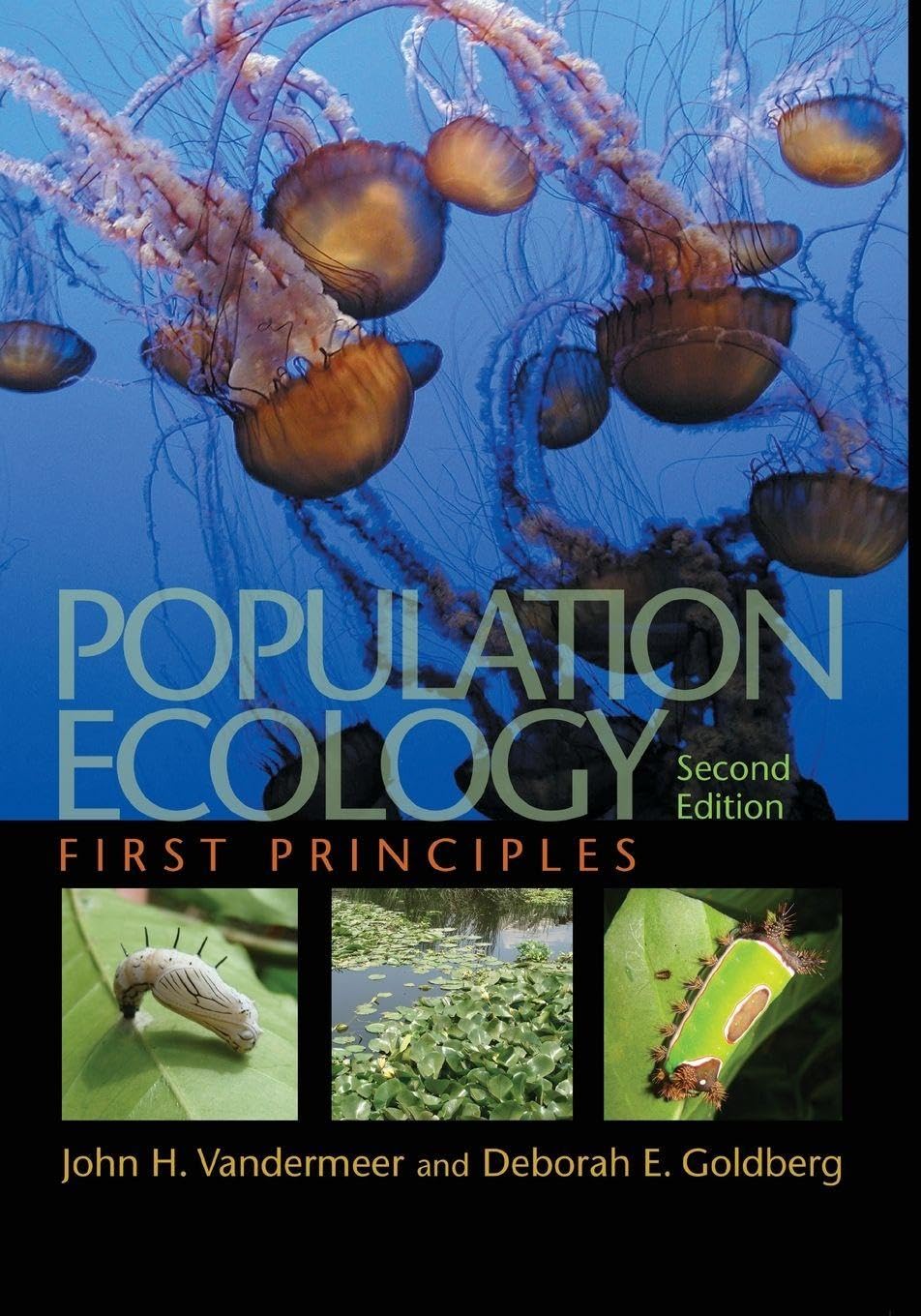
Population Ecology: First Principles by John H. VanderMeer – A Comprehensive Quantitative Ecology Textbook for Indian St
Inclusive of all applicable taxes. FREE shipping on all orders.
Available Offers
- 🚚Free Delivery — Free shipping on all orders
- 💵Cash on Delivery — Pay when your order arrives
- ↩️15-Day Easy Returns — Hassle-free return policy
- 🔒Cash on Delivery — Pay safely when your order arrives
Check Delivery
Product Description
Introduction
In an era where environmental shifts and human impact are reshaping the natural world, understanding how populations grow, shrink, and interact has never been more crucial. Population Ecology: First Principles - Second Edition by John H. VanderMeer offers a rigorous yet accessible foundation in the quantitative science that underpins all ecological study. This hardcover edition from Princeton University Press is an essential resource for Indian students, researchers, and professionals who seek to grasp the mathematical heartbeat of life on Earth.
Book Overview
This fully updated second edition builds on the classic first edition, delivering a comprehensive exploration of population ecology from the ground up. Rather than simply describing patterns, VanderMeer starts from first principles—simple equations and logical assumptions—and progressively constructs models that reflect real-world complexity. The book bridges theory and application, using empirical examples drawn from diverse organisms, including insects, mammals, and even viruses. It is designed to equip readers with the tools to analyze population dynamics in a changing world.
Key Highlights
- Updated content reflecting the latest advances in ecological theory and modelling
- Step-by-step development of mathematical models from basic principles
- Real-world examples spanning animals, plants, and microorganisms
- Clear, accessible writing suitable for both beginners and advanced learners
- Rigorous quantitative focus without sacrificing conceptual clarity
Inside the Book
The book is structured to guide the reader through the core ideas of population ecology. Early chapters introduce fundamental concepts such as exponential and logistic growth, age-structured populations, and metapopulations. Later sections delve into species interactions—predation, competition, mutualism—and their implications for population stability. Each chapter includes worked examples, exercises, and graphical interpretations that reinforce learning. The second edition also incorporates new material on stochastic processes and spatial dynamics, reflecting the growing importance of these topics in contemporary ecology.
Key Topics
- Exponential and logistic population growth
- Age-structured and stage-structured models
- Life tables and survivorship curves
- Predator-prey dynamics (Lotka-Volterra models)
- Competition and niche theory
- Metapopulation ecology and spatial patterns
- Stochasticity and environmental variability
- Harvesting and conservation applications
Reader Benefits
By working through this book, readers will develop the ability to construct and interpret ecological models with confidence. They will learn to think critically about data, assumptions, and predictions—skills that are invaluable for careers in wildlife management, conservation biology, environmental consulting, and academic research. The mathematical foundation provided here also prepares students for advanced coursework in ecology, evolutionary biology, and biostatistics. Indian readers, in particular, will appreciate the universal applicability of the principles, from managing tiger reserves to understanding crop pests.
Learning Outcomes
- Understand the mathematical basis of population growth and regulation
- Build and analyze simple models of single-species and multi-species dynamics
- Interpret life tables and calculate key demographic parameters
- Evaluate the effects of competition, predation, and mutualism on populations
- Apply ecological principles to real-world conservation and management problems
Who Should Read
This book is ideal for undergraduate and postgraduate students in ecology, environmental science, zoology, botany, and related fields. It is also a valuable reference for wildlife biologists, foresters, agricultural scientists, and anyone involved in natural resource management. The approach is mathematical but does not require advanced calculus—making it accessible to students with a basic grounding in algebra and a willingness to engage with quantitative reasoning.
About the Author
John H. VanderMeer is a distinguished ecologist and professor at the University of Michigan. With decades of research experience in population dynamics, tropical ecology, and agroecology, he brings a wealth of field-based insight to his writing. His work has influenced conservation strategies and sustainable farming practices worldwide. VanderMeer is known for his ability to make complex ecological theory understandable and relevant.
About the Publisher
Princeton University Press is a prestigious academic publisher with a long history of producing authoritative works in science, mathematics, and the humanities. Their ecology list includes some of the most widely used textbooks and monographs in the field. This hardcover edition is printed on high-quality paper and bound to withstand years of use in the classroom, library, or field station.
Conclusion
Population Ecology: First Principles - Second Edition is more than a textbook—it is a gateway to understanding the forces that shape life on our planet. Whether you are a student preparing for exams, a researcher building models, or a practitioner making conservation decisions, this book provides the conceptual and mathematical toolkit you need. Order your copy from Bookshops.in today and add this essential volume to your library.
Quick Summary
Population Ecology: First Principles by John H. VanderMeer is a definitive quantitative ecology textbook that provides Indian students and researchers with a solid grounding in the mathematical and theoretical foundations of population ecology. This second edition updates and expands upon the original, covering essential topics such as population growth, competition, predation, metapopulations, and the dynamics of species interactions. The book is designed for undergraduate and postgraduate students in ecology, environmental science, and conservation biology, as well as practitioners who need a clear yet rigorous introduction to the field. Readers will learn how to model and analyze population data, understand the factors that drive population change, and apply these principles to real-world issues like climate change, habitat loss, and species conservation. By choosing Bookshops.in, you get a genuine hardcover copy delivered to your doorstep in India, with the assurance of quality and prompt service. This book is an indispensable resource for anyone serious about understanding the science behind population ecology.
Book Highlights
Book Specifications
| ISBN-13 | 9780691160313 |
| ISBN-10 | 0691160317 |
| Publisher | Princeton University Press |
| Language | English |
| Dimensions | 17.78 x 1.91 x 25.4 cm |
| Weight | 567 g |
| Country | India |
| Category | Biology & Life Sciences › Biology |
| Genre | Science & Mathematics |
| Original Language | English |
Frequently Asked Questions
What is Population Ecology: First Principles about?
Who is the author of this book?
Is this book suitable for Indian students?
Does the book include mathematical models?
What is the price of this book?
Is the book available in hardcover?
Can I use this book for self-study?
What topics are covered in the book?
Is this book relevant to climate change studies?
What is the ISBN-13 of this book?
Does the book have exercises or examples?
Why should I buy this book from Bookshops.in?
Readers Also Search For
Customers Also Bought
Mathematics
Stereotype Spaces and Algebras: 73 (De Gruyter Expositions in Mathematics, 73)

Chemistry
Concise Encyclopedia of Biochemistry
Chemistry
Proceedings of the Third USSR - FRG Symposium, Makhachkala (USSR), October 2–6, 1980: 001
Physics
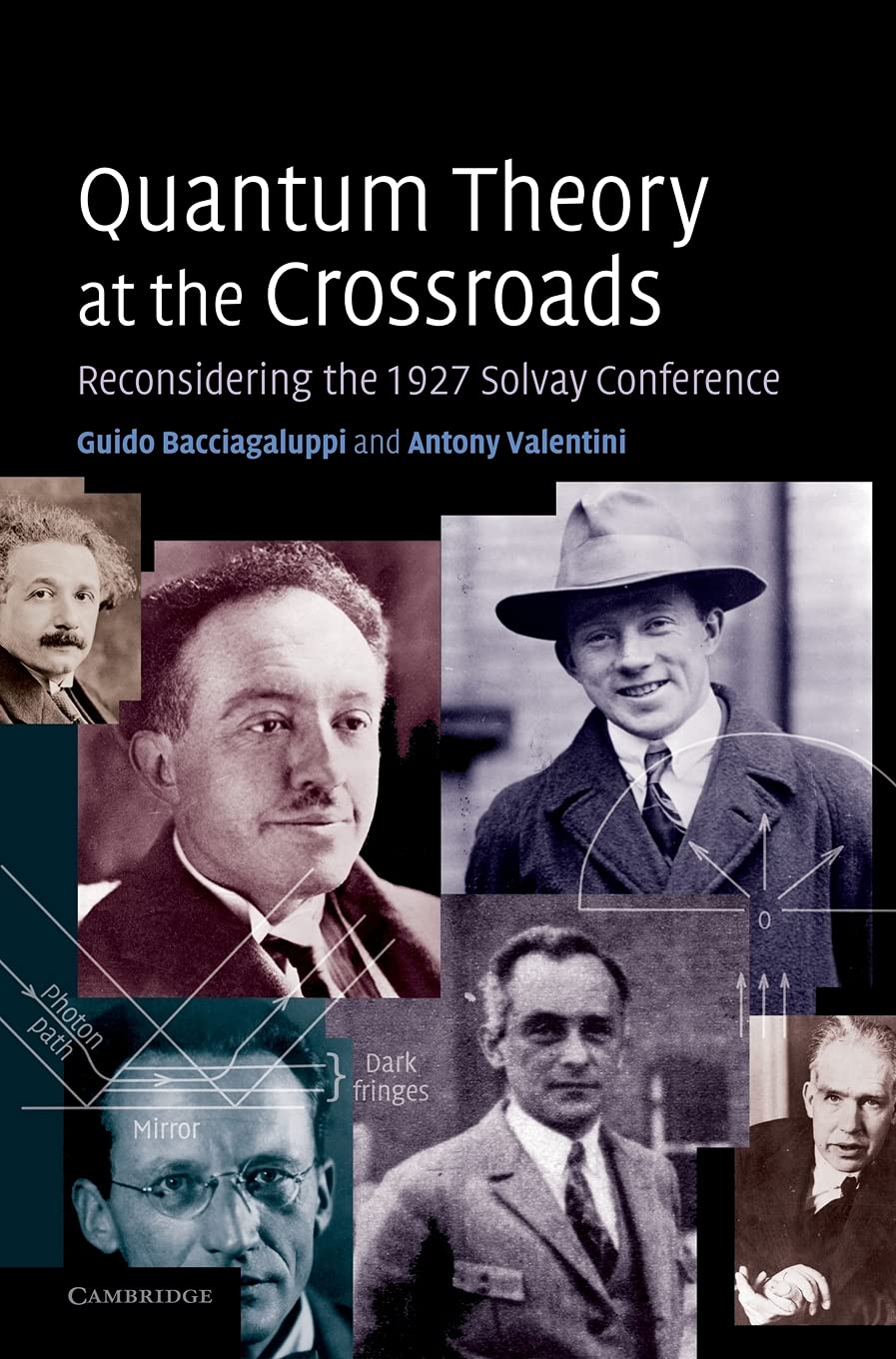
Quantum Theory at the Crossroads by Guido Bacciagaluppi – Quantum Mechanics History

Physics
The Quantum and Cosmic Codes of the Universe
Mathematics
Mathematical Theory of Optimal Processes (Classics of Soviet Mathematics)
Related Products
View All
Biology
Evolution: What the Fossils Say and Why It Matters by Donald R. Prothero
Biology
From Taxonomy to Phylogenetics – Life and Work of Willi Hennig

Biology
The Marine Biology of the South China Sea
Biology
Genetics Meets Metabolomics: from Experiment to Systems Biology
Biology
The Elements of Natural or Experimental Philosophy: 2
Biology