
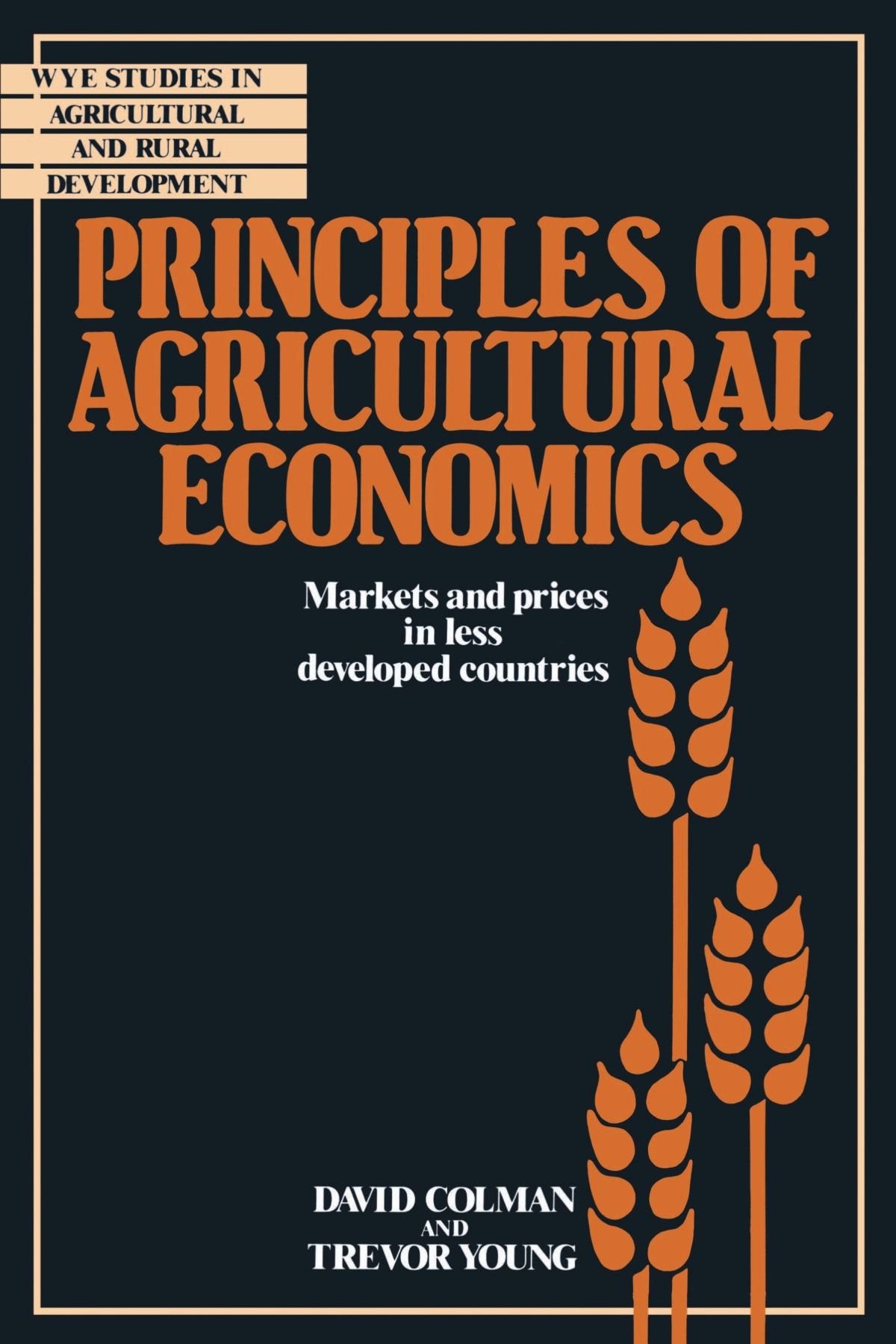
Principles of Agricultural Economics: Markets and Prices in Less Developed Countries by David Etc Colman – A Cambridge U
Inclusive of all applicable taxes. FREE shipping on all orders.
Available Offers
- 🚚Free Delivery — Free shipping on all orders
- 💵Cash on Delivery — Pay when your order arrives
- ↩️15-Day Easy Returns — Hassle-free return policy
- 🔒Cash on Delivery — Pay safely when your order arrives
Check Delivery
Product Description
Introduction
In the vast and diverse landscape of Indian agriculture, where millions depend on the land for their livelihood, understanding the economic principles that govern food production and rural markets is not just an academic exercise—it is a necessity. Principles of Agricultural Economics: Markets and Prices in Less Developed Countries by David Etc Colman offers a rigorous yet accessible foundation for students, researchers, and professionals who wish to bridge the gap between economic theory and the realities of developing nations. Published by the prestigious Cambridge University Press, this hardcover volume is a trusted companion for anyone seeking to make sense of the forces that shape agricultural markets, from the farm gate to the global trading floor.
Book Overview
This textbook is meticulously crafted to address the core microeconomic principles that are essential for agricultural economists working in rural development. Unlike many standard economics texts that draw examples exclusively from industrialised nations, Colman’s work is refreshingly grounded in the context of less developed countries (LDCs). The book is divided into two clear halves. The first half builds a solid foundation in the underlying principles of production, supply, and demand—tools that are vital for analysing and managing the agricultural sector. The second half brings these concepts together in a comprehensive discussion of market equilibrium and exchange, offering readers a holistic view of how agricultural markets function in resource-constrained settings. Throughout, hypothetical and actual empirical illustrations drawn almost exclusively from developing countries make the theory tangible and relevant.
Key Highlights
- Contextualised Learning: Every theoretical concept is illustrated with examples from less developed countries, making it directly applicable to the Indian and South Asian agricultural context.
- Dual Structure: The book’s clear division into foundational principles and market equilibrium allows for systematic learning and easy reference.
- Empirical Grounding: Real-world data and case studies from developing nations enrich the theoretical discussion, bridging the gap between classroom learning and field realities.
- Authoritative Publisher: As a Cambridge University Press publication, the book upholds the highest standards of academic rigour and editorial excellence.
- Durable Hardbound Edition: This hardcover format is built to withstand years of use in libraries, offices, and academic settings.
Inside the Book
The journey begins with a deep dive into production theory, where readers explore how farmers make decisions about resource allocation, input use, and output under conditions of scarcity. The discussion then moves to the supply side, examining how agricultural producers respond to price signals, weather variability, and policy interventions. On the demand side, the book covers consumer behaviour, income effects, and the unique characteristics of food demand in low-income settings. The latter half of the book synthesises these elements into a thorough analysis of market equilibrium, price formation, and exchange mechanisms. Special attention is given to the imperfections and institutional constraints that characterise rural markets in developing countries, such as information asymmetry, credit constraints, and fragmented supply chains.
Key Topics
- Production functions and input-output relationships in smallholder agriculture
- Supply response and price elasticity in developing country contexts
- Demand analysis for staple foods and cash crops
- Market equilibrium under conditions of uncertainty and imperfect competition
- Role of institutions, cooperatives, and government policies in agricultural markets
- Exchange mechanisms, including barter, spot markets, and futures
- Impact of technological change on agricultural productivity and market structure
Reader Benefits
Readers will gain a robust understanding of how microeconomic theory applies to the unique challenges of agricultural development. The book equips students with analytical tools to evaluate policies such as price supports, subsidies, and trade liberalisation. For practitioners, it offers a framework for diagnosing market failures and designing interventions that improve food security and rural incomes. The empirical illustrations help readers connect abstract models to real-world problems, fostering critical thinking and practical problem-solving skills. Moreover, the focus on less developed countries ensures that the content is culturally and economically relevant to readers in India, Bangladesh, Pakistan, Sri Lanka, and other parts of South Asia and Africa.
Learning Outcomes
- Master the core principles of production economics as they apply to agriculture
- Analyse supply and demand dynamics in food markets within developing countries
- Understand how price signals influence farmer behaviour and market outcomes
- Evaluate the role of government policies in stabilising agricultural markets
- Apply equilibrium models to real-world scenarios involving trade, storage, and price volatility
- Develop the ability to critically assess empirical studies on agricultural economics
Who Should Read
This book is ideally suited for undergraduate and postgraduate students of agricultural economics, development economics, and rural management. It is also an invaluable resource for researchers, policy analysts, and development practitioners working with government agencies, NGOs, or international organisations such as the World Bank and FAO. Professionals in agribusiness, commodity trading, and rural banking will find the theoretical insights directly applicable to their work. Additionally, anyone with a keen interest in understanding the economic forces that shape food systems in the developing world—from journalists to activists—will benefit from the clear and accessible exposition.
About the Author
David Etc Colman is a respected academic and economist whose work has focused on agricultural policy and rural development in less developed countries. With decades of teaching and research experience, Colman brings a deep understanding of the institutional and market realities that distinguish agricultural economies in the Global South. His writing is characterised by clarity, rigour, and a commitment to making complex economic ideas accessible to a broad audience. This book reflects his conviction that sound economic analysis must be rooted in the specific contexts where it is applied.
About the Publisher
Cambridge University Press is one of the oldest and most prestigious academic publishers in the world. With a history dating back to 1534, the Press is renowned for its commitment to scholarly excellence and the dissemination of knowledge across all disciplines. Its economics catalogue includes foundational texts that have shaped the field, and this book continues that tradition by offering a high-quality resource for students and professionals in developing countries. The hardcover edition ensures durability and a professional presentation suitable for academic libraries and personal collections alike.
Conclusion
Principles of Agricultural Economics: Markets and Prices in Less Developed Countries is more than just a textbook—it is a bridge between theory and practice, between the classroom and the field. For Indian readers and students, it offers a rare opportunity to study microeconomic principles through the lens of the agricultural realities that surround them. Whether you are preparing for a career in development economics, seeking to understand the dynamics of food markets, or looking to contribute to rural prosperity, this book provides the intellectual toolkit you need. Order your copy from Bookshops.in today and take a decisive step toward mastering the economics of agriculture in the developing world.
Quick Summary
Principles of Agricultural Economics: Markets and Prices in Less Developed Countries by David Etc Colman is a foundational textbook that bridges microeconomic theory with the practical realities of agriculture in developing nations. Written for students and professionals in rural development, the book explains production, supply, demand, and price formation using examples drawn almost exclusively from less developed countries, including India. Readers will learn how economic principles apply to smallholder farming, food markets, and agricultural policy, gaining tools to analyze market failures, subsidies, and trade issues. Published by Cambridge University Press, this hardcover edition is a trusted resource for postgraduate courses in agricultural economics and development studies. By purchasing from Bookshops.in, Indian customers receive a genuine print copy with fast, reliable service, making it an essential addition to any academic library focused on agriculture and development.
Book Highlights
Book Specifications
| ISBN-13 | 9780521336642 |
| ISBN-10 | 0521336643 |
| Publisher | Cambridge University Press |
| Language | English |
| Dimensions | 15.24 x 2.13 x 22.86 cm |
| Weight | 440 g |
| Country | India |
| Category | Economics › Development & Growth |
| Genre | Non-fiction |
| Original Language | English |
Frequently Asked Questions
What is Principles of Agricultural Economics about?
Who is the author of this book?
Is this book suitable for Indian students?
What topics does the book cover?
What is the ISBN for this edition?
Is this a hardcover or paperback?
Can I use this book for my postgraduate course?
Does the book include Indian examples?
What is the price of this book?
Is this book available in digital format?
Who should buy this book?
What makes this book different from general economics texts?
Why buy from Bookshops.in?
Readers Also Search For
Customers Also Bought

Entrepreneurship
Chinese Economic Revolution (English, Linda Grove)
Entrepreneurship
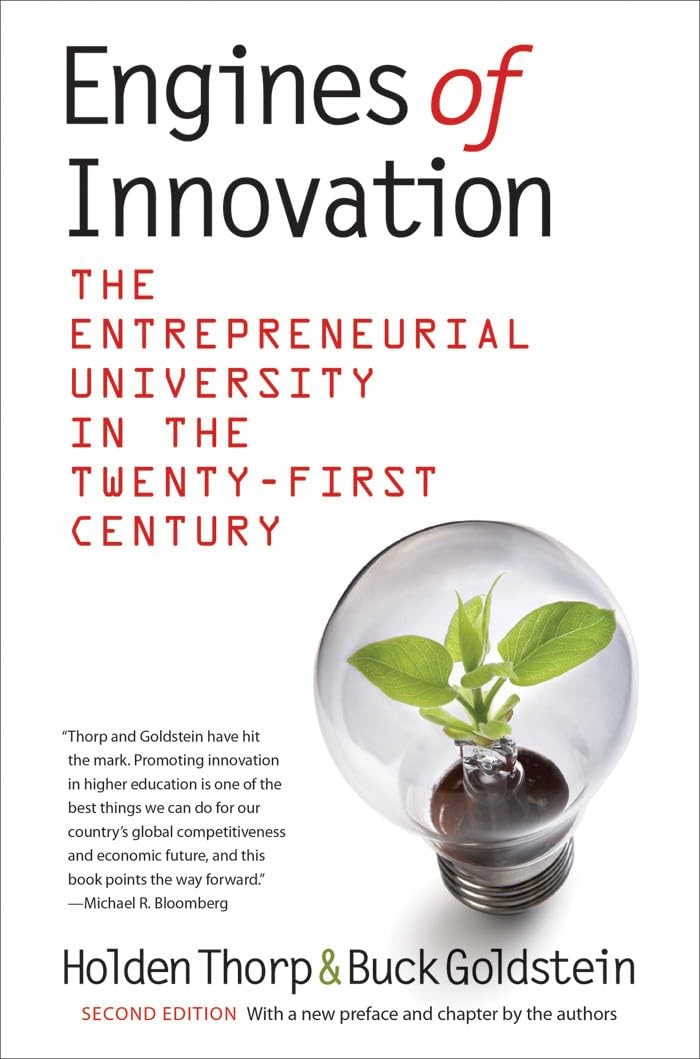
Engines of Innovation: The Entrepreneurial University in the Twenty-First Century by Holden Thorp
Entrepreneurship
Invention to Innovation (English, PhD Marshall Larry | Jenna Daroczy)

Entrepreneurship
Database Management Systems by Raghu Ramakrishnan – DBMS Textbook

Entrepreneurship
Decision-making for Technology Executives by Harold A. Linstone
Entrepreneurship
The Business Innovation Audit (English, William Tate)
Related Products
View All
Economics
Political Economy from Pufendorf to Marx (English, István Hont | Lasse S. Andersen | Béla Kapossy)
Economics
Women's Entrepreneurship and Economics (English, Miguel-Angel Galindo | Domingo Ribeiro)
Economics
Trade Policy and Industrialization in Turbulent Times | by Gerry Helleiner | Routledge | by Gerry Helleiner | Routledge | by Gerry Helleiner | Routledge | by Gerry Helleiner | Routledge | by Gerry Helleiner | Routledge | by Gerry Helleiner | Routledge | by Gerry Helleiner | Routledge | by Gerry Helleiner | Routledge | by Gerry Helleiner | Routledge | by Gerry Helleiner | Routledge | by Gerry Helleiner | Routledge | by Gerry Helleiner | Routledge | by Gerry Helleiner | Routledge | by Gerry Hellei
Economics
History of Economic Analysis | by Schumpeter Joseph A. | Taylor & Francis Ltd | by Schumpeter Joseph A. | Taylor & Francis Ltd | by Schumpeter Joseph A. | Taylor & Francis Ltd | by Schumpeter Joseph A. | Taylor & Francis Ltd | by Schumpeter Joseph A. | Taylor & Francis Ltd | by Schumpeter Joseph A. | Taylor & Francis Ltd | by Schumpeter Joseph A. | Taylor & Francis Ltd | by Schumpeter Joseph A. | Taylor & Francis Ltd | by Schumpeter Joseph A. | Taylor & Franci

Economics
OECD Compendium of Productivity Indicators 2015 | by Organization for Economic Cooperation an | Organization for Economic Co-Operation & Deve | by Organization for Economic Cooperation an | Organization for Economic Co-Operation & Deve | by Organization for Economic Cooperation an | Organization for Economic Co-Operation & Deve | by Organization for Economic Cooperation an | Organization for Economic Co-Operation & Deve | by Organization for Economic Cooperation an | Organization

Economics